Creatine Monohydrate vs HCl: Which Form Is Actually Better?
Creatine HCl is creatine bound to hydrochloric acid instead of a water molecule, and it is genuinely, measurably more soluble — about 38 times more soluble than monohydrate in the study that characterized it. That single true fact is the foundation for a marketing story that does not survive contact with the evidence: that because HCl dissolves better, you absorb more of it, need less of it, and avoid the bloating monohydrate supposedly causes. None of those follow. The same solubility study found no significant difference in how the two forms crossed an intestinal cell monolayer, and roughly 99% of ingested creatine monohydrate is already taken up by tissue or excreted intact — there is no absorption gap for a salt to close. In 2025 a triple-blind randomized trial finally put the two head to head at an equal 5 g/day for eight weeks in elite team-sport athletes and found no statistically significant difference between them on any strength or body-composition measure. Its authors did not hedge: claims of HCl superiority are, in their words, 'unfounded and misleading.' Monohydrate remains the form with over a thousand studies behind it, the highest creatine content per gram of any hydrated form, and the lowest price. Buy that.
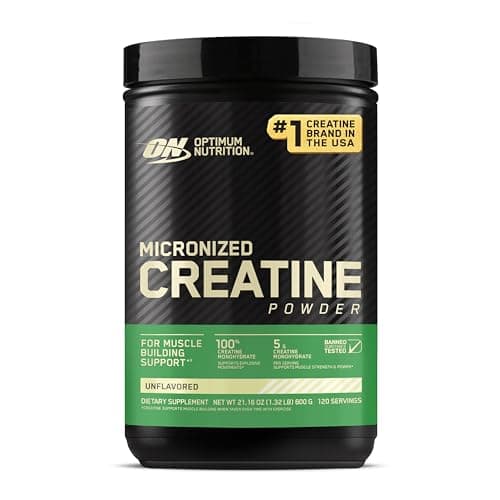
Optimum Nutrition — Creatine Monohydrate Powder (Micronized)
The verdict
Buy creatine monohydrate. It is the most-studied sports supplement on the shelf, the International Society of Sports Nutrition calls it 'the most effective ergogenic nutritional supplement currently available,' it delivers the most actual creatine per gram of powder you pay for, and the one published head-to-head trial against HCl at matched doses found no advantage for the newer form. Creatine HCl is not a scam — it is real creatine and it will work — but you are paying a premium for solubility, which is a mixing convenience, not a performance variable. The only sensible reasons to choose it are that you genuinely dislike the gritty texture of monohydrate in a small volume of water, or that you tried monohydrate and did not tolerate it. Those are preference reasons, not evidence reasons, and you should know that is what you are buying. Whichever form you pick, buy third-party tested, take 3–5 g every day, and remember that creatine supplements a real diet and hard training — it does not substitute for either.
Side-by-side
| Attribute | Creatine Monohydrate | Creatine HCl |
|---|---|---|
| What it is | Creatine bound to one water molecule of crystallization | A creatine salt — creatine paired with hydrochloric acid |
| Creatine per gram | 87.9% creatine by weight — the highest of any form except anhydrous | Lower — creatine salts carry less creatine per gram than monohydrate |
| Water solubility | Baseline (poor; needs stirring or a shaker) | ~38x more soluble than monohydrate |
| Intestinal permeability (Caco-2) | Baseline | No significant difference vs monohydrate |
| How much is absorbed | ~99% taken up by tissue or excreted; under 1% degrades in digestion | No published evidence of greater muscle creatine storage at equal doses |
| Head-to-head evidence | No difference from HCl at 5 g/day over 8 weeks (2025 RCT) | Same trial: authors call superiority claims 'unfounded and misleading' |
| Research volume | Over 1,000 published studies since the early 1990s | A handful, including one direct comparison against monohydrate |
| Standard daily dose | 3–5 g/day maintenance; optional 5 g x 4/day loading for 5–7 days | Marketed at lower 'effective' doses — a claim the 2025 trial tested and rejected |
| Our call | Buy this | Only if texture or tolerance is the reason you stopped taking creatine |
| Where to buy |
Prices pulled from Amazon as of October 18, 2026 and are subject to change. The price shown on Amazon at checkout applies.
Who should pick which
Pick Creatine Monohydrate
- Essentially everyone — it is the form the research was done on, the cheapest per gram of creatine, and the one with a thousand-plus studies behind it.
- Anyone buying their first tub, where the evidence-backed default matters more than any refinement.
- Budget-conscious lifters — monohydrate is 87.9% creatine by weight, the highest of any hydrated form, so more of what you pay for is the active ingredient.
- Competitive athletes who need a third-party-tested product (NSF Certified for Sport and Informed Sport options are far more common in monohydrate).
Pick Creatine HCl
- People who genuinely dislike mixing monohydrate — HCl dissolves clear in a small volume of water, which is a real convenience if texture is why you stopped taking creatine.
- Anyone who tried monohydrate, had persistent stomach upset, and wants to give a different form a fair shot before giving up on creatine entirely.
The claim, and where it comes from
Every creatine HCl label is selling the same three-step argument: it dissolves better, so you absorb more of it, so you need less of it — and a smaller dose means none of the bloating people blame on monohydrate. It is a tidy story, and step one is entirely true. When researchers at the University of Nebraska Medical Center characterized six creatine salts against monohydrate, the hydrochloride came out roughly 38 times more soluble in water. Anyone who has stirred a scoop of monohydrate into four ounces of water and swallowed the sand at the bottom will recognize why that sounded like progress. The problem is steps two and three. Solubility describes how readily a compound disperses in a glass; it says nothing about how much of it crosses your intestinal wall, and nothing at all about how much ends up in muscle. Those are separate questions with separate answers, and the answers have been available for years. The 2025 International Society of Sports Nutrition trial that finally tested the two forms directly put the marketing framing right in its own background section: HCl 'has gained attention for its claims of superior effects, especially at lower effective doses.' It then went and measured whether that was true.
Solubility is real. It just doesn't buy you anything.
The same study that produced the 38x solubility number also measured how creatine hydrochloride, pyruvate, and citrate crossed a Caco-2 monolayer — the standard laboratory model of intestinal absorption. Aside from the citrate salt, which was worse, there were no significant differences in permeability between the salts and plain monohydrate. Dissolving faster in a cup did not translate into moving faster across a gut wall. And there is a ceiling problem the marketing never mentions: monohydrate does not have an absorption deficit to fix. Roughly 99% of orally ingested creatine monohydrate is either taken up by tissue or excreted in the urine as creatine, and less than 1% is degraded to creatinine during digestion. A form cannot meaningfully improve on 99%. The related myth — that monohydrate breaks down into useless creatinine in stomach acid before it ever reaches your bloodstream — is simply wrong about where the chemistry happens. Creatine powder is stable for years in the tub, even at elevated storage temperatures; it is creatine sitting in a liquid that slowly cyclizes to creatinine, which is an argument for not premixing your shaker the night before, not an argument for buying a different salt.
The head-to-head trial nobody markets
For most of HCl's commercial life there was no direct comparison to point at, which is exactly why the marketing worked. In July 2025 that changed. Londoño-Velásquez and colleagues published a three-arm, triple-blind, placebo-controlled randomized trial in the Journal of the International Society of Sports Nutrition: 31 male and female elite handball and softball players, aged 18–28, randomized to 5 g/day of creatine monohydrate, 5 g/day of creatine HCl, or a maltodextrin placebo for eight weeks. Testing was not casual — isokinetic shoulder strength on a Humac Norm dynamometer, countermovement jump on a jump mat, drop jump on a force platform, reactive strength index, and whole-body and regional composition by DXA. The result: 'Comparison of neuromuscular and body composition variables between groups revealed no statistically significant differences in any measure.' Both creatine groups improved jump performance and fat-free mass within themselves, and only the monohydrate group showed a significant gain in fat-free mass index. The authors' conclusion is unusually blunt for a journal: 'claims of Cr-HCl superiority are unfounded and misleading, as this form of creatine does not outperform CrM even at low doses in elite team-sport athletes.' Two honest caveats, because this is one study and we would rather you hear them from us: 31 participants across three arms is a small trial, and two of its authors disclose positions on a scientific advisory board sponsored by Creapure and Creavitalis — which are creatine monohydrate brands. Neither caveat changes the direction of the finding, and it lines up with everything upstream of it, but a single small trial is evidence, not proof.
What monohydrate has behind it
The asymmetry here is the whole argument. Over 1,000 studies have been conducted on creatine monohydrate since it became a mainstream supplement in the early 1990s, and the ISSN's position stand names it 'the most effective ergogenic nutritional supplement currently available to athletes with the intent of increasing high-intensity exercise capacity and lean body mass during training' — adding that it is 'the most extensively studied and clinically effective form of creatine for use in nutritional supplements in terms of muscle uptake.' The dosing is well mapped: 5 g four times daily for 5–7 days loads muscle creatine stores 20–40% and lifts high-intensity performance capacity 5–10%, or you can skip loading entirely and take 3 g/day for 28 days to arrive at the same place more slowly. Maintenance sits at 3–5 g/day. On safety, the position stand is direct: the only consistently reported side effect in the literature is weight gain. On competing forms, the ISSN reviewers wrote that claims other forms are degraded less or taken up better than monohydrate are 'currently unfounded,' and the 2021 ISSN review put a finer point on it — there are no peer-reviewed papers showing that equal amounts of creatine salts, ethyl ester, buffered creatine, nitrate, or dipeptides increase muscle creatine storage more than monohydrate does. Meanwhile monohydrate is 87.9% creatine by weight, the highest percentage of any form other than anhydrous, so a gram of powder buys you more of the thing you actually want.
The bloating question, honestly
This deserves a straight answer rather than a dismissal, because it is the reason most people go looking at HCl in the first place. Water retention is real, and the ISSN's own review of creatine misconceptions identifies it as the most common adverse effect in the early days of supplementation — the myth grew out of early research using 20 g/day for six days. Two things follow. First, most of that water goes inside the muscle cell, which is part of how creatine works, not a side effect to be engineered away. Second, the dose and the timeline are doing the work, not the salt: you can simply skip the loading phase and take 3–5 g/day from the start, which reaches full saturation in about four weeks with far less of the initial swing. If your objection is gastrointestinal rather than cosmetic — cramping, upset stomach, a scoop that never dissolves — splitting the dose, taking it with food, or using a micronized monohydrate solves it for most people at a fraction of HCl's price. If you have genuinely tried all of that and creatine still does not sit well, then trying HCl is a reasonable next move. That is a tolerability decision, and it is a legitimate one. It is just not the performance upgrade the label implies.
What we'd actually buy
Micronized creatine monohydrate, third-party tested, in the largest tub of plain powder you will realistically get through. That is the whole recommendation. Look for NSF Certified for Sport or Informed Sport on the label if you are drug-tested, and for Creapure on the label if you want a specific, traceable German-manufactured monohydrate — but understand that certification is about what is in the tub, not about the molecule being superior. Skip the flavored pre-blended tubs where creatine rides along with a proprietary stimulant blend, skip gummies unless the panel clearly delivers a full 5 g of monohydrate per serving, and skip the upcharge forms generally: HCl, buffered, magnesium chelate, nitrate, and ethyl ester all cost more per effective gram and none has beaten monohydrate head to head. Take it every day, including rest days, because the point is saturating the muscle rather than timing a dose. And keep it in proportion: creatine is one of the very few supplements with evidence this deep, but it works on top of adequate protein, real food, hard training, and sleep — not instead of them.
Frequently asked questions
No. The one published head-to-head trial — a 2025 triple-blind randomized study in the Journal of the International Society of Sports Nutrition, with 31 elite handball and softball players taking 5 g/day of one form or the other for eight weeks — found no statistically significant difference between them on any strength, jump, or body-composition measure. Its authors concluded that claims of HCl superiority are 'unfounded and misleading.' Creatine HCl is real creatine and it does work; it simply does not work better. Monohydrate has over 1,000 studies behind it, delivers more creatine per gram, and costs less, which makes it the default for essentially everyone.
Related reading
Sources
- Creatine monohydrate versus creatine hydrochloride on strength and body composition in elite team-sport athletes: A placebo-controlled randomized clinical trial comparing low dosages (31 athletes, 5 g/day for 8 weeks; 'no statistically significant differences in any measure'; 'claims of Cr-HCl superiority are unfounded and misleading') — Journal of the International Society of Sports Nutrition (Londoño-Velásquez et al.), 2025
- International Society of Sports Nutrition position stand: safety and efficacy of creatine supplementation in exercise, sport, and medicine (monohydrate is 'the most effective ergogenic nutritional supplement currently available'; claims that other forms are degraded less or taken up better are 'currently unfounded'; loading and maintenance dosing; weight gain the only consistently reported side effect) — Journal of the International Society of Sports Nutrition (Kreider et al.), 2017
- Common questions and misconceptions about creatine supplementation: what does the scientific evidence really show? (~99% of ingested monohydrate taken up by tissue or excreted; under 1% degraded to creatinine in digestion; monohydrate is 87.9% creatine by weight; no peer-reviewed papers show creatine salts raise muscle creatine more than monohydrate at equal doses; water retention as the early adverse effect) — Journal of the International Society of Sports Nutrition (Antonio et al.), 2021
- Physicochemical characterization of creatine N-methylguanidinium salts (creatine hydrochloride 38x more soluble than monohydrate; no significant difference in Caco-2 monolayer permeability vs monohydrate) — Journal of Dietary Supplements (Gufford et al.), 2010
Optimum Nutrition — Creatine Monohydrate Powder (Micronized)
$27.00 · on Amazon