The Best Ab Equipment for a Home Gym, Ranked by What Each Piece Actually Trains
The verdict first: for most home gyms the best ab equipment is an ab mat, and our pick is the REP Fitness Ab Mat — a contoured foam pad that supports the lumbar spine through full-range sit-ups and costs about the same as one month of a gym membership. Buy the Perfect Fitness Ab Carver Pro alongside it and you have covered the two halves of core training that matter, for well under $70 total. That is the honest headline, and it is deliberately unexciting, because the single most useful thing this page can tell you is that core equipment is cheap and the expensive stuff is mostly worse. Here is the framework that makes the ranking make sense. Your trunk does three jobs: it flexes (sit-ups, crunches), it resists extension (planks, rollouts, hollow holds), and it resists rotation and lateral bending (side planks, carries, Pallof-style work). Almost every piece of equipment sold as 'ab equipment' trains exactly one of those, which is why a single purchase rarely covers you and why the gadget aisle is full of devices that duplicate what you already own. An ab mat trains flexion with lumbar support. An ab wheel is the cheapest and most brutal anti-extension tool in existence. A stability ball extends the range of flexion work and doubles as an unstable surface. A slam ball trains rotation and power through the trunk rather than isolated flexion. A pull-up bar turns hanging knee and leg raises into the hardest flexion work available. Parallettes give you L-sits and hanging-equivalent work at floor level. That is six tools, three functions, and no overlap — which is exactly how we ranked them. We also want to be straight about two things the category sells badly. First, no piece of equipment on this page reduces belly fat: spot reduction is not a thing, visible abs come from a calorie deficit and the protein and training that preserve muscle inside it, and anyone selling you an ab device as a fat-loss tool is lying. Second, the motorized ab belts, vibrating plates and ab-stimulator gadgets are not on this list because they do not meaningfully train anything. Six real pieces, scored on what each one trains, build quality for home use, footprint and storage, versatility, and value — with live Amazon prices below.
Top pick
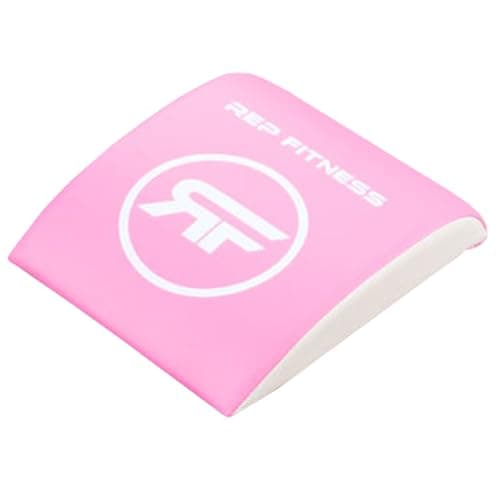
REP Fitness — REP Fitness Ab Mat
Thick foam pad with a lumbar-support contour · wipe-clean cover · compact footprint for home-gym storage · designed for sit-ups, core training and lower-back support · from REP Fitness, an established garage-gym equipment brand
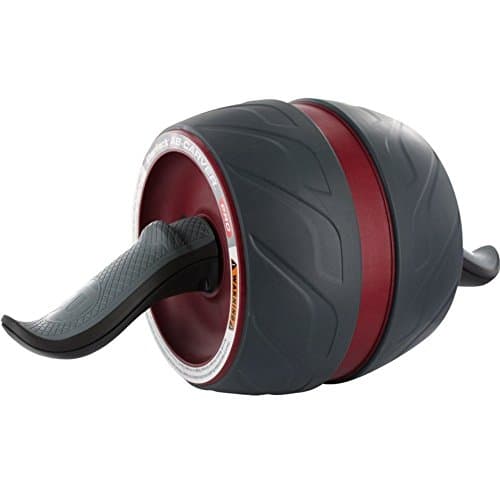
Perfect Fitness — Perfect Fitness Ab Carver Pro Roller
At a glance
Tap a row to check price · tap a header to sort| # | Best for | Price | ||
|---|---|---|---|---|
| 1 | 1. REP Fitness — REP Fitness Ab MatBest overall | Best overall | 8.6/10 | |
| 2 | 2. Perfect Fitness — Perfect Fitness Ab Carver Pro RollerBest for anti-extension | Best for anti-extension | 8.5/10 | $39.10$44.9913% offCheck Price for Perfect Fitness Perfect Fitness Ab Carver Pro Roller on AmazonIn Stock |
| 3 | 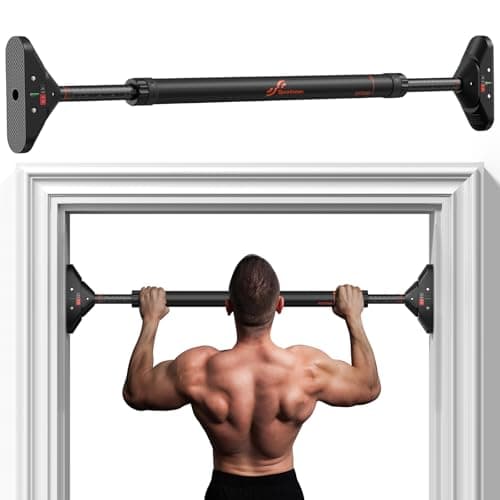 3. Sportneer — Sportneer Doorway Pull-Up Bar (No-Drill)Best double-duty buy | Best double-duty buy | 8.4/10 | $39.99$49.9920% offCheck Price for Sportneer Sportneer Doorway Pull-Up Bar (No-Drill) on AmazonIn Stock |
| 4 | 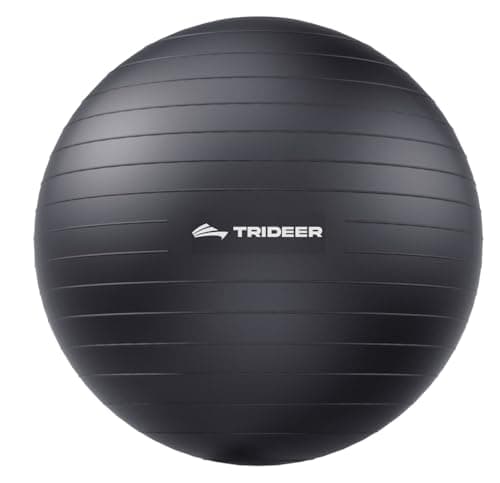 4. Trideer — Trideer Exercise BallBest budget versatility | Best budget versatility | 8/10 | |
| 5 | 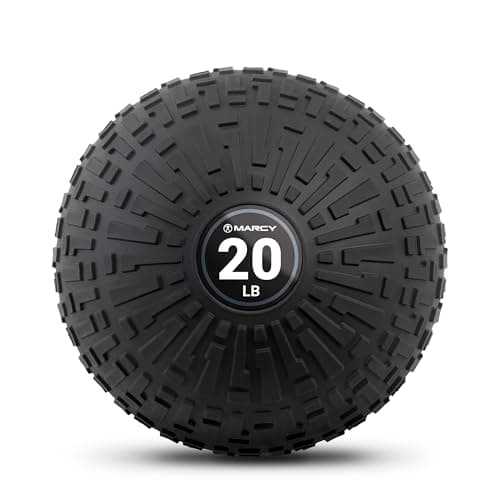 5. Marcy — Marcy Slam Ball (Sand-Filled, MCSB Series)Best for rotation and power | Best for rotation and power | 7.9/10 | $27.02Check Price for Marcy Marcy Slam Ball (Sand-Filled, MCSB Series) on AmazonAvailable to ship in 1-2 days |
| 6 | 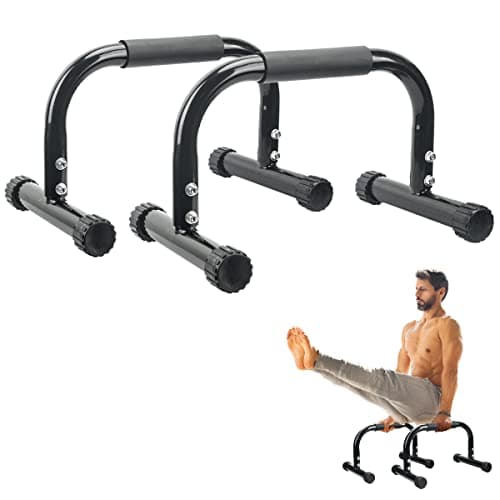 6. AmazeFan — AmazeFan Parallettes BarsBest for L-sits and compressions | Best for L-sits and compressions | 7.6/10 |
Prices pulled from Amazon as of October 18, 2026 and are subject to change. The price shown on Amazon at checkout applies.
How we scored
Every product below is scored on six metrics, 0-10 each, with the weighting described on how we review. The criteria specific to this category:
- What it actually trains, and whether that is a gap in your setup. The heaviest-weighted metric. We score each piece on which of the three trunk functions it delivers — flexion, anti-extension, or anti-rotation and lateral work — and how well it does that one job. A tool that duplicates something you already own scores lower even if it is well made, because the right core setup covers functions, not brand names.
- Build quality for actual home use. Core equipment takes a specific kind of abuse: body weight pressed into foam hundreds of times, wheels rolled on concrete and carpet, balls slammed into a garage floor. We reward high-density foam that holds its shape, steel axles rather than plastic bushings, sand-filled dead-weight construction in slam balls, and stated weight capacities on anything you hang from. We mark down compressible foam, plastic hubs, and bars without a published capacity.
- Footprint and storage, because a home gym is a room you also live in. A piece of core equipment that has to be dragged out of a cupboard gets used less, which makes storage a performance spec rather than a convenience one. We reward things that stand in a corner, slide under a bed, deflate, or weigh little enough to move one-handed, and we mark down anything that needs permanent floor space to justify a single function.
- Versatility beyond the core. The best value in a small home gym comes from equipment that does more than one job. A stability ball is a bench substitute and a hamstring-curl surface. A pull-up bar is a complete upper-body station that also happens to make hanging leg raises possible. A slam ball is conditioning as much as core. We score that double duty explicitly, and a single-function tool has to be very cheap or very good to rank above a versatile one.
- Value at the real price. We cost out what the piece actually does per dollar, not how cheap the entry model looks. Core equipment is the one category in a home gym where the honest answer is often 'this costs almost nothing' — an ab mat and an ab wheel together are under $70 and cover both halves of core training. Anything priced above that has to justify the gap with a genuinely different function, not a feature list.
- Does it earn its place over the floor? The final check, and it eliminates most of the category. Planks, hollow holds, side planks, dead bugs, and loaded carries need no equipment at all. Every piece here has to beat the free version by a clear margin — by adding support (the ab mat), by adding load you cannot get bodyweight (the wheel), by adding range (the ball), or by adding a position the floor cannot give you (the bar, the parallettes). Devices that fail this test are not on the page.
What to know before buying
- Buy in this order: ab mat, ab wheel, then everything else. The ab mat is first because the single most common home core exercise is the sit-up, and doing it on a hard floor is both uncomfortable and range-limited — the contoured pad supports the lumbar spine and lets you extend back past flat, which is the point of the full-range sit-up CrossFit boxes program. The wheel is second because it is the cheapest way to make anti-extension work genuinely hard: a standing rollout is brutal in a way a plank never becomes. Those two pieces cost under $70 combined and cover flexion and anti-extension, which is most of what a home trainee needs. Everything after that is filling a specific gap.
- Understand the three jobs or you will buy three tools that do the same thing. Flexion is the sit-up and crunch family — trunk bending, and what most people mean by 'abs'. Anti-extension is resisting your spine being pulled into an arch: planks, hollow holds, rollouts, and it is where most of the carryover to lifting lives. Anti-rotation and lateral work is resisting twist and side-bend: side planks, suitcase carries, slam-ball throws. A great many home gyms contain three devices that all train flexion and nothing that trains the other two. The fastest upgrade to most people's core training is not a new gadget, it is adding the missing function.
- No ab equipment burns belly fat, and the devices sold on that premise are the worst buys in fitness. Spot reduction is not a mechanism — training a muscle does not preferentially remove the fat sitting on top of it. Visible abdominal definition comes from a calorie deficit, with enough protein and enough resistance training to hold onto muscle while you are in it. That is why this site's framing is whole foods first and high protein: the kitchen decides whether you can see the muscle, and the equipment decides how strong it is underneath. Train the core for strength and trunk stiffness, which transfers to squats, deadlifts and carries — and treat anything advertising inches off your waist as a red flag.
- Check the weight capacity on anything you hang from, and check your door frame. A doorway pull-up bar's rating is the spec that matters, and the better ones publish it — our pick states 440 lb. Leverage-mount bars work by pressing against the frame above the door, so they need a solid frame and a flat surface above the trim; they are not suitable for hollow trim, loose moulding, or wide openings beyond the stated adjustment range. Measure your frame width before buying, put the frame padding on, and test the mount with a dead hang before you do anything dynamic on it. If your frame is not up to it, a freestanding tower is the safer answer even though it costs more and takes floor space.
- This is general fitness information, not medical advice, and core training has real contraindications. Full-range sit-ups and rollouts load the lumbar spine and hip flexors meaningfully. If you have a history of disc injury, significant low-back pain, a hernia, abdominal separation after pregnancy (diastasis recti), or you are pregnant or recently postpartum, get individual guidance from a physiotherapist or your doctor before adding flexion-heavy work — anti-extension and anti-rotation work is frequently the better starting point in those situations, but that is a judgement a clinician should make with you, not a web page. Sharp pain, numbness, or pain radiating into a leg is a stop-and-get-assessed signal, not something to train through.
Our picks
REP Fitness — REP Fitness Ab Mat
Key specs: Thick foam pad with a lumbar-support contour · wipe-clean cover · compact footprint for home-gym storage · designed for sit-ups, core training and lower-back support · from REP Fitness, an established garage-gym equipment brand
Pros
- The lumbar contour is the function: it supports the low back through the part of the range where a hard floor makes you cut the rep short
- Thick, shape-holding foam from a brand with a real reputation in garage-gym equipment rather than a generic import
- Costs about the same as one month of a commercial gym membership and will outlast several years of use
- Stores anywhere — slides under a bed, behind a rack, or onto a shelf, which is why it actually gets used
- Wipe-clean cover handles sweat, which matters more on core equipment than on almost anything else
Cons
- Single-function: it supports flexion work and does nothing at all for anti-extension or anti-rotation
- Foam pads compress eventually, and this is a consumable on a multi-year timescale rather than a lifetime purchase
- A folded towel is a crude free substitute, so the honest value is in the shape rather than the cushioning
Who this one is for
For anyone who does sit-ups at home on a hard floor, and especially for anyone training CrossFit-style full-range sit-ups where the mat is effectively standard kit. It is also the right first purchase if your low back is the reason you stopped doing core work — the lumbar contour is the whole point. Skip it if your core work is all planks and carries, because it does nothing for those.
REP Fitness — REP Fitness Ab Mat
- What it trains8/10
- Build quality9/10
- Footprint & storage10/10
- Versatility5/10
- Value10/10
Perfect Fitness — Perfect Fitness Ab Carver Pro Roller
Key specs: Wide contoured single wheel · built-in carbon-steel spring adds resistance on the way out and assists the return · ergonomic angled handles that recruit lats and shoulders · grippy rubber tread · includes a foam kneepad
Pros
- Anti-extension is the trunk function with the most carryover to lifting, and a rollout is the cheapest hard version of it in existence
- The internal spring is a genuine progression tool — it lets you train the full range before you can own it unassisted
- Wide single wheel with a grippy tread tracks straight on both hard floors and low-pile carpet, where narrow twin wheels wander
- Angled handles bring the lats and shoulders into the movement, which is how a rollout is supposed to feel
- Includes the kneepad, which sounds minor until you do rollouts on concrete without one
Cons
- Rollouts are genuinely advanced — an unassisted standing rollout defeats most people, and bad form means loading the low back instead of the trunk
- Costs roughly twice a plain ab wheel for the spring mechanism, which not everyone needs
- Single-function, and the one function is the hardest to learn safely on this page
Who this one is for
For the reader whose planks have stopped being difficult and who wants the next step without buying a machine. The built-in spring is specifically for people who cannot yet do a full standing rollout: it loads the extension and assists the return, which is a real progression rather than a gimmick. Not the pick if you have a history of disc trouble — rollouts load the lumbar spine hard, and that warrants clinical guidance first.
Perfect Fitness — Perfect Fitness Ab Carver Pro Roller
- What it trains10/10
- Build quality9/10
- Footprint & storage10/10
- Versatility5/10
- Value8/10
Sportneer — Sportneer Doorway Pull-Up Bar (No-Drill)
Key specs: Doorway leverage/tension mount, no drilling · adjustable width roughly 29.5-37 in to fit most door frames · rated to 440 lb capacity · multi-grip design · frame padding included
Pros
- Hanging knee and leg raises are the most demanding flexion exercise you can do, and this is the cheapest way to access them at home
- By far the best versatility score on the page — the same bar is a full upper-body pulling station
- A published 440 lb capacity, which is the spec that actually matters on anything you hang from and which cheap bars often omit
- No drilling and width-adjustable, so it works in rented accommodation where a mounted bar is not an option
- Comes off the frame in seconds and stores flat against a wall
Cons
- Leverage mounts need a solid frame and flat surface above the trim — unsuitable for hollow moulding, and capable of marking paint even with the padding fitted
- Door-frame width limits are real: measure before buying, because outside the 29.5-37 in range it simply will not fit
- Hanging leg raises are hard enough that beginners cannot use the core function on day one, unlike the mat or the ball
Who this one is for
For the small home gym where every purchase has to do two jobs. Hanging knee and leg raises are the hardest flexion work available and need nothing but a bar, and the same bar covers pull-ups, chin-ups and dead hangs. It is the wrong buy if your door frames are narrow, wide, or finished in hollow trim — measure first, and consider a freestanding tower instead.
Sportneer — Sportneer Doorway Pull-Up Bar (No-Drill)
- What it trains9/10
- Build quality8/10
- Footprint & storage8/10
- Versatility10/10
- Value8/10
Trideer — Trideer Exercise Ball
Key specs: Anti-burst, slow-deflate PVC · thick textured commercial-grade material · five sizes (45/55/65/75/85 cm) to match your height · quick pump included · high stated weight capacity
Pros
- Extends the range of trunk flexion well past what a mat allows, which is a genuinely different training stimulus rather than a duplicate
- Doubles as a bench substitute for pressing and a surface for hamstring curls and stir-the-pot planks — real versatility for under $20
- Anti-burst, slow-deflate construction is the safety spec that matters on something you load body weight onto
- Five sizes means you can match the ball to your height, which most buyers ignore and which decides whether it is usable
- The pump is in the box, which is not true of several pricier balls
Cons
- Takes up permanent room space when inflated, and a deflated ball is a ball that never gets used
- PVC balls lose a little pressure over months and need occasional topping up
- Not a precision tool — the instability that makes it useful also makes loaded work on it awkward
Who this one is for
For the beginner building a first setup on a tight budget, and for anyone who wants flexion work with a longer range than the floor allows — draping back over the ball extends the movement in a way a mat cannot. Match the size to your height rather than guessing. Skip it if space is tight and you will not keep an inflated ball in the room, because nobody re-inflates a ball for a workout.
Trideer — Trideer Exercise Ball
- What it trains7/10
- Build quality8/10
- Footprint & storage5/10
- Versatility9/10
- Value10/10
Marcy — Marcy Slam Ball (Sand-Filled, MCSB Series)
Key specs: Sand-filled dead-weight core (true no-bounce) · durable PVC shell · textured non-slip grip · sold across a 15/20/35 lb range (this pick 20 lb) · thick single-shell construction
Pros
- Trains the trunk function the rest of this page barely touches: resisting and producing rotation, plus bracing under dynamic load
- Genuine sand-filled dead weight means no bounce, which is the difference between a slam ball and a medicine ball coming back at your face
- Doubles as conditioning rather than only core work — slams are one of the most efficient ways to raise a heart rate in a small space
- Textured grip stays usable with sweaty hands, which is the main failure point of cheap slam balls
- Takes up no storage space at all: it sits on the floor in a corner and does not care
Cons
- Needs a floor that tolerates slamming — concrete, rubber matting or gym flooring, not a first-floor apartment or laminate
- Loud, which is a real constraint in shared housing
- Fixed weight, so progression means buying another ball
Who this one is for
For the reader who already has the mat and the wheel and is missing rotational and anti-rotational work entirely — which is most people. Slams, rotational throws and carries train the trunk to transmit force between hips and shoulders, which is what it does in a squat, a clean, or carrying a child up stairs. Needs a floor and a wall you are willing to abuse; not an apartment purchase.
Marcy — Marcy Slam Ball (Sand-Filled, MCSB Series)
- What it trains9/10
- Build quality9/10
- Footprint & storage9/10
- Versatility7/10
- Value8/10
AmazeFan — AmazeFan Parallettes Bars
Key specs: Steel-tube frame, roughly 16.6 x 10 x 10 in (mid-height, ~10 in tall) · long base and bar for a wide stable footprint · foam-sleeve grips · rated for handstands, planche work, dips and L-sits · bolts together
Pros
- L-sits and compression work are some of the hardest trunk-flexion training available, and parallettes are the standard tool for them
- Mid-height design gives enough clearance for tucked L-sits and dips without the tipping risk of very tall bars
- Long base and bar make for a genuinely stable footprint, which is the spec that separates usable parallettes from scary ones
- Doubles into dips, handstand and planche progressions, so it is not a single-function purchase
- Breaks down and stores in a cupboard, unlike any floor-standing calisthenics frame
Cons
- Clearly the most advanced piece here — most readers cannot use its main function yet, which is why it ranks last
- Foam-sleeve grips are less comfortable and less durable than the wooden handles on premium parallettes
- Bolt-together steel needs re-tightening occasionally, and the hardware is the weak point
Who this one is for
For the reader with a gymnastics or calisthenics bent who wants L-sits, tucked compressions and planche progressions, and who has no ceiling or door frame to hang from. It is explicitly the last purchase on this page, not the first — if you cannot yet hold a solid hollow position, buy the mat and the wheel and come back to this later.
AmazeFan — AmazeFan Parallettes Bars
- What it trains8/10
- Build quality7/10
- Footprint & storage8/10
- Versatility8/10
- Value7/10
Frequently asked questions
An ab mat and an ab wheel, bought together, for under $70 total. Our picks are the REP Fitness Ab Mat and the Perfect Fitness Ab Carver Pro, and the reason that pair wins is coverage rather than quality alone: the mat handles trunk flexion with lumbar support, and the wheel handles anti-extension, which are the two functions almost all home core training needs. Nothing else on this page is a better first purchase. If you want a third piece, make it the one that fills the gap you have rather than the one that looks most impressive — a slam ball if you have no rotational work, a doorway pull-up bar if you want hanging leg raises plus an upper-body station, a stability ball if you are on the tightest possible budget and want something versatile. The expensive end of the ab-equipment market is mostly worse value than the cheap end, which is unusual in home-gym equipment and worth knowing before you shop.
Related reading
- → How to use an ab mat
- → How to build a home gym on a budget
- → Small-space home gym setup
- → Cleaning and maintaining gym equipment
- → Ab roller vs ab mat
- → Medicine ball vs slam ball
- → Gymnastic rings vs pull-up bar
- → Best ab mats
- → Best ab rollers
- → Best stability balls
- → Best slam balls
- → Best pull-up bars
- → Best parallettes
- → Best home gym equipment for beginners
Sources
- Core Muscle Activity During Physical Fitness Exercises — review of trunk muscle activation across common core exercises — International Journal of Environmental Research and Public Health, 2020
- Regional fat changes induced by localized muscle endurance resistance training (spot reduction not supported) — Journal of Strength and Conditioning Research, 2013
- Physical Activity Guidelines for Americans, 2nd edition — muscle-strengthening activity recommendations — U.S. Department of Health and Human Services, 2018
- Electrical Muscle Stimulation devices — FDA consumer guidance on claims made for abdominal stimulator belts — U.S. Food and Drug Administration
- Product titles, dimensions, stated weight capacities, materials, live prices and availability for all six ranked products — retrieved via the Amazon product data layer — Amazon product listing data, 2026
Last verified: October 5, 2026. See our editorial policy and how we review for details on scoring and update cadence. Canonical URL: https://trustedhealthgear.com/reviews/best-ab-equipment-for-home-gym.
REP Fitness — REP Fitness Ab Mat
$29.99 · on Amazon