Small-Space & Apartment Home Gym Setup
A small-space or apartment gym works when you think in footprint first and buy gear that folds, mounts, or stows between sessions. The winning tools deliver the most training per square foot: adjustable dumbbells instead of a rack of fixed ones, resistance bands that live in a drawer, a doorway pull-up bar, a kettlebell or two, and a folding bench. Prioritize quiet, low-impact movements to keep peace with downstairs neighbors, put a mat down to protect the floor and dampen sound, and store everything vertically or under furniture. Done right, a complete, capable gym fits in a closet or a corner — and you only need an outside gym for the few things that truly demand more space or load.
Affiliate disclosure: Trusted Health Gear is an Amazon Associate. If you buy through links on this page, we may earn a commission at no extra cost to you. Commission does not influence our rankings. Full policy.
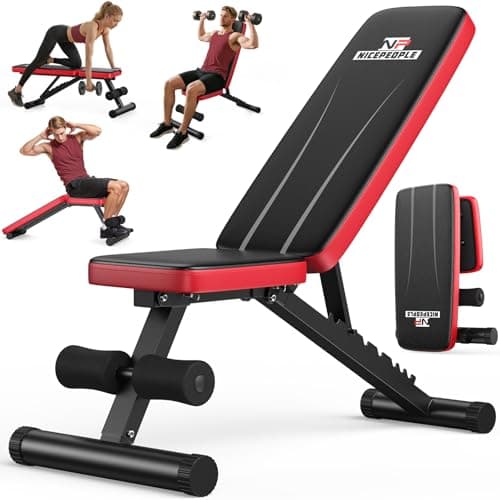
NICEPEOPLE — NICEPEOPLE Compact Adjustable Weight Bench
Best for small spaces — folds compact, with eight backrest angles for apartments and tight rooms
Think in footprint, not floor space
In a small home, the question isn't 'what equipment do I want' but 'what footprint can I give up, and only while I train.' Measure your actual usable area — the clear patch of floor where you'll move, plus the ceiling height for overhead presses and any jumping. A single adjustable-dumbbell pair, a bench, and a band anchor need only a few square feet in use and almost none when packed away. Favor gear with a small standing footprint and, ideally, one that stores flat or vertical. The mental shift is treating floor space as something you borrow for thirty minutes, not surrender permanently: if every piece folds, hangs, or slides under a bed afterward, a studio apartment can hold a genuinely complete gym without ever looking like one.
Foldable, wall-mounted, and doorway gear
The small-space specialty is equipment that isn't there when you're not using it. Doorway pull-up bars mount and remove in seconds and need zero floor. Wall-mounted folding racks collapse to a few inches when you're done, turning a garage or spare wall into a squat station that disappears. Folding benches store upright in a closet. Gymnastic rings hang from a bar or a ceiling anchor and roll into a bag, delivering a full upper-body and core workout from a single hook. Suspension trainers and bands do the same. Even a jump rope tucks into a corner. Build around these disappearing tools first, and reserve permanent floor space only for the one or two pieces you use every session. The goal is a gym you can make appear and vanish in under a minute.
Adjustable over fixed, always
In tight quarters, adjustable and multi-use gear beats fixed, single-purpose gear every time. One pair of adjustable dumbbells replaces ten or more fixed pairs and a rack, collapsing an entire wall of iron into a single small footprint — this is the highest-impact small-space swap you can make. A couple of adjustable kettlebells do the same for ballistic and hinge work. A band set covers a whole spectrum of resistance in a pouch. An adjustable bench flexes from flat to incline so you don't need multiple stations. The trade-offs are real — adjustable dumbbells have longer handles, changing weight takes a few seconds, and most shouldn't be dropped — but in an apartment those compromises are more than worth reclaiming the floor. When space is the binding constraint, versatility per square foot is the metric that matters most.
Noise and the downstairs neighbor
If someone lives below you, noise and impact decide half your equipment choices. Dropped weights, jumping, and slamming carry straight through a floor, so build around controlled, quiet movements: dumbbell and kettlebell work with a soft set-down, band exercises, bodyweight strength, and low-impact conditioning. Put down rubber or thick foam mats — they blunt both floor damage and sound transmission — and set weights down deliberately rather than dropping them. Save plyometrics, rope skipping, and heavy barbell drops for a gym or a ground-floor space. A slam ball is designed to be thrown without bouncing, but even that lands with a thud on a shared floor, so use it thoughtfully and on a thick mat. Training very early or very late amplifies complaints, so time your louder sessions for daytime. Good neighbor etiquette keeps a home gym sustainable.
Storage that disappears
Storage is what separates a livable apartment gym from a cluttered obstacle course. Think vertical and hidden: wall hooks and pegboards hold bands, ropes, rings, and a suspension trainer off the floor; a narrow vertical rack stores plates or a couple of kettlebells in a corner; a folding bench and mat slide behind a door or under a bed. Keep the whole kit near where you train so setup and teardown take a minute, not a chore that makes you skip sessions. A single storage bench or ottoman can hold bands, a jump rope, and small accessories while doubling as furniture. The principle is that every piece has a home it returns to, so the space reverts to a living room the moment you finish. A tidy setup you actually put away is one you'll keep using.
A sample apartment kit
Here's a complete kit that fits a closet and trains everything. One pair of adjustable dumbbells for pressing, rowing, squatting, and curling. A folding adjustable bench for flat and incline work. A resistance-band set for assistance, pulling, and warm-ups. A doorway pull-up bar for the best bodyweight back movement. One or two kettlebells for swings, goblet squats, and carries. A pair of gymnastic rings on a ceiling or doorway anchor for dips, rows, and core. A couple of rubber mats under it all for grip and quiet. Add a jump rope if you have a ground floor or a nearby gym for conditioning. That's a full-body strength-and-conditioning gym in roughly the space of a coat closet, for far less than a year of membership — and every piece stows away when you're done.
When to still use a gym
A small-space setup handles the overwhelming majority of training, but a few goals still argue for an outside gym or a garage. Very heavy barbell squats, deadlifts, and bench press need a rack, a loaded bar, and a floor you can drop weight on — hard to replicate safely in an apartment. Serious Olympic lifting, loud plyometrics, sprinting, and sled work want space and a tolerant surface. And some people simply train better around others or with access to specialty machines. The smart move isn't all-or-nothing: keep the compact home kit for consistent, convenient daily training — the strength and conditioning work you'll actually do most days — and use a gym membership or a friend's garage for the occasional heavy barbell session. Convenience at home plus capacity elsewhere is the best of both worlds.
NICEPEOPLE — NICEPEOPLE Compact Adjustable Weight Bench
Frequently asked questions
Adjustable dumbbells, a folding bench, a resistance-band set, a doorway pull-up bar, and a kettlebell or two. They cover every major movement, fit in a closet, and store away between sessions — far more training per square foot than fixed weights or machines.
Related reading
Sources
- Physical Activity Guidelines for Americans, 2nd edition (muscle-strengthening recommendations) — U.S. Department of Health and Human Services, 2018
- The Best Compact and Apartment Home Gym Equipment — Garage Gym Reviews
- Small-Space and Apartment Gym Equipment Guide — BarBend
- Resistance Training and Program Design Basics — National Strength and Conditioning Association
NICEPEOPLE — NICEPEOPLE Compact Adjustable Weight Bench
$62.99 · on Amazon