The Best Pull-Up Bars for a Home Gym
The pull-up is the best upper-body strength movement most people can do at home, and the bar is the cheapest ticket into it — but the wrong bar turns a great exercise into a wobble-and-pray situation. There are really three types, and picking the right one is most of the decision: doorway bars (fast, no tools, but capped by your door frame and your bodyweight), wall- or joist-mounted bars (rock solid, unlimited swing and kipping room, but permanent and requiring drilling into studs), and freestanding power towers (no drilling, extra dip and knee-raise stations, but a big footprint). We ranked these across all three categories on capacity and build, grip options, mounting stability, versatility or storage, and value — and we'll be straight about the honest limits of each: which doorway bars can chip a frame or slip, which mounts need real studs behind the drywall, and when a $30 bar is genuinely all you need.
Top pick
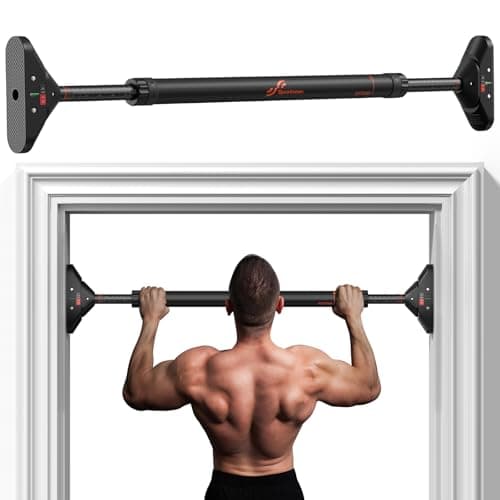
Sportneer — Sportneer Doorway Pull-Up Bar (No-Drill)
Doorway leverage/tension mount, no drilling · adjustable width roughly 29.5-37 in to fit most door frames · rated to 440 lb capacity · multi-grip design · frame padding included · widely stocked on Amazon
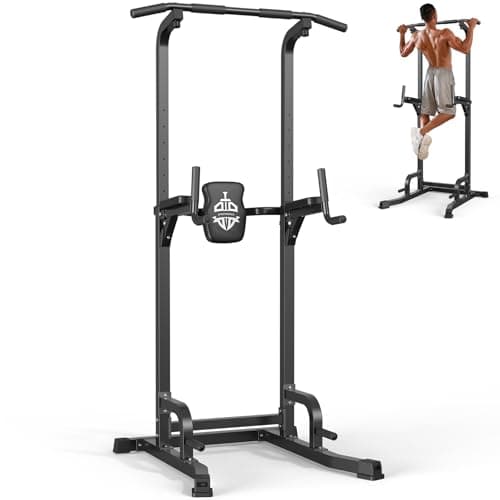
Sportsroyals — Sportsroyals Power Tower Pull-Up and Dip Station
At a glance
Tap a row to check price · tap a header to sort| # | Best for | Price | ||
|---|---|---|---|---|
| 1 | | Best overall doorway bar | 8.4/10 | Check price |
| 2 | | Best freestanding option | 8.2/10 | $139.99$149.99 |
| 3 | 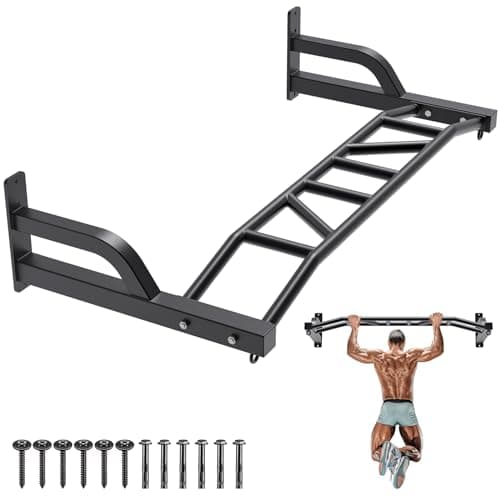 | Best wall-mounted | 8.1/10 | $119.99 |
| 4 | 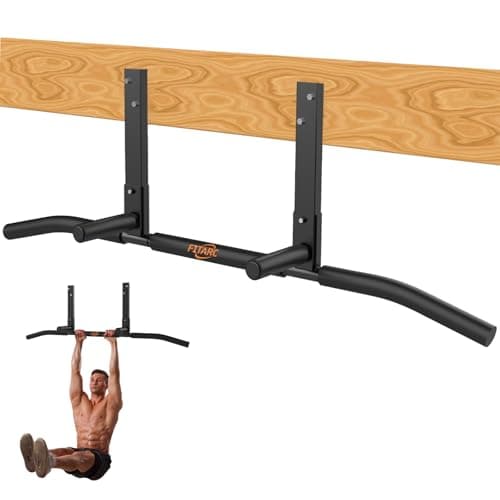 | Best budget permanent mount | 7.8/10 | $39.99 |
| 5 | 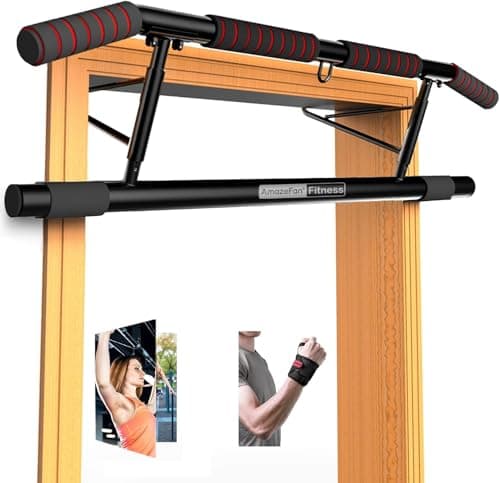 | Best foldable doorway bar | 7.5/10 | $49.98 |
| 6 | 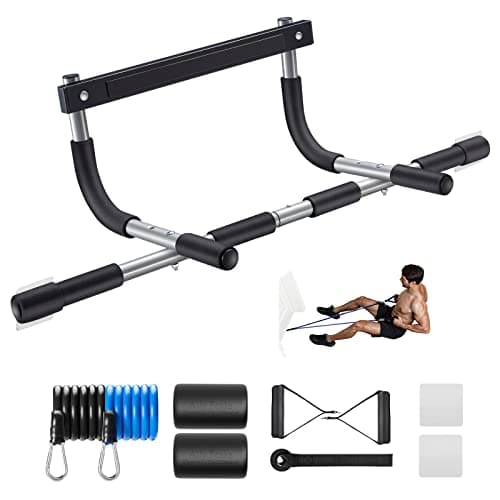 | Best budget doorway | 7.3/10 | $29.89 |
Prices pulled from Amazon as of Sep 15, 2026 and are subject to change. The price shown on Amazon at checkout applies.
How we scored
Every product below is scored on six metrics, 0-10 each, with the weighting described on how we review. The criteria specific to this category:
- Capacity and build — thick-gauge steel and a realistic weight rating matter more than a headline number; add your bodyweight plus any weighted-vest or dip-belt load, then leave a margin, and favor solid welds over thin tubing that flexes under a kip.
- Grip options — multiple hand positions (wide, neutral/parallel, and close) let you train chin-ups, wide pull-ups, and neutral-grip pulls that are easier on the shoulders and elbows; padded or knurled grips help on higher-rep sets.
- Mounting stability and type — doorway leverage bars rely on the frame and trim, tension bars rely on friction, and wall/joist mounts rely on hitting real studs or ceiling joists; the more securely a bar is anchored, the more you can swing, kip, and load it without worry.
- Doorway fit and frame protection — leverage-mount bars must match your door width and need padding and a solid top trim to avoid marking or cracking the frame; measure your doorway and check the adjustable range before buying.
- Versatility and footprint — power towers add dip, knee-raise, and push-up stations but eat floor space; wall mounts free the floor entirely; doorway bars store in a drawer but limit you to hanging work — match the design to your room and goals.
- Value — durable, stable pull-up capacity per dollar, weighing a $30 doorway bar against a $120 wall mount or a $150 power tower based on how permanent and how heavy your training will be.
What to know before buying
- Know your three types before you shop. Doorway bars (leverage or tension) are cheapest and need no tools, but they're limited by your door frame, cap your loading, and leave little room to swing. Wall- and joist-mounted bars are the most solid and give you full kipping and weighted-pull-up room, but they're permanent and must be anchored into real studs or joists. Freestanding power towers need no drilling and add dip and knee-raise stations, but they take up serious floor space. Pick the type first; the specific model second.
- Leverage doorway bars can mark or crack a frame — respect how they work. A leverage-mount bar uses your door's top trim as a fulcrum: your weight pushes down on the far side and levers up against the molding. That works fine on a solid, well-built frame with the included padding in place, but on flimsy or hollow trim it can dent, mark, or in bad cases crack the molding. Check that your top trim is solid, keep the pads seated, and don't kip aggressively on a leverage bar.
- Wall and joist mounts are only as strong as what's behind the drywall. A wall-mounted or joist-mounted bar is the sturdiest option — but every rating assumes you've bolted it into real wood studs or ceiling joists with proper lag bolts, not into drywall anchors. Find your studs, use the right hardware, and if you're unsure about the wall, get a second opinion before you hang your bodyweight on it. Done right, a wall mount outlasts and out-steadies every doorway bar.
- Weight ratings need your real total load, with margin. The '440 lb' on a bar isn't an invitation to trust it blindly. Add your bodyweight plus any weighted vest, dip belt, or plates, then leave a healthy safety margin for the dynamic force of a hard rep or a kip — which can briefly exceed your static weight. If you plan to train with added load, size up the bar (or go to a wall mount) rather than living near the rated ceiling.
- A power tower does more than pull-ups — that's the point and the catch. A power tower stacks a pull-up bar over a dip station, a vertical knee-raise pad, and often push-up handles, so one footprint covers most bodyweight training. The trade-offs are size and, on lighter models, some sway on explosive reps. If floor space is tight, a wall mount or doorway bar is smarter; if you want a bodyweight station and have the room, a tower earns its space.
Our picks
Sportneer — Sportneer Doorway Pull-Up Bar (No-Drill)
Key specs: Doorway leverage/tension mount, no drilling · adjustable width roughly 29.5-37 in to fit most door frames · rated to 440 lb capacity · multi-grip design · frame padding included · widely stocked on Amazon
Pros
- No-drill install means you're doing pull-ups in minutes with zero permanent changes to your home — ideal for renters
- Adjustable 29.5-37 inch width fits the majority of standard door frames, so it's likely to work in your doorway out of the box
- 440 lb rating leaves plenty of margin for bodyweight training and a modest weighted vest for most users
- Multiple grip positions and included frame padding cover the essentials while protecting your trim
Cons
- Like any doorway bar, it's limited by your frame's strength and leaves little room to swing or kip
- The leverage mount can mark or stress weaker trim — it needs a solid, well-built door frame to be safe
- Grip variety and comfort are basic compared with a dedicated wall mount or multi-grip tower
Sportneer — Sportneer Doorway Pull-Up Bar (No-Drill)
- Capacity / build8/10
- Grip options7/10
- Mounting stability7/10
- Storage / footprint9/10
- Value9/10
Sportsroyals — Sportsroyals Power Tower Pull-Up and Dip Station
Key specs: Freestanding power tower, no drilling · pull-up bar plus dip station, vertical knee-raise pad, and push-up handles · adjustable-height frame · rated to 360 lb · established home-tower brand · widely stocked on Amazon
Pros
- Needs no drilling or door frame — a complete bodyweight station you can place anywhere with enough floor room
- Combines pull-ups, dips, knee raises, and push-ups in one footprint, covering most upper-body and core bodyweight work
- Height-adjustable frame suits different users and ceiling heights, and the wide base gives a planted feel for controlled reps
- From an established power-tower brand with a strong review history and easy availability on Amazon
Cons
- Takes up serious floor space — the opposite of a doorway bar you can stash in a drawer
- The 360 lb rating is the lowest here, so factor in added weighted-vest or dip-belt load carefully
- Lighter than a bolted wall mount, so very explosive kipping reps can introduce some sway
Sportsroyals — Sportsroyals Power Tower Pull-Up and Dip Station
- Capacity / build7/10
- Grip options8/10
- Mounting stability8/10
- Versatility9/10
- Value8/10
SELEWARE — SELEWARE 48-inch Wall-Mounted Multi-Grip Pull-Up Bar
Key specs: Wall-mounted, bolts into studs · 48-inch wide multi-grip frame (wide, neutral/parallel, and standard grips) · heavy-duty steel construction · clears the wall for full swing and kipping room · mounting hardware included · stocked on Amazon
Pros
- Bolted into real studs, it's dramatically more solid than any doorway bar — built for kipping, muscle-ups, and heavy weighted pull-ups
- The 48-inch multi-grip frame offers wide, neutral, and standard hand positions so you can train every pull-up variation
- Stands off the wall far enough to clear your head and knees, giving genuine room to swing and do full-range work
- Heavy-gauge steel and a permanent mount mean it disappears into the wall and frees the floor entirely
Cons
- Requires drilling and correct anchoring into wood studs — a poor install or a hollow wall is dangerous, and it's not renter-friendly
- Higher price than a doorway bar, and you'll spend time and effort mounting it properly
- Permanent — once it's up, moving it leaves holes to patch, so measure and plan the placement carefully
SELEWARE — SELEWARE 48-inch Wall-Mounted Multi-Grip Pull-Up Bar
- Capacity / build9/10
- Grip options9/10
- Mounting stability9/10
- Storage / footprint8/10
- Value7/10
Fitarc — Fitarc Joist-Mount Pull-Up Bar
Key specs: Joist- or wall-mount, bolts into ceiling joists or studs · rated to 440 lb · heavy-duty steel bar · mounting hardware included · a low-cost route to a permanent, solid bar · stocked on Amazon
Pros
- Mounts to garage ceiling joists or a wall stud for a fixed, solid bar at a fraction of a power tower's price
- 440 lb rating and simple steel construction handle bodyweight training and moderate added load reliably
- Frees your doorways and floor entirely — great for a garage gym where you can hit the joists overhead
- Straightforward hardware and design make for a quicker, cheaper install than a large multi-grip wall frame
Cons
- Requires drilling into real joists or studs — install quality is everything, and there's no no-drill option
- Basic single-bar design with limited grip variety compared with the wide SELEWARE multi-grip frame
- Ceiling-joist mounting can leave tight headroom for tall users depending on your ceiling height
Fitarc — Fitarc Joist-Mount Pull-Up Bar
- Capacity / build8/10
- Grip options6/10
- Mounting stability8/10
- Storage / footprint9/10
- Value9/10
AmazeFan — AmazeFan Doorway Pull-Up Bar
Key specs: Doorway leverage mount · ergonomic multi-position grips · rated to 400 lb capacity · alloy-steel, foldable frame · includes wrist straps and a workout guide · stocked on Amazon
Pros
- Ergonomic, well-padded grips make higher-rep and longer sets easier on the hands than bare-tube bars
- Foldable alloy-steel frame stores flat, so it tucks away when you're not training
- 400 lb rating covers bodyweight work with room to spare for most users
- Comes with wrist straps and a workout guide, a nice extra for beginners getting started
Cons
- Still a leverage doorway bar — limited by your frame and prone to marking weak trim without care
- Slightly lower 400 lb rating than the 440 lb doorway and mount picks here
- Folding hinge adds a joint that can loosen over time, and swing room is minimal as with any door bar
AmazeFan — AmazeFan Doorway Pull-Up Bar
- Capacity / build7/10
- Grip options7/10
- Mounting stability7/10
- Storage / footprint9/10
- Value8/10
ALLY PEAKS — ALLY PEAKS Multi-Grip Doorway Pull-Up Bar
Key specs: Doorway leverage mount · thickened heavy-duty steel frame · multiple grip positions (wide, neutral, close) · rated to 440 lb capacity · frame padding included · widely stocked on Amazon
Pros
- Thickened steel frame feels sturdier than many bargain doorway bars while staying inexpensive
- Multiple grip positions let you rotate between wide, neutral, and close pulls from one cheap bar
- 440 lb rating is generous for a doorway bar, covering bodyweight plus a light vest for most users
- Simple no-drill leverage mount installs in minutes and comes with padding to protect the frame
Cons
- Leverage mount depends on solid door trim — it can mark or stress weak molding, so check your frame first
- Minimal swing room and no kipping — strictly a hanging and strict-rep bar
- Finish and grip comfort are basic; the padded grips wear faster than a premium bar's
ALLY PEAKS — ALLY PEAKS Multi-Grip Doorway Pull-Up Bar
- Capacity / build7/10
- Grip options7/10
- Mounting stability6/10
- Storage / footprint9/10
- Value9/10
Frequently asked questions
Pick the type first. A doorway bar is cheapest, needs no tools, and stores in a drawer, but it's limited by your frame, caps your loading, and leaves little room to swing — perfect for renters and strict pull-ups. A wall- or joist-mounted bar is the most solid choice and gives full kipping and weighted-pull-up room, but it's permanent and must be anchored into real studs or joists. A freestanding power tower needs no drilling and adds dip and knee-raise stations, at the cost of a big footprint. Choose based on whether you rent, how heavy you'll train, and how much floor space you can spare.
Related reading
Sources
- How to Choose and Mount a Pull-Up Bar (doorway vs wall vs freestanding, stud mounting) — Garage Gym Reviews, 2026
- Best Pull-Up Bars, Tested (capacity, grip options, mounting stability) — BarBend, 2026
- Pull-Up and Chin-Up Technique and Grip-Variation Guidelines — American Council on Exercise (ACE), 2026
- Bodyweight and Vertical-Pulling Progressions for Strength Development — National Strength and Conditioning Association (NSCA), 2026
Last verified: August 1, 2026. See our editorial policy and how we review for details on scoring and update cadence. Canonical URL: https://trustedhealthgear.com/reviews/best-pull-up-bar.
Sportneer — Sportneer Doorway Pull-Up Bar (No-Drill)
on Amazon