Gymnastic Rings vs Pull-Up Bar: Which Should You Buy?
Gymnastic rings and pull-up bars both build a strong upper body, but they solve different problems. A pull-up bar is fixed and stable, which makes it the simplest, most beginner-friendly way to train vertical pulling — pull-ups, chin-ups, dead hangs, and toes-to-bar — and it can go up in a doorway in seconds. Rings hang from straps and move freely, so they wobble, rotate, and demand constant stabilization. That instability is the trade: everything is harder, but you get the widest bodyweight menu in one tool — rows, pull-ups, dips, push-ups, muscle-ups, L-sits, and lever work — plus a free-rotating grip that many lifters find easier on the elbows and shoulders. Strap height also scales difficulty smoothly, from feet-on-floor rows to full bodyweight. Rings need a solid overhead anchor; a bar can mount in a doorway or on a wall. The honest split is access and simplicity versus versatility and joint-friendly range.
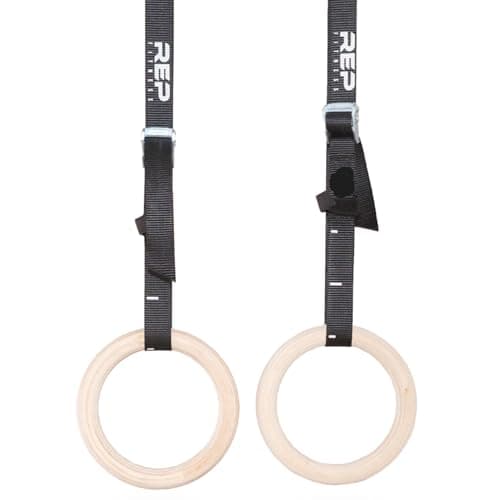
REP Fitness — REP Fitness Wood Gymnastic Rings (Numbered Straps)
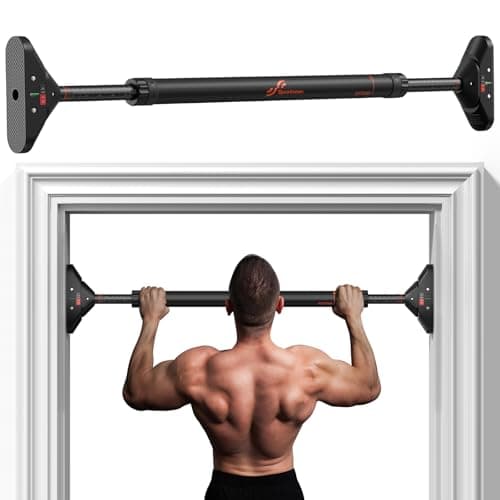
Sportneer — Sportneer Doorway Pull-Up Bar (No-Drill)
The verdict
Pick a pull-up bar if you're a beginner, you want a stable and intuitive way to train pulling, or you need a quick doorway setup with no overhead anchor. Pick gymnastic rings if you want the widest bodyweight movement menu — pulls, dips, rows, and skill work — a joint-friendly rotating grip, and smooth difficulty scaling, and you have a solid anchor to hang them from. Many people end up doing both: mount a sturdy bar, then hang the rings from it.
Side-by-side
| Attribute | Gymnastic Rings | Pull-Up Bar |
|---|---|---|
| Best for | Widest bodyweight menu (pull, push, core) + joint-friendly rotation | Simple, stable vertical pulling and hangs |
| Stability | Unstable — rings rotate and swing; high stabilizer demand | Fixed and stable |
| Movement menu | Pull-ups, dips, rows, muscle-ups, push-ups, L-sits, levers | Pull-ups, chin-ups, hangs, toes-to-bar, kipping |
| Grip / joint feel | Free-rotating; hands find a natural path (shoulder/elbow-friendly) | Fixed path; vary width and grip type |
| Learning curve | Steep — instability makes every movement harder | Beginner-friendly and intuitive |
| Setup / anchoring | Needs a high overhead anchor with clearance to hang and swing | Doorway, wall/ceiling mount, tower, or rig |
| Scalability | Excellent — strap height scales rows to full bodyweight | Coarser — band- or feet-assisted variations |
| Portability | Excellent — pack the straps, hang anywhere with an anchor | Doorway bar packs; mounted bars and towers are fixed |
Who should pick which
Pick Gymnastic Rings
- Calisthenics and CrossFit athletes chasing dips, muscle-ups, levers, and the widest bodyweight menu.
- Lifters with cranky elbows or shoulders who benefit from a free-rotating grip.
- Travelers and minimalists who want one packable tool they can hang from any solid anchor.
Pick Pull-Up Bar
- Beginners who want a stable, intuitive way to build pulling strength without a learning curve.
- Renters and quick-setup trainers who need a doorway bar and no overhead anchor to drill into.
Stable bar vs. moving rings: what actually changes
The whole comparison comes down to stability. A pull-up bar doesn't move, so your body only has to produce force in one plane — you pull, you lower, done. Rings hang from straps and are free to rotate, tilt, and swing, so every rep also becomes a stabilization task: your shoulders, forearms, and core work overtime just to keep the rings from wandering. That's why a strict ring pull-up feels dramatically harder than the same movement on a bar, and why ring dips humble people who dip fine on fixed bars. The instability isn't a flaw — it recruits stabilizers and builds control you can't get from a rigid bar — but it does make rings the more demanding, less beginner-friendly of the two tools.
Why rings are the more versatile tool
One pair of rings covers pulling, pushing, and core work, which is what makes them the most versatile bodyweight tool you can buy. You get ring rows and pull-ups for the back, ring dips and push-ups for pressing, muscle-ups that bridge the two, and support holds, L-sits, and lever progressions for the core and straight-arm strength. Adjustable straps are the underrated feature: raise or lower the rings and drop your feet to the floor, and a brutal exercise becomes a beginner-friendly one, which makes difficulty easy to scale as you get stronger. A fixed bar, by contrast, mostly trains vertical pulling and hanging core work — excellent at those, but a narrower menu overall.
Why the pull-up bar wins on simplicity and access
The pull-up bar's advantage is that it just works. It's stable and intuitive, so beginners can start training pulls on day one without wrestling instability, and progress is easy to load with a weight belt or scale down with a band. Access is the other win: a doorway bar goes up in seconds with no drilling, which suits renters and small apartments, while wall-, ceiling-, and rig-mounted bars add rock-solid capacity for kipping and high volume. The bar is also the better home for movements that reward a fixed point — dead hangs, strict and kipping pull-ups, butterfly, and toes-to-bar are all cleaner when the bar isn't swinging away from you.
Joints, learning curve, and anchoring realities
Rings tend to be kinder to cranky joints because the grip rotates freely: your wrists and forearms find their own path, and at the top of a ring dip the rings turn out to a position your shoulders often prefer to a locked bar. The cost is a steep learning curve — the instability that protects joints also makes everything harder to control at first. Anchoring differs too. Rings need a solid overhead point with clearance to hang and swing: a mounted pull-up bar, a rig, a beam, or a rated branch. A bar's requirements are more flexible — a suitable door frame, wall studs, or a free-standing tower. In practice, a mounted bar and a set of rings pair perfectly.
Our take: bar first for most, rings for the versatility
For most people starting out, buy the bar first. It's cheaper, simpler, and stable, and strict and kipping pull-ups plus hangs and toes-to-bar are the foundation of almost every pulling program. Once you can string together clean pull-ups, add rings for dips, rows, muscle-ups, and skill work — and hang them from the bar or rig you already own, which is the most common setup we recommend. If you specifically want gymnastics or calisthenics skills, or your elbows and shoulders prefer a rotating grip, you can skip ahead to rings; just know the learning curve is real. Owning both is inexpensive and covers nearly everything.
Frequently asked questions
Yes. Because the rings move and rotate, every exercise adds a stabilization demand that a fixed bar doesn't. A strict ring pull-up is meaningfully harder than a bar pull-up, and ring dips challenge people who handle fixed-bar dips easily. That extra difficulty builds control and stabilizer strength, but it's also why most beginners are better off starting on a stable bar and moving to rings once the basics are solid.
Sources
- Gymnastic ring strength and skill progressions — GymnasticBodies
- Bodyweight and suspension training for strength — National Strength and Conditioning Association (NSCA)
- The muscle-up and pull-up movement standards — CrossFit
- Suspension and ring training exercise guidance — American Council on Exercise (ACE)
REP Fitness — REP Fitness Wood Gymnastic Rings (Numbered Straps)
$39.99 · on Amazon