The Best Power Towers for Pull-Ups, Dips, and Leg Raises
A power tower is the free-standing station that gives you the three bodyweight movements every program is built on — pull-ups, dips, and hanging or captain's-chair knee and leg raises — without drilling anything into a wall or doorframe. For apartments, rentals, and garages with no stud to mount a bar or no ceiling joist you trust, that's the whole appeal: one footprint of floor, no permanent hardware, and the backbone of a real bodyweight program. It's one of the highest-value pieces of equipment a beginner or intermediate lifter can own, because the movements it enables carry a program on their own. But a power tower is also one of the pieces of home gear where the cheap ones and the good ones look nearly identical in photos and behave completely differently in use, and the difference is stability. A tower's job is to not move while you do. Under a slow, controlled pull-up most towers feel fine; the honest test is what happens under a bigger or kipping athlete, at the top of an explosive dip, or when you're doing leg raises that swing your bodyweight forward — that's when a light, narrow-based tower wobbles, sways, or in the worst case tips. That instability is the number-one reason people return these, so it's the number-one thing we ranked on. After stability comes build quality (steel gauge, weld quality, and whether the joints stay tight instead of developing a rattle), weight capacity (the honest ceiling for you plus a moving load, not a static number), adjustable height (enough pull-up bar clearance that your feet aren't tucked the whole time), footprint (how much floor it eats in a room that's also for living), and assembly (dozens of bolts, and how well they hold torque over time). We ranked these six on stability, build quality, versatility, footprint, and value. Two honest framing notes before you buy. First, the base is everything: a wider base and, where possible, bolting the unit to the floor kills the wobble and tip risk that plague freestanding towers, and if your tower feels unstable, weighting or anchoring the base is the fix. Second, know the limit of the category — a power tower is a bodyweight station, not a substitute for a squat rack. It will not hold a loaded barbell, and it's not meant to; if heavy barbell work is your goal, buy a rack. For pull-ups, dips, and core, a good tower is all most people need.
Top pick
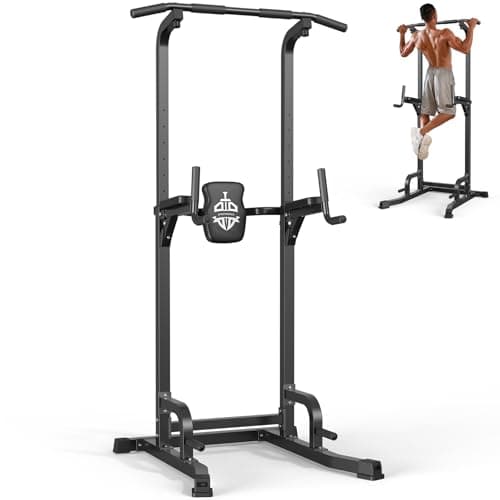
SPORTSROYALS — SPORTSROYALS Power Tower (adjustable height, dip station)
Free-standing multi-station tower · pull-up bar, dip handles, captain's-chair knee/leg-raise station with backrest, and push-up bars at the base · adjustable overall height for different users · wide steel base for stability · padded contact points · covers the core bodyweight movements from one footprint
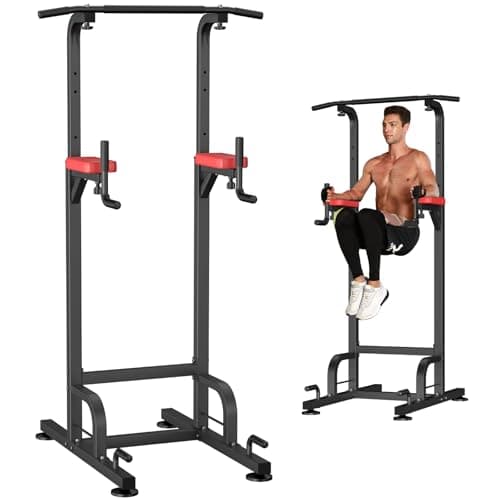
RELIFE — RELIFE Rebuild Your Life Power Tower
At a glance
Tap a row to check price · tap a header to sort| # | Best for | Price | ||
|---|---|---|---|---|
| 1 | | Best overall | 8.4/10 | $139.99$149.99 |
| 2 | | Best budget | 8/10 | $99.99 |
| 3 | 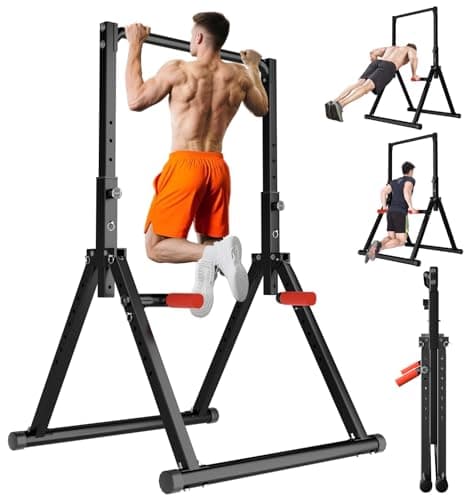 | Best foldable / small space | 7.8/10 | $149.99 |
| 4 | 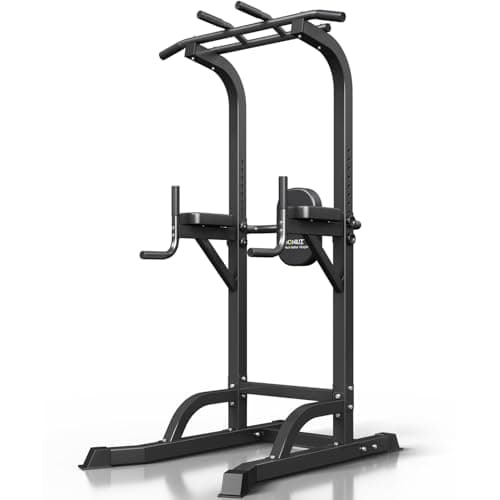 | Best for heavier users | 7.6/10 | $179.99 |
| 5 | 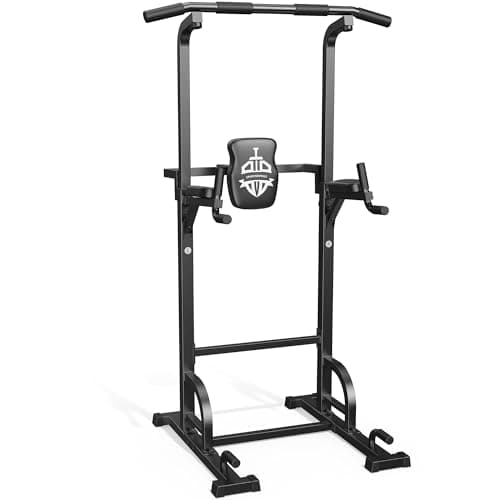 | Best pull-up clearance | 7.4/10 | $179.99$209.99 |
| 6 | 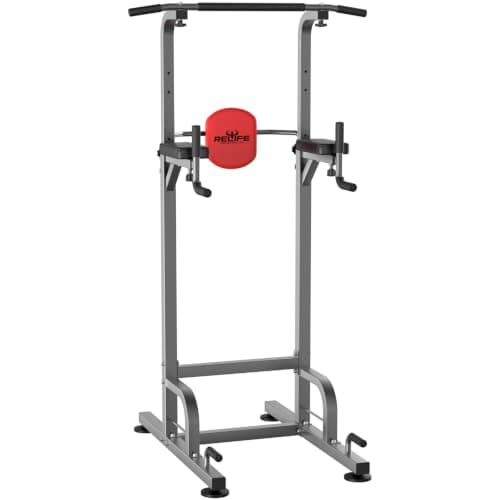 | Best simple freestanding option | 7.2/10 | $129.99$149.99 |
Prices pulled from Amazon as of Sep 16, 2026 and are subject to change. The price shown on Amazon at checkout applies.
How we scored
Every product below is scored on six metrics, 0-10 each, with the weighting described on how we review. The criteria specific to this category:
- Stability — the single most important thing, and the reason most towers get returned. A tower has to stay planted while your bodyweight moves around on it. Under a slow pull-up almost anything feels fine; the real test is a bigger athlete, an explosive or kipping rep, or leg raises that swing your weight forward. A wide base, a low center of gravity, and — best of all — the ability to bolt the unit to the floor are what separate a solid tower from one that wobbles, sways, or tips. If you can only prioritize one thing, prioritize this.
- Build quality — gauge, welds, and joints that stay tight. Heavier-gauge steel tubing, clean welds, and solid connection points are what keep a tower from flexing under load or developing a rattle after a few weeks. Bolted joints loosen over time on cheaper units, so hardware that holds torque (and can be re-tightened) matters. You can often feel the difference the first time you load it: a well-built tower is quiet and rigid, a cheap one creaks and gives.
- Weight capacity and honest headroom — the number on the box versus real use. Manufacturers quote a static maximum; what matters is your bodyweight plus the dynamic load of moving on the bar, ideally with comfortable margin. Heavier and taller users, or anyone adding a weight belt for dips and pull-ups, should choose a tower rated well above their bodyweight, not right at it. Treat the rated capacity as a ceiling to stay under, not a target to hit.
- Versatility — how many real movements it covers. The best towers cover pull-ups (multiple grips help), dips, and a captain's-chair station for knee and leg raises, and many add a padded backrest and push-up handles at the base for a vertical-plus-floor combo. More stations mean more program from one footprint. But extra attachments only count if the core three are solid — a wobbly tower with lots of pads is still a wobbly tower.
- Footprint and height — floor space and pull-up clearance. In a room that's also for living, how much floor a tower eats and whether it can fold matter. Just as important is height: the pull-up bar needs enough clearance that a taller user isn't tucking their knees the entire set, and the whole thing has to fit under your ceiling. Adjustable-height models flex to different users and let shorter people bring the dip and pull-up stations to a usable position.
- Value and assembly — cost per usable year, and how it goes together. These range from budget to mid-priced, so we reward towers that get stability and build right for the money and mark down ones that feel flimsy at any price. Assembly is part of the deal: most towers are a few dozen bolts, and how well those bolts torque down and stay tight is part of long-term stability. A tower that's cheap but sways, or solid but impossible to keep tight, isn't good value.
What to know before buying
- Stability is the whole game — judge a tower on its worst case, not its best. Nearly every tower feels fine under a slow, controlled pull-up; the ones that get returned are the ones that wobble under a heavier athlete, sway at the top of an explosive dip, or lurch during leg raises when your bodyweight swings forward. Before you buy, look hard at the base width and the weight rating relative to your own weight, and assume the tower will feel less stable than the marketing video. If a tower you already own feels sketchy, the fix is almost always at the base — see the next note.
- A wider base and bolting down beat everything else for killing wobble. The two things that make a freestanding tower feel rock-solid are a wide, low base and, where your floor allows, anchoring it down. Many towers have holes in the feet for exactly this — bolting into a garage slab, or screwing into a wood platform you build, transforms the feel. If you can't drill, a heavy sandbag, plates, or a couple of dumbbells set on the base rails lower the center of gravity and cut the sway. Don't accept a wobbly tower as normal; it's usually fixable.
- Match the weight rating to your bodyweight with real margin, not to the wire. A tower rated right at your weight is a tower with no headroom for the dynamic load of actually moving on it, let alone adding a weight belt for weighted dips or pull-ups. Heavier and taller users especially should pick a model rated comfortably above their bodyweight — treat the quoted capacity as a limit to stay well under. The higher-capacity, heavier-steel towers here (like the DONIUZ) exist for exactly this reason and are worth the extra bulk if you're a bigger athlete.
- A power tower is not a squat rack, and that's fine. This is a bodyweight station — pull-ups, dips, leg raises, and often push-ups — not a place to load a heavy barbell. It won't hold a loaded bar and isn't built to, so if your main goal is heavy squats, presses, and deadlifts, buy a rack instead and treat a tower as a complement or a small-space alternative. For the enormous amount of training you can do with just pull-ups, dips, and core work, a solid tower is genuinely all most people need, and it does that job for a fraction of a rack's price and footprint.
- Mind height and footprint before it arrives. Measure your ceiling against the tower's height plus your reach on the pull-up bar — you need clearance to hang and pull without ducking, and taller users should check the bar is high enough that they're not tucking their knees the whole set. Then measure the floor: in a shared living space, a foldable model (like the WATBKHE) or a compact freestanding one earns its keep, while a bigger multi-function tower wants a dedicated corner. It's much easier to check the tape measure than to wrestle an assembled tower back into its box.
Our picks
SPORTSROYALS — SPORTSROYALS Power Tower (adjustable height, dip station)
Key specs: Free-standing multi-station tower · pull-up bar, dip handles, captain's-chair knee/leg-raise station with backrest, and push-up bars at the base · adjustable overall height for different users · wide steel base for stability · padded contact points · covers the core bodyweight movements from one footprint
Pros
- Strong all-round stability for a freestanding tower — a wide base and solid frame keep it planted through pull-ups, dips, and leg raises better than most towers at its price, which is the thing that matters most
- Adjustable height means taller users get real pull-up clearance and shorter users can bring the stations into a usable position, so one tower fits a range of people
- Genuinely versatile: pull-ups with multiple hand positions, dips, a padded captain's-chair for knee and leg raises, and push-up bars at the base cover a full bodyweight program from one footprint
- A popular, widely available model, so setup guidance, spare parts, and owner feedback are easy to find
Cons
- It's a large, tall unit that wants a dedicated corner — it doesn't fold, so it eats floor space in a shared room
- Like any freestanding tower it can still sway under very explosive or kipping reps; bolting or weighting the base is the fix if you train aggressively
- Assembly is a few dozen bolts and takes time, and the joints benefit from a re-tighten after the first week of use as everything settles
SPORTSROYALS — SPORTSROYALS Power Tower (adjustable height, dip station)
- Stability8/10
- Build quality8/10
- Versatility9/10
- Footprint6/10
- Value9/10
RELIFE — RELIFE Rebuild Your Life Power Tower
Key specs: Free-standing power tower · pull-up bar, dip station, captain's-chair knee/leg-raise station with backrest and armrests, and push-up handles · steel frame with a stabilizing base · padded backrest and arm pads · positioned as an affordable multi-function bodyweight station
Pros
- One of the best-value multi-station towers here — it covers pull-ups, dips, leg raises, and push-ups at a budget price, making it an easy first tower for someone building a home setup
- Padded backrest and armrests make the captain's-chair leg-raise station comfortable, and the multiple grips on the pull-up bar add variety
- Reasonably stable for the price when assembled correctly on a level floor, and the base has provisions to help it stay planted
- A widely owned model, so there's plenty of assembly help and owner feedback available
Cons
- Budget steel and hardware mean it can develop some sway or a rattle under heavier or more explosive use — a bigger athlete will feel it move more than a premium tower
- Bolted joints can loosen over time and benefit from periodic re-tightening to keep it feeling solid
- Not adjustable in the way the top pick is, so very tall users may find the pull-up clearance or station heights less than ideal
RELIFE — RELIFE Rebuild Your Life Power Tower
- Stability7/10
- Build quality7/10
- Versatility8/10
- Footprint7/10
- Value9/10
WATBKHE — WATBKHE Power Tower (foldable, adjustable)
Key specs: Foldable, adjustable-height power tower · pull-up bar, dip station, and knee/leg-raise station · folding frame to reduce footprint when stored · height adjustment for different users · steel construction · aimed at apartments and shared rooms where floor space is at a premium
Pros
- The folding frame is the standout — it lets you reclaim floor space in a shared living room or small apartment when you're not training, which no fixed tower can do
- Adjustable height makes it work for a range of users and gives taller people usable pull-up clearance
- Covers the essential trio of pull-ups, dips, and leg raises, so you're not giving up core function to get the fold
- A sensible pick for renters and small spaces where a permanent, dedicated corner for a tower just isn't available
Cons
- A folding joint is one more moving part, and folding designs generally trade a little rigidity for the convenience — expect slightly more flex than a fixed-frame tower of similar price
- You have to actually fold and unfold it each session for the space benefit, which adds a small chore that discourages some people
- Repeated folding puts wear on the hinge and hardware over time, so keeping those bolts tight matters more than on a static tower
WATBKHE — WATBKHE Power Tower (foldable, adjustable)
- Stability7/10
- Build quality7/10
- Versatility7/10
- Footprint9/10
- Value7/10
DONIUZ — DONIUZ Power Tower (multi-function)
Key specs: Multi-function free-standing power tower · pull-up bar, dip handles, captain's-chair leg-raise station, and push-up bars · heavier-duty steel frame and wide base aimed at higher weight capacity · padded backrest and arm supports · built for users who want more margin above their bodyweight
Pros
- The heavier frame and wider base give more stability and more capacity headroom, which is exactly what a bigger or taller athlete — or anyone adding a weight belt for dips and pull-ups — needs
- Multi-function layout covers pull-ups, dips, leg raises, and push-ups, so the extra sturdiness doesn't cost you versatility
- Padded backrest and arm supports make the leg-raise station comfortable during longer core work
- The extra steel means it generally feels more planted and rigid under load than lighter budget towers
Cons
- Heavier and bulkier to move and assemble than a lightweight tower, and it wants a dedicated spot rather than being shuffled around a room
- The added sturdiness usually comes at a higher price than the budget picks, so lighter users may be paying for capacity they don't need
- It's still a freestanding bodyweight station, not a rack — the higher capacity is about safe margin for your bodyweight, not for loading a barbell
DONIUZ — DONIUZ Power Tower (multi-function)
- Stability8/10
- Build quality8/10
- Versatility8/10
- Footprint6/10
- Value7/10
SPORTSROYALS — SPORTSROYALS Pull Up Power Tower Dip Station
Key specs: Free-standing pull-up and dip power tower · tall frame for generous pull-up bar clearance · dip handles and knee/leg-raise station · wide stabilizing base · padded contact points · aimed at taller users who want to hang and pull without tucking their knees
Pros
- The taller frame gives real pull-up clearance, so taller users can hang at full extension and pull without tucking their legs the entire set — a common frustration with shorter towers
- Covers pull-ups, dips, and leg raises with the same generally solid SPORTSROYALS base and build that made the top pick stable
- A wide base keeps it planted through the core movements, and padded contact points keep dips and leg raises comfortable
- A straightforward, focused tower for people whose main complaint about other towers is not enough height
Cons
- The taller design needs more ceiling clearance — measure your room first, because a tall tower plus your reach on the bar can run into a standard ceiling
- A higher center of gravity means base width and anchoring matter even more; weight or bolt the base if it feels tippy during dynamic reps
- Fewer bells and whistles than the fuller multi-function towers — it's focused on height and the core movements rather than maximum station count
SPORTSROYALS — SPORTSROYALS Pull Up Power Tower Dip Station
- Stability7/10
- Build quality7/10
- Versatility7/10
- Footprint7/10
- Value8/10
RELIFE — RELIFE Free Standing Power Tower
Key specs: Simple free-standing power tower · pull-up bar, dip station, and knee/leg-raise station · steel frame with a stabilizing base · padded backrest · pared-back design focused on the essential bodyweight movements without extra attachments
Pros
- A clean, no-frills tower that does the essential three — pull-ups, dips, and leg raises — without the extra attachments and complexity some people never use
- The simpler design means fewer parts and joints, so there's less to loosen, rattle, or go wrong over time
- Padded backrest makes the leg-raise station comfortable, and the stabilizing base keeps it reasonably planted on a level floor
- An affordable, established RELIFE option for someone who just wants the core movements and doesn't care about a maximal station count
Cons
- Budget build means it can develop some sway under heavier or explosive use — a bigger athlete will feel it move, and weighting or anchoring the base helps
- Fewer stations and less adjustability than the top picks, so it's less flexible across different users and goals
- Bolted joints can loosen with time and need periodic re-tightening to keep it feeling solid
RELIFE — RELIFE Free Standing Power Tower
- Stability7/10
- Build quality7/10
- Versatility6/10
- Footprint7/10
- Value8/10
Frequently asked questions
Cheaper ones can, and it's the number-one reason people return them — so it's worth understanding. Under a slow, controlled pull-up almost any tower feels fine. The wobble and tip risk show up under a heavier athlete, at the top of an explosive or kipping rep, or during leg raises that swing your bodyweight forward. The fixes are straightforward: choose a tower with a wide base and a weight rating comfortably above your bodyweight, and where your floor allows, bolt the feet down (many have holes for exactly this) or weight the base with a sandbag or plates to lower the center of gravity. A properly based and anchored tower is very stable; a light, narrow one used aggressively is not.
Related reading
Sources
- The Best Power Towers — how base width, steel gauge, and weight capacity affect stability for pull-ups and dips — Garage Gym Reviews
- Best Power Towers and pull-up/dip stations — stability, build quality, and versatility compared — BarBend
- Bodyweight training fundamentals — pull-ups, dips, and hanging leg raises for upper-body and core strength — National Strength and Conditioning Association (NSCA)
- Home gym equipment for small spaces — choosing between racks, towers, and wall/doorway options for pull-ups and dips — BarBend
Last verified: August 2, 2026. See our editorial policy and how we review for details on scoring and update cadence. Canonical URL: https://trustedhealthgear.com/reviews/best-power-tower.
SPORTSROYALS — SPORTSROYALS Power Tower (adjustable height, dip station)
$139.99 · on Amazon