The Best Slam Balls for Conditioning and Power (2026)
A slam ball earns its place in a garage gym by doing one thing dumbbells and kettlebells can't: it lets you throw maximum force into the floor and absorb none of the rebound. That makes ball slams one of the safest ways to train explosive, full-body power and metabolic conditioning — you drive your hips and lats through the ball, it lands dead, and you reset. The catch is that not every product labeled 'slam ball' actually stays dead. A real slam ball is sand-filled, or engineered for a dead bounce, with a thick, textured shell; a cheap one rebounds back at your face or splits at the seam after a month on concrete. We ranked these on shell durability, grip texture, how genuinely no-bounce they are, weight range, and value — and we'll tell you plainly why sand-filled beats bouncy, what weight to actually start with, and where a rubber dead-bounce shell makes more sense than sand.
Top pick
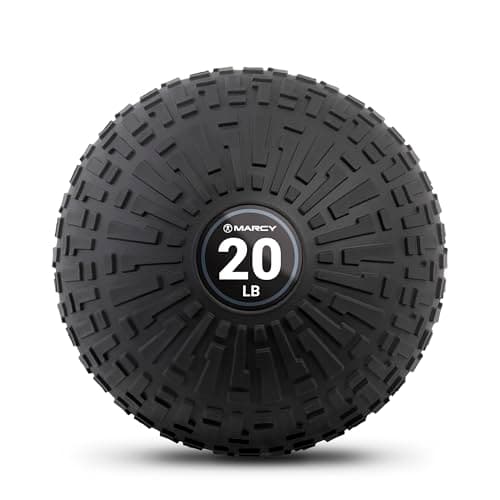
Marcy — Marcy Slam Ball (Sand-Filled, MCSB Series)
Sand-filled dead-weight core (true no-bounce) · durable PVC shell · textured non-slip grip · non-bounce design for slams, tosses, and carries · sold across a 15/20/35 lb range (this pick 20 lb) · thick single-shell construction
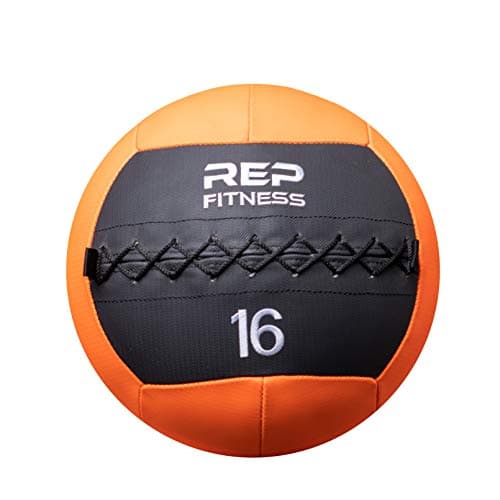
REP Fitness — REP Fitness Weighted Slam Ball (Sand-Filled)
At a glance
Tap a row to check price · tap a header to sort| # | Best for | Price | ||
|---|---|---|---|---|
| 1 | | Best overall | 8.7/10 | $26.24 |
| 2 | | Best premium build | 8.5/10 | $84.99 |
| 3 | 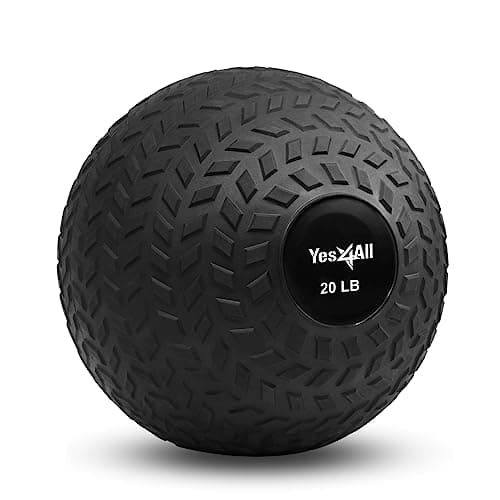 | Best value all-rounder | 8.2/10 | Check price |
| 4 | 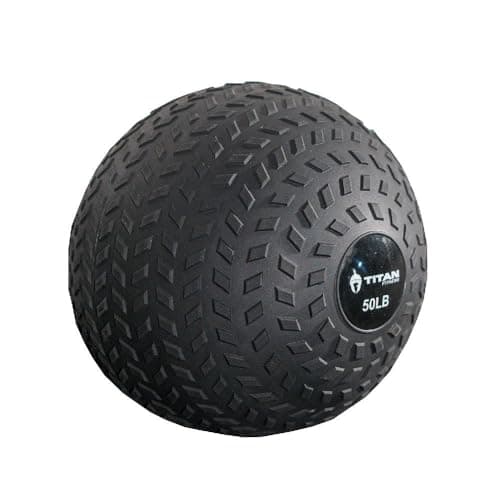 | Best heavy / commercial-grade | 8.1/10 | $89.99 |
| 5 | 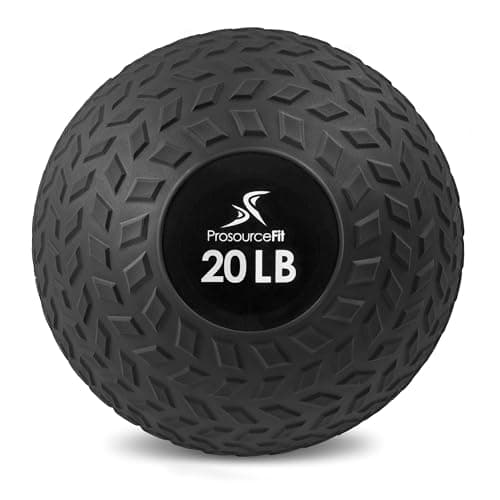 | Best budget textured grip | 7.7/10 | $34.99 |
| 6 | 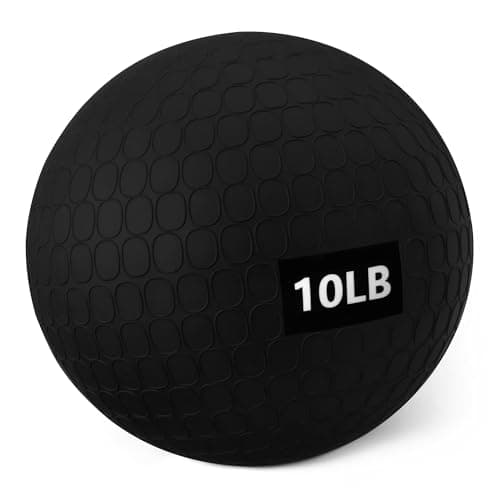 | Cheapest entry | 7.1/10 | Check price |
Prices pulled from Amazon as of Sep 15, 2026 and are subject to change. The price shown on Amazon at checkout applies.
How we scored
Every product below is scored on six metrics, 0-10 each, with the weighting described on how we review. The criteria specific to this category:
- Shell durability — a thick PVC or rubber shell that survives repeated slams onto concrete is the whole ballgame; thin, cheap shells split at the seam within months of honest use.
- Grip and texture — an aggressive tread or textured surface holds sweaty hands on overhead slams and rotational throws, where a smooth ball slips out at the worst possible moment.
- Dead bounce — a genuine slam ball is sand-filled or engineered so it lands and stays put; anything that rebounds meaningfully toward your face is a wall ball or a medicine ball, not a slam ball.
- Weight range and increments — a line that spans roughly 10 to 40-plus pounds lets you load slams heavy while keeping throws and carries lighter, and buy matched weights over time.
- Size and density — sand-filled balls get dense and small at heavy weights, which changes how easy they are to catch and carry, so physical size matters as much as the number on the shell.
- Value — durability and grip per dollar, factoring in the uncomfortable truth that the cheapest balls are usually the ones that fail first.
What to know before buying
- Sand-filled vs rubber vs vague 'no-bounce' claims. A sand-filled PVC ball is the classic dead ball — it lands with a thud and doesn't rebound, which is exactly what you want for slams in a garage or small space. A rubber dead-bounce ball (Titan's, here) uses a tough engineered shell that's more abrasion-resistant but can retain a hair of rebound compared with pure sand. What you want to avoid is anything that bounces meaningfully: that's a wall ball or a medicine ball, and slamming it will send it back into your face. When a listing is vague about fill and bounce, treat it with suspicion.
- Start heavier than you'd guess. Because the slam is a full-body throw, not a controlled lift, the movement tolerates more load than people expect — most adults start slams around 15-20 lb, and a small, dense ball is easier to grip and control than a big soft one of the same weight. Beginners, older trainees, and anyone doing rotational or rehab work can start around 10 lb. This is the opposite of choosing a light weight to 'learn the movement' — a too-light slam ball is awkward and teaches nothing.
- Grip and chalk matter more than you think. On an overhead slam, a smooth ball plus sweaty hands equals a projectile. A pronounced tread or textured surface is the difference between a controlled slam and a flyer, so weight it heavily in your decision. Even with a good tread, chalk helps on max-effort or high-volume sets, and it's cheaper than a new ball or a hole in the drywall.
- Protect your floor and your ball. Slamming onto bare, rough concrete is the fastest way to split a shell and crack a slab. Slam onto a rubber gym mat, a stall-mat platform, or a dedicated slam target instead — it extends the ball's life dramatically and protects the floor and your joints. This is the single biggest durability factor within your control, and it applies to every ball on this list.
- One ball or a set? Start with a single ball at your slam weight, then add a lighter one later for throws, rotational work, and Russian twists as your training expands. Buying from a line with a wide weight range (Yes4All and Marcy both span roughly 10-40 lb) makes it easy to add matched weights over time instead of ending up with a mismatched drawer of one-offs.
Our picks
Marcy — Marcy Slam Ball (Sand-Filled, MCSB Series)
Key specs: Sand-filled dead-weight core (true no-bounce) · durable PVC shell · textured non-slip grip · non-bounce design for slams, tosses, and carries · sold across a 15/20/35 lb range (this pick 20 lb) · thick single-shell construction
Pros
- Sand-filled core is genuinely dead — it lands with a thud and stays put instead of bouncing back at your face, which is the entire point of a slam ball
- Textured PVC shell grips sweaty hands well for overhead slams, rotational throws, and loaded carries without demanding chalk
- Comes in a sensible ladder of weights (roughly 15 to 35 lb), so you can match load to the movement — heavier for slams, lighter for throws and carries
- Priced like a budget ball but built like a mid-tier one, with a thick shell that shrugs off repeated slams onto a mat
Cons
- Like any PVC shell, it can eventually split at the seam after years of hard slams onto rough concrete — a rubber mat under it extends its life a lot
- The heavier weights are dense and physically small, which some lifters find awkward to catch during partner throws
- Grip texture is good, not aggressive — very sweaty hands may still want chalk on max-effort overhead work
Marcy — Marcy Slam Ball (Sand-Filled, MCSB Series)
- Durability / shell8/10
- Grip / texture8/10
- Dead bounce9/10
- Weight range8/10
- Value9/10
REP Fitness — REP Fitness Weighted Slam Ball (Sand-Filled)
Key specs: Heavy sand-filled core (dead bounce) · thick, soft-textured durable shell · built for repeated hard slams · from an established strength-equipment brand (REP Fitness) · multiple weights available (this pick 16 lb)
Pros
- Built for abuse: a thick, durable shell and sand-filled dead-weight core designed for the repeated hard slams that destroy cheaper balls
- Soft textured surface is easy on the hands and the floor while still gripping well for throws, slams, and carries
- Backed by a real strength-equipment brand with customer support, rather than an anonymous seller
- Dead, no-bounce landing every time — the sand fill means it lands and stays, safe for slams in a garage or small space
Cons
- Priced well above the budget balls — you're paying a clear premium for build quality and brand support
- Runs dense at the middle weights, so it's physically smaller in the hand than a bouncy medicine ball of the same weight
- Overkill for someone who only occasionally slams; the value case is strongest if you train slams and throws frequently
REP Fitness — REP Fitness Weighted Slam Ball (Sand-Filled)
- Durability / shell9/10
- Grip / texture8/10
- Dead bounce9/10
- Weight range8/10
- Value7/10
Yes4All — Yes4All Slam Ball (Sand-Filled PVC, Tread Grip)
Key specs: Durable PVC shell · sand-filled dead-weight core (no bounce) · tread/textured grip · very wide weight range (10-40 lb) · popular, widely stocked Amazon fitness brand (this pick 20 lb)
Pros
- Sand-filled PVC gives a true dead bounce at a genuine value price, with the tread grip you want for overhead slams
- Enormous weight range (10-40 lb) makes it easy to buy a matched pair now or add a heavier ball later from the same line
- One of the most widely bought and restocked slam balls on Amazon, so availability and replacement are rarely a problem
- Tread pattern grips sweaty hands well without chalk for slams, throws, and carries
Cons
- Value-line quality control varies — a minority of units develop seam or grip wear faster than premium balls
- The PVC shell strongly prefers a mat or rubber floor; repeated slams onto bare rough concrete shorten its life
- Grip tread is functional rather than aggressive, so very sweaty hands may still want chalk on max sets
Yes4All — Yes4All Slam Ball (Sand-Filled PVC, Tread Grip)
- Durability / shell7/10
- Grip / texture8/10
- Dead bounce8/10
- Weight range9/10
- Value9/10
Titan Fitness — Titan Fitness Rubber Tread Slam Ball (Dead Bounce)
Key specs: Thick rubber shell with aggressive tread · engineered dead-bounce (minimal rebound) · 11.5-inch diameter · 50 lb · built for heavy slams, tosses, and rotational work · from a well-known garage-gym brand (Titan Fitness)
Pros
- Heavy-duty rubber shell with deep tread is built to survive years of hard, heavy slams that would split a thinner PVC ball
- Engineered dead-bounce keeps a 50 lb ball from rebounding dangerously, so you can slam heavy with confidence
- Aggressive tread grips extremely well even with sweaty hands on max-effort overhead slams and carries
- From a well-known garage-gym brand, so build quality and availability are a known quantity
Cons
- Only makes sense at heavy loads — at 50 lb this is a dedicated heavy-slam and carry tool, not a do-everything conditioning ball
- Rubber-shell construction rather than sand-filled, so it can retain a very slight rebound compared with a pure dead-weight sand ball
- Premium price and heavy shipping weight — overkill unless you specifically train heavy slams
Titan Fitness — Titan Fitness Rubber Tread Slam Ball (Dead Bounce)
- Durability / shell9/10
- Grip / texture9/10
- Dead bounce8/10
- Weight range6/10
- Value7/10
ProsourceFit — ProsourceFit Slam Ball (Tread Textured, Dead Weight)
Key specs: Dead-weight (no-bounce) design · tread-textured grip surface · durable rubber-type shell · sold across a 10-30 lb range (this pick 20 lb) · popular budget conditioning brand (ProsourceFit)
Pros
- Aggressive tread texture grips sweaty hands unusually well for a budget ball, which matters most on overhead slams
- Dead-weight design lands without a dangerous bounce, so it's safe for slams in a home gym
- Available across a useful weight range (roughly 10-30 lb) so you can match load to the movement
- One of the better-value textured slam balls, widely stocked and easy to restock on Amazon
Cons
- Budget construction — the shell can show wear or seam stress sooner than premium balls under heavy, repeated slams
- Fill and internal construction aren't as clearly documented as dedicated sand-filled balls, so dead-bounce feel can vary slightly by unit
- Tops out at moderate weights, so dedicated heavy-slam training needs a different ball
ProsourceFit — ProsourceFit Slam Ball (Tread Textured, Dead Weight)
- Durability / shell7/10
- Grip / texture8/10
- Dead bounce7/10
- Weight range7/10
- Value8/10
Amazon Basics — Amazon Basics Heavy-Duty Slam Ball
Key specs: Heavy-duty weighted slam ball · textured grip surface · dead-weight slam design (minimal bounce) · sold in several weights, 10/15/20 lb (this pick 10 lb) · the lowest-cost pick, widely available
Pros
- The cheapest way to add slams and ball throws to a home workout, from a widely available and easy-to-return source
- Textured surface and heavy-duty shell handle everyday light conditioning slams and tosses
- Available in light, beginner-friendly weights, which suits first-timers learning slam mechanics
- Simple, no-frills, and easy to restock — a fine starter or a light second ball
Cons
- Amazon Basics publishes little construction detail (fill type isn't clearly stated), so the dead-bounce feel and internal build are less certain than a spec'd sand-filled ball
- Some listings run low on stock and weight options come and go, so the exact weight you want may not always be available
- Basic build isn't meant for heavy, high-volume slamming — it's a light-duty entry ball, not a garage-gym workhorse
Amazon Basics — Amazon Basics Heavy-Duty Slam Ball
- Durability / shell6/10
- Grip / texture7/10
- Dead bounce7/10
- Weight range6/10
- Value8/10
Frequently asked questions
They look similar but behave very differently. A slam ball is dense, small, and dead — it's sand-filled or engineered not to bounce, so you can throw it into the floor at full force and it stays put. A wall ball is larger, softer, and lighter for its size, meant to be thrown up against a wall and caught, so it has a little give but still shouldn't bounce hard. A traditional medicine ball is often firmer and may bounce, and is used for controlled throws, tosses, and rotational work. If you slam a bouncy medicine ball into the floor, it comes back at your face — which is exactly why a real slam ball exists.
Related reading
Sources
- Medicine Ball Training for Power Development (rotational and overhead throws, rate of force production) — National Strength and Conditioning Association (NSCA), 2025
- Slam Ball Buying Guide (no-bounce sand-filled construction, weight selection, PVC vs rubber shells) — BarBend, 2026
- Medicine Ball Exercises for Core and Conditioning (safe slam mechanics and the hip hinge) — American Council on Exercise (ACE), 2025
- Metabolic Conditioning with Ball Work (ball slams, wall balls, and interval design) — CrossFit, 2025
Last verified: August 1, 2026. See our editorial policy and how we review for details on scoring and update cadence. Canonical URL: https://trustedhealthgear.com/reviews/best-slam-ball.
Marcy — Marcy Slam Ball (Sand-Filled, MCSB Series)
$26.24 · on Amazon