Slam Ball vs Wall Ball: Which Should You Buy?
Slam balls and wall balls look similar but behave like opposites. A slam ball is small, dense, and dead — a thick rubber shell packed with sand or gel that hits the floor with a thud and refuses to bounce. That no-rebound design is the whole point: you drive it overhead and slam it down for ballistic, full-body power and conditioning, and you don't need a wall to do it. A wall ball is bigger, softer, and lightly padded so it can be thrown against a wall and caught without hurting you. Its home is the wall ball shot — a squat-to-target throw that anchors classic CrossFit benchmarks — plus chest passes and partner throws. Slam it hard on concrete rep after rep and it can burst or go lumpy. So the real choice is about movement and facility: overhead slams on a solid floor lean slam ball; catchable squat-to-target throws against a wall lean wall ball.
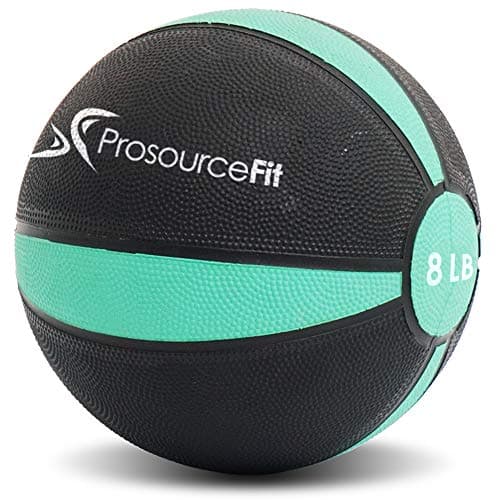
ProsourceFit — ProsourceFit Weighted Rubber Medicine Ball (8 lb)
The verdict
Pick a slam ball if you want ballistic overhead slams, rotational core power, and a near-indestructible conditioning tool in a small space with no wall — just a solid floor. Pick a wall ball if you train the CrossFit wall ball shot, do squat-to-target and partner throws, and have a sturdy wall with overhead clearance. They train different patterns, so many garage gyms end up owning both — but if you buy just one, let the movement you'll actually program most, and the space you have, decide.
Side-by-side
| Attribute | Slam Ball | Wall Ball |
|---|---|---|
| Best for | Overhead slams, ballistic power, conditioning | Wall ball shots, squat-to-target and partner throws |
| Bounce / rebound | Dead — engineered for zero bounce | Soft with slight give; catchable, not for hard slamming |
| Shell & construction | Thick rubber shell, dense sand/gel fill, smaller diameter | Soft padded shell, larger diameter, more forgiving fill |
| Movement menu | Slams, rotational slams, throw-downs, weighted carries | Wall ball shots, chest passes, overhead and partner throws |
| Space & facility needs | Sturdy floor or mat; no wall; low ceiling is fine | Solid wall + 9-10 ft target clearance, or a partner |
| Durability under slamming | Built to be slammed repeatedly; near-indestructible | Can deform or burst if slammed on hard ground |
| Catchability | Poor — hard, small, doesn't rebound | Good — soft and large, designed to be caught |
| Learning curve | Simple slam mechanic; easy to start | Wall ball shot is a coordinated skill to time |
Who should pick which
Pick Slam Ball
- Lifters who want ballistic overhead slams and rotational power for conditioning and core work.
- Small-space and low-ceiling trainers with a solid floor but no wall to throw against.
- Anyone who wants a near-indestructible tool that shrugs off repeated hard slams.
Pick Wall Ball
- CrossFitters who need to train and test the wall ball shot and benchmarks like Karen.
- People with a sturdy wall and overhead clearance who like squat-to-target and partner throws.
Dead bounce vs. soft catch: the core difference
The difference starts inside the ball. A slam ball is filled with sand or a gel-like compound inside a thick, hard rubber shell, which kills the rebound almost entirely — throw it down and it stays put instead of bouncing back at your face. That dead behavior is exactly what makes repeated overhead slams safe and effective. A wall ball uses a softer, lightly padded synthetic shell around a more forgiving fill, and it's noticeably larger in diameter. That softness and size are deliberate: the ball has to be catchable when it rebounds off a wall or when a partner throws it, and it shouldn't hurt when it lands on your hands or chest. One is built to be destroyed on the floor; the other is built to be thrown and caught.
The slam ball's job: ballistic power and conditioning
Slam balls are ballistic conditioning tools. The signature move is the overhead slam: you extend explosively, drive the ball down with everything you have, and repeat — a full-body triple-extension pattern that spikes your heart rate fast and trains power endurance. Rotational slams add a hard oblique and anti-rotation component that carries over to throwing and swinging sports. Because the ball dies on impact, you never chase a rebound and you don't need a wall or a high ceiling — a sturdy floor or rubber mat is enough, which makes it ideal for low-ceiling garages and small spaces. The dense build also shrugs off abuse; a good slam ball is close to indestructible under exactly the punishment that would wreck a softer ball.
The wall ball's job: throw-and-catch and the wall ball shot
Wall balls are throw-and-catch tools built around one benchmark movement: the wall ball shot. You hold the ball at your chest, drop into a front squat, and drive up to launch it at a target — 10 feet for men, 9 feet for women in the CrossFit standard — then catch it on the way down and go again. Standard competition weights are 20 pounds for men and 14 for women, and the movement anchors classic benchmarks like 'Karen' (150 wall ball shots for time). The soft, larger ball makes catching realistic and forgiving, which also opens up chest passes, overhead throws, and partner work. What it doesn't want is to be slammed on concrete rep after rep — that's how you split a seam.
Durability, space, and what your facility allows
Your space decides more here than your goals do. A slam ball needs only a solid floor and works fine under a low ceiling, so it fits garages, basements, and apartments where you can't throw anything overhead. A wall ball needs a sturdy, unobstructed wall you're allowed to hammer and enough overhead clearance to hit a 9-to-10-foot target — or a willing partner to throw with. Durability runs the other way: the slam ball is built to absorb repeated floor impacts, while a wall ball slammed on hard ground will deform or burst over time because its soft shell was never meant for it. Both store easily, though the slam ball's smaller, denser build is a little tidier on a shelf.
Our take: match the ball to the movement (and often own both)
These aren't competitors so much as different jobs. If your training is overhead slams, rotational power, and floor-based conditioning — and especially if you have a low ceiling or no wall to throw against — the slam ball is the buy. If you train CrossFit and want to own the wall ball shot, or you like squat-to-target and partner throws and have the wall and clearance for it, get the wall ball. Plenty of garage gyms end up with both because they cover different patterns cheaply. If you can only pick one, don't overthink it: choose the movement you'll actually program most, then confirm your facility can support it.
Frequently asked questions
You can, but you shouldn't make a habit of it. Wall balls use a soft, lightly padded shell designed for wall impacts and catching, not repeated slams onto hard floors. Do it often and the seams give out or the ball deforms and goes lumpy. If slamming is your main movement, buy a purpose-built slam ball — its dense fill and thick rubber shell are made to take exactly that abuse.
Sources
- Wall ball shot movement standard and scaling — CrossFit
- Medicine ball training for power development — National Strength and Conditioning Association (NSCA)
- Medicine ball exercises and technique — American Council on Exercise (ACE)
- Slam ball vs wall ball: how to choose and use each — BarBend
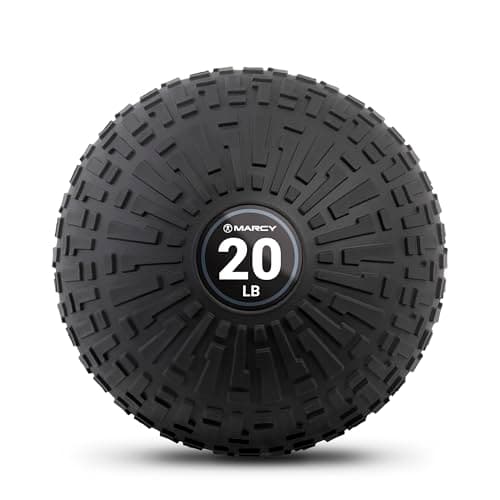
Marcy — Marcy Slam Ball (Sand-Filled, MCSB Series)
$26.24 · on Amazon