Kettlebell vs Dumbbell: Which Should You Buy First?
Kettlebells and dumbbells are complementary tools, not competitors. The kettlebell's offset center of mass — the load hangs below the handle — makes it built for ballistic, full-body work: swings, cleans, snatches, and Turkish get-ups that train conditioning, hip power, and grip. The dumbbell's balanced load and pair format make it the better tool for straightforward hypertrophy and unilateral strength: presses, rows, curls, lunges, and bench work with clean, controllable loading. If you only want conditioning and posterior-chain power in a small footprint, start with a kettlebell. If you want to build muscle across the whole body with the widest exercise menu, start with dumbbells.
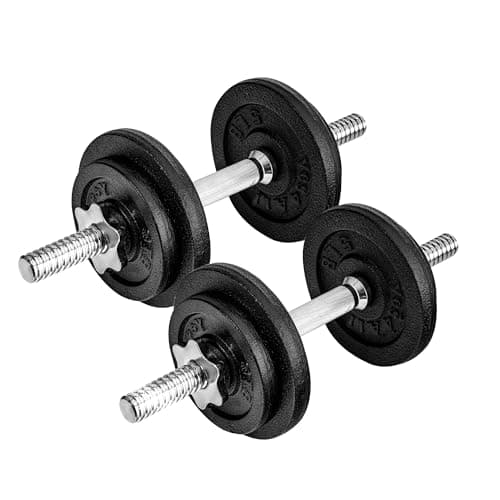
Yes4All — Yes4All Adjustable Dumbbell Set (Cast Iron, Spinlock)
The verdict
Pick a kettlebell if your priority is conditioning, ballistic hip power (swings, snatches), and grip work in a minimal footprint. Pick dumbbells if your priority is hypertrophy, unilateral strength, and the widest range of standard lifts. Most lifters end up wanting both — but if you buy one first, let your primary goal decide: power/cardio leans kettlebell, muscle-building leans dumbbell.
Side-by-side
| Attribute | Kettlebell | Dumbbell |
|---|---|---|
| Best for | Ballistic conditioning, hip power, grip | Hypertrophy, unilateral strength, balanced loading |
| Ballistic work / swings | Purpose-built — offset load suits swings, cleans, snatches | Possible but awkward; weight isn't designed to be thrown around |
| Hypertrophy / muscle building | Good for some lifts; awkward for others | Excellent — clean loading for presses, rows, curls, lunges |
| Grip / wrist demand | High grip; bell rests on forearm (takes practice to not bruise) | Moderate; neutral, predictable wrist position |
| Conditioning / cardio | Strong — swings/snatches drive heart rate fast | Possible via complexes, but less natural |
| Versatility / exercise menu | Wide for ballistic + full-body flows | Widest overall for standard strength movements |
| Learning curve | Steeper — swing/snatch technique needs coaching | Gentle — most movements are intuitive |
| Cost / space | Low — 1-2 bells cover a lot; tiny footprint | Higher if you want a full range; adjustable sets save space |
| Where to buy |
Who should pick which
Pick Kettlebell
- People chasing conditioning, work capacity, and posterior-chain power (swings, snatches, get-ups).
- Small-space trainees — one or two bells cover a huge amount of ground.
Pick Dumbbell
- Lifters focused on hypertrophy who want clean, progressive loading across many movements.
- Anyone prioritizing unilateral strength and stability — single-arm presses, rows, split squats.
- Beginners who want the gentlest learning curve and the most exercise tutorials available.
The offset load is the whole story
A kettlebell's mass sits below the handle, not centered on it. That offset is what makes the swing, clean, and snatch feel natural — the bell wants to travel in an arc and rotate around the wrist, which is exactly what ballistic, hip-driven training needs. A dumbbell's load is balanced on the handle axis, so it stays put and is easy to press, curl, and row in a controlled line. Neither is 'better' — they're built for different jobs. Trying to do heavy swings with a dumbbell is clumsy; trying to do strict heavy bench presses with a kettlebell fights the offset load the whole way.
Conditioning and power: kettlebell territory
If you want to spike your heart rate and train explosive hip extension, the kettlebell swing and snatch are hard to beat. They load the posterior chain (glutes, hamstrings, back) ballistically and let you accumulate a lot of work in a short time. Research on kettlebell training shows meaningful gains in aerobic capacity and posterior-chain power from swing-based protocols. Grip and forearm endurance get trained hard as a bonus — the handle is thicker and the load pulls away from you on every rep.
Hypertrophy and unilateral strength: dumbbell territory
For building muscle, you want clean, progressive loading through a full range of motion across many movements — and that's the dumbbell's home turf. Dumbbell presses, rows, curls, lateral raises, lunges, and split squats all load the target muscle predictably and are easy to progress. The pair format also makes unilateral training simple: single-arm work exposes and corrects left-right imbalances, and the balanced load lets you focus on the muscle rather than wrestling the implement. For pure time-under-tension hypertrophy, dumbbells win.
Learning curve, cost, and footprint
Dumbbell movements are mostly intuitive — most people can press and row safely on day one, and tutorials are everywhere. Kettlebell ballistics (swing, snatch) reward coaching: bad swing technique loads the lower back instead of the hips, and a sloppy snatch bangs the bell into your forearm. On cost and space, a single kettlebell or two covers a huge amount of conditioning and full-body work in a tiny footprint. A full dumbbell range costs more and takes more room — adjustable dumbbells are the usual fix, trading a little convenience for big space savings.
The honest answer: buy both, but in order
These tools are complementary. A practical home setup is one or two kettlebells for swings, get-ups, and conditioning, plus a pair (or an adjustable set) of dumbbells for pressing, rowing, and unilateral hypertrophy work. If budget forces a choice: pick the tool that matches your dominant goal first, then add the other when you can. Conditioning-and-power people start with a bell; muscle-building people start with dumbbells.
Frequently asked questions
You can build appreciable muscle and strength with kettlebells, especially as a beginner or intermediate, using presses, goblet squats, rows, and high-rep ballistics. But for pure hypertrophy across the whole body, dumbbells make progressive loading and isolation easier. If muscle size is your main goal, dumbbells are the more efficient primary tool.
Related reading
Sources
- Transference of Kettlebell Training to Strength, Power, and Endurance — Journal of Strength and Conditioning Research, 2012
- Kettlebell swing training improves maximal and explosive strength — Journal of Strength and Conditioning Research, 2012
- Hip and lumbar continuous motion characteristics during the kettlebell swing — Journal of Strength and Conditioning Research, 2013
- Acute physiological responses to kettlebell swing exercise — Journal of Strength and Conditioning Research, 2015
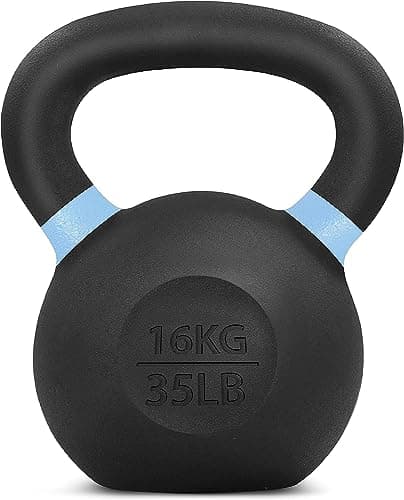
Yes4All — Yes4All Powder Coated Kettlebell (35 lb)
on Amazon