The Best Plyo Boxes for Jumps & Conditioning
A plyo box earns its floor space by training the one quality most home gyms neglect: explosive power. Box jumps, step-ups, box squats, depth drops, and Bulgarian split squats all live on a good box, and the hardware that makes them safe is boring — a wide, dead-stable base that won't tip when you land tired, a genuinely non-slip top, and honest heights that match your actual vertical. We ranked these on build quality, stability under a hard landing, surface grip and safety, the range of heights on offer, and value. Just as important is the material trade-off: 3-in-1 wood boxes are the versatile garage-gym standard, soft foam boxes save your shins on max-effort jumps, and steel boxes are near-indestructible but punish a missed rep. We'll tell you plainly which one fits your training and your budget, and where paying more buys nothing you'll actually use.
Top pick
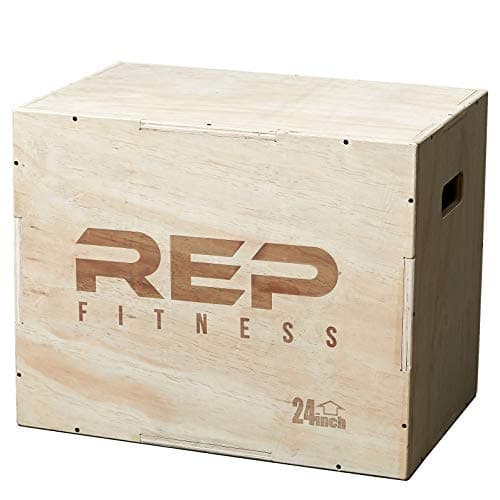
REP Fitness — REP Fitness 3-in-1 Wood Plyo Box (30/24/20)
Plywood 3-in-1 box · three heights (30 / 24 / 20 in) from one unit by flipping it · CrossFit-standard dimensions · notched, bolt-together panels (assembly required) · wide flat non-tip base · high weight capacity for jumps and box squats
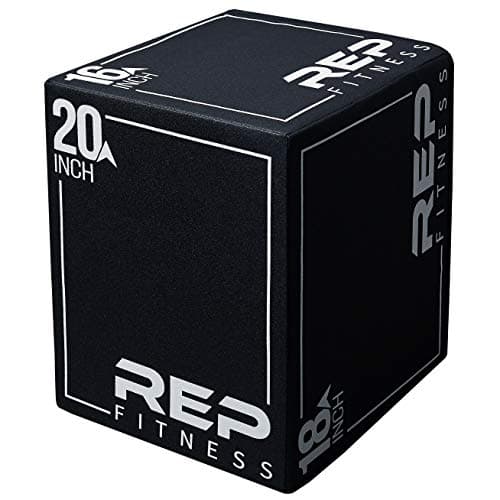
REP Fitness — REP Fitness Soft Plyo Box (20 in, 3-in-1 Foam)
At a glance
Tap a row to check price · tap a header to sort| # | Best for | Price | ||
|---|---|---|---|---|
| 1 | | Best overall | 8.8/10 | $144.99 |
| 2 | | Best soft foam | 8.4/10 | $109.99$126.99 |
| 3 | 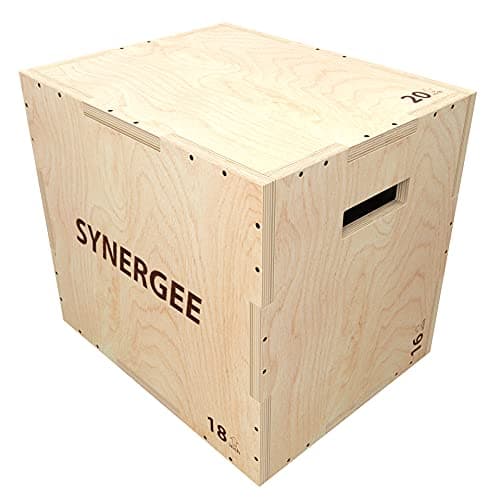 | Best value wood | 8.2/10 | $99.95 |
| 4 | 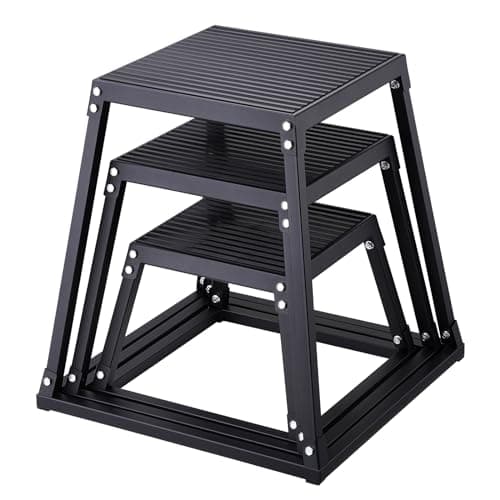 | Best steel | 7.9/10 | $110.00 |
| 5 | 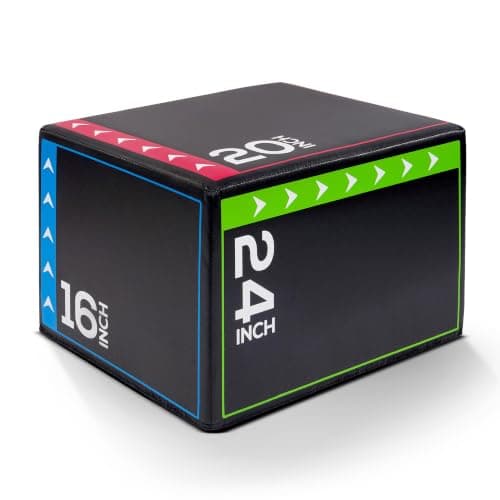 | Best budget soft foam | 7.5/10 | $74.99$99.99 |
| 6 | 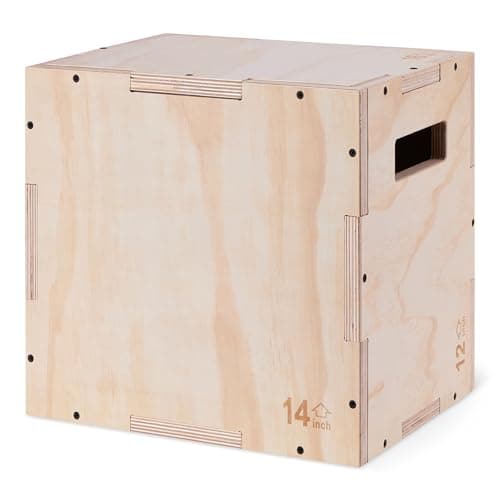 | Best budget overall | 7.3/10 | $35.99 |
Prices pulled from Amazon as of Sep 15, 2026 and are subject to change. The price shown on Amazon at checkout applies.
How we scored
Every product below is scored on six metrics, 0-10 each, with the weighting described on how we review. The criteria specific to this category:
- Stability and base width — a wide, flat, non-tipping base is the single most important safety feature; the box must not rock or slide when you land fatigued or slightly off-center.
- Build quality and weight capacity — plywood joints should be tight and flush (or steel welds clean), rated well above your bodyweight plus landing momentum so nothing flexes or cracks over thousands of reps.
- Surface grip and safety — a genuinely non-slip top and, ideally, forgiving edges; this is where soft foam beats wood and steel, because a missed jump means a bruised shin, not a trip to urgent care.
- Height options — a true 3-in-1 box gives three heights from one unit by flipping it, letting you scale from step-ups to max-effort jumps and progress over time.
- Footprint and portability — a single 3-in-1 box saves floor space over three separate boxes, while heavy steel sets are rock-solid but a pain to move and store.
- Value — durability and versatility per dollar, factoring whether you want one do-everything box or a specialized foam box for high-volume jumping.
What to know before buying
- Wood vs foam vs steel is the real decision. Wood 3-in-1 boxes are the garage-gym default: rigid, stable, three heights in one, and affordable — but the edges are merciless if you catch a shin. Soft foam boxes cost more and can feel slightly less stable at the tallest orientation, but they turn a missed jump into a bruise instead of stitches, which is worth it if you do high-rep box jumps or you're new to them. Steel boxes are nearly indestructible and rock-solid, but they're heavy to move and just as unforgiving as wood on a miss.
- Pick your height honestly. A 24-inch box is the common CrossFit standard for men and 20 inches for women, but that's a competition number, not a starting point. Ego-driven box jumps are how people gash their shins or blow out an Achilles. Start at a height you can land softly on and stand up straight from, and remember that stepping down (not rebounding) saves your knees and Achilles over the long haul. A 3-in-1 box offering 16/20/24 or 20/18/16 covers most trainees; taller athletes may want a 30/24/20.
- 3-in-1 wood and foam boxes almost always require assembly. Budget 20-30 minutes and a drill or socket wrench. A well-made box has tight, flush-fitting panels with no wobble once bolted; cheaper ones can arrive with warped plywood or misaligned holes. Confirm the hardware is included and that the panels lock squarely before you trust the box with a landing, and re-check the bolts periodically — a loose plywood box is how a wobble develops.
- Weight capacity is about momentum, not just standing weight. A 200-lb athlete landing from a jump loads the top far above 200 lb for a split second. Look for boxes rated to 350 lb or more, and don't buy the lightest-duty foam box if you're a heavier lifter doing loaded box squats.
- Match the box to the movement. If you mostly do box squats, step-ups, and box-supported work, a stable wood or steel box at a fixed comfortable height is ideal. If you're chasing conditioning with high-rep jumps, the shin-saving foam box is the smarter — and safer — buy. Plenty of home gyms end up wanting one of each.
Our picks
REP Fitness — REP Fitness 3-in-1 Wood Plyo Box (30/24/20)
Key specs: Plywood 3-in-1 box · three heights (30 / 24 / 20 in) from one unit by flipping it · CrossFit-standard dimensions · notched, bolt-together panels (assembly required) · wide flat non-tip base · high weight capacity for jumps and box squats
Pros
- One box gives three true heights — 20, 24, and 30 inches — by simply turning it over, covering box squats and step-ups through competition-height jumps
- Thick plywood panels with tight, flush-fitting notched joints make a rigid, dead-stable platform that doesn't creak or shift on a hard landing
- 30/24/20 dimensions match the CrossFit competition standard, so your training heights line up with what you'll see in a class or a WOD
- Wide flat base and high weight capacity handle heavier athletes doing box squats and depth drops, and REP's build quality is a clear step above generic import boxes
Cons
- Wood edges are unforgiving — catch a shin on a missed jump and you'll bleed; there's no padding to save you
- Requires assembly with the included hardware, and a poorly torqued box can develop a slight wobble over time if you don't re-check the bolts
- The 30-inch top height is more than many trainees should be jumping, so it's easy to let ego pick a dangerous height
REP Fitness — REP Fitness 3-in-1 Wood Plyo Box (30/24/20)
- Build quality9/10
- Stability9/10
- Surface & safety7/10
- Height range9/10
- Value7/10
REP Fitness — REP Fitness Soft Plyo Box (20 in, 3-in-1 Foam)
Key specs: High-density foam core · durable cover with hook-and-loop closure · 3-in-1 design gives three heights by rotating the box · non-slip bottom · light and forgiving on shins · 20-inch model (other sizes available)
Pros
- Dense foam construction forgives a missed jump — you get a bruise, not a shin full of splinters — which makes high-rep box jumps far less intimidating
- 3-in-1 shape delivers three usable heights from one box by rotating it, so it scales as your jump improves
- Firm enough to jump on without sinking, yet soft enough to be safe for beginners, kids, and anyone rebuilding jump confidence after a shin bang
- Lighter and easier to reposition than wood or steel, and the tough cover with hook-and-loop closure holds its shape through heavy use
Cons
- Costs more than a comparable wood box for the same heights
- Slightly less rock-solid than rigid wood or steel at the tallest orientation — there's a touch of give at the top
- Foam covers can scuff or eventually compress under very heavy, high-volume use, and they don't love being stored outdoors
REP Fitness — REP Fitness Soft Plyo Box (20 in, 3-in-1 Foam)
- Build quality8/10
- Stability8/10
- Surface & safety10/10
- Height range8/10
- Value7/10
Synergee — Synergee 3-in-1 Wood Plyo Box (20/18/16)
Key specs: Plywood 3-in-1 box · three heights (20 / 18 / 16 in) from one unit by flipping it · bolt-together panels (assembly required) · non-slip landing surface · wide flat base · lower height ladder suits beginners and general training
Pros
- 20/18/16 heights are the sweet spot for most home trainees — tall enough to be useful, low enough to land and step down safely
- Solid plywood build with snug joints gives a stable, quiet platform for jumps, step-ups, and box squats
- Noticeably cheaper than premium boxes while keeping genuinely usable build quality
- Three heights in one compact unit is a smart fit for a garage or spare-room gym where floor space is tight
Cons
- Tops out at 20 inches, so advanced athletes chasing competition-height jumps will outgrow it
- Wood edges are just as unforgiving as any other rigid box on a missed rep
- Requires assembly, and finish and quality control sit a step below the premium brands
Synergee — Synergee 3-in-1 Wood Plyo Box (20/18/16)
- Build quality8/10
- Stability8/10
- Surface & safety7/10
- Height range8/10
- Value9/10
VEVOR — VEVOR Steel Plyo Box Set (12/18/24 in)
Key specs: Powder-coated welded steel · set of three boxes (12 / 18 / 24 in) · anti-slip textured top · pre-assembled (no build required) · very high stability and durability · heavier and larger footprint than a single 3-in-1 box
Pros
- Welded steel construction is essentially indestructible — no plywood joints to loosen, no foam to compress
- Arrives pre-assembled, so there's no drill, no bolts, and no chance of a badly built box
- Three separate fixed heights (12, 18, 24 in) let two people train at different heights at once, or you can leave the one you use set up
- Anti-slip top and heavy steel base make for extremely stable, confidence-inspiring landings
Cons
- Steel edges are as brutal as wood on a missed jump — expect a real gash if you come up short
- Three separate boxes eat far more floor space than a single 3-in-1 unit, and each is heavy to move
- Fixed heights mean no fine-tuning between the three sizes, and powder coat can chip where boxes knock together
VEVOR — VEVOR Steel Plyo Box Set (12/18/24 in)
- Build quality8/10
- Stability9/10
- Surface & safety6/10
- Height range8/10
- Value8/10
BalanceFrom — BalanceFrom 3-in-1 Foam Plyometric Jump Box
Key specs: Foam core with wipe-clean vinyl cover · 3-in-1 design gives three heights by rotating the box · non-slip bottom · forgiving landing surface · widely stocked on Amazon · budget-friendly soft box
Pros
- Soft foam build makes missed jumps far less punishing — a smart entry point for beginners learning to jump
- 3-in-1 shape provides three heights from one box, so it grows with your progress
- Priced well below premium foam boxes like REP's while covering the same core use case
- Light and easy to move, store, and reposition, and simple to wipe down after a sweaty session
Cons
- Cover and foam quality sit below premium boxes — expect faster wear under very heavy, high-volume use
- Can feel a little less stable at the tallest orientation than a rigid box
- Weight capacity is lower than wood or steel, so heavier lifters doing box squats should size up carefully
BalanceFrom — BalanceFrom 3-in-1 Foam Plyometric Jump Box
- Build quality7/10
- Stability7/10
- Surface & safety9/10
- Height range8/10
- Value8/10
Amazon Basics — Amazon Basics 3-in-1 Wooden Plyo Box (16/14/12)
Key specs: Plywood 3-in-1 box · three heights (16 / 14 / 12 in) from one unit by flipping it · non-slip surface · 450 lb weight capacity · easy assembly · very low price point
Pros
- About as cheap as a real wood plyo box gets, making it an easy first box for step-ups, box squats, and low jumps
- Rated to 450 lb, so the basic structure comfortably handles heavier trainees for step-ups and supported work
- Lower 16/14/12 heights are genuinely useful for beginners, seniors, and glute or step-up work where a 24-inch box is overkill
- Simple assembly and easy to restock through Amazon
Cons
- Tops out at 16 inches — too low for athletes who want real box-jump height
- Wood edges are unforgiving, and the budget finish can ship with minor roughness or a slightly loose fit
- Not a do-everything box; it's a low-height specialist, so taller trainees will need to size up
Amazon Basics — Amazon Basics 3-in-1 Wooden Plyo Box (16/14/12)
- Build quality7/10
- Stability8/10
- Surface & safety7/10
- Height range6/10
- Value9/10
Frequently asked questions
Start lower than your ego wants. The right box is one you can land on softly, in a quarter-squat, and stand up straight from — for many beginners that's 12-20 inches, not the 24-inch competition standard. Box height should track your ability to land quietly and under control, not your max effort. A 3-in-1 box offering something like 16/20/24 or 20/18/16 lets you begin low and progress as your jump and landing mechanics improve. If you can't land softly and stand tall, the box is too high.
Sources
- Plyometric Training: Program Design, Landing Mechanics, and Progression — National Strength and Conditioning Association (NSCA), 2026
- Box Jump Technique and Why to Step Down Instead of Jumping Down — American Council on Exercise (ACE), 2026
- Best Plyo Boxes Tested — Wood, Foam, and Steel Compared — BarBend, 2026
- Box Jump Movement Standard (24-inch men / 20-inch women) — CrossFit, 2026
Last verified: August 1, 2026. See our editorial policy and how we review for details on scoring and update cadence. Canonical URL: https://trustedhealthgear.com/reviews/best-plyo-box.
REP Fitness — REP Fitness 3-in-1 Wood Plyo Box (30/24/20)
$144.99 · on Amazon