Ab Roller vs Ab Mat: Which Core Tool Do You Actually Need?
The ab roller and the ab mat get lumped together as 'ab gear,' but they solve opposite problems, which is why plenty of home gyms own both. An ab roller — the wheel with two handles — is a rollout tool. You kneel, grip the handles, and roll the wheel out in front of you while fighting to keep your torso from sagging; that makes it an anti-extension exercise that trains the front of your core hard. It's cheap, brutally effective, and endlessly progressive, but it's genuinely tough for beginners and can strain your lower back if your form breaks down. An ab mat is a contoured foam pad you sit on for sit-ups and crunches. Its shape supports the natural curve of your lower back and lets your torso travel through a fuller range of flexion than crunching on a flat floor, so it's really a positioning and comfort aid for flexion-based ab work — not a strength tool on its own. In short: the wheel builds hard anti-extension strength, the mat makes higher-rep flexion work more comfortable, and because both are inexpensive, owning the pair is a reasonable call.
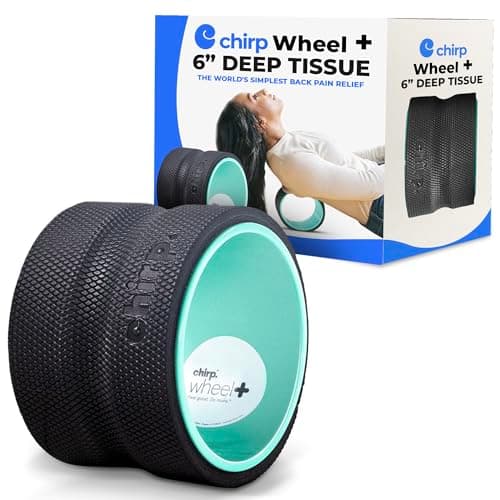
Chirp — Chirp Wheel+ (Back Roller Wheel)
BalanceFrom — BalanceFrom High-Density Gym Equipment Mat (3ft x 6.5ft)
The verdict
Buy the ab roller if you want a cheap tool that seriously challenges your core: the rollout trains anti-extension strength in a way few exercises match, it scales from kneeling partial reps to brutal standing versions, and it costs almost nothing. Just respect the learning curve and protect your lower back by starting conservatively. Buy the ab mat if your ab work is built around sit-ups and crunches and you want that work to be more comfortable and hit a fuller range of motion — it supports your lumbar curve and takes the edge off grinding your spine into a hard floor. They aren't really rivals: one adds difficulty, the other adds comfort and range to a different movement pattern. Since both are inexpensive, many people simply own both and use each for what it's good at. If you can only pick one, choose by goal — strength points to the wheel, comfortable high-rep flexion points to the mat.
Side-by-side
| Attribute | Ab Roller (Ab Wheel) | Ab Mat |
|---|---|---|
| Best for | Hard anti-extension core strength | Comfortable, fuller-range sit-ups and crunches |
| What it is | A wheel with two handles you roll out and back | A contoured foam pad you sit on for flexion work |
| Movement pattern | Anti-extension — resisting your torso from over-arching | Trunk flexion — supporting sit-ups and crunches |
| Difficulty | High — tough even for many experienced lifters | Low — it's a positioning aid, not a strength tool |
| Beginner-friendly | Not really — needs progressions and solid form | Very — easy and comfortable from day one |
| Progression | Highly progressive — kneeling to standing rollouts | Limited — adds comfort and range, not resistance |
| Lower-back demand | Can strain the low back if form breaks down | Supports the lumbar curve during flexion work |
| Price | Cheap | Cheap |
Who should pick which
Pick Ab Roller (Ab Wheel)
- Lifters who want a cheap, seriously challenging core tool and are ready to train hard anti-extension strength.
- Intermediate and advanced trainees looking for a progressive movement that scales from kneeling reps to standing rollouts.
- Home gym owners who want the most core-strength stimulus per dollar in the smallest possible package.
Pick Ab Mat
- Anyone whose ab routine centers on sit-ups and crunches and wants those reps to be more comfortable through a fuller range of motion.
- People who find crunching on a hard floor rough on the tailbone or lower back and want a pad that supports the lumbar curve.
- Beginners easing into flexion-based ab work who want a comfortable, low-intensity positioning aid rather than a demanding strength tool.
Two tools, two totally different jobs
The single most useful thing to understand is that these aren't competing versions of the same product — they train different movements. The ab roller works anti-extension: as you roll the wheel away from your body, gravity tries to pull your hips and lower back into an arch, and your core has to fight to stop that from happening. Resisting that arch, under load, is what builds the deep front-core strength the rollout is famous for. The ab mat works the opposite pattern. It's built for trunk flexion — the crunching, sit-up motion where you curl your ribcage toward your hips — and its contoured shape simply makes that movement more comfortable and lets you move through a longer range than you can on a flat floor. So one tool resists motion at your spine and the other supports motion at your spine. Because they sit on opposite sides of that line, comparing them as if one is 'better' misses the point; the honest question is which movement pattern you're trying to train.
The ab roller: cheap, brutal, and hard to fake
The ab wheel's reputation is earned. It costs almost nothing, packs into a drawer, and yet it's one of the most demanding core tools you can own — there's no momentum to hide behind, because the moment your midsection stops working, your form collapses and you feel it. It's also genuinely progressive: beginners start with short kneeling rollouts or roll toward a wall to limit the range, and as they get stronger they extend the distance, then eventually work toward brutal standing rollouts that challenge advanced lifters. That combination of low cost and high ceiling is why coaches keep recommending it. The catch is the flip side of its strength: because it loads your core in a lengthened, extended position, poor form — letting your hips sag and your lower back over-arch — can put real strain on the lumbar spine. It rewards control and punishes ego. Used with good form and sensible progression, it's a superb strength tool; rushed or overreached, it's an easy way to tweak your back.
The ab mat: a positioning aid, not a strength tool
The ab mat is a much humbler piece of gear, and it's important to be clear about what it does. It doesn't add resistance or make your core work harder by itself — it's a contoured foam pad that changes the geometry of a sit-up or crunch. Sitting on it, the wedge supports the natural curve of your lower back and lets your torso extend slightly before you curl up, so each rep travels through a fuller range of flexion than a crunch performed flat on the floor. For a lot of people it also just feels better: it takes the pressure off the tailbone and spine that makes floor crunches unpleasant, which in practice means you'll do the work more willingly and with better positioning. But don't mistake comfort and range for strength. On its own, an ab mat won't build a powerful core the way loaded, progressive training will — it's an aid that makes flexion-based ab work more comfortable and complete, not a training stimulus in its own right.
Form, safety, and the lower back
Both tools reward paying attention to your lower back, from opposite directions. With the ab roller, the danger is letting your hips drop and your lumbar spine over-arch as you extend — the fix is to brace your midsection hard, tuck your pelvis slightly, and only roll out as far as you can while keeping that position, shortening the range if you can't. A useful rule of thumb people use is that if you can't yet hold a solid plank, you're probably not ready for full rollouts. The ab mat's job is partly to support the lumbar curve during flexion, but heavy, high-volume sit-ups aren't for everyone either. None of this is medical advice: if you have a history of back issues or any current pain, talk to a qualified coach or a healthcare professional and start conservatively rather than diving into either tool at full intensity. Progress gradually, keep your form honest, and stop a set the moment your technique breaks down.
Why many home gyms own both
Because these tools do different jobs and both are cheap, the practical answer for a lot of people isn't to choose — it's to own both and use each for what it's good at. The ab wheel becomes your hard, progressive anti-extension exercise, the thing you reach for when you want to actually build core strength and have something to work toward over months. The ab mat becomes the comfort upgrade for your sit-ups and crunches, letting you rack up higher-rep flexion work without beating up your tailbone. Together they cover both sides of core training — resisting movement and producing it — for roughly the price of a couple of coffees. If your budget or space truly only allows one, let your goal decide: pick the wheel if you're chasing core strength and don't mind the learning curve, and pick the mat if your training already revolves around sit-ups and you mainly want them to be more comfortable and complete.
Frequently asked questions
They train opposite movements. An ab roller is a wheel with handles that you roll out and back, which forces your core to resist your torso arching — an anti-extension exercise that builds serious front-core strength. An ab mat is a contoured foam pad you sit on for sit-ups and crunches; it supports your lower-back curve and lets you move through a fuller range of flexion, but it's a comfort and positioning aid, not a strength tool on its own. In short, the wheel makes core work harder, while the mat makes flexion-based ab work more comfortable.
Related reading
Sources
- American Council on Exercise (ACE)-sponsored study: best and worst abdominal exercises, ranked by EMG muscle activation — American Council on Exercise (ACE)
- The Benefits of Ab Rollouts and Progressions to Perform Them (anti-extension training, lower-back cautions, and how to progress the ab wheel) — BarBend
- Want a stronger core — skip the sit-ups (why crunches and sit-ups target only part of the core, and how core training works) — Harvard Health Publishing
- How to Do Crunches: Proper Form, Variations, and Benefits (trunk-flexion mechanics behind sit-ups and crunches) — BarBend
Chirp — Chirp Wheel+ (Back Roller Wheel)
$27.99 · on Amazon