Do Probiotics Actually Work?
For one specific job, yes, and the numbers are good: starting Lactobacillus rhamnosus GG or Saccharomyces boulardii within two days of your first antibiotic dose reduces the risk of antibiotic-associated diarrhea. In a meta-analysis of 21 randomized trials covering 4,780 people, S. boulardii cut the rate in adults from 17.4% to 8.2%. For most of what the category is actually sold for — daily gut maintenance in a healthy person, bloating, immunity, weight — the honest answer is much weaker. The American Gastroenterological Association's 2020 guideline found insufficient evidence to recommend probiotics for Crohn's disease, ulcerative colitis, irritable bowel syndrome or the treatment of C. difficile infection, and went further than most guidelines do: it suggested that patients taking probiotics for those conditions consider stopping, because there are costs and not enough evidence of benefit. The NIH Office of Dietary Supplements states there are no formal recommendations for or against probiotics in healthy people. Two things make this category genuinely hard to shop: effects are strain-specific, so a result for one named strain tells you nothing about another product, and US labeling rules only require the total weight of microorganisms — which can include dead ones — rather than a viable count at the end of shelf life. Buy a probiotic for a named reason with a named strain, or buy fiber instead.
Affiliate disclosure: Trusted Health Gear is an Amazon Associate. If you buy through links on this page, we may earn a commission at no extra cost to you. Commission does not influence our rankings. Full policy.
Why the question is so hard to answer in one sentence
'Probiotic' is not a drug, an ingredient, or even a mechanism — it is a category label covering hundreds of different organisms sold for dozens of different purposes, and the evidence is specific to the organism rather than the label. The NIH Office of Dietary Supplements is explicit about why that matters: some probiotic mechanisms are nonspecific and shared broadly, while others, including cytokine production, specific immunomodulatory activities and effects on the endocrine and nervous systems, are expressed in a strain-specific manner. ODS's conclusion is that recommendations for clinical use need to be strain-specific, and that researchers should account for strain when pooling data to avoid misleading conclusions about efficacy. Translated into shopping terms: a trial showing Lactobacillus rhamnosus GG reduced diarrhea during antibiotics is not evidence that a 50-billion-CFU, twelve-strain 'advanced gut formula' does anything at all. It is not even evidence about a different Lactobacillus. This is the single most important thing to understand about the aisle, and it is the reason a blanket yes or no to 'do probiotics work' is the wrong shape of answer. What follows is the split: where the evidence is strong enough to buy on, where it is modest, and where a gastroenterology guideline has told people to stop.
Where they clearly work: diarrhea while you're on antibiotics
This is the strongest case in the category and it is genuinely strong. Antibiotics reduce microbial diversity, and up to 30% of patients who take them experience antibiotic-associated diarrhea. Meta-analyses indicate that a few specific species and strains might reduce that risk by about 51%, and two organisms carry most of the evidence. For Saccharomyces boulardii — a yeast, not a bacterium — a systematic review and meta-analysis of 21 randomized trials in 4,780 adults and children found the rate of antibiotic-associated diarrhea fell from 17.4% to 8.2% in adults and from 20.9% to 8.8% in children versus placebo or no treatment, with no clear dose-dependent effect across the doses tested. For Lactobacillus rhamnosus GG, a review of 12 randomized trials in 1,499 children and adults found the risk dropped from 22.4% to 12.3% overall — though when the 445 children and 1,052 adults were analyzed separately, the difference was only statistically significant in the children, where 1 to 2 x 10^10 CFU a day reduced risk by 71%. Three practical details come straight out of this literature. Timing matters: starting within two days of the first antibiotic dose is more effective than starting later. Age matters: the benefit has been observed in children and adults aged 18 to 64, but not in adults 65 and older. And more strains is not better — there is no evidence that benefits are greater when more than one probiotic strain is used, which is worth remembering the next time a label advertises twenty-four of them. The 2023 ESPGHAN position paper on probiotics recommends 5 x 10^9 CFU a day or more of either LGG or S. boulardii, started simultaneously with antibiotics, for children with risk factors for antibiotic-associated diarrhea. The AGA's 2020 guideline separately suggests S. boulardii or specific probiotic combinations over no probiotic for preventing C. difficile infection in adults and children on antibiotic treatment.
Where they modestly work: IBS, and mild ulcerative colitis
Here the signal is real but small, and the study quality is the limiting factor rather than the effect direction. On irritable bowel syndrome, most meta-analyses find a positive but modest benefit. One pooled 23 randomized trials in 2,575 patients and found probiotics reduced the risk that IBS symptoms would persist or fail to improve by 21%, with beneficial effects on global symptoms, abdominal pain, bloating and flatulence scores — but the authors rated the quality of the underlying studies as low. A second, in 15 trials and 1,793 patients, found reduced overall symptom severity and abdominal pain compared with placebo after 8 to 10 weeks of therapy. A more recent systematic review of 35 trials covering 3,406 adults is the one that best captures the state of play: a statistically significant reduction in global symptoms appeared in only 14 of 29 trials, and a clinically meaningful reduction in abdominal pain in only 8 of 34, with most of the positive results coming from multi-strain products. There is also evidence that which symptom you have determines which organism might help — in a meta-analysis of 10 trials in 877 adults, products containing Bifidobacterium breve, Bifidobacterium longum or Lactobacillus acidophilus produced lower pain scores, while several other species including Bifidobacterium animalis, Lactobacillus casei, Lactobacillus plantarum and S. boulardii had no significant effect on pain. On inflammatory bowel disease the picture splits cleanly: across multiple reviews, certain probiotics may have modestly beneficial effects on ulcerative colitis but not on Crohn's disease. The AGA's 2020 systematic review found no evidence that probiotics help induce or maintain remission in 689 children and adults with Crohn's disease, and could not draw conclusions for severe ulcerative colitis, though there is some evidence of a modest reduction in disease activity in mild-to-moderate ulcerative colitis when added to conventional therapy. The British Society of Gastroenterology's read was that probiotics may be modestly beneficial in ulcerative colitis but should not be routinely used.
Where the guideline says to stop
The AGA's 2020 clinical practice guideline is unusual among guidelines in giving negative advice rather than just withholding positive advice, and that is worth reading literally. It found insufficient evidence to make recommendations on using probiotics to treat C. difficile infection, Crohn's disease, ulcerative colitis or IBS, and for those conditions it suggested patients consider stopping — the reasoning being that probiotics carry real costs and the evidence is not sufficient to establish benefit. It also recommends using probiotics in adults and children with ulcerative colitis or Crohn's disease only in the context of a clinical trial. On children with acute gastroenteritis, the guidance is a clear negative for the North American setting: probiotics do not appear to be beneficial and should not be routinely given to children presenting to the emergency room with diarrhea. The one place the guideline is affirmative outside antibiotic-associated diarrhea is in preterm, low-birth-weight infants, where specific combinations of Lactobacillus and Bifidobacterium strains reduced mortality, severe necrotizing enterocolitis, days to full feeds and hospital stay — and even that comes with a serious caveat, because the FDA issued a 2023 news release warning that administering probiotics to preterm infants may cause infection or invasive and potentially fatal disease, citing one infant death and more than two dozen other adverse events. Everything else the category is marketed for is weaker still. On body weight, the trials point in multiple directions: one meta-analysis of 15 trials in 957 adults with overweight or obesity found reductions of 0.6 kg in body weight and 0.27 kg/m² in BMI over 3 to 12 weeks, another found 0.54 kg in adults, and another found only a 0.82 cm reduction in waist circumference with no effect on weight or BMI at low-to-moderate quality. Those are rounding errors dressed up as a mechanism. And for healthy people taking a daily capsule as general maintenance — by far the most common use — ODS states there are currently no formal recommendations for or against the use of probiotics in healthy people. That is not a hidden endorsement. It is an absence of evidence.
The colonization problem, and the one finding that should give you pause
Two 2018 papers published together in Cell complicated the whole premise of the category, and they are worth knowing about because neither appears on any label. In the first, researchers gave an 11-strain probiotic combination or placebo to healthy volunteers and then looked directly at the gut lining with endoscopy rather than inferring from stool. The probiotics survived gastrointestinal passage alive, but colonization of the gut mucosa was person-, region- and strain-specific, predictable from baseline host and microbiome features, and — importantly for anyone who has taken a stool test — indistinguishable by whether the probiotic showed up in stool. The impact on the mucosal community was transient and individualized. The authors' conclusion was that empiric probiotic supplementation may be limited in universally and persistently affecting the gut mucosa. In other words, 'it showed up in my stool' does not mean it took up residence, and whether it does anything to your gut lining depends on the gut lining you started with. The second paper is the one that should actually change behavior. Researchers compared what happened after a course of antibiotics in people given a multi-strain probiotic versus people given their own banked stool back (autologous fecal transplant) versus people left to recover on their own. Antibiotics did make the gut more colonizable by the probiotic — but compared with spontaneous recovery, the probiotic produced a markedly delayed and persistently incomplete return of the native microbiome and host gene expression toward normal, while the autologous transplant restored it rapidly and nearly completely within days. In vitro, soluble factors secreted by Lactobacillus contributed to the inhibition. Hold two things at once here, because the honest reading is genuinely mixed: this is one study, in a small number of people, measuring microbiome reconstitution rather than whether anyone felt worse, and it sits alongside solid clinical trial evidence that the same class of product prevents diarrhea during antibiotics. Our read is that it argues for a short, targeted course with a named strain for a named reason, and against the habit of taking a broad-spectrum capsule indefinitely because it seems generally healthy.
If you're going to buy one, what to look for
Five criteria, in order of how much they change what you get. First, a named strain, not a species. 'Lactobacillus rhamnosus GG' and 'Saccharomyces boulardii CNCM I-745' are strains with trials attached; 'Lactobacillus blend' is not. If the product will not tell you which strain it contains, it has nothing to show you. Second, CFU at the end of shelf life rather than at time of manufacture. This matters more than it sounds: US labeling regulations only require manufacturers to list the total weight of microorganisms on the Supplement Facts panel, that mass can include both live and dead organisms, and therefore it has no relationship to the number of viable organisms in the product. ODS's advice is to look specifically for a count guaranteed at the end of shelf life — manufacturers may list CFU voluntarily, and the ones that do are telling you something. Third, a dose in the range the trials used. For antibiotic-associated diarrhea that is roughly 5 x 10^9 CFU a day or more, which makes the common 1-billion products underdosed and the 100-billion products a number chasing a number. Fourth, a match between the product and your actual reason for buying it — a yeast-based S. boulardii product for antibiotic cover is a different purchase from a multi-strain product for IBS symptoms, and neither is a general wellness capsule. Fifth, strain count treated as neutral rather than a feature: there is no evidence that multi-strain beats single-strain for antibiotic-associated diarrhea, though multi-strain products did produce most of the positive IBS results. On safety, the record in healthy people is reassuring — common probiotics such as Bifidobacterium and members of the Lactobacillaceae family are unlikely to cause harm, and side effects are usually minor and self-limited, mostly gas. The exception is serious and specific: probiotic use has been linked to cases of bacteremia, fungemia and severe infection, almost entirely in people who were severely ill or immunocompromised. If that describes you or someone you are buying for, this is a doctor's decision, not a shelf decision.
What we'd actually buy
Every pick below is already reviewed and scored in our roundups — same products, same specs, with live Amazon prices.
| Attribute | Culturelle Culturelle Digestive DailyOur pick | Florastor Florastor Daily Probiotic | Seed Daily Synbiotic (DS-01) | Metamucil Metamucil Psyllium Husk Fiber (Powder) |
|---|---|---|---|---|
| Best for | Best evidence for single-strain use | Best yeast-based probiotic (antibiotic support) | Best overall for research transparency | Best overall — the most-studied psyllium, in a scalable powder |
| Who it's for | The single-strain purchase with the best trial record: Lactobacillus rhamnosus GG at 10 billion CFU, which clears the 5 x 10^9 threshold the antibiotic-diarrhea literature used. Start it within two days of your first antibiotic dose. | The other organism with real antibiotic-cover evidence, and a yeast rather than a bacterium — Saccharomyces boulardii CNCM I-745, the named strain from the trials that cut adult rates from 17.4% to 8.2%. | If you want a multi-strain daily product anyway, buy one that solves the labeling problem: 24 named strains at a count guaranteed at end of shelf life rather than at manufacture. Expensive, and the daily-maintenance case is still the weakest in this guide. | The honest alternative if your actual goal is regularity and a better-fed microbiome: psyllium is the most-studied fiber on the shelf, costs a fraction of a probiotic subscription, and does not depend on anything colonizing you. |
| Key specs | Lactobacillus rhamnosus GG, 10 billion CFU, 30-count | Saccharomyces boulardii CNCM I-745, 250mg, 50-count capsules | 24 named strains, 53.6 billion AFU end-of-shelf-life, 2-in-1 capsule with inner prebiotic coating, 30-day subscription | Psyllium husk soluble fiber powder · scalable dosing by the teaspoon · flavored and sugar-free options · the psyllium brand behind much of the clinical research · mixes into water |
| Our score | 8.7/10 | 7.8/10 | 8.5/10 | 8.6/10 |
| Where to buy |
Prices pulled from Amazon as of October 18, 2026 and are subject to change. The price shown on Amazon at checkout applies.
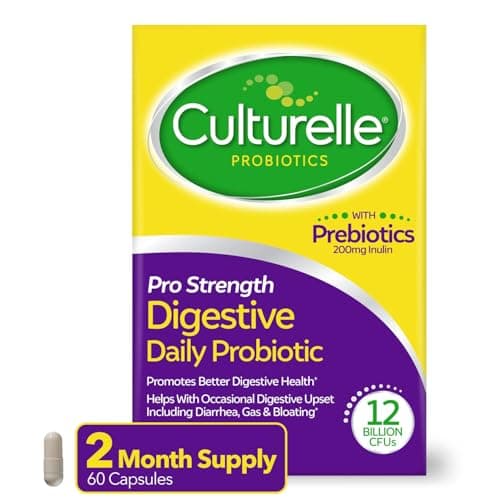
Culturelle — Culturelle Digestive Daily
The single-strain purchase with the best trial record: Lactobacillus rhamnosus GG at 10 billion CFU, which clears the 5 x 10^9 threshold the antibiotic-diarrhea literature used. Start it within two days of your first antibiotic dose.
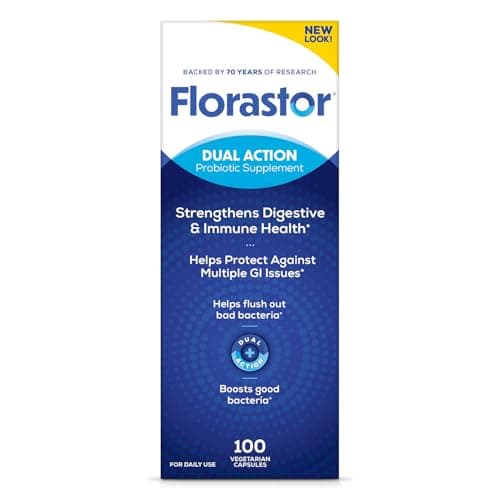
Florastor — Florastor Daily Probiotic
The other organism with real antibiotic-cover evidence, and a yeast rather than a bacterium — Saccharomyces boulardii CNCM I-745, the named strain from the trials that cut adult rates from 17.4% to 8.2%.
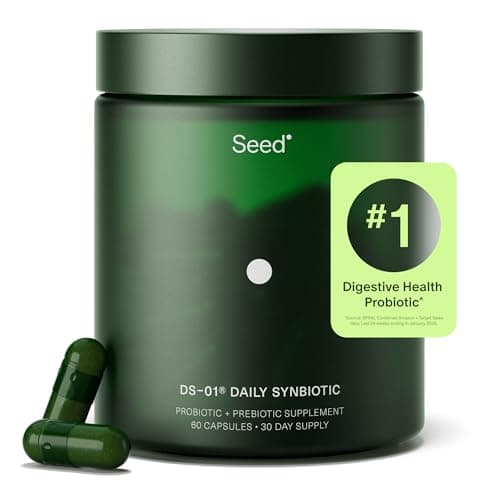
Seed — Daily Synbiotic (DS-01)
If you want a multi-strain daily product anyway, buy one that solves the labeling problem: 24 named strains at a count guaranteed at end of shelf life rather than at manufacture. Expensive, and the daily-maintenance case is still the weakest in this guide.
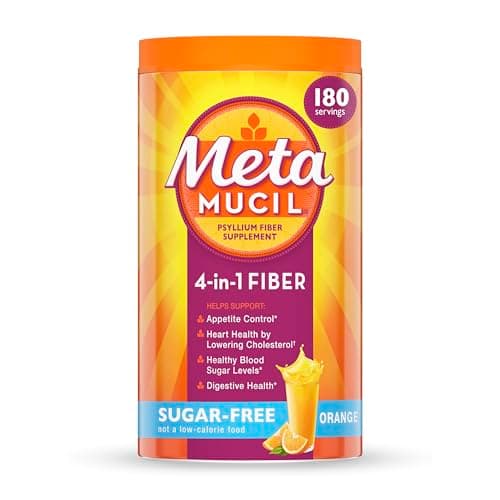
Metamucil — Metamucil Psyllium Husk Fiber (Powder)
The honest alternative if your actual goal is regularity and a better-fed microbiome: psyllium is the most-studied fiber on the shelf, costs a fraction of a probiotic subscription, and does not depend on anything colonizing you.
Bottom line
Probiotics work the way a specific drug works for a specific indication, not the way a vitamin works as general insurance — and the category is priced and marketed as the second thing. If you are starting a course of antibiotics, LGG or S. boulardii begun within two days of the first dose at 5 billion CFU or more is a well-evidenced, cheap, short-term purchase, and we would make it. If you have diagnosed IBS, a multi-strain product run honestly for 8 to 10 weeks is a reasonable experiment with a modest expected payoff and low-quality evidence behind it. If you have Crohn's disease, ulcerative colitis or a C. difficile infection, the gastroenterology guideline that reviewed this literature told patients to consider stopping, and that advice deserves more weight than a label. And if you are a healthy person buying a daily capsule because gut health is good — which is most of this market — there is no formal recommendation either way, the colonization research suggests the effect on your gut lining is transient and individual, and your money does more in the produce aisle. That is the position we would defend: the thing with the best evidence for a healthier gut is not a bacterium in a capsule, it is enough fiber from real food, and most Americans eat about 15 g a day against targets of 25 to 38 g. Fix that first. Then buy a probiotic when you have a named reason to.
Frequently asked questions
For a narrow set of jobs, yes, with specific named strains. The best-evidenced use is preventing antibiotic-associated diarrhea: a meta-analysis of 21 randomized trials in 4,780 people found Saccharomyces boulardii reduced the rate in adults from 17.4% to 8.2% and in children from 20.9% to 8.8%, and a review of 12 trials in 1,499 people found Lactobacillus rhamnosus GG reduced it from 22.4% to 12.3%, with the effect strongest in children. Starting within two days of the first antibiotic dose works better than starting later, and the benefit has been seen in children and adults aged 18 to 64 but not in adults 65 and older. For irritable bowel syndrome the effect is real but modest and the trial quality is low. For most other uses — including daily use by healthy people — the evidence does not support the marketing, and the NIH Office of Dietary Supplements states there are no formal recommendations for or against probiotics in healthy people. The category's results are strain-specific, so a trial on one named strain is not evidence for a different product.
Related reading
Sources
- Probiotics — Fact Sheet for Health Professionals (effects expressed in a strain-specific manner, so clinical recommendations need to be strain-specific; up to 30% of patients who use antibiotics experience antibiotic-associated diarrhea, and meta-analyses indicate certain strains might reduce that risk by 51%, with benefit in children and adults 18-64 but not adults 65+; LGG review of 12 RCTs in 1,499 people, AAD 22.4% to 12.3%, significant only in children when analyzed separately, 1-2 x 10^10 CFU/day reducing risk 71% in children; S. boulardii review of 21 RCTs in 4,780 people, adults 17.4% to 8.2% and children 20.9% to 8.8%, no clear dose-dependence; starting within 2 days of the first antibiotic dose more effective, and no evidence that more than one strain is better; ESPGHAN 2023 recommends 5 x 10^9 CFU/day or more of LGG or S. boulardii started simultaneously with antibiotics in at-risk children; IBS meta-analyses of 23 RCTs/2,575 patients, 15 RCTs/1,793 patients and 35 RCTs/3,406 adults; AGA 2020 review of 12 trials/689 Crohn's and 17 trials/1,673 ulcerative colitis patients; obesity trials showing 0.6 kg / 0.27 kg/m2, 0.54 kg, and 0.82 cm waist with no weight effect; labeling regulations require only total microorganism weight, which can include dead organisms and has no relationship to viable count, so look for CFU at end of shelf life; probiotics may only transiently colonize the gut mucosa in highly individualized patterns; no formal recommendations for or against probiotics in healthy people; linked cases of bacteremia, fungemia and severe infection mostly in severely ill or immunocompromised individuals; FDA 2023 warning on preterm infants citing one death and more than two dozen adverse events) — NIH Office of Dietary Supplements, 2026
- AGA Clinical Practice Guidelines on the Role of Probiotics in the Management of Gastrointestinal Disorders (insufficient evidence for treating C. difficile infection, Crohn's disease, ulcerative colitis or IBS, with the suggestion that patients consider stopping; probiotics in ulcerative colitis or Crohn's only in the context of a clinical trial; S. boulardii or specific combinations suggested for prevention of C. difficile infection in adults and children on antibiotics; specific Lactobacillus and Bifidobacterium combinations in preterm, low-birth-weight infants; probiotics should not be routinely given to children in North America with acute gastroenteritis) — Gastroenterology, 159(2):697-705 — American Gastroenterological Association, 2020
- Personalized Gut Mucosal Colonization Resistance to Empiric Probiotics Is Associated with Unique Host and Microbiome Features (11-strain probiotic combination versus placebo with sequential invasive multi-omics sampling; probiotics remained viable through gastrointestinal passage; humans showed person-, region- and strain-specific mucosal colonization patterns predicted by baseline host and microbiome features but indistinguishable by probiotic presence in stool; transient, individualized impact on mucosal community structure and gut transcriptome; authors conclude empiric probiotic supplementation may be limited in universally and persistently impacting the gut mucosa) — Cell, 174(6):1388-1405, 2018
- Post-Antibiotic Gut Mucosal Microbiome Reconstitution Is Impaired by Probiotics and Improved by Autologous FMT (antibiotic perturbation enhanced probiotic colonization in the human mucosa; compared with spontaneous post-antibiotic recovery, probiotics induced a markedly delayed and persistently incomplete indigenous stool and mucosal microbiome reconstitution and host transcriptome recovery, while autologous fecal microbiome transplantation induced rapid and near-complete recovery within days; in vitro, Lactobacillus-secreted soluble factors contributed to probiotics-induced microbiome inhibition) — Cell, 174(6):1406-1423, 2018
- AGA Technical Review on the Role of Probiotics in the Management of Gastrointestinal Disorders (the systematic review underlying the 2020 guideline, including the 63-trial analysis in 15,712 preterm infants and the Crohn's disease and ulcerative colitis trial sets) — Gastroenterology — American Gastroenterological Association, 2020
- Dietary fiber intake recommendations (about 25 g/day for adult women and 38 g/day for adult men, or roughly 14 g per 1,000 calories, against average US intake of about 15 g/day) — the figures and sources behind our fiber targets are set out in full on our fiber guide — USDA / HHS Dietary Guidelines for Americans, via Trusted Health Gear, 2026
- Product titles, named strains, CFU or AFU counts, shelf-life labeling, live prices and availability for the probiotic and fiber products referenced — retrieved via the Amazon product data layer — Amazon product listing data, 2026
Culturelle — Culturelle Digestive Daily
$26.93 · on Amazon