The Best Natural Vitamin C Supplements — and the Claim You Should Stop Paying For
The verdict first, because it is not the one the category wants: if you specifically want vitamin C that came out of a fruit rather than a fermenter, the pick is Peak Performance Raw Whole Food Vitamin C from acerola cherry — the only genuinely whole-food-derived option we stock, vegan, US-sourced and short-labeled. But the reason it sits second on this page rather than first is that the premium buys you sourcing, not absorption. The NIH's own fact sheet states that supplemental ascorbic acid is bioequivalent to the ascorbic acid naturally occurring in foods, and that no bioavailability difference was found among plain ascorbic acid, Ester-C and ascorbic acid with bioflavonoids. Natural and synthetic vitamin C are the same molecule, and your gut cannot tell them apart. So the pick for most people is Thorne Vitamin C with citrus bioflavonoids: 500 mg, third-party certified, from the brand with the most rigorous testing program in supplements — because once absorption is off the table, the thing worth paying for is somebody independent having checked what is in the capsule. If your budget is the deciding factor, the Nature Made 500 mg tablet does the identical physiological job for pennies a day. That is the shape of this whole category. Vitamin C is cheap, it is chemically simple, and it saturates: NIH puts absorption at 70-90% at moderate intakes of 30-180 mg a day, falling below 50% once a single dose goes past about 1,000 mg, with the excess excreted in urine. Which means every claim that sells you a bigger number — liposomal 1,700 mg, maximum-strength gummies, fat-soluble vitamin C — is selling you the fraction your kidneys throw away. The one thing a whole-food source does give you that a tablet does not is the rest of the fruit, and our honest position is that half a cup of raw red pepper carries about 95 mg of vitamin C, a medium orange about 70 mg, and both come with fiber and potassium attached. Food first; supplement to cover the gap. Below are five options ranked on third-party testing, dose sanity, label honesty and live price, with the two picks we think the rubric exists to catch included so you can see why.
Top pick
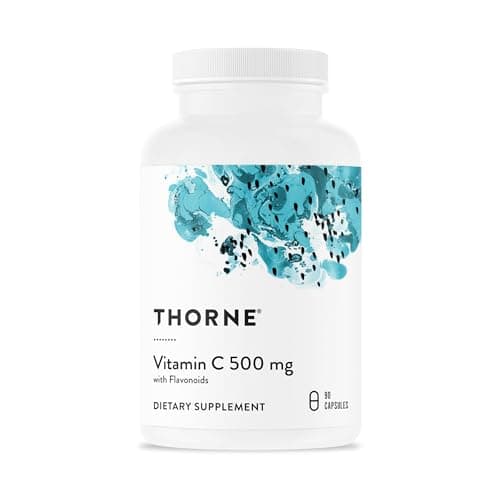
Thorne — Vitamin C 500 mg with Citrus Bioflavonoids (90 servings)
Vitamin C 500 mg with citrus bioflavonoids from oranges, capsule, 90 servings, third-party certified
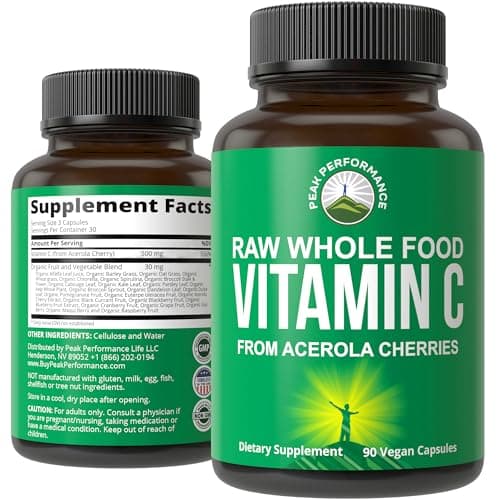
Peak Performance — Raw Whole Food Vitamin C from Acerola Cherry (90 capsules)
At a glance
Tap a row to check price · tap a header to sort| # | Best for | Price | ||
|---|---|---|---|---|
| 1 | 1. Thorne — Vitamin C 500 mg with Citrus Bioflavonoids (90 servings)Best overall | Best overall | 8.4/10 | |
| 2 | 2. Peak Performance — Raw Whole Food Vitamin C from Acerola Cherry (90 capsules)Best whole-food-derived | Best whole-food-derived | 6.8/10 | |
| 3 | 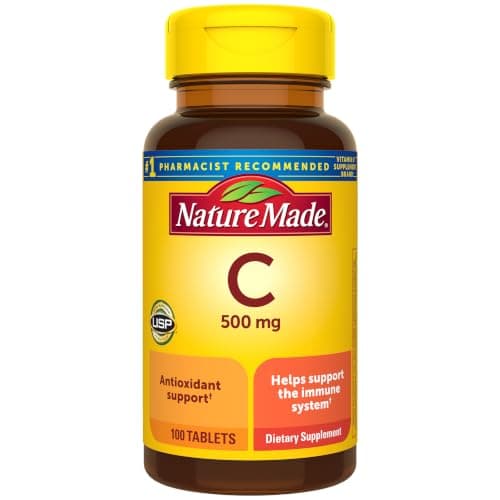 3. Nature Made — Vitamin C 500 mg Tablets (100 count)Best value | Best value | 8.1/10 | |
| 4 | 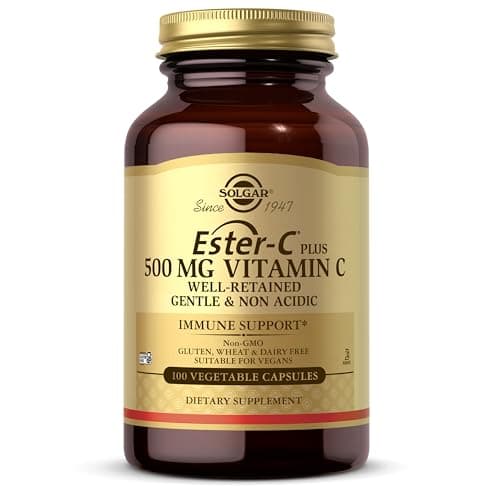 4. Solgar — Ester-C Plus 500 mg (100 vegetable capsules)Best buffered form | Best buffered form | 6.9/10 | $12.74$17.9929% offCheck Price for Solgar Ester-C Plus 500 mg (100 vegetable capsules) on AmazonIn Stock |
| 5 | 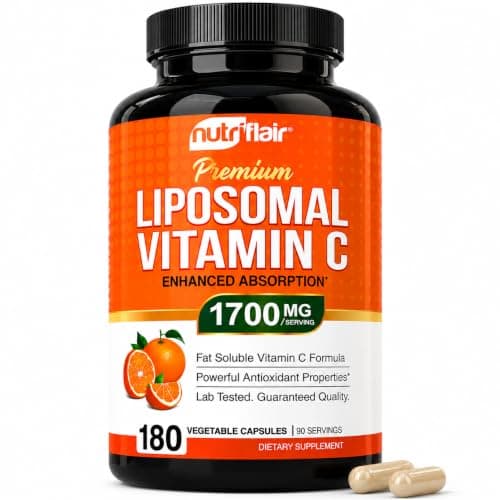 5. NutriFlair — Liposomal Vitamin C 1700 mg (180 capsules)The absorption-theater pick this rubric exists to catch | The absorption-theater pick this rubric exists to catch | 4.6/10 |
Prices pulled from Amazon as of October 18, 2026 and are subject to change. The price shown on Amazon at checkout applies.
How we scored
Every product below is scored on six metrics, 0-10 each, with the weighting described on how we review. The criteria specific to this category:
- Third-party testing — a certification or published batch data, because vitamin C is cheap to make and cheap to fake, and the capsule is the only thing you cannot inspect
- Dose sanity — we reward 500 mg, where NIH puts absorption at its practical best, and penalize single doses past 1,000 mg where absorption falls below half
- Source honesty — whether a whole-food claim is backed by a real fruit-derived ingredient, and whether the marketing stays inside what the evidence supports
- Form and tolerability — buffered mineral ascorbates genuinely help acid-sensitive stomachs; gummies are a sugar delivery system with a vitamin claim on it
- Cost per daily dose, calculated against the live price — on a nutrient with a low ceiling, value carries real weight
What to know before buying
- Natural and synthetic vitamin C are the same molecule: L-ascorbic acid. NIH states that supplemental ascorbic acid is bioequivalent to the ascorbic acid naturally occurring in foods. A whole-food-sourced capsule is a sourcing preference, not an absorption upgrade.
- Absorption falls as the dose rises. NIH puts it at 70-90% at 30-180 mg a day and below 50% above roughly 1,000 mg in a single dose, with the excess excreted. Splitting 500 mg twice a day beats taking 1,000 mg at once if you want a higher daily total.
- The tolerable upper limit for adults is 2,000 mg a day. Above it the usual problems are osmotic diarrhea and cramps rather than anything dramatic, but there is no upside to be had up there either.
- Citrus bioflavonoids, rose hips and Ester-C are the three most common upcharges in this category, and NIH cites a study finding no bioavailability difference among ascorbic acid, Ester-C and ascorbic acid with bioflavonoids. Buy them if you like the formula, not because they absorb better.
- Buffered forms are the one real exception. A mineral ascorbate such as calcium ascorbate is less acidic, and that is a genuine reason to pay a little more if plain ascorbic acid upsets your stomach — which for most people it does not.
- If whole-food vitamin C is the actual goal, food is dramatically cheaper than any capsule here: roughly 95 mg in half a cup of raw red pepper, about 70 mg in a medium orange, plus fiber and potassium you do not get from a pill.
- Taking vitamin C with an iron supplement improves non-heme iron absorption, which is the one stacking interaction in this category worth doing on purpose.
Our picks
Thorne — Vitamin C 500 mg with Citrus Bioflavonoids (90 servings)
Key specs: Vitamin C 500 mg with citrus bioflavonoids from oranges, capsule, 90 servings, third-party certified
Pros
- 500 mg sits in the range your body can actually use — above the RDA with headroom, well short of where absorption falls off a cliff
- Third-party certified from a brand whose testing program is among the most rigorous in supplements, which is the accountability the rest of this cheap-to-fake category lacks
- Clean capsule and a 90-serving bottle — a full quarter of a year on one purchase
Cons
- The citrus bioflavonoids are the marketing, not the mechanism: NIH found no bioavailability difference between ascorbic acid with bioflavonoids and plain ascorbic acid
- Several times the price of the plain tablet below for a physiologically identical dose
- Capsule rather than a food-derived extract, so it does not satisfy a strict whole-food preference
Who this one is for
For anyone who wants the single most trustworthy vitamin C capsule and does not mind paying a few times the tablet price for an independent certificate. Buy it for the testing program, not for the bioflavonoids.
Thorne — Vitamin C 500 mg with Citrus Bioflavonoids (90 servings)
- Third-party testing9/10
- Bioavailability8/10
- Clinical evidence9/10
- Value5/10
- Brand transparency8/10
- Form & absorption7/10
Peak Performance — Raw Whole Food Vitamin C from Acerola Cherry (90 capsules)
Key specs: Whole food vitamin C from acerola cherry, 500 mg serving (2 capsules for 1000 mg), vegan, USA sourced, 90 pills
Pros
- Acerola is one of the most vitamin-C-dense fruits there is, and this is the only genuinely fruit-derived vitamin C on this page
- Arrives with the cherry's naturally occurring cofactors rather than as an isolated powder — a fair fit if you would rather your supplements came from food
- Vegan, US-sourced, short ingredient list, no proprietary blend
Cons
- The for-max-absorption claim is the one NIH specifically contradicts — supplemental ascorbic acid is bioequivalent to the ascorbic acid in foods, so food-sourced does not mean better absorbed
- The most expensive way here to buy a mainstream dose, with no third-party certification surfaced to justify it
- If whole-food vitamin C is the goal, half a cup of red pepper is about 95 mg and costs less than the capsule
Who this one is for
For the person whose criterion is genuinely where the vitamin came from: acerola cherry rather than a synthesized ascorbic acid. Buy it for the sourcing, knowing the absorption claim on the bottle is not supported — and knowing red peppers are cheaper.
Peak Performance — Raw Whole Food Vitamin C from Acerola Cherry (90 capsules)
- Third-party testing5/10
- Bioavailability8/10
- Clinical evidence6/10
- Value4/10
- Brand transparency5/10
- Form & absorption7/10
Nature Made — Vitamin C 500 mg Tablets (100 count)
Key specs: Vitamin C 500 mg per tablet, 100 tablets, 100-day supply, no artificial flavors, no added color, no preservatives, gluten free
Pros
- A dose that covers the RDA several times over for pennies a day — on a nutrient where the ceiling is low, this is the rubric's honest answer
- 500 mg once daily with a meal is the whole protocol; one tablet, no stacking, 100 days per bottle
- Nature Made was the first brand accepted into USP's Dietary Supplement Verification Program and carries more USP-verified products than any other brand — check the USP mark on the bottle you buy, since it is granted per product rather than per brand
Cons
- USP verification is listed by some retailers for this tablet but is not stated on the manufacturer's own product page, so treat the mark on the physical label as the source of truth
- A plain white tablet with no testing story printed on the bottle — you are trusting the brand's quality-control reputation rather than a certificate
- Synthetic ascorbic acid, so it will not satisfy a whole-food-sourcing preference even though the molecule is identical
Who this one is for
For anyone who read the first paragraph, accepted that natural and synthetic vitamin C are the same molecule, and would rather spend the difference on vegetables. One tablet, 100 days, done.
Nature Made — Vitamin C 500 mg Tablets (100 count)
- Third-party testing7/10
- Bioavailability8/10
- Clinical evidence9/10
- Value10/10
- Brand transparency7/10
- Form & absorption8/10
Solgar — Ester-C Plus 500 mg (100 vegetable capsules)
Key specs: Ester-C ascorbate complex 500 mg, non-acidic, vegetable capsule, non-GMO, vegan, gluten-free, kosher, 100 servings
Pros
- A buffered mineral ascorbate is genuinely gentler on an acid-sensitive stomach, which is a real reason to pay a little more — unlike the absorption claim
- 500 mg keeps the dose sensible, and Solgar is a long-established brand with a clean vegan, non-GMO label
- A modest premium over the plain tablet rather than a gouge
Cons
- The core Ester-C promise does not survive the evidence: NIH cites a study finding no bioavailability difference among ascorbic acid, Ester-C and ascorbic acid with bioflavonoids
- Non-acidic does heavy marketing work for a benefit that only matters if plain ascorbic acid actually bothers you
- Not whole-food derived, and no third-party certification surfaced
Who this one is for
For the person whose honest reason for shopping outside plain ascorbic acid is gastric discomfort rather than absorption. The non-acidic part is real; the better-absorbed part is not.
Solgar — Ester-C Plus 500 mg (100 vegetable capsules)
- Third-party testing6/10
- Bioavailability8/10
- Clinical evidence8/10
- Value7/10
- Brand transparency6/10
- Form & absorption6/10
NutriFlair — Liposomal Vitamin C 1700 mg (180 capsules)
Key specs: Liposomal vitamin C 1700 mg, marketed as fat soluble, non-GMO, vegan capsule, 180 capsules
Pros
- Cheap per capsule, and liposomal delivery does have a measurable plasma signal in the published studies
- Non-GMO and vegan, with a large 180-count bottle
Cons
- 1,700 mg is 85% of the 2,000 mg upper limit in a single serving, at a dose where NIH says absorption is already below 50% — the headline number is the least defensible thing on the label
- Fat-soluble vitamin C inverts the chemistry: ascorbic acid is water-soluble, which is the entire reason you excrete the excess; the lipid is the carrier, not the vitamin
- The liposomal absorption case rests on studies that are uniformly industry-funded, and better uptake of a dose past saturation buys nothing
Who this one is for
Listed so you can see what the claims look like when they stop being true. If you are shopping for natural vitamin C and a bottle offers you 1,700 mg of fat-soluble liposomal delivery, this is the pattern to recognize and walk past.
NutriFlair — Liposomal Vitamin C 1700 mg (180 capsules)
- Third-party testing4/10
- Bioavailability5/10
- Clinical evidence4/10
- Value6/10
- Brand transparency3/10
- Form & absorption5/10
Frequently asked questions
If natural means fruit-derived, Peak Performance Raw Whole Food Vitamin C from acerola cherry is the pick — it is the only genuinely whole-food-sourced option here, vegan, US-sourced and plainly labeled. But buy it for the sourcing rather than for absorption, because the NIH fact sheet states that supplemental ascorbic acid is bioequivalent to the ascorbic acid naturally occurring in foods. For most people the better buy is Thorne Vitamin C 500 mg, where the premium goes to a third-party certification instead of a sourcing story, and if cost decides it, the Nature Made 500 mg tablet is physiologically identical for a fraction of the price.
Related reading
Sources
- Vitamin C — Health Professional Fact Sheet (bioequivalence of supplemental and food-sourced ascorbic acid; 70-90% absorption at 30-180 mg/day falling below 50% above 1 g; no bioavailability difference among ascorbic acid, Ester-C and ascorbic acid with bioflavonoids; RDA and 2,000 mg upper limit; food sources) — NIH Office of Dietary Supplements
- Vitamin C for preventing and treating the common cold (no reduction in incidence in the general population; roughly halved incidence in people under extreme physical stress) — Cochrane Database of Systematic Reviews
- USP Dietary Supplement Verification Program — what the verified mark covers — United States Pharmacopeia
- Product titles, ingredient sources, serving sizes, certifications, live prices and availability for all five supplements — retrieved via the Amazon product data layer — Amazon product listing data, 2026
Last verified: October 17, 2026. See our editorial policy and how we review for details on scoring and update cadence. Canonical URL: https://trustedhealthgear.com/reviews/best-natural-vitamin-c-supplement.
Thorne — Vitamin C 500 mg with Citrus Bioflavonoids (90 servings)
$23.00 · on Amazon