What Supplements Help With Stress?
Four ingredients have enough randomized data to be worth your money, and all four are adjuncts rather than solutions. Ashwagandha has the most evidence: a 2022 dose-response meta-analysis in Phytotherapy Research pooling 12 trials in 1,002 participants found significant reductions in anxiety and stress versus placebo, with the stress effect sitting at 300-600 mg a day — though heterogeneity was above 83% and the authors rated the certainty of the evidence as low. Magnesium is the one most likely to matter and least likely to be exciting: NHANES data show 48% of Americans take in less magnesium than their estimated average requirement, and a 2017 systematic review in Nutrients found suggestive benefit on subjective anxiety in anxiety-vulnerable samples while judging the quality of the existing evidence poor. L-theanine is the only one that works on a short clock: a four-week crossover trial in 30 healthy adults found reductions in self-rated depression, trait anxiety and Pittsburgh Sleep Quality Index scores at 200 mg a day. Rhodiola has one frequently cited trial — 80 mildly anxious participants, 400 mg a day, improvements in self-reported anxiety, stress, anger, confusion and depression at 14 days — with the significant caveat that it had no placebo arm. What should frame all of it is NCCIH's own position: its stress page states flatly that there is no drug to cure stress, and it covers breathing, biofeedback, progressive muscle relaxation, mindfulness, meditation and yoga without mentioning dietary supplements at all. That is the hierarchy. Sleep, training, whole food and a breathing practice are the intervention; a capsule is a small bet you place on top of them, at a studied dose, for a defined trial period. Anything sold as a cortisol blocker, an adaptogen proprietary blend with undisclosed doses, or a stress gummy at a fraction of a trial dose is being sold on the word 'stress' rather than on data.
Affiliate disclosure: Trusted Health Gear is an Amazon Associate. If you buy through links on this page, we may earn a commission at no extra cost to you. Commission does not influence our rankings. Full policy.
Start with the thing that actually has the evidence
This is not the throat-clearing paragraph before the product list — it is the reason the product list is short. NCCIH's stress page says there is no drug to cure stress, and the approaches it reviews are all behavioral: a 2019 review found preliminary evidence that diaphragmatic breathing exercises may help reduce stress; heart-rate-variability biofeedback has been reported to help self-reported stress and anxiety; progressive muscle relaxation shows stress-alleviating effects and possible benefit for anxiety and depression in some people; mindfulness may reduce stress symptoms and improve sleep, with a 2019 review finding moderately strong evidence for better sleep quality; a 2017 review of focused-attention meditation found reduced blood pressure and cortisol; yoga results are mixed, with a 2020 review finding benefit for perceived stress. Dietary supplements do not appear on that page. That absence is informative. On this site we also treat sleep as a performance pillar rather than a nice-to-have, and chronic short sleep is the most common reason an adult feels permanently frayed — no capsule competes with fixing it. Hard training, whole food instead of ultra-processed convenience, and daylight are in the same category. Everything below is a modest add-on with a modest effect size, measured mostly in small trials. Buy one if you want to run a careful experiment. Do not buy one instead of the experiment you already know works.
Ashwagandha: the most-studied option, and the most overclaimed
If you only try one thing from this page, this is it, because it has the deepest trial base — and because that base is less sturdy than the marketing implies. Akhgarjand and colleagues (2022) pooled 12 randomized trials in 1,002 participants aged 25 to 48 and found significant reductions in both anxiety (SMD -1.55) and stress (SMD -1.75) versus placebo, with a non-linear dose-response favoring 300-600 mg a day for stress. Those are large effect sizes. They also came with heterogeneity of 93.8% and 83.1% and a certainty rating of low, which is the authors' way of saying the trials disagree with each other and are mostly small. A 2024 review in Explore pooling nine trials in 558 patients found mean reductions of 4.72 points on the Perceived Stress Scale, 2.19 on the Hamilton Anxiety Scale and 2.58 on serum cortisol versus placebo. A 2025 BJPsych Open review of 14 trials found an anxiety effect that survived outlier correction (SMD -1.13) and Bayesian confirmation, with weaker signals for depression. NCCIH's plainer summary: some ashwagandha preparations may be effective for insomnia and stress, the evidence on anxiety is unclear, and many trials are small and used different preparations. Two practical notes. The first is patience — the primary endpoints in these trials sit at 60 days, and our ashwagandha timeline guide walks through why an eight-week trial is the shortest fair test. The second is the safety envelope, which is why we treat it as a defined trial rather than a permanent habit: NCCIH puts short-term safety at up to three months with long-term safety unknown, notes a number of reported cases linking liver injury to ashwagandha supplements, and lists interactions with medications for diabetes and blood pressure, immunosuppressants, sedatives, anticonvulsants and thyroid drugs. Avoid it in pregnancy and breastfeeding, before surgery, and with autoimmune or thyroid conditions or hormone-sensitive prostate cancer.
Magnesium: a deficiency correction that happens to help some people
Magnesium is the least glamorous item here and probably the one with the best risk-reward, for a reason that has nothing to do with stress marketing: a lot of people are genuinely short of it. An analysis of NHANES 2013-2016 found 48% of Americans of all ages take in less magnesium from food and beverages than their estimated average requirement, with adult men 71 and older and adolescents among the worst off. The adult RDA runs 310 to 420 mg depending on age and sex. Against that backdrop, Boyle and colleagues' 2017 systematic review in Nutrients is best read as a deficiency-correction story rather than an anxiolytic one: across 18 studies, every one of which recruited samples with an existing vulnerability — mildly anxious, premenstrual syndrome, postpartum, hypertensive — four of eight studies in anxious samples, four of seven in PMS samples and one of two in hypertensive samples reported positive effects on subjective anxiety, while postpartum anxiety showed none. Their conclusion is worth quoting in spirit: the evidence is suggestive of benefit in anxiety-vulnerable samples, but the quality of that evidence is poor and well-designed trials are still needed. Notably, no study in the review administered a validated measure of subjective stress as an outcome at all, so strictly speaking this is anxiety data being borrowed for a stress question. What makes it still worth doing: the downside is small and the ceiling is clear. The Tolerable Upper Intake Level for supplemental magnesium is 350 mg a day for adults, separate from food, and overshooting it produces diarrhea, nausea and abdominal cramping rather than anything dangerous in healthy people. Form matters for comfort and absorption more than for mood — glycinate is the gentle default, oxide is the cheap one that largely passes through, and our magnesium roundup and our oxide-versus-glycinate comparison cover the trade-off properly.
L-theanine: the only one on this page with a short clock
L-theanine is an amino acid found in tea, and it is the one option here you can evaluate in weeks rather than months. The cleanest trial is Hidese and colleagues (2019, Nutrients): a randomized, placebo-controlled, crossover, double-blind study in 30 healthy adults with no major psychiatric illness, mean age 48, taking 200 mg a day or placebo for four weeks each. Self-rating Depression Scale scores, State-Trait Anxiety Inventory trait scores and Pittsburgh Sleep Quality Index scores all decreased after L-theanine (p = 0.019, 0.006 and 0.013), and within the PSQI the subscale scores for sleep latency, sleep disturbance and use of sleep medication improved versus placebo. Verbal fluency and executive function scores also improved. Read the design honestly: 30 people, a crossover, self-report instruments, healthy adults with stress-related complaints rather than a clinical population. This is a real result, not a large one. What makes L-theanine useful in practice is the combination of a short evaluation window, a well-established tolerability profile, and the fact that it stacks sensibly with caffeine — the most replicated finding in the nootropic literature is the caffeine-plus-theanine pairing, which our nootropic roundup covers at length, and that pairing is the version of 'calm focus' with the strongest data behind it. If your stress presents mainly as being wired, reactive and unable to settle after coffee, this is the cheapest experiment on the page. If it presents as grinding, months-long pressure, ashwagandha is the better-matched bet.
Rhodiola, and what to look for on a label before you buy anything
Rhodiola rosea is the fourth ingredient with data worth mentioning, and it is also a good lesson in reading a trial before trusting it. Cropley and colleagues (2015, Phytotherapy Research) gave 80 mildly anxious participants either 2 x 200 mg of a standardized rhodiola extract daily or no treatment, with four testing sessions over 14 days. The treatment group showed significant reductions in self-reported anxiety, stress, anger, confusion and depression at 14 days, plus improvement in total mood, with no meaningful differences in cognitive performance. The authors are candid that this was a non-placebo-controlled trial — the comparison arm received nothing, so expectation effects cannot be separated out, and they explicitly note they cannot determine a causal relationship. Their argument that the findings were probably not pure placebo rests on the changes being gradual and specific. Take it as a promising signal in people whose stress shows up as fatigue and low mood rather than as proof, and see our ashwagandha versus rhodiola comparison for how the two differ in practice. Which brings us to the label rules that apply to everything in this category. Insist on a named, standardized extract with the active percentage printed — KSM-66 at 5% withanolides or Sensoril at 10%, rhodiola standardized to 3% rosavins, Suntheanine or a plain disclosed L-theanine dose. Insist on a dose that matches a trial, not a fraction of one: 300-600 mg a day of ashwagandha extract, 200 mg of L-theanine, 350 mg or less of supplemental magnesium. Skip proprietary blends that list a total milligram figure for eight ingredients, because a blend hides whether any single component reached a studied dose, and in this category that is usually the point. Skip anything marketed as a cortisol blocker or a stress gummy whose serving carries a tenth of a trial dose. And check interactions before you start rather than after, especially if you take sedatives, thyroid medication, blood pressure or diabetes drugs. Our supplement-label guide is the longer version of this paragraph.
What we'd buy, matched to how your stress presents
Every pick below is already reviewed and scored in our roundups — same products, same specs, with live Amazon prices.
| Attribute | Nutricost Ashwagandha KSM-66Our pick | Sports Research Sports Research L-Theanine 200 mg with Suntheanine (60 Softgels) | Thorne Basic Nutrients Magnesium Bisglycinate | NutriONN NutriONN Rhodiola Rosea 500 mg, 3% Rosavins (180 Vegan Capsules) |
|---|---|---|---|---|
| Best for | Best KSM-66 at low per-serving cost | Best stimulant-free option — calm focus to pair with your own coffee | Overall pick — third-party testing + clinical-grade transparency | Best for fatigue-driven brain fog rather than focus |
| Who it's for | First choice for grinding, chronic stress, and the pick with the deepest trial base behind it: genuine KSM-66 at 600 mg per capsule, which is the top of the 300-600 mg a day band where the 2022 dose-response meta-analysis located the stress effect. Cheap per clinically relevant dose, which matters when the plan is an eight-week trial you may decide to stop. | The short-clock option, and the right match if your stress is the wired, over-caffeinated kind: 200 mg of L-theanine as Suntheanine, which is the exact daily dose used in the four-week crossover trial that found reductions in trait anxiety, depression scale and sleep-quality scores. Stimulant-free, so it pairs with your own coffee rather than replacing it. | The unglamorous pick that is most likely to be correcting an actual shortfall, given that 48% of Americans take in less magnesium than their estimated average requirement: 135 mg of elemental magnesium as bisglycinate from an NSF-certified facility, which leaves plenty of room under the 350 mg supplemental upper limit if you take two. | For stress that presents as fatigue and flatness rather than agitation: rhodiola standardized to 3% rosavins at 500 mg a capsule, in the range used in the 14-day mood trial. Included with its caveat attached — that trial had no placebo arm, so treat this as the most speculative of the four. |
| Key specs | 600mg KSM-66 per capsule, 5% withanolides, 120-count | 200 mg L-theanine per softgel as Suntheanine, the branded form used in research · 60 softgels · third-party tested, non-GMO verified · no caffeine, so you control the stimulant separately | 135mg elemental magnesium bisglycinate, 60 capsules, NSF-certified facility | 500 mg rhodiola rosea extract standardized to 3% rosavins and 1% salidroside · 180 vegan capsules · six-month supply · the standard 3:1 rosavin-to-salidroside standardization used in research |
| Our score | 8.2/10 | 8.1/10 | 8.7/10 | 7.2/10 |
| Where to buy |
Prices pulled from Amazon as of October 26, 2026 and are subject to change. The price shown on Amazon at checkout applies.
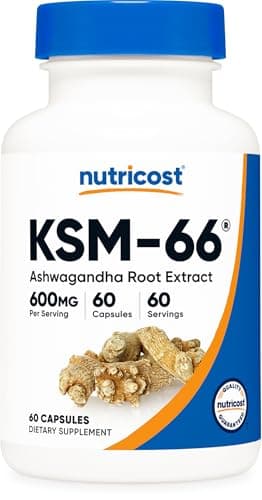
Nutricost — Ashwagandha KSM-66
First choice for grinding, chronic stress, and the pick with the deepest trial base behind it: genuine KSM-66 at 600 mg per capsule, which is the top of the 300-600 mg a day band where the 2022 dose-response meta-analysis located the stress effect. Cheap per clinically relevant dose, which matters when the plan is an eight-week trial you may decide to stop.
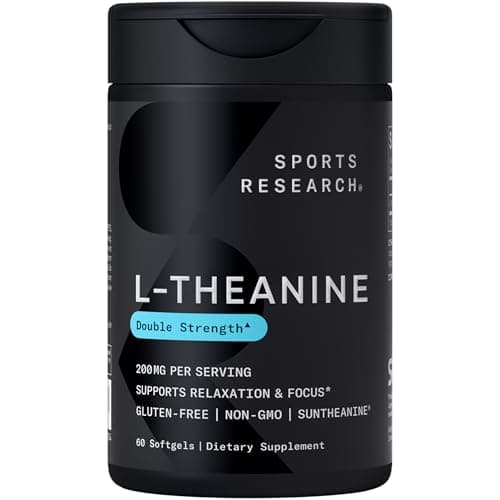
Sports Research — Sports Research L-Theanine 200 mg with Suntheanine (60 Softgels)
The short-clock option, and the right match if your stress is the wired, over-caffeinated kind: 200 mg of L-theanine as Suntheanine, which is the exact daily dose used in the four-week crossover trial that found reductions in trait anxiety, depression scale and sleep-quality scores. Stimulant-free, so it pairs with your own coffee rather than replacing it.
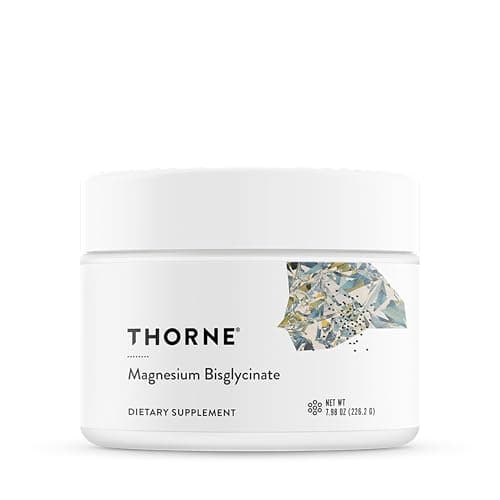
Thorne — Basic Nutrients Magnesium Bisglycinate
The unglamorous pick that is most likely to be correcting an actual shortfall, given that 48% of Americans take in less magnesium than their estimated average requirement: 135 mg of elemental magnesium as bisglycinate from an NSF-certified facility, which leaves plenty of room under the 350 mg supplemental upper limit if you take two.
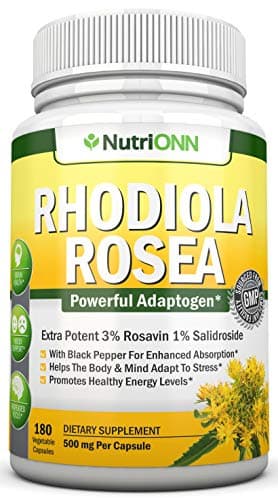
NutriONN — NutriONN Rhodiola Rosea 500 mg, 3% Rosavins (180 Vegan Capsules)
For stress that presents as fatigue and flatness rather than agitation: rhodiola standardized to 3% rosavins at 500 mg a capsule, in the range used in the 14-day mood trial. Included with its caveat attached — that trial had no placebo arm, so treat this as the most speculative of the four.
What we'd actually do
Fix sleep first, and be ruthless about it — it is the highest-leverage change available and no supplement on this page competes with it. Then pick ONE ingredient matched to how your stress actually presents, and run it as a timed trial rather than adding it to a pile. If it is grinding, chronic, months-long pressure: ashwagandha, a named standardized extract at 300-600 mg a day, assessed at eight weeks with a decision at twelve. If it is wired-and-reactive, especially around caffeine: L-theanine at 200 mg a day, which you can judge in about four weeks. If your diet is light on leafy greens, nuts, legumes and whole grains — and for roughly half of Americans it is: magnesium glycinate, under the 350 mg supplemental ceiling, taken in the evening, where the plausible wins are sleep quality and regularity as much as mood. If your stress reads as fatigue and flatness: rhodiola, with the honest caveat that its best-known trial had no placebo arm. One at a time is not a stylistic preference; it is the only way to learn anything, because stacking four things in one week guarantees you will never know which one did something. Write a one-line baseline for a week before you start. Set an end date. And keep the effect sizes in proportion: these are small-to-moderate changes in self-reported stress measured mostly in small trials with low-certainty evidence, layered on top of the interventions that actually carry the load. If stress is affecting your ability to function, sleep or work, that is a conversation with a clinician and not a shopping problem. This is general information, not medical advice.
Frequently asked questions
Four have enough randomized data to justify the money, and all four are adjuncts. Ashwagandha has the deepest base: a 2022 meta-analysis of 12 trials in 1,002 participants found significant reductions in anxiety (SMD -1.55) and stress (SMD -1.75) versus placebo, with the stress effect at 300-600 mg a day — though heterogeneity exceeded 83% and the certainty of evidence was rated low. Magnesium is a deficiency correction with suggestive anxiety benefit in vulnerable groups per a 2017 Nutrients review that also judged the evidence quality poor; 48% of Americans take in less than their estimated average requirement. L-theanine at 200 mg a day lowered trait anxiety, depression-scale and sleep-quality scores in a four-week crossover trial of 30 adults. Rhodiola improved self-reported stress and mood at 14 days in 80 mildly anxious people, in a trial with no placebo arm. For context, NCCIH's stress page says there is no drug to cure stress and does not list supplements among its approaches at all — breathing, mindfulness, meditation, progressive muscle relaxation and biofeedback are what it covers.
Related reading
- → Best ashwagandha supplements, scored on a public rubric
- → How long does ashwagandha take to work?
- → Ashwagandha dosage: what the research actually uses
- → Best magnesium supplements
- → Best nootropics (where L-theanine and rhodiola rank)
- → Ashwagandha vs rhodiola
- → Magnesium oxide vs glycinate
- → Best supplements for sleep
- → How to read a supplement label
Sources
- Stress (states that there is no drug to cure stress; reviews deep breathing with a 2019 review finding preliminary evidence that diaphragmatic breathing may help reduce stress, biofeedback including HRV biofeedback for self-reported stress and anxiety, progressive muscle relaxation, mindfulness with a 2019 review finding moderately strong evidence for improved sleep quality, focused-attention meditation with a 2017 review finding reduced blood pressure and cortisol, and yoga with mixed results and a 2020 review finding benefit for perceived stress; dietary supplements are not among the approaches covered) — NIH National Center for Complementary and Integrative Health
- Ashwagandha (some preparations may be effective for insomnia and stress while the evidence on anxiety is unclear; many trials small and using different preparations; appears safe short term for up to 3 months with long-term safety unknown; a number of reported cases linking liver injury to ashwagandha supplements; interactions with medications for diabetes and high blood pressure, immunosuppressants, sedatives, anticonvulsants and thyroid hormone drugs; avoid in pregnancy and breastfeeding, before surgery, and in autoimmune, thyroid and hormone-sensitive prostate cancer) — NIH National Center for Complementary and Integrative Health
- Does Ashwagandha supplementation have a beneficial effect on the management of anxiety and stress? A systematic review and meta-analysis of randomized controlled trials (Akhgarjand C et al. — 12 trials, 1,002 participants aged 25-48; anxiety SMD -1.55 and stress SMD -1.75 vs placebo with I2 of 93.8% and 83.1%; non-linear dose-response favorable for stress at 300-600 mg/day; certainty of evidence rated LOW) — Phytotherapy Research, 2022
- Effects of Ashwagandha (Withania Somnifera) on stress and anxiety: A systematic review and meta-analysis (nine randomized controlled trials, 558 patients; Perceived Stress Scale MD -4.72, Hamilton Anxiety Scale MD -2.19, serum cortisol MD -2.58 vs placebo; four studies reported mild to moderate adverse events) — Explore, 2024
- The effect of Withania somnifera on mental health symptoms in individuals with mental disorders: a systematic review and meta-analysis (14 studies, 360 treated and 353 controls; median oral dose 600 mg/day, median follow-up 8 weeks; outlier-corrected anxiety SMD -1.13, stress SMD -0.95, sleep quality SMD -1.35; anxiety effect confirmed in a Bayesian model, depression not) — BJPsych Open, 2025
- The Effects of Magnesium Supplementation on Subjective Anxiety and Stress — A Systematic Review (Boyle NB, Lawton C, Dye L — 18 studies, all in samples with existing vulnerability to anxiety; positive effects on subjective anxiety in 4 of 8 anxious samples, 4 of 7 PMS samples and 1 of 2 hypertensive samples, none in postpartum anxiety; no study administered a validated measure of subjective stress as an outcome; evidence suggestive of benefit but of poor quality) — Nutrients, 2017
- Magnesium — Fact Sheet for Health Professionals (adult RDAs and AIs ranging from 310 to 420 mg; Tolerable Upper Intake Level for SUPPLEMENTAL magnesium of 350 mg/day for adults; NHANES 2013-2016 analysis finding 48% of Americans of all ages ingest less magnesium from food and beverages than their respective EARs; high supplemental doses cause diarrhea, nausea and abdominal cramping) — NIH Office of Dietary Supplements
- Effects of L-Theanine Administration on Stress-Related Symptoms and Cognitive Functions in Healthy Adults: A Randomized Controlled Trial (Hidese S et al. — randomized, placebo-controlled, crossover, double-blind, 30 healthy adults, mean age 48.3, 200 mg/day for four weeks; Self-rating Depression Scale p = 0.019, State-Trait Anxiety Inventory trait p = 0.006 and Pittsburgh Sleep Quality Index p = 0.013 all decreased; PSQI subscales for sleep latency, sleep disturbance and use of sleep medication improved vs placebo; verbal fluency and executive function also improved) — Nutrients, 2019
- The Effects of Rhodiola rosea L. Extract on Anxiety, Stress, Cognition and Other Mood Symptoms (Cropley M, Banks AP, Boyle J — 80 mildly anxious participants, 2 x 200 mg daily vs a no-treatment control, four testing sessions over 14 days; significant reductions in self-reported anxiety, stress, anger, confusion and depression and improvement in total mood, no cognitive differences; authors note this was a NON-placebo-controlled trial and that causality cannot be determined) — Phytotherapy Research, 2015
- Product titles, extract types, standardization percentages, doses, counts, certifications, live prices and availability for the supplements referenced — retrieved via the Amazon product data layer — Amazon product listing data, 2026
Nutricost — Ashwagandha KSM-66
$14.95 · on Amazon