The Best Nootropic Supplements, Ranked by What They Actually Disclose
The nootropic aisle is built on a labeling loophole. Under FDA rules (21 CFR 101.36), a supplement can group its active ingredients into a "proprietary blend," print one total weight for the whole group, and never tell you how much of any single ingredient is inside — the only requirement is that the ingredients be listed in descending order by weight. That is why so many brain supplements lead with an impressive list of well-known compounds and then bury the doses. You can be paying for a 650 mg blend where the ingredient you actually came for is the smallest item on the list, present at a fraction of the amount used in the research. Once you know that, this category gets much simpler to shop, because the honest products announce themselves: they print every milligram. And here is the part the marketing would rather you not notice — the single best-evidenced combination in the entire category is not an exotic blend at all. It is caffeine plus L-theanine, two cheap ingredients that have been tested together repeatedly in controlled trials, and you can buy a bottle with both doses printed on the label for under fifteen dollars. Everything above that price needs to justify itself. A few ingredients genuinely can: citicoline has a real randomized trial behind it for memory in older adults, and bacopa monnieri has a meta-analysis behind it — though bacopa works on a timescale of months, not minutes, which is not what most people buying a "focus" pill expect. We should also be blunt about the ceiling here. No capsule in this roundup will outperform fixing your sleep, and if you train hard, creatine has better cognitive data than most things marketed as nootropics. This is health content, not medical advice: nothing here diagnoses, treats, or cures anything, and if you take medication — particularly for blood pressure, mood, or a thyroid or seizure condition — talk to your doctor before adding a stimulant or an herbal extract.
Top pick
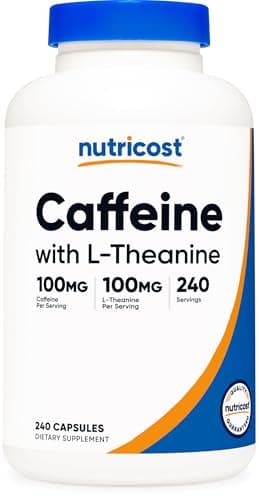
Nutricost — Nutricost Caffeine with L-Theanine (100 mg each, 240 Capsules)
100 mg caffeine + 100 mg L-theanine per capsule · both doses printed, no proprietary blend · 240 capsules · GMP-manufactured, non-GMO · roughly six cents per capsule
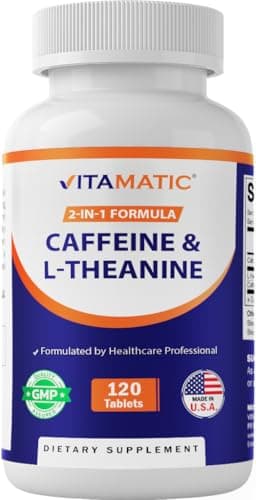
Vitamatic — Vitamatic L-Theanine 200 mg with Caffeine 100 mg (120 Tablets)
At a glance
Tap a row to check price · tap a header to sort| # | Best for | Price | ||
|---|---|---|---|---|
| 1 | 1. Nutricost — Nutricost Caffeine with L-Theanine (100 mg each, 240 Capsules)Best overall | Best overall | 8.8/10 | |
| 2 | 2. Vitamatic — Vitamatic L-Theanine 200 mg with Caffeine 100 mg (120 Tablets)Best ratio for stimulant-sensitive people | Best ratio for stimulant-sensitive people | 8.4/10 | $9.99$19.9950% offCheck Price for Vitamatic Vitamatic L-Theanine 200 mg with Caffeine 100 mg (120 Tablets) on AmazonIn Stock |
| 3 | 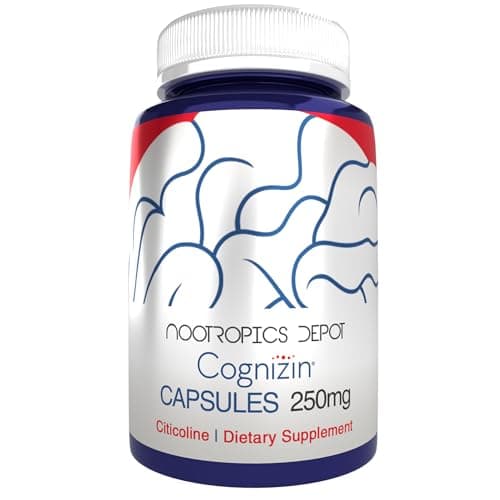 3. Nootropics Depot — Nootropics Depot Cognizin Citicoline Capsules (60 Count)Best for memory over months | Best for memory over months | 8.3/10 | |
| 4 | 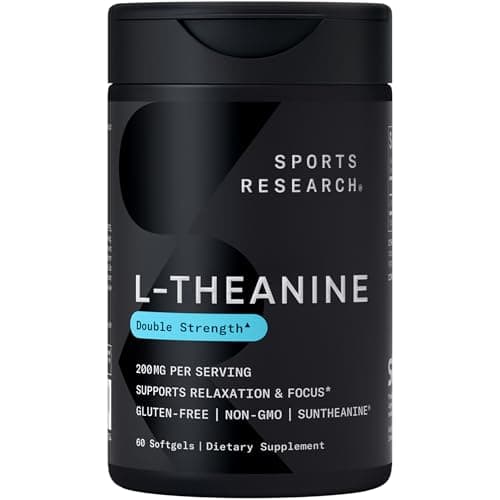 4. Sports Research — Sports Research L-Theanine 200 mg with Suntheanine (60 Softgels)Best stimulant-free option | Best stimulant-free option | 8.1/10 | |
| 5 | 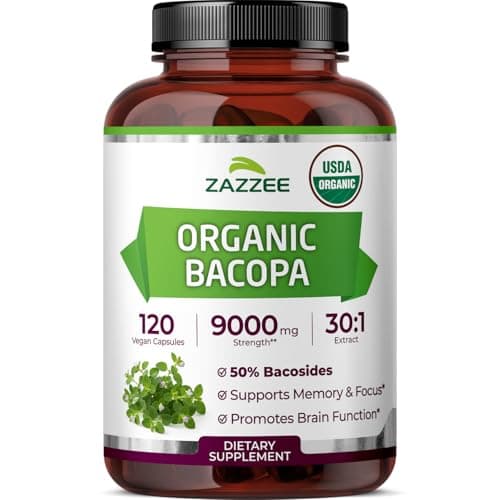 5. Zazzee — Zazzee USDA Organic Bacopa 30:1 Extract, 50% Bacosides (120 Vegan Capsules)Best long-game herbal | Best long-game herbal | 7.7/10 | |
| 6 | 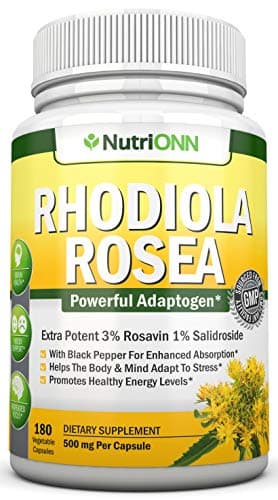 6. NutriONN — NutriONN Rhodiola Rosea 500 mg, 3% Rosavins (180 Vegan Capsules)Best for fatigue-driven brain fog rather than focus | Best for fatigue-driven brain fog rather than focus | 7.2/10 | |
| 7 | 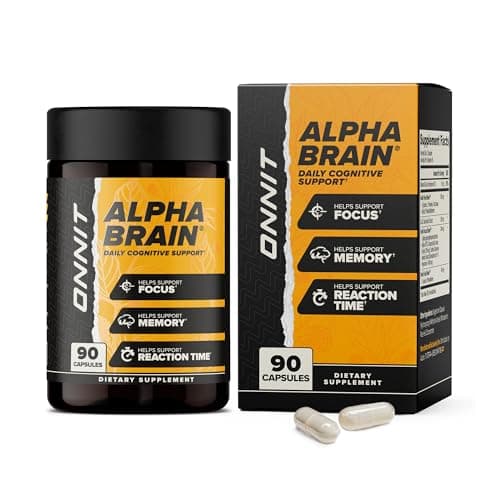 7. Onnit — Onnit Alpha BRAIN (90 Count)The category's most famous product | The category's most famous product | 6/10 |
Prices pulled from Amazon as of October 18, 2026 and are subject to change. The price shown on Amazon at checkout applies.
How we scored
Every product below is scored on six metrics, 0-10 each, with the weighting described on how we review. The criteria specific to this category:
- Full dose disclosure — no proprietary blends. This is the first filter and it eliminates most of the category. If a label says 'Proprietary Blend 650 mg' and lists six ingredients underneath it, you cannot tell whether the compound you want is 500 mg or 5 mg, and you cannot compare it to the dose used in any study. FDA labeling rules permit this, so it is legal, not fraudulent — but it makes the product unverifiable. We score a fully disclosed label at the top and score proprietary blends down hard, no matter how good the ingredient list looks.
- Strength of the human evidence for that specific ingredient. Nootropic marketing borrows credibility from neuroscience in general rather than from trials of the actual product. We ask a narrower question: has this ingredient, at roughly this dose, been tested in humans? Caffeine with L-theanine has repeated controlled trials on attention tasks; citicoline has a randomized trial in older adults; bacopa has a meta-analysis of trials running twelve weeks or longer. Ingredients with only animal data, mechanism stories, or a single company-funded study score lower.
- The studied form, and branded ingredients where the trials used them. Form matters more here than in most categories because the research was often run on a specific branded raw material — Suntheanine for L-theanine, Cognizin for citicoline — and generic versions are not automatically equivalent in the way a generic drug is. We reward products that use the form the trials used and say so on the label, and we're skeptical of vague botanical listings with no standardization percentage.
- Third-party testing and manufacturing standards. Nootropic ingredients are largely botanical extracts and synthesized aminos, both of which carry real contamination and potency risks, and the category has a history of products containing unlisted drug analogues. We reward brands that publish certificates of analysis, run independent potency and contaminant testing, and manufacture under GMP, and we're wary of anonymous brands with no verification at all.
- Cost per effective daily dose. The right unit here is what one day at a research-relevant dose costs, not what the bottle costs. That number varies wildly in this category — from a few cents a day for a disclosed caffeine-and-theanine capsule to well over a dollar a day for a branded blend. When a premium product costs fifteen times more per capsule than a fully disclosed alternative with better evidence, that gap has to be earned by something real, and usually it isn't.
- Honest claims proportionate to the science. Cognition is the easiest thing in supplements to sell and the hardest to feel, which is why this aisle leans on words like 'unlock,' 'limitless,' and 'peak mental performance.' We reward labels and brands that describe modest, specific effects matching what was actually measured — faster attention-switching, better delayed recall — and we score down anything implying dramatic intelligence gains or protection against cognitive decline, which no product here has earned.
What to know before buying
- Read the Supplement Facts panel before the front of the box. The front of a nootropic bottle is marketing; the panel is the product. Look for a number next to every single ingredient. If you see the words 'Proprietary Blend' — or a branded blend name with one total weight and a list indented underneath — you are buying something you cannot evaluate, because the ordering rule only tells you which ingredient is most plentiful, not by how much. A two-ingredient bottle that prints '100 mg caffeine, 200 mg L-theanine' is telling you more than a twelve-ingredient blend ever will.
- Start with caffeine and L-theanine, because it's the best-evidenced and by far the cheapest thing here. In controlled trials the pairing improved speed and accuracy on attention-switching tasks and reduced susceptibility to distraction — modest, real, measurable effects, replicated more than once. The studied ratios cluster around one part caffeine to one or two parts L-theanine (50 mg with 100 mg in one well-known trial; 150 mg with 250 mg in another). Practically: if caffeine alone makes you jittery, the theanine is what takes the edge off without dulling the alertness. If you already drink coffee, you can buy L-theanine on its own and take it alongside — you do not need a separate stimulant.
- Match the ingredient to the timescale you actually want. This is where most disappointment comes from. Caffeine and L-theanine work acutely — you feel them within an hour, and they do nothing for you next week. Citicoline and bacopa are the opposite: the citicoline trial ran twelve weeks at 500 mg a day, and the bacopa meta-analysis only included trials of twelve weeks or longer, where the reliable finding was faster speed of attention rather than dramatically better memory. So if you want help with a specific afternoon, buy the acute option. If you're willing to run a three-month experiment and judge it honestly at the end, the chronic options are reasonable. Buying bacopa and expecting to feel it on Tuesday is a guaranteed waste of money.
- Sleep is the nootropic, and if you train hard, creatine is probably the second one. We'd rather be honest than sell you a capsule: nothing in this roundup competes with consistently sleeping seven to nine hours, and the effect size of being well-rested dwarfs anything measured in these trials. Beyond that, a 2024 systematic review and meta-analysis of creatine found significant benefits for memory and processing speed in adults — better cognitive evidence than most products sold specifically as brain supplements, from a cheap powder you may already be taking for training. Fix sleep, train, eat enough protein and real food, and treat a nootropic as the small optimization it is rather than a substitute for any of that.
- Respect the stimulant, and know the interactions. 'Nootropic' sounds gentle, but most products that produce a noticeable effect do it with caffeine, and caffeine is a real drug with real limits — it raises blood pressure acutely, it has a half-life long enough that a late-afternoon dose can damage the sleep you're trying to protect, and stacking a nootropic on top of pre-workout and coffee is an easy way to overshoot badly. Herbal extracts carry their own issues: rhodiola and bacopa can interact with medications, bacopa commonly causes GI upset, and huperzine A (common in blends) affects acetylcholine in ways that warrant medical input. If you're pregnant or breastfeeding, on medication, or managing a health condition, talk to your doctor first — and add one product at a time so you can tell what's doing what.
Our picks
Nutricost — Nutricost Caffeine with L-Theanine (100 mg each, 240 Capsules)
Key specs: 100 mg caffeine + 100 mg L-theanine per capsule · both doses printed, no proprietary blend · 240 capsules · GMP-manufactured, non-GMO · roughly six cents per capsule
Pros
- Delivers the one combination in this category with repeated human trials behind it — caffeine plus L-theanine — with both amounts printed on the label so you can compare them to the research
- At 240 capsules for under fifteen dollars it costs about six cents a serving, which makes every premium blend in the aisle answer an awkward question about value
- A simple two-ingredient label from an established value brand: nothing hidden, nothing to decode, and easy to adjust by taking one capsule instead of two
Cons
- A 1:1 caffeine-to-theanine ratio is a bit more stimulant-forward than the 1:2 ratio used in the best-known trial — if caffeine makes you anxious, the higher-theanine options here suit you better
- Nutricost publishes less independent testing detail than premium brands like Sports Research or Nootropics Depot, so you're leaning on GMP manufacturing and brand reputation
- Purely acute: it does nothing for memory over weeks, and the caffeine is real, so a late-day capsule can cost you sleep
Nutricost — Nutricost Caffeine with L-Theanine (100 mg each, 240 Capsules)
- Third-party testing7/10
- Bioavailability9/10
- Clinical evidence9/10
- Value10/10
- Brand transparency10/10
- Form & absorption8/10
Vitamatic — Vitamatic L-Theanine 200 mg with Caffeine 100 mg (120 Tablets)
Key specs: 200 mg L-theanine + 100 mg caffeine per tablet · both doses printed, no blend · 120 tablets · the 1:2 caffeine-to-theanine ratio used in the published trials · lowest bottle price here
Pros
- Uses the caffeine-to-theanine ratio the research actually leaned on — roughly twice as much L-theanine as caffeine — which is the version most people describe as calm alertness rather than buzz
- The cheapest bottle in this roundup, and still fully transparent: two ingredients, two numbers, no proprietary blend anywhere on the panel
- A sensible entry point if you've tried plain caffeine pills and disliked how they felt, since the extra theanine is exactly the variable being changed
Cons
- Vitamatic is a smaller value brand with limited published third-party testing, so verification rests on GMP manufacturing rather than public certificates of analysis
- Fewer servings per bottle than the Nutricost option and a higher cost per tablet, so it wins on ratio rather than on raw value
- Tablets rather than capsules, which some people find harder to swallow and impossible to split into a smaller dose
Vitamatic — Vitamatic L-Theanine 200 mg with Caffeine 100 mg (120 Tablets)
- Third-party testing6/10
- Bioavailability9/10
- Clinical evidence9/10
- Value9/10
- Brand transparency10/10
- Form & absorption8/10
Nootropics Depot — Nootropics Depot Cognizin Citicoline Capsules (60 Count)
Key specs: Cognizin branded citicoline · 60 capsules · the same branded ingredient used in the published randomized trial · Nootropics Depot publishes lab testing and certificates of analysis · single-ingredient label
Pros
- Uses Cognizin, the specific branded citicoline tested in a randomized, double-blind, placebo-controlled trial of 100 healthy adults aged 50-85, where 500 mg daily for twelve weeks improved composite and episodic memory scores against placebo
- Single-ingredient, fully disclosed label from a brand built on published analytical testing — this is the most verifiable product in the roundup
- A genuinely different mechanism from the caffeine-based options: no stimulant, so it stacks with coffee and doesn't touch your sleep
Cons
- That trial was run and authored by staff of Kyowa Hakko, the company that makes Cognizin — the design was solid, but it is industry research, and independent replication is thinner
- The most expensive per serving of the transparent options here, and the benefit was measured in older adults with age-associated memory complaints, not in healthy 25-year-olds looking for focus
- Chronic, not acute — you're committing to about three months before judging it, and you may feel nothing day to day
Nootropics Depot — Nootropics Depot Cognizin Citicoline Capsules (60 Count)
- Third-party testing9/10
- Bioavailability9/10
- Clinical evidence8/10
- Value5/10
- Brand transparency10/10
- Form & absorption9/10
Sports Research — Sports Research L-Theanine 200 mg with Suntheanine (60 Softgels)
Key specs: 200 mg L-theanine per softgel as Suntheanine, the branded form used in research · 60 softgels · third-party tested, non-GMO verified · no caffeine, so you control the stimulant separately
Pros
- Uses Suntheanine, the branded L-theanine that much of the published work was conducted on, at the 200 mg dose people actually pair with a normal cup of coffee
- Sports Research is one of the better-verified mainstream brands, with third-party testing and non-GMO verification rather than self-reported quality claims
- Separating the theanine from the caffeine is the smarter setup for most coffee drinkers: you keep your existing caffeine habit and add only the variable that smooths it out
Cons
- L-theanine alone has weaker measured effects than the caffeine-plus-theanine combination — in the trials, the combination is what moved attention outcomes, not theanine by itself
- Materially more expensive per serving than the combination products, and you're still buying caffeine separately
- Softgels typically use gelatin, so check the label if you need a vegan product
Sports Research — Sports Research L-Theanine 200 mg with Suntheanine (60 Softgels)
- Third-party testing9/10
- Bioavailability9/10
- Clinical evidence6/10
- Value6/10
- Brand transparency10/10
- Form & absorption9/10
Zazzee — Zazzee USDA Organic Bacopa 30:1 Extract, 50% Bacosides (120 Vegan Capsules)
Key specs: Concentrated 30:1 bacopa extract standardized to 50% bacosides · USDA organic · 120 vegan capsules · four-month supply at one capsule daily · standardization percentage printed on the label
Pros
- Publishes both the extract ratio and the bacoside standardization — the two numbers that let you compare a bacopa product to the extracts used in research, and which most cheap bacopa omits entirely
- Bacopa is one of the few herbals in this aisle with a real meta-analysis behind it: nine randomized controlled trials, 437 participants, all dosing twelve weeks or longer
- A large, organic, single-ingredient bottle that covers the full duration a fair trial requires, rather than running out after five weeks
Cons
- The meta-analysis found the reliable benefit was faster speed of attention and reaction time — measured in milliseconds — while the memory findings were inconclusive due to high variation between trials
- Bacopa commonly causes GI upset, cramping, and nausea, especially on an empty stomach, and it can interact with several medications
- Requires patience most buyers don't have: nothing happens quickly, and there is no acute effect to reassure you it's working
Zazzee — Zazzee USDA Organic Bacopa 30:1 Extract, 50% Bacosides (120 Vegan Capsules)
- Third-party testing6/10
- Bioavailability7/10
- Clinical evidence7/10
- Value8/10
- Brand transparency9/10
- Form & absorption9/10
NutriONN — NutriONN Rhodiola Rosea 500 mg, 3% Rosavins (180 Vegan Capsules)
Key specs: 500 mg rhodiola rosea extract standardized to 3% rosavins and 1% salidroside · 180 vegan capsules · six-month supply · the standard 3:1 rosavin-to-salidroside standardization used in research
Pros
- Standardized to 3% rosavins and 1% salidroside — the ratio found in the rhodiola extracts used in fatigue research, and printed plainly instead of hidden in a blend
- Targets a different problem than the rest of this list: rhodiola is an adaptogen studied for fatigue and stress load, not for acute attention, which makes it the right pick if your 'brain fog' is really tiredness
- 180 capsules is an unusually long supply at this price, which matters for an adaptogen you'd want to run for several weeks
Cons
- The evidence base for rhodiola is weaker and more heterogeneous than for caffeine-plus-theanine or citicoline, with small trials and inconsistent extract quality across the category
- The added black pepper extract is a marketing flourish here — there's no strong case that rhodiola needs an absorption enhancer, and piperine can affect how other medications are metabolized
- Can be activating enough to disturb sleep if taken late, and may interact with antidepressants and blood-pressure medication
NutriONN — NutriONN Rhodiola Rosea 500 mg, 3% Rosavins (180 Vegan Capsules)
- Third-party testing5/10
- Bioavailability7/10
- Clinical evidence6/10
- Value9/10
- Brand transparency8/10
- Form & absorption8/10
Onnit — Onnit Alpha BRAIN (90 Count)
Key specs: Three named proprietary blends: Onnit Flow Blend 650 mg, Onnit Focus Blend 240 mg, Onnit Fuel Blend 60 mg · individual ingredient amounts inside the Flow and Fuel blends are not disclosed · caffeine-free · IGEN non-GMO tested · 90 capsules at 2 per serving (45 servings)
Pros
- Unlike most of the aisle it has an actual randomized, double-blind, placebo-controlled trial: 63 adults aged 18-35 taking it for six weeks improved on delayed verbal recall and executive function versus placebo
- Caffeine-free, which genuinely distinguishes it from products that are mostly a stimulant in a fancy bottle, and the ingredient list is a reasonable one on paper
- Consistent, widely available, and made by an established brand with non-GMO testing — this is a real product, not a fly-by-night listing
Cons
- The doses are inside proprietary blends, so you cannot tell how much L-theanine, alpha-GPC, or phosphatidylserine you're getting — the exact problem that makes a nootropic impossible to evaluate or compare to research
- That supporting trial was funded by Onnit with an author affiliated to the company, ran only six weeks in 63 people, and moved a narrow set of measures — promising, but not the same as independent replication
- At roughly ninety cents a capsule it costs about fifteen times more per capsule than the fully disclosed caffeine-and-theanine option that has more replicated evidence behind it
Onnit — Onnit Alpha BRAIN (90 Count)
- Third-party testing6/10
- Bioavailability7/10
- Clinical evidence6/10
- Value3/10
- Brand transparency3/10
- Form & absorption6/10
Frequently asked questions
For most people it's caffeine combined with L-theanine, bought as a product that prints both doses on the label. It is the most replicated pairing in the category: controlled trials found the combination improved speed and accuracy on attention-switching tasks and reduced susceptibility to distraction, with effects that showed up within an hour. It's also the cheapest thing here by a wide margin — roughly six cents a serving for a fully disclosed bottle. The studied ratios run about one part caffeine to one or two parts L-theanine, so 100 mg of caffeine with 100-200 mg of L-theanine is a reasonable target. Start there before spending on anything exotic, and if it doesn't do much for you, that's useful information about the whole category rather than a reason to buy something pricier.
Related reading
- → How to read a supplement label (and spot proprietary blends)
- → How to take creatine
- → Ashwagandha vs rhodiola (which adaptogen for what)
- → Pre-workout vs coffee (where your caffeine comes from)
- → Best brain health supplements
- → Best creatine (better cognitive evidence than most nootropics)
- → Best mushroom supplements (lion's mane, the nootropic mushroom)
- → Best pre-workout (the other caffeine purchase)
- → Best ashwagandha (for stress rather than focus)
- → Best supplements for energy (caffeine + L-theanine tops that list too)
Sources
- The combined effects of L-theanine and caffeine on cognitive performance and mood (n=27; 50 mg caffeine + 100 mg L-theanine improved speed and accuracy on attention-switching and reduced distractibility) — Nutritional Neuroscience, 2008
- Citicoline and Memory Function in Healthy Older Adults: A Randomized, Double-Blind, Placebo-Controlled Clinical Trial (n=100, ages 50-85, 500 mg/day for 12 weeks; composite and episodic memory improved vs placebo; authors affiliated with Kyowa Hakko, maker of Cognizin) — The Journal of Nutrition, 2021
- Meta-analysis of randomized controlled trials on cognitive effects of Bacopa monnieri extract (9 RCTs, 437 participants, chronic dosing ≥12 weeks; improved speed of attention — ~18 ms faster Trail B, ~10 ms faster choice reaction time — memory findings inconclusive) — Journal of Ethnopharmacology, 2014
- The effects of creatine supplementation on cognitive function in adults: a systematic review and meta-analysis (16 RCTs, 492 participants; memory SMD 0.31, processing speed SMD −0.51; no significant effect on overall cognition or executive function) — Frontiers in Nutrition, 2024
- A randomized, double-blind, placebo controlled, parallel group, efficacy study of Alpha BRAIN administered orally (n=63, ages 18-35, 6 weeks; improved delayed verbal recall and executive function; study funded by Onnit with a company-affiliated author) — Human Psychopharmacology: Clinical and Experimental, 2016
- 21 CFR 101.36 — Nutrition labeling of dietary supplements (permits a proprietary blend to declare only the total weight of the blend, with component ingredients listed in descending order of predominance and no individual amounts) — U.S. Code of Federal Regulations / FDA
Last verified: August 10, 2026. See our editorial policy and how we review for details on scoring and update cadence. Canonical URL: https://trustedhealthgear.com/reviews/best-nootropic.
Nutricost — Nutricost Caffeine with L-Theanine (100 mg each, 240 Capsules)
$13.95 · on Amazon