Ashwagandha vs Rhodiola: Which Adaptogen Should You Pick?
Ashwagandha and rhodiola are both classified as 'adaptogens' — plants traditionally used to support resilience under stress. They work via different mechanisms, have different research bases, and fit different use profiles. Ashwagandha has the deeper published research base, especially around sleep and subjective stress, and is typically taken daily. Rhodiola has a more 'acute' profile — taken situationally for mental fatigue and endurance.
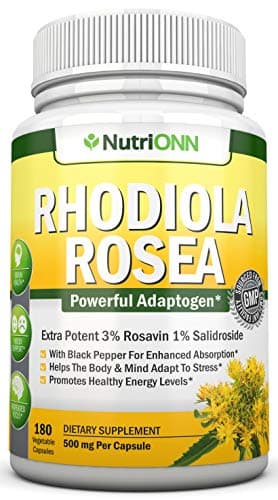
NutriONN — NutriONN Rhodiola Rosea 500 mg, 3% Rosavins (180 Vegan Capsules)
The verdict
Pick ashwagandha if you want a daily adaptogen for general stress and sleep support, especially evening-weighted routines — the research base is larger and the dose is more standardized. Pick rhodiola if you want situational support for mental fatigue during demanding cognitive or physical work, especially on days you need extra mental bandwidth. Some people use both — ashwagandha at night, rhodiola in the morning — which is supported in traditional use though not formally studied.
Side-by-side
| Attribute | Ashwagandha | Rhodiola rosea |
|---|---|---|
| Botanical name | Withania somnifera | Rhodiola rosea |
| Traditional use | Ayurvedic, 3,000+ years — "rasayana" (rejuvenator) | Scandinavian + Siberian, centuries — endurance support |
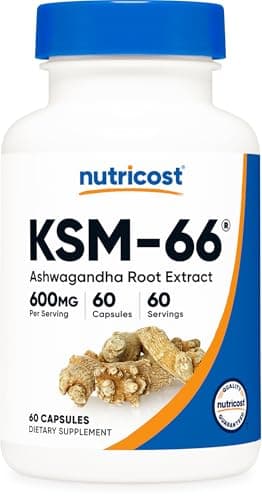
| Primary actives | Withanolides (KSM-66 @ 5%; Sensoril @ 10%) | Rosavins and salidroside (typical 3:1 ratio) |
| Typical dose | 300-600mg KSM-66 OR 125-250mg Sensoril per day | 200-600mg (3-5% rosavins, 1-2% salidroside) |
| Timing | Often daily, commonly evening for sleep focus | Typically morning or mid-day; not at night |
| Time to effect | 4-12 weeks of daily use in trials | Often reported within hours; sustained benefits at 4+ weeks |
| Best-studied endpoints | Subjective stress, sleep quality, anxiety scales | Mental fatigue, cognitive performance under strain, mood |
| Safety during pregnancy | Not recommended | Not recommended |
| Where to buy |
Prices pulled from Amazon as of October 18, 2026 and are subject to change. The price shown on Amazon at checkout applies.
Who should pick which
Pick Ashwagandha
- People looking for a daily-use adaptogen for sleep and subjective stress.
- Users who tolerate and prefer evening dosing.
Pick Rhodiola rosea
- People looking for a situational pick-me-up during mental fatigue.
- Students, shift workers, or athletes dealing with acute mental fatigue.
Different mechanisms
Ashwagandha's putative mechanism is modulation of the HPA (hypothalamic-pituitary-adrenal) axis — several trials show reduced cortisol responses and improved self-reported calm under sustained stress. Rhodiola acts more via monoamine (dopamine, serotonin, norepinephrine) modulation and mitochondrial efficiency — the acute 'mental energy' profile reflects this. They aren't redundant; they're complementary.
Research base comparison
Ashwagandha has the larger total research base, especially recent randomized controlled trials on KSM-66 and Sensoril extracts. Rhodiola has smaller but reasonably consistent trials on mental-fatigue endpoints, plus an older base of Soviet-era research on endurance and cognition.
Timing
This is often the deciding factor. Ashwagandha is generally neutral on alertness or mildly calming — easy to take in the evening. Rhodiola is activating for many people; taking it at night can interfere with sleep. If you tried an adaptogen and felt 'wired' at night, it was probably rhodiola.
Can you stack them?
Traditionally yes — some herbalist protocols use rhodiola in the morning and ashwagandha at night. Published controlled trials on the stack specifically are minimal, so this is based on traditional use and user experience rather than RCT evidence.
Frequently asked questions
You can, and traditional use supports rhodiola morning + ashwagandha night. There's no published controlled trial on the stack specifically, so this is a 'reasonable but not evidence-based' pattern.
Sources
- An investigation into the stress-relieving and pharmacological actions of ashwagandha — Medicine (Baltimore), 2019
- Rhodiola rosea in stress induced fatigue — a double-blind cross-over study — Phytomedicine, 2000
- Rhodiola rosea versus sertraline for major depressive disorder — Phytomedicine, 2015
Nutricost — Ashwagandha KSM-66
$14.95 · on Amazon