How to Stack Supplements for Sleep
Stacking sleep supplements only works if you stop treating them as interchangeable sedatives and start matching each one to a specific failure. Four rules carry the whole page. First, behavior before bottles: the American College of Physicians strongly recommends cognitive behavioral therapy for insomnia as the initial treatment for chronic insomnia, and both the 2016 ACP guideline and the 2017 American Academy of Sleep Medicine guideline concluded there is not enough strong evidence on melatonin's effectiveness or safety in chronic insomnia to recommend it. If you have chronic insomnia, the stack is not the intervention — CBT-I is, and no combination below substitutes for it. Second, melatonin is a clock tool rather than a sleeping pill, and the effective dose is far below what the shelf sells: in Zhdanova's dose-response work in age-related insomnia, 0.3 mg performed as well as 3.0 mg, and NCCIH's own summary of melatonin's genuine wins is circadian — jet lag, shift work, and delayed sleep-wake phase disorder, where a 2018 trial in 307 people taking it an hour before the desired bedtime fell asleep about 34 minutes earlier. Use it to move your clock, not to knock yourself out. Third, the honest ranking is not the aisle's ranking. A 2022 systematic review and meta-analysis in the Postgraduate Medical Journal pooled 31 randomized controlled trials of sleep supplements and found subjective sleep quality significantly improved by amino acids (mean difference -1.27), melatonin (-1.21, I² = 79%) and vitamin D (-1.63, I² = 85%) — while magnesium, zinc, resveratrol and nitrate did not have adequate data for meta-analysis at all, and the authors concluded further research on them is required. Magnesium is the most-recommended sleep supplement on the internet and it is in the 'needs more research' column, which is worth knowing before you build a stack on top of it. Fourth, add one thing at a time and give each layer two weeks. A stack assembled in a single week is uninterpretable: you will not know which component did anything, which one is making you groggy, or which one to drop. The practical sequence we would run: fix light, caffeine timing and a consistent wake time first; then magnesium glycinate in the evening as the base layer; then either low-dose melatonin if the problem is timing or L-theanine if the problem is being wired; then tart cherry if you also train hard. Four layers maximum, two weeks apiece, and a note each morning. This is general information and not medical advice — if you snore heavily, wake gasping, or are exhausted despite adequate time in bed, that is a sleep study and not a supplement.
Affiliate disclosure: Trusted Health Gear is an Amazon Associate. If you buy through links on this page, we may earn a commission at no extra cost to you. Commission does not influence our rankings. Full policy.
Diagnose the failure before you buy the stack
Almost every bad sleep stack comes from the same mistake: buying for 'bad sleep' instead of for a specific failure mode. There are four, and they want different things. ONSET — you lie awake for 45 minutes or more at a normal bedtime. That is the failure melatonin and L-theanine are plausibly aimed at, and it is also the one most responsive to behavior, because it is usually driven by light, caffeine or an inconsistent schedule. MAINTENANCE — you fall asleep fine and wake at 3 a.m. Melatonin does very little here; this is where alcohol, late eating, room temperature and sleep apnea belong on the suspect list long before any capsule. TIMING — you sleep well but on a schedule that does not fit your life, falling asleep at 2 a.m. and waking at 10. That is a circadian problem and it is the one place melatonin genuinely shines, taken hours before the bedtime you want rather than at the bedtime you have. WIRED — you are tired but cannot settle, usually with caffeine, training or stress behind it. That is the L-theanine and ashwagandha lane, and it overlaps with the stress question we cover separately. Write down which of the four you have before you spend anything. If it is maintenance, the honest answer is that the supplement aisle has very little for you and the useful moves are elsewhere. If you cannot tell, track a week of bedtime, estimated sleep-onset time, wake-ups and caffeine before buying — that week of notes is worth more than the first bottle.
Melatonin is a clock tool, and the dose on the shelf is wrong
This is the single most consequential correction on the page, because melatonin is the default purchase and most people use it in a way the evidence does not support. Start with what it is good at. NCCIH's review of the research puts melatonin's clearest wins in circadian territory: for delayed sleep-wake phase disorder, melatonin supplements appear to help with sleep, with a 2016 review of 52 people finding sleep onset about 22 minutes faster than placebo and a 2018 randomized trial in 307 people — taking it one hour before the desired bedtime, with a set bedtime — finding participants fell asleep about 34 minutes earlier, slept better in the first third of the night and functioned better during the day. Jet lag after eastward flights: may be better than placebo. Shift work: about 24 minutes more daytime sleep across seven studies in 263 participants, on low-quality evidence. Now what it is not good at. For chronic insomnia, the 2017 AASM guideline and the 2016 ACP guideline both concluded there is not enough strong evidence on effectiveness or safety to recommend it. Then the dose. Zhdanova's dose-response study in age-related insomnia compared 0.1, 0.3 and 3.0 mg and found 0.3 mg was as effective as 3.0 — which means the 5 mg and 10 mg bottles that dominate the shelf are not stronger, they are simply further past the point where more stops helping, with next-day grogginess as the usual cost. Buy 1 mg or less, take it earlier than you think, and treat it as a scheduling tool. One more reason for restraint: a 2023 study found 22 of 25 melatonin gummies were mislabeled, with content ranging from 74% to 347% of the label and one containing no detectable melatonin at all, so a capsule from a tested brand buys you more certainty than a gummy at any dose.
What the meta-analysis actually ranks — and where magnesium sits
If you want one table to build a stack from, the 2022 systematic review and meta-analysis in the Postgraduate Medical Journal is the closest thing available. It pooled 31 randomized controlled trials of dietary supplements aimed at sleep and asked a single question: which ones significantly improved subjective sleep quality? Three cleared the bar. Amino acids: mean difference -1.27 (95% CI -2.35 to -0.20) with zero heterogeneity, the tightest result in the review. Melatonin: -1.21 (-2.17 to -0.24), but with I² of 79%. Vitamin D: the largest point estimate at -1.63 (-3.15 to -0.10), with I² of 85% and a confidence interval that nearly touches zero. The authors' own conclusion names amino acids, vitamin D and melatonin as significantly beneficial while flagging the high heterogeneity and wide confidence intervals for the latter two. And then the part the supplement aisle does not quote: magnesium, zinc, resveratrol and nitrate did not have adequate data for meta-analysis, and the review concludes that further research on their effect on sleep quality is required. That is an uncomfortable finding for a site that recommends magnesium glycinate as often as we do, so here is the honest position: magnesium is cheap, well tolerated, corrects a shortfall that roughly half of Americans have, and has a plausible mechanism and a lot of favorable anecdote — but it does not yet have the meta-analytic support that melatonin and amino acids have for sleep specifically. Build it in as the cheap base layer, not as the component you expect to do the heavy lifting. The vitamin D result also deserves a second look if you have not had a level checked, because it is the one ingredient on that list most people are not thinking of as a sleep supplement at all.
Magnesium, L-theanine and tart cherry: the three layers worth adding
Three ingredients make our stack, each with a different job and a different quality of evidence. MAGNESIUM GLYCINATE is the base layer: evening dosing, glycinate rather than oxide because the cheap form largely passes through, and under the 350 mg a day Tolerable Upper Intake Level for supplemental magnesium. The case for it is deficiency correction plus tolerability rather than sleep-specific trial data, and the honest expectation is better sleep quality rather than faster sleep onset. L-THEANINE is the wired layer and it has the best single trial of the three for this purpose: a randomized, placebo-controlled, crossover, double-blind study in 30 healthy adults taking 200 mg a day for four weeks found Pittsburgh Sleep Quality Index scores improved (p = 0.013), with the subscale scores for sleep latency, sleep disturbance and use of sleep medication all improving versus placebo. Thirty people and self-report instruments — a real result, not a large one — but it maps precisely onto the wired failure mode, and it is the only item here you can evaluate in a month. It also happens to be an amino acid, which is the category that topped the 2022 meta-analysis. TART CHERRY is the food-derived layer and it does double duty if you train: a seven-day study using 30 mL of concentrate twice daily found urinary melatonin up 15-16%, about 25 minutes more total sleep time and 5-6% better sleep efficiency; a pilot study in older adults with insomnia using 8 oz morning and night for two weeks found roughly 17 minutes less wake time after sleep onset; and a later pilot using 240 mL twice daily reported 84 minutes more sleep time by polysomnography, with procyanidin B-2 and indoleamine dioxygenase inhibition proposed as the mechanism. Small studies, consistently in the same direction, and the only item on the page that is literally a fruit. Our dosing guide covers the amounts those studies used.
The stacking rules: one layer, two weeks, four maximum
Five rules, and they matter more than which products you choose. ONE AT A TIME. Add a single new component, change nothing else, and hold it for two weeks before judging. A stack built in one week is uninterpretable — you will not be able to tell which item helped, which is making you groggy at 9 a.m., or which one to drop when you want to stop spending. TWO WEEKS PER LAYER. Two weeks is long enough for a real effect to show and short enough that you will actually do it. The exception is anything adaptogenic: ashwagandha's stress and sleep trials ran 8 to 10 weeks, and in one insomnia trial sleep onset latency improved in the placebo arm too at five weeks, separating from placebo only at ten — so if ashwagandha is in your stack it goes in last and gets its own longer window. FOUR COMPONENTS MAXIMUM. Past four you are no longer running an experiment, you are buying a mood. Our stack is magnesium, then melatonin or L-theanine depending on the failure mode, then tart cherry if you train. DO NOT DOUBLE-DOSE THE SAME MECHANISM. Two melatonin products, or a melatonin capsule plus a 'sleep gummy' that also contains melatonin, is the most common accidental overdose in this category — and because labels in this category are unreliable, you may be further over than you think. Read every panel before you combine anything. KEEP A ONE-LINE MORNING NOTE. Bedtime, roughly how long it took to fall asleep, wake-ups, and how you felt at 9 a.m. Four words a day. Without it you are judging a two-week intervention on the memory of last night, which is how people end up taking five things indefinitely with no idea whether any of them works.
The stack we'd build, in the order we'd add it
Every pick below is already reviewed and scored in our roundups — same products, same specs, with live Amazon prices.
| Attribute | Thorne Magnesium Bisglycinate (Powder)Our pick | Natrol Fast Dissolve Melatonin 1 mg (90 tablets) | Sports Research Sports Research L-Theanine 200 mg with Suntheanine (60 Softgels) | Sports Research Tart Cherry Fruit Complex (800 mg, 60 Softgels) |
|---|---|---|---|---|
| Best for | Best overall for sleep — clean glycinate you can dose to taste, from an NSF-certified facility | Best low-dose melatonin — the closest thing on the shelf to a physiological dose | Best stimulant-free option — calm focus to pair with your own coffee | Best food-derived option — the one pick that does double duty on sleep and training recovery |
| Who it's for | The base layer, added first and held for two weeks before anything else goes in. A powder lets you dose to taste and stay under the 350 mg a day supplemental ceiling, and glycinate is the form worth paying for because magnesium oxide largely passes through. Buy it for tolerability and deficiency correction rather than for a dramatic effect — the 2022 meta-analysis could not pool enough magnesium data to rate it. | The timing layer, and deliberately the 1 mg tablet rather than a 5 or 10 mg one. Zhdanova's dose-response work found 0.3 mg performed as well as 3.0 mg in age-related insomnia, so the small dose is the informed choice rather than the weak one. Take it an hour or more before the bedtime you want, not at the bedtime you have, and skip it if your problem is waking at 3 a.m. rather than falling asleep. | The wired layer — the right pick if you are tired but cannot settle, which usually means caffeine, training or stress. 200 mg of L-theanine is exactly the dose from the four-week crossover trial that found improved Pittsburgh Sleep Quality Index scores along with better sleep latency and less use of sleep medication. It is also the only component here you can fairly judge in a month, and an amino acid, the category that topped the 2022 meta-analysis. | The optional fourth layer, and the one worth adding if you train hard, because it earns its place on soreness as well as sleep. The tart cherry sleep studies are small but point the same way — roughly 25 minutes more total sleep in a seven-day concentrate study, about 17 minutes less wake-after-sleep-onset in older adults with insomnia. A softgel is a concentrate, so check our dosing guide against what the studies actually used. |
| Key specs | ~200 mg elemental magnesium per scoop as magnesium bisglycinate · powder, so the dose is adjustable · single ingredient · manufactured in an NSF-certified facility · unflavored option with no sweetener | 1 mg melatonin per fast-dissolve tablet · dissolves on the tongue, no water needed · 90 tablets · splittable for a sub-1 mg dose | 200 mg L-theanine per softgel as Suntheanine, the branded form used in research · 60 softgels · third-party tested, non-GMO verified · no caffeine, so you control the stimulant separately | 800 mg tart cherry complex per softgel · made with Montmorency cherries · contains CherryPURE, the standardized concentrate used in the published recovery research · 60 softgels · gluten-free, non-GMO, no added sugar |
| Our score | 9/10 | 8/10 | 8.1/10 | 7.8/10 |
| Where to buy |
Prices pulled from Amazon as of November 2, 2026 and are subject to change. The price shown on Amazon at checkout applies.
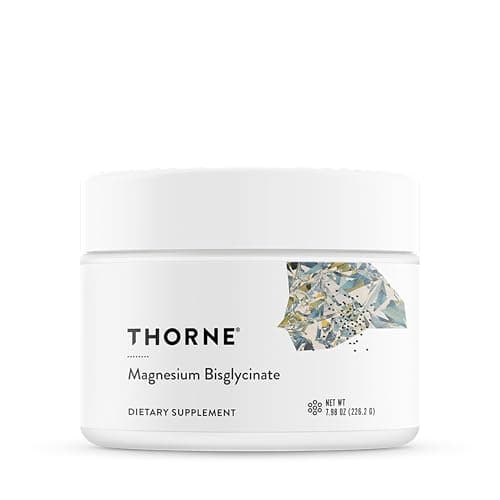
Thorne — Magnesium Bisglycinate (Powder)
The base layer, added first and held for two weeks before anything else goes in. A powder lets you dose to taste and stay under the 350 mg a day supplemental ceiling, and glycinate is the form worth paying for because magnesium oxide largely passes through. Buy it for tolerability and deficiency correction rather than for a dramatic effect — the 2022 meta-analysis could not pool enough magnesium data to rate it.
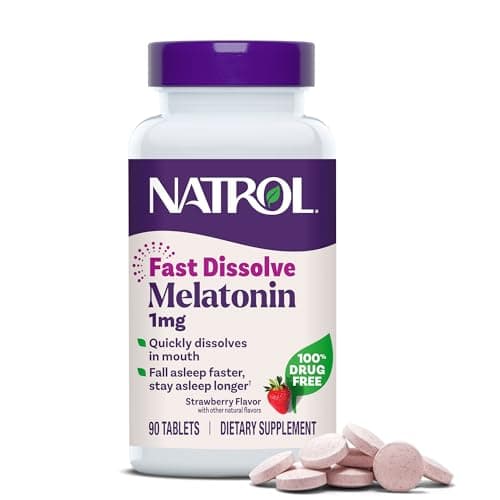
Natrol — Fast Dissolve Melatonin 1 mg (90 tablets)
The timing layer, and deliberately the 1 mg tablet rather than a 5 or 10 mg one. Zhdanova's dose-response work found 0.3 mg performed as well as 3.0 mg in age-related insomnia, so the small dose is the informed choice rather than the weak one. Take it an hour or more before the bedtime you want, not at the bedtime you have, and skip it if your problem is waking at 3 a.m. rather than falling asleep.
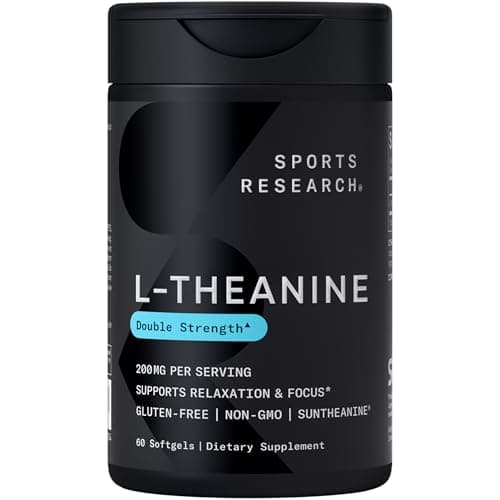
Sports Research — Sports Research L-Theanine 200 mg with Suntheanine (60 Softgels)
The wired layer — the right pick if you are tired but cannot settle, which usually means caffeine, training or stress. 200 mg of L-theanine is exactly the dose from the four-week crossover trial that found improved Pittsburgh Sleep Quality Index scores along with better sleep latency and less use of sleep medication. It is also the only component here you can fairly judge in a month, and an amino acid, the category that topped the 2022 meta-analysis.
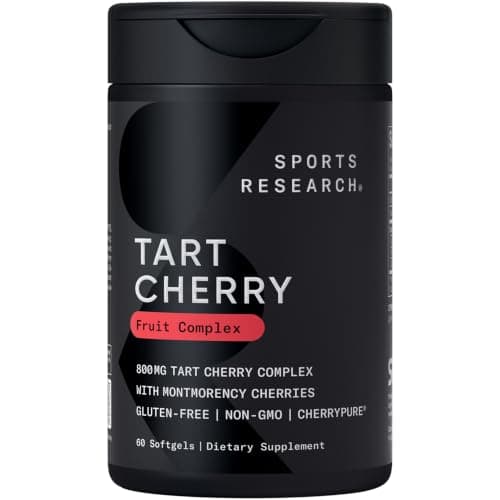
Sports Research — Tart Cherry Fruit Complex (800 mg, 60 Softgels)
The optional fourth layer, and the one worth adding if you train hard, because it earns its place on soreness as well as sleep. The tart cherry sleep studies are small but point the same way — roughly 25 minutes more total sleep in a seven-day concentrate study, about 17 minutes less wake-after-sleep-onset in older adults with insomnia. A softgel is a concentrate, so check our dosing guide against what the studies actually used.
What not to stack, and when to stop stacking entirely
A few combinations and situations deserve a flat no. Do not combine a sleep stack with alcohol as a sleep aid — alcohol shortens sleep onset and then wrecks the second half of the night, which is the exact pattern people then try to fix with more supplements. Do not add melatonin on top of a prescription sedative or an antihistamine sleep aid without asking the prescriber; NCCIH specifically notes that people with epilepsy and those taking blood thinners need medical supervision with melatonin, and that the 2015 AASM guidelines recommend against melatonin use in people with dementia, where it may stay active longer and cause daytime drowsiness. Do not give a child a stack: NCCIH flags uncertainties about dose and timing in children, possible effects on puberty, menstrual cycles and prolactin that are not settled, and a 2024 CDC report estimating 11,000 emergency department visits for unsupervised melatonin ingestion by children five and under between 2019 and 2022, many involving flavored products. That is a conversation with a pediatrician, not a purchase. And stop stacking entirely in three situations. If you snore heavily, wake gasping or choking, or are exhausted despite spending eight hours in bed, the issue may be sleep apnea and no supplement addresses it — that is a sleep study. If your sleep problem has lasted three months or more, you have chronic insomnia by definition, and the ACP strongly recommends CBT-I as the initial treatment; the stack is at best an adjunct to that. And if you have worked through four layers over two months with nothing to show, the answer is that this is not a supplement problem. Put the money into blackout curtains, a cooler room, a fixed wake time, and getting your caffeine cutoff eight hours before bed.
What we'd actually do
Here is the sequence, in order, with the decision point at each step. WEEK 0, free: fix the inputs. A fixed wake time seven days a week, bright light in the morning, caffeine cutoff eight hours before bed, a cool dark room, and no screens-in-bed. Do this before you buy anything, because it is the highest-leverage change available and it will change what the supplements are being asked to do. WEEKS 1-2, the base layer: magnesium glycinate in the evening, under the 350 mg supplemental ceiling. Cheap, well tolerated, correcting a shortfall roughly half of Americans have — with the honest caveat that the 2022 meta-analysis put magnesium in the needs-more-research column for sleep specifically. WEEKS 3-4, the targeted layer, chosen by your failure mode: if the problem is TIMING, add melatonin at 1 mg or less, taken an hour or more before the bedtime you want, and treat it as moving your clock rather than sedating you; if the problem is WIRED, add L-theanine at 200 mg, the dose from the four-week crossover trial. Not both. WEEKS 5-6, optional: tart cherry, especially if you train hard, where it does double duty on soreness and sleep. Stop at four components. Keep the one-line morning note the whole time, and at the end of six weeks drop anything you cannot point at a line in your notes to justify — the goal is the smallest stack that works, not the biggest one you can tolerate. And keep the hierarchy straight: sleep is a performance pillar on this site, which means it gets treated as seriously as training. That means fixing the schedule, the light and the caffeine first, and using the bottles for the gap that is left. This is general information, not medical advice; talk to a clinician before adding anything if you take prescription medication, are pregnant or breastfeeding, or have a diagnosed sleep disorder.
Frequently asked questions
One layer at a time, two weeks each, four components maximum, and matched to a specific failure mode rather than to 'bad sleep'. The sequence we would run: fix light, caffeine timing and a fixed wake time first; add magnesium glycinate in the evening as the base layer; then add ONE targeted layer depending on the problem — low-dose melatonin if the issue is timing, L-theanine at 200 mg if the issue is being wired; then tart cherry as an optional fourth if you train hard. Rules that matter more than the products: never add two things in the same week, because you will not know which did what; never double up on the same mechanism, since a melatonin capsule plus a sleep gummy containing melatonin is the most common accidental overdose here; and keep a one-line morning note so you are judging a two-week trial on data rather than on last night's memory. If your sleep problem has lasted three months or more, the American College of Physicians strongly recommends cognitive behavioral therapy for insomnia as the initial treatment — the stack is an adjunct to that at best.
Related reading
- → Best supplements for sleep, scored on a public rubric
- → Melatonin vs magnesium: which one your sleep problem needs
- → How much tart cherry juice for sleep?
- → Best melatonin supplements
- → Best magnesium for sleep
- → Can you take multiple supplements at once?
- → What supplements help with stress
- → How long does ashwagandha take to work?
- → When to take magnesium
Sources
- Melatonin: What You Need To Know (circadian wins — delayed sleep-wake phase disorder with sleep onset about 22 minutes faster than placebo in a 2016 review of 52 people and a 2018 randomized trial in 307 people taking it one hour before the desired bedtime falling asleep about 34 minutes earlier; jet lag may be better than placebo; shift work about 24 minutes more daytime sleep across 7 studies in 263 participants on low-quality evidence; for CHRONIC INSOMNIA the 2017 AASM and 2016 ACP guidelines found not enough strong evidence on effectiveness or safety to recommend it, and ACP strongly recommends CBT-I as initial treatment; a 2023 study found 22 of 25 gummies mislabeled with content from 74% to 347% of label and one with no detectable melatonin; a 2024 CDC report estimated 11,000 emergency department visits for unsupervised ingestion by children 5 and under 2019-2022; epilepsy and blood thinners require medical supervision; 2015 AASM guidelines recommend against use in people with dementia) — NIH National Center for Complementary and Integrative Health
- Efficacy of dietary supplements on improving sleep quality: a systematic review and meta-analysis (31 randomized controlled trials; subjective sleep quality significantly improved by amino acids MD -1.27, 95% CI -2.35 to -0.20, I2 = 0%; melatonin MD -1.21, -2.17 to -0.24, I2 = 79%; and vitamin D MD -1.63, -3.15 to -0.10, I2 = 85%; magnesium, zinc, resveratrol and nitrate did NOT have adequate data for meta-analysis and the authors conclude further research on them is required) — Postgraduate Medical Journal, 2022
- Clinical Practice Guideline for the Pharmacologic Treatment of Chronic Insomnia in Adults (American Academy of Sleep Medicine, 2017 — recommends against melatonin for chronic insomnia) — Journal of Clinical Sleep Medicine, 2017
- Melatonin Treatment for Age-Related Insomnia (Zhdanova IV et al. — dose-response comparison of 0.1, 0.3 and 3.0 mg; 0.3 mg was as effective as 3.0 mg) — Journal of Clinical Endocrinology & Metabolism, 2001
- Effects of L-Theanine Administration on Stress-Related Symptoms and Cognitive Functions in Healthy Adults: A Randomized Controlled Trial (Hidese S et al. — randomized, placebo-controlled, crossover, double-blind, 30 healthy adults, 200 mg/day for four weeks; Pittsburgh Sleep Quality Index scores decreased p = 0.013, with PSQI subscales for sleep latency, sleep disturbance and use of sleep medication improved versus placebo) — Nutrients, 2019
- Effect of tart cherry juice (Prunus cerasus) on melatonin levels and enhanced sleep quality (30 mL concentrate twice daily, 7 days; urinary melatonin up 15-16%, about 25 minutes more total sleep time, 5-6% better sleep efficiency) — European Journal of Nutrition, 2012
- Effects of a tart cherry juice beverage on the sleep of older adults with insomnia: a pilot study (8 oz morning and night for two weeks; about 17 minutes less wake time after sleep onset) — Journal of Medicinal Food, 2010
- Magnesium — Fact Sheet for Health Professionals (adult RDAs 310-420 mg; Tolerable Upper Intake Level for SUPPLEMENTAL magnesium of 350 mg/day; NHANES 2013-2016 analysis finding 48% of Americans ingest less magnesium from food and beverages than their respective EARs; high supplemental doses cause diarrhea, nausea and abdominal cramping) — NIH Office of Dietary Supplements
- Efficacy and Safety of Ashwagandha (Withania somnifera) Root Extract in Insomnia and Anxiety: A Double-blind, Randomized, Placebo-controlled Study (Langade D et al. — 10 weeks; sleep onset latency improved in BOTH the extract and placebo arms at five weeks and was significantly shorter than placebo only at ten weeks, p 0.019) — Cureus, 2019
- Product titles, doses, counts, certifications, live prices and availability for the supplements referenced — retrieved via the Amazon product data layer — Amazon product listing data, 2026
Thorne — Magnesium Bisglycinate (Powder)
$52.00 · on Amazon