Melatonin vs Magnesium for Sleep: Which Should You Try?
These two get lumped together as 'natural sleep aids,' but they work in completely different ways, and understanding that tells you which — if either — is worth trying. Melatonin is a hormone your brain already makes when it gets dark; taken as a supplement it's a timing signal, not a sedative. It's genuinely useful for problems of clock alignment — jet lag, shift work, and delayed sleep-phase — where it can nudge your body clock and modestly shorten the time it takes to fall asleep. It is not a knockout pill, and taking more doesn't help: low doses of 0.5 to 1 mg often work as well as the 5 and 10 mg bottles on the shelf. Magnesium is an essential mineral involved in hundreds of processes, including the ones that let your nervous system settle down. It's worth trying mainly if your intake or status is low — which is common — and the gentle, sleep-friendly form is magnesium glycinate. Neither is a fix for bad sleep habits, and neither should be your first move for chronic insomnia, which is a medical issue worth taking to a doctor. If your problem is a misaligned clock, start with melatonin; if it's general tension and you suspect you're low on magnesium, start there.
The verdict
Reach for melatonin when your sleep problem is a timing problem — jet lag, shift work, or a body clock that runs late — and use a low dose (0.5-1 mg) a few hours before your target bedtime, not a megadose at lights-out. Reach for magnesium (glycinate) if your diet is short on it or you want gentle relaxation support, understanding the payoff is largest when you were actually low to begin with. They can be used together, but neither substitutes for real sleep hygiene, and chronic insomnia belongs with a doctor rather than a supplement shelf. If you're a healthy person with the occasional rough night, magnesium glycinate is the lower-risk daily option; melatonin is the targeted tool for clock problems.
Side-by-side
| Attribute | Melatonin | Magnesium |
|---|---|---|
| What it is | A hormone your brain makes at night, sold as a supplement | An essential mineral used in 300+ enzyme reactions |
| How it helps sleep | Signals 'night' to your body clock; modestly shortens time to fall asleep | Supports nervous-system relaxation — mainly if you were low |
| Best use case | Jet lag, shift work, delayed sleep-phase (clock problems) | Low dietary intake/status, general relaxation and cramps |
| Is it a sedative? | No — a timing signal, not a knockout | No — relaxation support, not a sedative |
| Typical dose | 0.5-1 mg (low often works as well as high) | About 200-400 mg elemental; glycinate for sleep |
| When to take | A few hours before target bedtime (timing is key) | Evening, taken consistently |
| Main cautions | Grogginess/vivid dreams; wrong-time use worsens timing; US label content varies | GI upset at high doses (worse with citrate/oxide); drug interactions |
| Evidence for sleep | Strong for jet lag/circadian; modest for sleep onset | Modest; best when correcting a deficiency |
Who should pick which
Pick Melatonin
- Travelers crossing time zones and shift workers — melatonin's strongest, best-evidenced use is realigning a shifted body clock.
- Night owls with delayed sleep-phase who fall asleep and wake far too late and want to shift their clock earlier.
Pick Magnesium
- People whose diet is low in magnesium (common) or who want gentle, daily relaxation support rather than a timing shift.
- Anyone who wants the lower-risk daily option and doesn't have a clock-alignment problem — glycinate is well tolerated.
- People who also get muscle cramps or tension and may benefit from correcting a genuine magnesium shortfall.
Melatonin is a clock signal, not a sleeping pill
The single most useful thing to understand about melatonin is that it doesn't sedate you — it tells your body it's nighttime. Your brain releases it as darkness falls, and it's part of how your circadian rhythm decides when you feel sleepy. Taken as a supplement, it can shift that clock and shorten how long it takes to drift off, but the effect on sleep onset is modest, on the order of minutes, and it does little for staying asleep. Where melatonin genuinely shines is problems of timing: a Cochrane review found it effective for preventing and reducing jet lag, and it's a first-line tool for delayed sleep-phase and shift work — situations where your internal clock is out of step with when you need to sleep. If your issue is that you're wired at a normal bedtime because you crossed time zones or work nights, melatonin is the right lever. If you simply can't fall asleep in your own bed on your own schedule, it's a weaker tool than the marketing suggests.
With melatonin, less is usually as good as more
The melatonin aisle runs from 0.5 mg to 10 mg, and the big numbers are mostly a marketing artifact. Research consistently finds that low doses — 0.5 to 1 mg — work about as well as much larger ones for shifting the clock and easing sleep onset, and a dose-response analysis found higher amounts didn't produce a proportionally stronger effect. Overshooting has real downsides: too much melatonin, or melatonin taken at the wrong time, can leave you groggy the next morning, cause vivid dreams, and actually push your clock in the wrong direction. There's also a quality wrinkle specific to the United States, where melatonin is sold as a supplement rather than a regulated drug: studies analyzing over-the-counter products have found the actual melatonin content often differs substantially from the label, sometimes by huge margins. The practical takeaway is to start at 0.5-1 mg, take it a few hours before your target bedtime rather than at lights-out, and treat the 10 mg bottle as the wrong default, not a stronger option.
Magnesium helps most when you're actually low
Magnesium is an essential mineral your body uses in hundreds of enzymatic reactions, including ones that regulate the nervous system and help it downshift toward rest. That's the mechanistic basis for its reputation as a relaxation and sleep aid — and it's real, but with an important qualifier: the benefit is largest when you were short on magnesium to begin with. Low intake is common, since many people don't hit the RDA (roughly 400-420 mg a day for men and 310-320 mg for women) from food, so a lot of people do have room to gain. But if your magnesium status is already fine, topping up won't turn you into a great sleeper. The honest framing is that magnesium is worth trying mainly if your diet is short on it or you suspect a shortfall — and that whole foods like leafy greens, legumes, nuts, seeds, and whole grains are the first place to get it before a pill.
If you take magnesium for sleep, glycinate is the gentle form
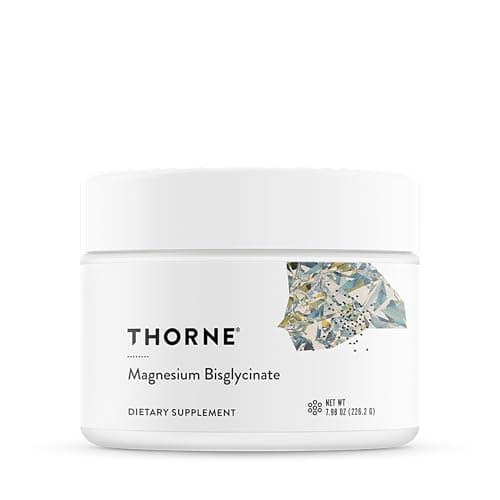
Not all magnesium is the same, and the form matters more for sleep than the dose does. Magnesium glycinate — magnesium bound to the amino acid glycine — is the sleep-friendly pick because it's well absorbed and gentle on the gut, so it doesn't send you to the bathroom the way cheaper forms can. Magnesium citrate is also reasonably absorbed but has a stronger laxative effect, and magnesium oxide is poorly absorbed and mostly useful as a laxative or antacid rather than for sleep. For a nightly relaxation supplement, glycinate at around 200-400 mg of elemental magnesium in the evening is the standard, sane choice. Start at the lower end, since even well-tolerated forms can loosen stools at higher doses, and take it consistently rather than expecting a single dose to work like a sedative.
Neither is a fix for bad sleep habits — or for chronic insomnia
Here's the part the supplement industry won't lead with: the highest-return sleep interventions are free. Consistent wake and sleep times, a dark and cool room, morning daylight, limiting late caffeine and alcohol, and getting screens out of bed do more for most people than any pill or capsule. Melatonin and magnesium are modest add-ons layered on top of those basics, not replacements for them — and if you skip the fundamentals, no supplement will rescue your sleep. Just as important: chronic insomnia, loud snoring or gasping (possible sleep apnea), and sleep that's been broken for weeks are medical issues, not shelf decisions. The first-line treatment for chronic insomnia is cognitive behavioral therapy (CBT-I), not a supplement, and major sleep-medicine guidance does not endorse melatonin as a treatment for it. If your sleep problem is persistent, talk to a doctor before reaching for either of these.
Frequently asked questions
It depends on the problem. If your sleep issue is a timing problem — jet lag, shift work, or a body clock that runs late — melatonin is the better tool, used at a low dose a few hours before your target bedtime. If your diet is low in magnesium or you want gentle, lower-risk daily relaxation support, magnesium (glycinate) is the better fit, though the payoff is biggest if you were actually short on it. Neither is a sedative, and neither replaces good sleep habits. For a healthy person with the odd rough night, magnesium glycinate is the safer everyday option; melatonin is the targeted fix for clock problems.
Sources
- Magnesium — Fact Sheet for Health Professionals (RDA ~400-420 mg men / 310-320 mg women, common low intakes, forms and absorption, role in nervous-system function) — NIH Office of Dietary Supplements, 2022
- Optimizing the Time and Dose of Melatonin as a Sleep-Promoting Drug: Systematic Review of RCTs and Dose-Response Meta-Analysis (low doses effective; higher doses not proportionally better; timing matters) — Journal of Pineal Research, 2024
- Melatonin for the prevention and treatment of jet lag (Cochrane review — melatonin effective for jet lag; 0.5-5 mg comparably effective, higher doses not better) — Cochrane Database of Systematic Reviews (Herxheimer & Petrie), 2002
- Melatonin: What You Need To Know (timing signal vs. sedative, use cases, safety, supplement quality) — NIH National Center for Complementary and Integrative Health, 2022
- Melatonin Natural Health Products and Supplements: Presence of Serotonin and Significant Variability of Melatonin Content (OTC melatonin content ranged widely from label; some products contained serotonin) — Journal of Clinical Sleep Medicine (Erland & Saxena), 2017
Align — Align Probiotic Supplement
$59.99 · on Amazon