Does Pre-Workout Raise Blood Pressure?
Yes, acutely, and the size of the effect is known. In a meta-analysis of five controlled trials in hypertensive individuals, 200-300 mg of caffeine produced a mean increase of 8.1 mmHg in systolic and 5.7 mmHg in diastolic blood pressure, starting within the first hour and lasting at least three hours — and a typical scoop of pre-workout sits right in that dose range. Caffeine is doing almost all of the work; the citrulline and nitrate 'pump' ingredients in the same scoop pull mildly in the opposite direction, with inorganic nitrate and beetroot supplementation lowering systolic blood pressure by about 4.4 mmHg in a meta-analysis of 16 trials. Two pieces of context matter before anyone panics. First, the same caffeine meta-analysis found no increase in blood pressure after two weeks of coffee consumption and no association between habitual coffee drinking and cardiovascular disease risk in hypertensive people — the effect is acute, not cumulative. Second, the exercise itself is a far larger acute stimulus: during leg presses to failure at 95% of maximum strength, intra-arterial systolic pressure in healthy men rose from 160 to 270 mmHg. So the honest framing is not 'pre-workout is dangerous', it is: if your blood pressure is already high or untreated, you are adding a measurable pressor on top of a much bigger one, you should know your actual numbers rather than guess, and a caffeine-free pre-workout gets you the rest of the formula without the pressor at all.
Affiliate disclosure: Trusted Health Gear is an Amazon Associate. If you buy through links on this page, we may earn a commission at no extra cost to you. Commission does not influence our rankings. Full policy.
What's actually in the scoop, and which parts move blood pressure
A multi-ingredient pre-workout is usually four things stacked together, and they do not all pull the same direction. Caffeine is the stimulant and the only ingredient with a large, reliable, immediate effect on blood pressure. Beta-alanine is the tingle — it buffers acid in efforts of roughly one to four minutes and has nothing to do with blood pressure. Citrulline or citrulline malate is the 'pump' ingredient, a nitric oxide precursor intended to cause vasodilation, which if anything lowers pressure. And then there is the filler layer: taurine, electrolytes, B vitamins, and in the worse products, a proprietary blend hiding the doses. The practical consequence is that the caffeine number on the label is the number that matters for this question, and everything else is noise around it. That is also why the dose range across products is so wide in its implications. Among the pre-workouts we have reviewed, caffeine content runs from zero in genuinely stim-free formulas, through 150 mg in mainstream products like C4 Original, to 188 mg in Kaged Sport, with plenty of products elsewhere in the aisle sitting at 300 mg or more per scoop and some requiring two scoops for a 'full dose'. The FDA cites 400 mg a day — about two to three 12-ounce cups of coffee — as an amount not generally associated with negative effects for healthy adults, and estimates that toxic effects such as seizures can be seen with rapid consumption of around 1,200 mg. A 350 mg scoop on top of two coffees puts you past the daily figure before you have lifted anything, and that total is where the real risk lives rather than in the supplement alone.
The number: 8.1 mmHg systolic, for at least three hours
The cleanest answer comes from a 2011 systematic review and meta-analysis in the American Journal of Clinical Nutrition that looked specifically at hypertensive people, which is the group that should care most. Across five controlled trials, administering 200-300 mg of caffeine produced a mean increase of 8.1 mmHg in systolic blood pressure (95% CI: 5.7 to 10.6) and 5.7 mmHg in diastolic (95% CI: 4.1 to 7.4). The rise appeared in the first hour after intake and lasted three hours or more. That dose window — 200 to 300 mg — is precisely where a lot of pre-workout scoops land, so this is about as directly applicable a finding as you will get. Now the part that is routinely left out of alarmed internet posts about this: the same review examined longer-term effects and found something different. Across three studies of two-week coffee consumption, no increase in blood pressure was observed when coffee was compared with a caffeine-free diet or with decaffeinated coffee, and across seven cohort studies there was no evidence of an association between habitual coffee consumption and higher cardiovascular disease risk in hypertensive subjects. The authors' conclusion was exactly that split: caffeine produces an acute increase in blood pressure lasting at least three hours in hypertensive individuals, while current evidence does not support an association between longer-term coffee consumption and increased blood pressure or cardiovascular risk. For a pre-workout, that means the right mental model is a temporary, predictable, few-hour bump — not a drug that is slowly raising your baseline. It also means the acute bump is real and arrives at the exact moment you are about to add a second, larger one.
The context nobody gives you: what a hard set does to blood pressure
If an 8 mmHg rise from caffeine sounds alarming, the comparison that puts it in proportion is the set itself. In a study using intra-arterial measurement in healthy males performing leg press to failure at 95% of their maximum dynamic strength, systolic blood pressure rose from 160 mmHg before exercise to 270 mmHg during the lifting phase, with diastolic going from 91 to 183 mmHg and intrathoracic pressure climbing from essentially zero to nearly 58 Torr. During the lowering phase systolic was still 207 mmHg. Those are enormous transient numbers, driven by the mechanics of a heavy effort — muscular compression of vessels plus the Valsalva maneuver you reflexively perform under a heavy load — and they return toward baseline between sets. We are not citing this to be reassuring about stimulants; we are citing it because any honest discussion of 'does pre-workout raise blood pressure' has to acknowledge that heavy lifting raises it by an order of magnitude more, in people with normal blood pressure, and that this is a well-described and generally well-tolerated feature of training rather than a problem with the supplement. The implication cuts both ways. For a healthy lifter with normal blood pressure, the caffeine contribution is small relative to the stimulus they already chose. For someone with uncontrolled hypertension, the relevant conversation is not really about the scoop at all — it is about the fact that both the training and the stimulant are pressors and that their clinician should be in the loop on the whole picture, including the lifting.
The ingredients pulling the other way
This is where pre-workout differs from a plain caffeine pill, and it is worth being precise rather than generous. Citrulline and the nitrate-donor ingredients are in the formula to produce vasodilation, and the vasodilation is real in the sense that it is the basis for the whole nitric-oxide category. The best-quantified version of this effect comes from inorganic nitrate rather than citrulline: a meta-analysis of 16 randomized crossover trials with 254 total participants found inorganic nitrate and beetroot juice consumption reduced systolic blood pressure by 4.4 mmHg (95% CI: −5.9 to −2.8, p < 0.001), with a smaller and non-significant diastolic change of −1.1 mmHg, and a dose-response relationship between daily nitrate intake and the systolic change. So the pump side of the formula is working in the opposite direction to the caffeine side, at roughly half the magnitude in the studies that measured it best. We would not lean on that as reassurance, for two reasons. The doses in nitrate trials are not necessarily the doses in your scoop, and the pre-workout literature itself shows the net effect still goes up: a randomized, double-blind, placebo-controlled crossover study in 15 recreationally active women found that a single dose of a multi-ingredient pre-workout significantly raised diastolic blood pressure alongside resting energy expenditure, while improving upper-body muscular endurance, anaerobic capacity and subjective focus. One small study, but it measured the whole product rather than one ingredient, and the whole product moved pressure up. The sensible read is that the opposing ingredients blunt the caffeine effect somewhat without canceling it.
The ingredients that genuinely are a problem
Two things in this aisle are a different category of risk from caffeine, and both are worth knowing by name. DMAA — 1,3-dimethylamylamine, also sold as methylhexanamine or marketed as 'geranium extract' — is an amphetamine derivative that the FDA states is not a dietary ingredient, making DMAA-containing products marketed as dietary supplements illegal. The FDA's position on the mechanism is direct: taking DMAA can raise blood pressure and lead to cardiovascular problems ranging from shortness of breath and tightening in the chest to heart attack, and the risk is higher in combination with other stimulants such as caffeine. The agency is not aware of any reliable science indicating DMAA occurs naturally in plants, and it continues to advise consumers not to use products containing it. This is not a historical footnote — the FDA has issued recalls of pre-workout products for undeclared DMAA, which means the ingredient can be present in something whose label does not list it. The practical defense is the same one we recommend for every supplement category on this site: buy from brands that disclose every dose, and prefer products carrying NSF Certified for Sport or Informed Sport marks, because those programs test for exactly this class of contaminant. The second problem is the proprietary blend. A label that reads 'Energy & Focus Matrix, 6,200 mg' with ten ingredients underneath it is not telling you how much caffeine you are about to take, which makes it impossible to manage your daily total, impossible to taper, and impossible to interpret if you feel bad afterward. For this question specifically — a question whose entire answer depends on a milligram figure — an undisclosed caffeine dose should be disqualifying.
What to do about it: four decisions, in order
First, find out what your blood pressure actually is instead of reasoning about it. CDC puts normal at less than 120/80 mmHg, with elevated covering systolic 120-129 with diastolic below 80, and high blood pressure defined as readings consistently at or above 130/80 mmHg. This is a five-minute measurement with a home monitor, and it changes the answer completely: at 112/70 the caffeine conversation is academic, and at 148/92 it is not a supplement question anymore, it is a doctor's appointment. Second, do the arithmetic on your total daily caffeine rather than the scoop in isolation. FDA's 400 mg figure is a daily ceiling for healthy adults, and the coffee you already drank counts; if the product will not disclose its dose, you cannot do this step, which is reason enough to switch products. Third, if your numbers are elevated, or you are on blood pressure medication, or caffeine makes you feel wired and anxious — buy a stim-free pre-workout. This is the most underrated option in the category: you keep the citrulline, the beta-alanine and the ritual, you lose the ingredient causing the pressor and the one most likely to wreck your sleep, and you give up only the acute stimulant effect. Fourth, fix the timing problem even if your blood pressure is fine. Caffeine's half-life means a late-afternoon or evening scoop is a sleep problem, and sleep is a performance pillar we take as seriously as training on this site. A caffeine-free formula for evening sessions solves both issues at once. And one safety note that outranks everything above: chest pain, pressure or tightness, severe shortness of breath, an irregular or racing heartbeat that does not settle, fainting, or a sudden severe headache during or after a workout are reasons to stop and seek medical care — not reasons to search for a gentler pre-workout.
What we'd actually buy
Every pick below is already reviewed and scored in our roundups — same products, same specs, with live Amazon prices.
| Attribute | Transparent Labs Stim-Free Pre-Workout (Blue Raspberry, 30 servings)Our pick | Cellucor C4 Original Pre-Workout (Fruit Punch, 30 servings) | Kaged Kaged Sport Pre-Workout (Mango Lime, 20 servings) | OMRON OMRON Silver Blood Pressure Monitor |
|---|---|---|---|---|
| Best for | Best for evening training — caffeine-free, sleep-safe | The category benchmark — popular, but the label is the problem | Best for tested athletes — Sport Certified, moderate caffeine | Best everyday value — validated-brand accuracy with Bluetooth logging at a mid-range price |
| Who it's for | The answer for anyone with elevated blood pressure, on BP medication, caffeine-sensitive, or training in the evening: genuinely stimulant-free, with the citrulline and beta-alanine intact and every dose disclosed. | If you want caffeine but want it modest and clearly stated: 150 mg per scoop, printed on the label, which leaves room inside the FDA's 400 mg daily figure for the coffee you already had. | A mid-dose, fully disclosed 188 mg of caffeine with Sport Certification — the banned-substance testing that is the real defense against undeclared stimulants like DMAA. | The purchase that actually answers this question for you rather than in general: a validated-brand upper-arm monitor with logging, so you know whether you are at 112/70 or 148/92 before you decide anything about a scoop. |
| Key specs | Caffeine and stimulant free, beta-alanine, citrulline malate, elevATP, 30 servings | 150mg caffeine, beta-alanine, creatine, added vitamin C, sugar free, 30 servings | Sport Certified, 188mg caffeine, beta-alanine, nitric-oxide support, 20 servings | Upper-arm oscillometric monitor · single-user on-device memory · Bluetooth to the OMRON Connect app · high-morning-average indicator · backlit display · irregular-heartbeat detection · ships with OMRON's wide-range cuff (fits most adult arms, roughly 9-17 in / 22-42 cm) |
| Our score | 7.8/10 | 6.7/10 | 8.3/10 | 8.8/10 |
| Where to buy |
Prices pulled from Amazon as of October 18, 2026 and are subject to change. The price shown on Amazon at checkout applies.

Transparent Labs — Stim-Free Pre-Workout (Blue Raspberry, 30 servings)
The answer for anyone with elevated blood pressure, on BP medication, caffeine-sensitive, or training in the evening: genuinely stimulant-free, with the citrulline and beta-alanine intact and every dose disclosed.

Cellucor — C4 Original Pre-Workout (Fruit Punch, 30 servings)
If you want caffeine but want it modest and clearly stated: 150 mg per scoop, printed on the label, which leaves room inside the FDA's 400 mg daily figure for the coffee you already had.

Kaged — Kaged Sport Pre-Workout (Mango Lime, 20 servings)
A mid-dose, fully disclosed 188 mg of caffeine with Sport Certification — the banned-substance testing that is the real defense against undeclared stimulants like DMAA.
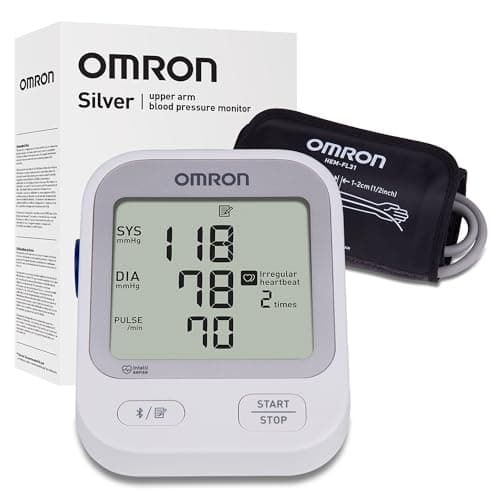
OMRON — OMRON Silver Blood Pressure Monitor
The purchase that actually answers this question for you rather than in general: a validated-brand upper-arm monitor with logging, so you know whether you are at 112/70 or 148/92 before you decide anything about a scoop.
Bottom line
Pre-workout raises your blood pressure for a few hours, by roughly 8 mmHg systolic and 6 mmHg diastolic at the caffeine doses most scoops deliver, and then it goes back down. The effect does not appear to accumulate into a higher baseline — two weeks of coffee did not raise blood pressure in the trials, and habitual coffee drinking was not associated with cardiovascular disease even in hypertensive cohorts. Set against the 270 mmHg systolic measured during a maximal leg press, the scoop is the smaller of the two things you are about to do to your cardiovascular system. That is the reassuring half. The other half is that none of it tells you anything about your own situation, because the whole answer turns on numbers you probably do not have: your resting blood pressure, and the milligrams of caffeine in your scoop plus everything else you drank today. Get both of those, and the decision makes itself. Our position, consistent with how we handle every stimulant on this site: the caffeine is the only ingredient in the tub with strong evidence of an acute performance effect, so take it on purpose at a disclosed dose, early in the day, inside a sensible daily total — or take the stim-free version and get your caffeine from coffee where you know exactly what you are getting. And if your blood pressure is already above 130/80, the pre-workout is not the thing to optimize. Training, sleep, sodium, body weight and a clinician are.
Frequently asked questions
At the caffeine doses most scoops deliver, expect roughly 8 mmHg systolic and 6 mmHg diastolic for about three hours. The specific figures come from a 2011 systematic review and meta-analysis in the American Journal of Clinical Nutrition that looked at hypertensive individuals: across five controlled trials, 200-300 mg of caffeine produced a mean increase of 8.1 mmHg in systolic blood pressure (95% CI: 5.7 to 10.6) and 5.7 mmHg in diastolic (95% CI: 4.1 to 7.4), beginning within the first hour and lasting at least three hours. Caffeine is responsible for nearly all of this; the citrulline and nitrate ingredients in the same product push mildly the other way, with inorganic nitrate and beetroot supplementation reducing systolic pressure by about 4.4 mmHg in a 16-trial meta-analysis. Measured as a whole product, the net still goes up — a placebo-controlled crossover study in 15 recreationally active women found a single dose of a multi-ingredient pre-workout significantly raised diastolic blood pressure. Your individual number depends on the caffeine dose in your scoop, your habituation, and what else you drank that day.
Related reading
- → Best pre-workout supplements, scored on a public rubric
- → Best blood pressure monitors for home use
- → How to measure blood pressure at home
- → Pre-workout vs coffee: which caffeine is better before training
- → Creatine vs pre-workout
- → Best beta-alanine supplements
- → How to read a supplement label
- → Best supplements for energy
Sources
- The effect of coffee on blood pressure and cardiovascular disease in hypertensive individuals: a systematic review and meta-analysis (in 5 trials, 200-300 mg caffeine produced a mean increase of 8.1 mmHg systolic, 95% CI 5.7-10.6, and 5.7 mmHg diastolic, 95% CI 4.1-7.4; the increase appeared in the first hour and lasted at least 3 hours; in 3 studies of 2-week coffee consumption no blood pressure increase was observed versus a caffeine-free diet or decaffeinated coffee; 7 cohort studies found no association between habitual coffee consumption and higher cardiovascular disease risk in hypertensive subjects) — American Journal of Clinical Nutrition, 94(4):1113-1126, 2011
- Left ventricular response in healthy young men during heavy-intensity weight-lifting exercise (intra-arterial measurement during leg press to failure at 95% of maximum dynamic strength; systolic blood pressure rose from 160 +/- 6 to 270 +/- 21 Torr and diastolic from 91 +/- 2 to 183 +/- 18 Torr during the lifting phase, with intrathoracic pressure rising from 0.8 to 57.8 Torr; during the lowering phase systolic was 207 +/- 23 Torr and diastolic 116 +/- 8 Torr) — Journal of Applied Physiology, 75(6):2703-2710, 1993
- Inorganic nitrate and beetroot juice supplementation reduces blood pressure in adults: a systematic review and meta-analysis (16 randomized crossover trials, 254 participants; systolic blood pressure -4.4 mmHg, 95% CI -5.9 to -2.8, p < 0.001; diastolic -1.1 mmHg, 95% CI -2.2 to 0.1, p = 0.06; meta-regression showed an association between daily inorganic nitrate dose and systolic change) — Journal of Nutrition, 143(6):818-826, 2013
- The acute effects of a multi-ingredient pre-workout supplement on resting energy expenditure and exercise performance in recreationally active females (randomized, double-blind, placebo-controlled crossover in 15 women; significant main effect for condition on resting energy expenditure, p = 0.021, and on diastolic blood pressure, p = 0.011; greater bench press repetitions to failure and total treadmill work, with improved subjective focus at 80 minutes post-ingestion) — Journal of the International Society of Sports Nutrition, 15:2, 2018
- Spilling the Beans: How Much Caffeine is Too Much? (400 milligrams a day, about two to three 12-fluid-ounce cups of coffee, cited as an amount not generally associated with negative effects for healthy adults; toxic effects such as seizures estimated with rapid consumption of around 1,200 milligrams; pure and highly concentrated caffeine products can have serious health consequences including death) — U.S. Food and Drug Administration, 2026
- DMAA in Products Marketed as Dietary Supplements (DMAA, also known as 1,3-dimethylamylamine, methylhexanamine or 'geranium extract', is not a dietary ingredient, and DMAA-containing products marketed as dietary supplements are illegal; taking DMAA can raise blood pressure and lead to cardiovascular problems ranging from shortness of breath and tightening in the chest to heart attack, with higher risk in combination with other stimulants such as caffeine; FDA is not aware of reliable science indicating DMAA occurs naturally in plants) — U.S. Food and Drug Administration, 2026
- About High Blood Pressure (normal blood pressure is less than 120/80 mm Hg; elevated blood pressure is systolic 120-129 with diastolic below 80; high blood pressure is readings consistently at or above 130/80 mm Hg) — Centers for Disease Control and Prevention, 2026
- Product titles, caffeine amounts per serving, certifications, live prices and availability for the pre-workout and blood pressure monitor products referenced — retrieved via the Amazon product data layer — Amazon product listing data, 2026
Transparent Labs — Stim-Free Pre-Workout (Blue Raspberry, 30 servings)
$49.99 · on Amazon