Are Workout Gloves Worth It? Who They Help, and Who They Hold Back
Honest answer: workout gloves are worth it for a specific set of reasons, and not the one most people buy them for. They are worth it if you want to protect your hands from calluses and tears, if you train in a commercial gym and would rather not grip equipment other people have sweated on, if cold metal in a winter garage gym is genuinely unpleasant, or if you want built-in wrist support on pressing work. They are not worth it as a grip aid — gloves add a layer between your hand and the bar, which usually reduces bar feel and can make a thick barbell effectively thicker and harder to hold. If your problem is a slipping bar rather than sore hands, chalk solves it better and costs a fraction as much. Our pick if you want one well-made pair that covers most lifters is the Harbinger Pro Wristwrap Gloves 3.0, which pairs a durable leather palm with wrist support that is actually useful rather than decorative.
Affiliate disclosure: Trusted Health Gear is an Amazon Associate. If you buy through links on this page, we may earn a commission at no extra cost to you. Commission does not influence our rankings. Full policy.
What gloves actually do — and what people think they do
A workout glove does three real things. It puts a durable layer between your skin and the knurling, which prevents the pinching that creates calluses and the shearing that tears them. It adds padding, which reduces the point pressure of a bar or handle on the base of your fingers. And many models wrap the wrist, which adds a modest amount of support and warmth to the joint. Those are genuine benefits and worth paying twenty-odd dollars for if they match your problem. What a glove does not do is make you grip better. Grip is a function of friction between your hand and the bar, plus the strength of your finger flexors. A glove changes the friction surface — sometimes favourably on a smooth or worn handle, often unfavourably on good knurling, which is designed to bite into skin — and it does nothing at all for finger strength. The second misconception is about bulk: a thickly padded glove increases the effective diameter of the handle you are wrapping your fingers around, and a larger diameter is harder to hold, not easier. That is the mechanism behind the common complaint that heavy deadlifts feel worse in gloves.
Who gloves are genuinely worth it for
Five groups, and if you are in one of them stop agonising and buy a pair. First, anyone whose job or life does not tolerate thick calluses — musicians, people in client-facing work, anyone who simply does not want them. Calluses are a cosmetic and comfort question, not a moral one. Second, anyone training in a shared commercial gym who would rather have a fabric layer between their palms and shared equipment; that is a perfectly reasonable preference and gloves handle it. Third, anyone training in an unheated garage gym in winter, where a cold steel barbell at 6am is a legitimate reason to want a layer. Fourth, people doing high-volume machine, cable and dumbbell work where the handles are often worn smooth and comfort matters more than bar feel — gloves are at their best here and at their worst on a knurled barbell. Fifth, lifters who want integrated wrist support for pressing: a wristwrap glove is a convenient way to get a modest amount of wrist stability without putting on separate wraps, though note that a dedicated wrist wrap is considerably more supportive if that is your actual need.
Who should skip them
Three groups are usually better off without. Powerlifters and anyone doing heavy deadlifts and heavy rows, because bar feel and a thin, high-friction interface matter most exactly where the load is highest — most serious pullers use chalk and, on the heaviest work, straps. CrossFit and gymnastics athletes doing barbell cycling and high-volume bar work, who generally need hand protection rather than padding, which is what gymnastics grips are for: a thin layer over the palm that lets the bar roll in the hand rather than a padded wrap that bunches. And anyone whose honest problem is that the bar is slipping. That is a friction problem, chalk is the answer, and it costs about a fifth as much as gloves while actively improving grip instead of insulating against it. There is also a long-term argument worth taking seriously: hands adapt. Calluses are the adaptation, and skin that has been protected for a year is skin that will tear the first time you do volume without protection. That is not a reason to avoid gloves if you want them, but it is a reason not to drift into them by default.
Gloves versus chalk versus straps versus grips
These four accessories solve four different problems and are routinely confused. Gloves solve skin protection, comfort and warmth, with a cost in bar feel. Chalk solves friction: it dries sweat and raises the coefficient of friction between skin and steel, so the bar stops slipping — it is the cheapest and most effective grip aid there is, and the trade-off is mess and the fact that many commercial gyms ban loose chalk (liquid chalk is the workaround and is usually permitted). Straps solve the problem of grip failing before the target muscle does: they wrap the bar and take your fingers largely out of the equation, which is exactly right on heavy back work where you want to train your lats rather than your hands, and exactly wrong as a default on everything, because then your grip never gets trained. Gymnastics grips solve high-volume bar work: a thin leather or synthetic layer across the palm that protects skin from tearing on pull-ups and toes-to-bar while letting the bar rotate. The practical framework: if your skin hurts, gloves or grips. If the bar slips, chalk. If your grip gives out before your back does, straps. If your hands are weak, train them — none of these four fixes that.
What to look for in a pair
Five specs, roughly in order of how much they matter. Palm material: leather is more durable and gives better bar feel than synthetic or neoprene, which is why the better gloves still use it; a leather palm with a silicone or textured print is the best of both. Padding thickness: thinner is better for barbell work and worse for comfort on machines, so choose deliberately rather than assuming more padding is a better product — the most common regret is buying the thickest pair available and then not being able to feel a deadlift. Wrist support: an integrated wrap is useful for pressing and should be adjustable with hook-and-loop; if you genuinely need meaningful wrist support, buy dedicated wrist wraps instead, because an integrated strap is a convenience rather than a substitute. Fit and finger style: gloves should be snug without compressing when you make a fist, and half-finger designs are cooler and give more fingertip feel while full-finger designs protect more and suit cold garages and rope work. Ventilation and washability: these are sweat-soaked items held close to skin, so mesh backing and a washable construction are not luxuries — pick a pair you can actually clean, and clean it, because the smell is only the visible half of the problem.
What we'd actually buy
Every pick below is already reviewed and scored in our roundups — same products, same specs, with live Amazon prices.
| Attribute | Harbinger Harbinger Pro Wristwrap Gloves 3.0Our pick | Contraband Sports Contraband Pink Label 5537 Micro Weight Lifting Gloves | Bear Grips Bear Grips Weight Lifting Gloves | Gymreapers Gymreapers Gym Chalk (8 x 2oz Blocks) |
|---|---|---|---|---|
| Best for | Best overall — leather-palm durability with genuinely useful integrated wrist support | Best minimalist — thin, low-profile silicone grip that keeps the most bar feel | Best for CrossFit and mixed training — compression fit with half- and full-finger options | Best overall — bulk magnesium-carbonate blocks that grip hard and last for months |
| Who it's for | For most lifters who want one pair that lasts: a leather palm for durability and bar feel, with integrated wrist support that is genuinely useful on pressing rather than decorative. | For the reader who wants skin protection without losing the bar — thin, low-profile silicone grip, and the right pick if your main worry about gloves is padding dulling your deadlift. | For CrossFit and mixed-modal training: a compression fit with half- and full-finger options, built for the volume bar work that destroys conventional padded gloves. | For the reader whose actual problem is a slipping bar rather than sore skin — chalk raises friction instead of insulating against it, and costs a fraction of any glove here. |
| Key specs | Durable leather palm · half-finger design · integrated adjustable wrist wrap · breathable 4-way stretch Lycra back · men's and women's sizing · long-standing, well-reviewed lifting-glove line | Minimalist half-glove design · grip-lock silicone padding rather than thick foam · very low profile · touchscreen/watch-friendly · women's sizing · no wrist wrap | Compression fit for a snug, low-slip feel · half-finger and full-finger versions · breathable build for varied training · designed for functional fitness and mixed modalities · men's and women's sizing | Eight individually wrapped 2 oz blocks (1 lb total) · magnesium carbonate · crumbles easily into a chalk bag or bowl · block format for home and chalk-friendly gyms · bulk value from a trusted lifting brand |
| Our score | 8.5/10 | 7/10 | 7.5/10 | 8.5/10 |
| Where to buy | $22.99Check Price on Amazon |
Prices pulled from Amazon as of October 18, 2026 and are subject to change. The price shown on Amazon at checkout applies.
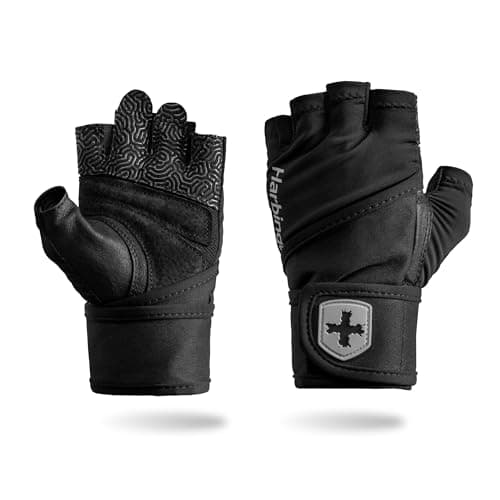
Harbinger — Harbinger Pro Wristwrap Gloves 3.0
For most lifters who want one pair that lasts: a leather palm for durability and bar feel, with integrated wrist support that is genuinely useful on pressing rather than decorative.
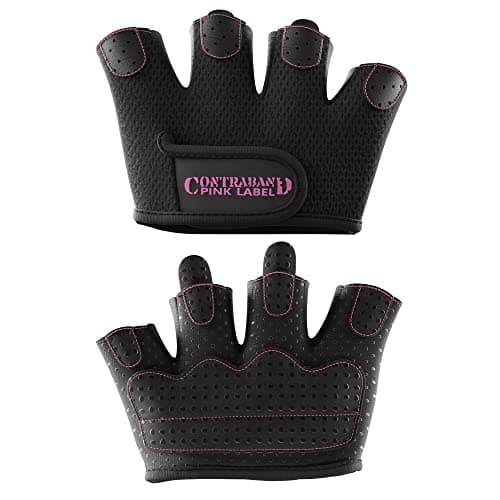
Contraband Sports — Contraband Pink Label 5537 Micro Weight Lifting Gloves
For the reader who wants skin protection without losing the bar — thin, low-profile silicone grip, and the right pick if your main worry about gloves is padding dulling your deadlift.
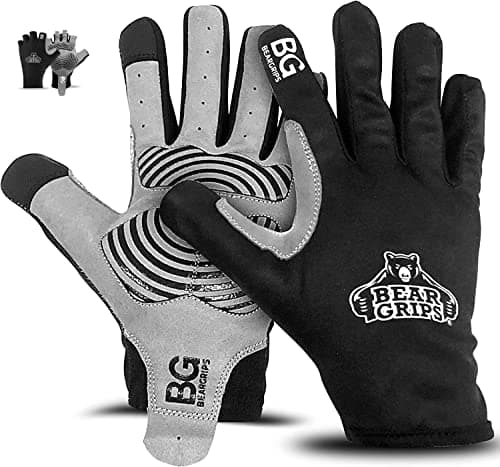
Bear Grips — Bear Grips Weight Lifting Gloves
For CrossFit and mixed-modal training: a compression fit with half- and full-finger options, built for the volume bar work that destroys conventional padded gloves.
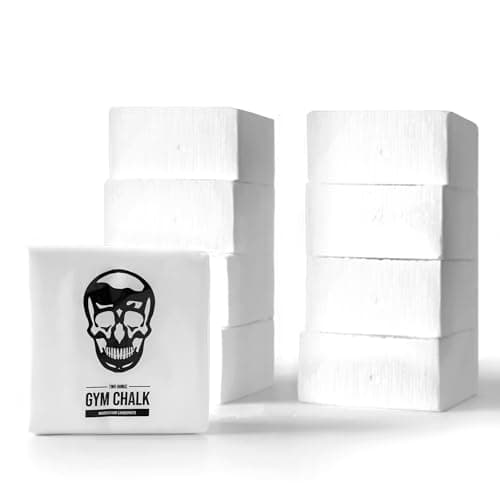
Gymreapers — Gymreapers Gym Chalk (8 x 2oz Blocks)
For the reader whose actual problem is a slipping bar rather than sore skin — chalk raises friction instead of insulating against it, and costs a fraction of any glove here.
Caring for your hands, with or without gloves
Whatever you decide about gloves, do the hand maintenance, because torn calluses are what actually stop people training. Calluses become a problem when they build into a raised ridge at the base of the fingers; that ridge is what catches on a bar and tears. The fix is boring and effective: file them down every week or two with a pumice stone or a callus file after a shower, when the skin is soft, and keep the palm smooth rather than letting it build. Moisturise, which sounds unmanly and prevents splits. Grip the bar correctly — the bar should sit low in the palm, at the base of the fingers rather than high in the middle of the hand, because a high grip is what pinches a fold of skin and creates the tear in the first place. If you do tear, keep it clean, cover it, and give it a few days with straps or reduced volume rather than ripping it open again on day two. And if your hands are routinely destroyed by your training, look at volume and technique before you look at equipment: that pattern usually means a gripping fault rather than a skin deficiency.
Bottom line
Gloves are a comfort and skin-protection tool, and judged on that they are genuinely worth the money for a lot of people. Buy them if you want to avoid calluses, do a lot of machine and dumbbell work, train in a cold garage, share gym equipment, or like having wrist support built in. Do not buy them expecting better grip — that is chalk's job, and chalk does it better for less. Do not buy the thickest pair you can find, because padding costs you bar feel exactly where bar feel matters. And if you are a heavy puller, a CrossFit athlete doing volume bar work, or someone whose grip fails before their back does, the right purchase is chalk, gymnastics grips or straps rather than gloves. There is no virtue in bare hands and no shame in gloves; match the tool to the problem and spend the difference on something to lift.
Frequently asked questions
Yes, if your problem is skin and comfort — no, if your problem is grip. Gloves genuinely prevent calluses and tears, cut the point pressure of a bar or handle on the base of your fingers, keep your hands off shared commercial gym equipment, make a cold garage-gym barbell tolerable in winter, and in wristwrap models add a modest amount of wrist support for pressing. All of that is worth twenty-odd dollars if it matches what bothers you. What gloves do not do is improve grip. Grip comes from friction between skin and steel plus the strength of your finger flexors, and a glove changes the friction surface — often for the worse on good knurling, which is designed to bite into skin — while doing nothing for finger strength. Worse, thick padding increases the effective diameter of the handle you are wrapping your fingers around, and a fatter handle is harder to hold. If the bar is slipping, buy chalk instead; it costs a fifth as much and actually increases friction.
Related reading
Sources
- The effect of weightlifting gloves on grip strength and muscle activity during resistance exercise — PubMed / U.S. National Library of Medicine
- Effect of magnesium carbonate (chalk) on friction and grip performance — Journal of Sports Sciences
- ACSM Position Stand: Progression Models in Resistance Training for Healthy Adults (training interface and load progression context) — Medicine & Science in Sports & Exercise (American College of Sports Medicine), 2009
- Calluses and corns — causes, prevention and safe self-care — American Academy of Dermatology
- Product titles, palm materials, wrist-support designs, live prices and availability for the gloves and chalk referenced — retrieved via the Amazon product data layer — Amazon product listing data, 2026
Harbinger — Harbinger Pro Wristwrap Gloves 3.0
$24.25 · on Amazon