Lifting Straps vs Wrist Wraps: Which Do You Actually Need?
Lifting straps and wrist wraps get confused constantly, but they fix opposite problems. Straps are for GRIP: a fabric loop cinches your hand to the bar so a heavy deadlift, row, shrug, or rack pull isn't cut short by your fingers opening before your back is done. Wrist wraps are for the WRIST JOINT: a stiff cuff cinched around the wrist keeps it from bending backward under a loaded press, so bench, overhead press, push press, and the catch of a clean or jerk feel more stable. One buys you grip on pulls; the other buys you a braced wrist on pushes. They don't compete — a lifter who benches and deadlifts heavy has a use for both. Neither is a substitute for the strength underneath it, so the smart move is to use each selectively on the sets that actually need it, not by default.
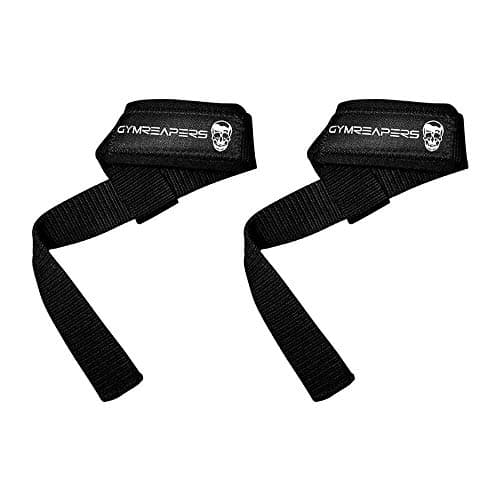
Gymreapers — Gymreapers Padded Cotton Lasso Lifting Straps
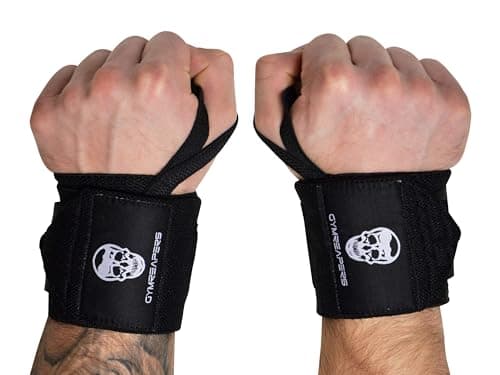
Gymreapers — Gymreapers Competition Grade Wrist Wraps (18 inch)
The verdict
There's no single winner because they aren't the same tool. Reach for lifting straps when grip is the thing failing on heavy pulls — deadlifts, rows, shrugs, rack pulls. Reach for wrist wraps when your wrist bends back and needs bracing under heavy pressing or overhead work. If you only pull heavy, straps matter more; if you only press heavy, wraps do. Most serious lifters end up owning both and using each on the handful of sets that call for it.
Side-by-side
| Attribute | Lifting Straps | Wrist Wraps |
|---|---|---|
| Best for | Grip on heavy pulls (deadlift, row, shrug) | Wrist stability on presses and overhead work |
| What it supports | Grip — ties your hand to the bar | The wrist joint — resists bending backward |
| Key movements | Deadlifts, RDLs, rows, shrugs, rack pulls | Bench, overhead press, push press, cleans, jerks |
| How it works | Fabric loop cinches around the bar to remove grip as the limiter | Stiff cuff around the wrist adds rigidity under load |
| Training styles that lean on it | Strength and hypertrophy pulling; high-volume back days | Pressing strength, CrossFit, Olympic weightlifting |
| Safety note | Ties you to the bar — use where you can bail (floor pulls, not overhead) | Tighten only for the heavy work set; loosen between sets |
| Over-reliance risk | Grip and forearm strength can stall if used on every set | Can mask wrist mobility limits or a pressing technique flaw |
| Cost and options | Inexpensive; a few styles (lasso, closed-loop, figure-8) | Inexpensive; stiffness varies (stiff for max, soft for reps) |
Who should pick which
Pick Lifting Straps
- Lifters whose grip gives out before their back on heavy deadlifts, rows, shrugs, and rack pulls.
- Bodybuilders doing high-volume back work who want grip out of the equation late in a session.
- Anyone with smaller hands or sweaty palms losing heavy pulling sets to grip rather than the target muscle.
Pick Wrist Wraps
- Bench, overhead press, and push-press lifters whose wrists bend back under heavy loads.
- CrossFit and Olympic lifters bracing the wrist in the front-rack and overhead catch positions.
Different tools, different jobs — the confusion explained
The confusion is understandable — both wrap around your wrist, both are cheap, and both live in the same gym bag. But they target different links in the chain. Lifting straps address grip: they loop over the bar and around your hand so the bar can't slip, which takes your fingers and forearms out of the equation on heavy pulls. Wrist wraps address the wrist joint itself: a stiff cuff resists the wrist bending backward (extension) when a heavy load sits over your palm, as it does in pressing. So the quick test is simple — if the bar is being pulled and your grip is the limiter, that's a straps problem. If the load is being pushed and your wrist folds back, that's a wraps problem.
Lifting straps: buy grip back on heavy pulls
Straps shine any time grip fails before the target muscle. On heavy deadlifts, rack pulls, barbell rows, RDLs, and shrugs, your back, hips, or traps can usually handle more than your fingers can hold — especially on high-rep back days when grip fatigues fast. Looping in with straps lets you keep loading the muscle you're actually trying to train. Common styles trade speed for security: lasso and single-loop straps are quick on and off, closed-loop straps sit at a fixed size, and figure-8 straps lock you to the bar hardest (great for strongman holds, worst for a fast release). One caution: straps tie you to the bar, so use them where you can bail safely — pulls from the floor, not loads overhead.
Wrist wraps: a brace for the pressing wrist
Wrist wraps do nothing for grip — they stiffen the wrist. Under a heavy bench press, overhead press, or push press, the loaded bar tends to drive the wrist into extension, which bleeds force and can nag the joint. A snug wrap keeps the wrist stacked closer to neutral so you press through a solid, stable platform. They earn their keep most in the bottom of a bench, the lockout of an overhead press, and the front-rack and overhead catch positions in weightlifting and CrossFit. Stiffness is the main variable: stiff, shorter wraps suit maximal singles and heavy pressing, while softer, longer wraps allow more movement for lighter, higher-rep or gymnastics-style work. Tighten right before a heavy set and loosen between sets to keep blood flowing.
The over-reliance trap — don't outsource strength you should build
Here's the honest part both marketing pages skip: support gear can quietly cap the strength you're supposed to be building. Lean on straps for every pulling set and your grip and forearms never get the stimulus to catch up, so raw grip stalls — a real problem for anyone who competes raw or values a strong grip on its own. Lean on wraps for every press and you can mask a wrist mobility limit or a technique flaw instead of fixing it. The fix isn't to skip the gear; it's to earn it. Do warm-ups and lighter working sets raw, add some direct grip work, and save straps and wraps for the heavy sets where they genuinely let you train harder. Treat them as tools, not a default.
Our take: most serious lifters end up owning both
Because they solve different problems, the practical answer for most serious lifters is both — and since each is inexpensive and packs into a gym bag, that's an easy call. If you mostly pull heavy and rarely press to a limit, straps are the higher priority. If pressing and overhead work is your bread and butter, wraps come first. Buy the one your training leans on now, add the other when the need shows up, and use each selectively rather than by default. That keeps grip and wrist strength developing on your lighter sets while the gear does its job on the heavy ones — the setup that gets you the benefit without the crutch.
Frequently asked questions
They fix opposite problems. Lifting straps improve grip — a fabric loop ties your hand to the bar so heavy pulls (deadlifts, rows, shrugs) aren't limited by your fingers opening. Wrist wraps support the wrist joint — a stiff cuff keeps the wrist from bending backward under a heavy press or overhead load. Straps are for pulling when grip is the weak link; wraps are for pushing when the wrist needs bracing. They're not interchangeable, and many lifters use both for different lifts.
Sources
- Grip strength and the role of lifting straps in resistance training — National Strength and Conditioning Association (NSCA)
- Wrist wraps and wrist support for pressing movements — BarBend
- Hand and forearm strength development in strength training — American Council on Exercise (ACE)
- Wrist stabilization and bench press mechanics — BarBend
Gymreapers — Gymreapers Padded Cotton Lasso Lifting Straps
$14.95 · on Amazon