The Best Weightlifting Belts for Lifting Heavy (2026)
A weightlifting belt does not lift the weight for you, and it will not fix a technique problem — anyone who tells you otherwise is selling something. What a belt actually does is give your abdominal wall something firm to push against, which raises the intra-abdominal pressure that stiffens and stabilizes your spine under heavy load. Used on maximal and near-maximal squats, deadlifts, and presses, that added bracing lets a well-trained lifter move a little more weight a little more safely. Used as a back brace, a crutch for pain, or a permanent fixture on every warm-up set, it does nothing useful and can mask problems you should be fixing. The hardware that matters is unglamorous: how stiff the material is, how thick and how wide the belt sits, and how the buckle closes. We ranked these on bracing stiffness, closure, build quality, comfort and break-in, and value — and we are honest about who each type is actually for.
Top pick
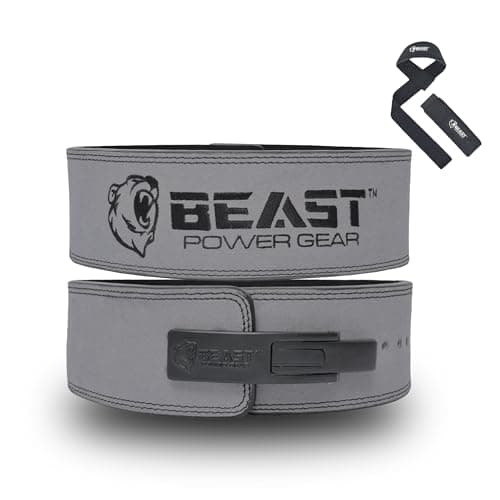
Beast Power Gear — Beast Power Gear 10mm Lever Belt
10mm thick leather (13mm option) · four-inch uniform width · lever buckle for fast on/off at consistent tightness · includes a free lifting strap · popular budget-to-mid Amazon powerlifting belt
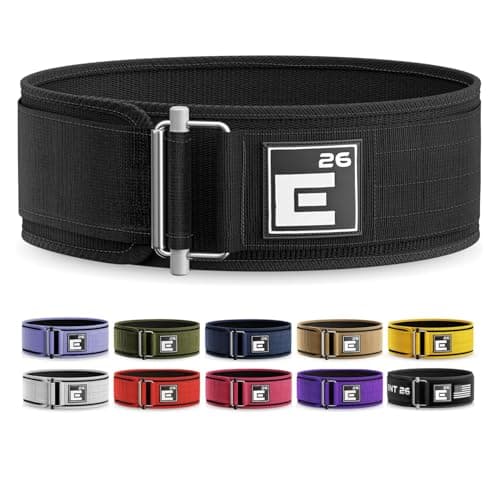
Element 26 — Element 26 Self-Locking Nylon Belt
At a glance
Tap a row to check price · tap a header to sort| # | Best for | Price | ||
|---|---|---|---|---|
| 1 | | Best overall lever belt | 8.6/10 | $55.90$59.90 |
| 2 | | Best for CrossFit and functional fitness | 8.4/10 | $34.97 |
| 3 | 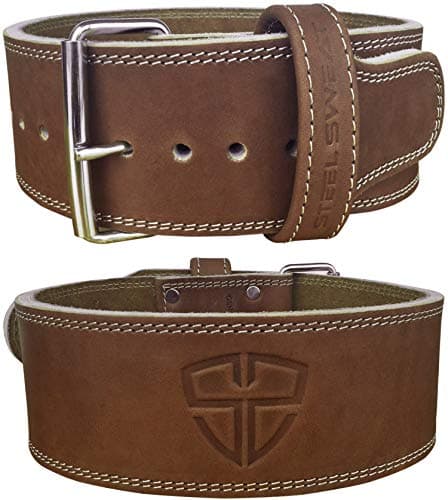 | Best value leather belt | 8.2/10 | $25.75 |
| 4 | 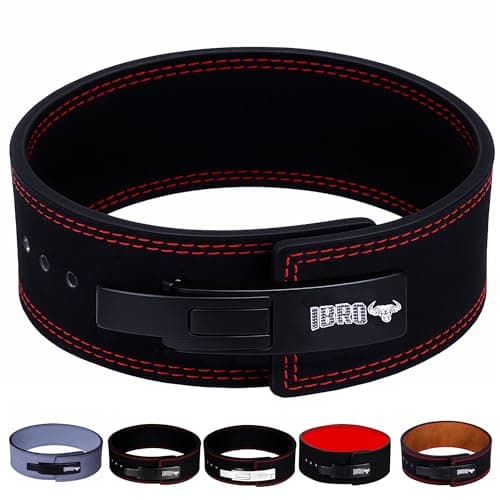 | Best premium lever | 7.9/10 | $59.99 |
| 5 | 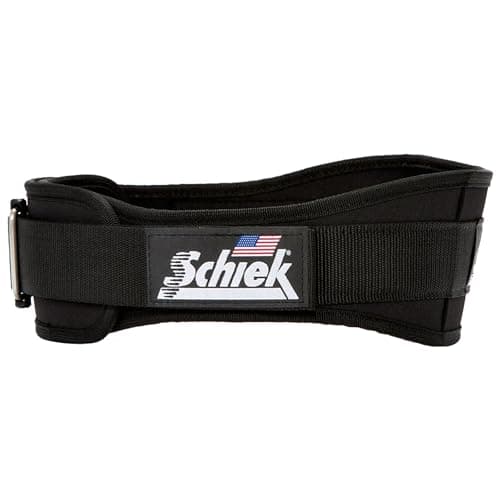 | Best contoured comfort nylon | 7.6/10 | $59.95 |
| 6 | 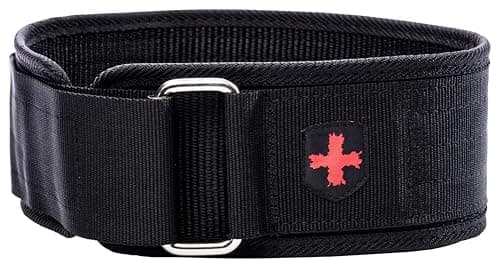 | Best padded entry nylon | 7.2/10 | $29.99 |
Prices pulled from Amazon as of Sep 15, 2026 and are subject to change. The price shown on Amazon at checkout applies.
How we scored
Every product below is scored on six metrics, 0-10 each, with the weighting described on how we review. The criteria specific to this category:
- Material — single-thickness leather is stiffer and braces harder for maximal lifts, while nylon is more flexible and comfortable and better suits varied or CrossFit-style training, at the cost of some rigidity under a true one-rep max.
- Thickness — 10mm leather is the stiff powerlifting standard, 13mm is for advanced lifters who want maximum rigidity, and 9mm or 7mm trade a little stiffness for an easier break-in and more comfort.
- Width — a uniform four-inch (10cm) width front-to-back braces the whole trunk and is the powerlifting standard, whereas tapered belts that are wide at the back and narrow at the front are comfier but give up bracing where you often need it most.
- Closure — a lever is fast and delivers identical tightness every set but needs a screwdriver to resize; a single prong adjusts hole-to-hole in seconds; a double prong is the most secure but slow to fasten; a nylon self-locking or Velcro buckle is comfortable and micro-adjustable but can slip or peel over years of use.
- Build quality — full-grain leather, clean riveting or stitching, and a solid steel buckle separate a belt that lasts a decade from one that frays and bends.
- Value and versatility — decide whether you want one belt for everything (a nylon self-locker leans this way) or a dedicated, stiff powerlifting belt for your heaviest barbell work, and buy the thickness and closure that match how you actually train.
What to know before buying
- Leather or nylon is the first fork in the road. A stiff single-thickness leather belt (usually 10mm) braces hardest and is the choice for maximal barbell squats and deadlifts. A nylon self-locking belt is more flexible and comfortable, packs down, and handles cleans, thrusters, carries, and general training well — which is why the CrossFit and functional crowd favor it. Pick by what you actually train most, not by what a competitive powerlifter uses.
- Then choose a closure. A lever is fast on and off and gives identical tightness every single set, which is great once you have settled on a size — but resizing means unscrewing and repositioning the lever, so it is a poor match if your waist changes noticeably day to day. A single prong adjusts hole-to-hole in seconds and is the most versatile. A double prong is the old-school, maximally secure option, but fastening two prongs between heavy sets is genuinely annoying. Nylon self-lockers are quick and micro-adjustable but the least rigid.
- Size the belt to your body, not just to a spec sheet. A 10mm-by-four-inch belt is the powerlifting default, but a shorter or smaller-framed lifter can find a four-inch belt digs into the ribs or hips in the bottom of a squat — a three-inch width or a 9mm thickness can sit better and still brace well. Buy from a size chart that measures your actual waist at belt height, not your trouser size.
- Budget for a break-in period with leather. A stiff 10mm belt is genuinely uncomfortable for the first few weeks and will not wrap tightly until you work it — bend it, roll it, and wear it during warm-ups to speed things up. Nylon needs no break-in and is comfortable from day one, which is part of its appeal for people who do not want to fight their gear.
- Be honest about what a belt is for. It lets you brace harder and typically adds a small amount to what you can lift on maximal trunk-loaded work — it is not a back brace, not a cure for lower-back pain, and not a substitute for learning to brace. Build your trunk tension (a proper Valsalva brace) without a belt first, then add the belt for your heavy sets. Do not wear it for warm-ups or light accessory work, and if you have uncontrolled high blood pressure, know that belted maximal bracing spikes blood pressure further — a reason to check with a doctor before loading up.
Our picks
Beast Power Gear — Beast Power Gear 10mm Lever Belt
Key specs: 10mm thick leather (13mm option) · four-inch uniform width · lever buckle for fast on/off at consistent tightness · includes a free lifting strap · popular budget-to-mid Amazon powerlifting belt
Pros
- Stiff 10mm leather braces hard for heavy squats and deadlifts, and steps up to 13mm if you want maximum rigidity
- The lever clamps to identical tightness every set and pops off fast between attempts — a real advantage on heavy singles
- Uniform four-inch width supports the whole trunk front-to-back, the powerlifting standard
- Strong value against boutique lever belts, and it ships with a bonus lifting strap
Cons
- Resizing the lever means getting out a screwdriver, so it is a poor match if your waist fluctuates from day to day
- The 10mm leather needs a break-in period before it wraps tightly and comfortably
- Budget lever hardware quality varies between units — check the lever alignment and rivets on arrival
Beast Power Gear — Beast Power Gear 10mm Lever Belt
- Bracing / stiffness9/10
- Buckle / closure8/10
- Build quality8/10
- Comfort / break-in6/10
- Value9/10
Element 26 — Element 26 Self-Locking Nylon Belt
Key specs: Four-inch single-ply nylon · patented self-locking steel buckle (no Velcro to peel or slip) · flexible and comfortable across varied movements · wide size range · a favorite of the CrossFit and functional-fitness crowd
Pros
- The self-locking steel buckle holds tension securely without the peel-and-slip failure mode of Velcro belts
- Flexible four-inch nylon is comfortable for cleans, thrusters, carries, and squats — one belt for varied training
- No break-in and it packs flat, so it is easy to live with and easy to travel with
- Comes in a broad size range and is a genuinely durable, well-regarded belt at a fair price
Cons
- Nylon flexes more than stiff leather, so it braces less at a true one-rep-max squat or deadlift
- Not the choice for a dedicated powerlifter chasing maximal rigidity
- The self-locking buckle takes a few sessions to thread and cinch quickly
Element 26 — Element 26 Self-Locking Nylon Belt
- Bracing / stiffness7/10
- Buckle / closure8/10
- Build quality8/10
- Comfort / break-in9/10
- Value8/10
Steel Sweat — Steel Sweat Hyde 10mm Single-Prong Leather Belt
Key specs: Four-inch wide by 10mm thick · vegetable-tanned leather · single-prong steel buckle for fast hole-to-hole adjustment · budget price for a full-thickness leather belt
Pros
- Delivers genuine 10mm stiff-leather bracing at a price closer to a nylon belt
- The single prong adjusts hole-to-hole in seconds and suits a waist that changes a little day to day
- Vegetable-tanned leather breaks in and molds to your torso over time
- Outstanding stiffness-per-dollar — the value benchmark for a leather belt
Cons
- Stiff out of the box, so expect a break-in period before it wraps snugly
- Edges and finish are budget-grade next to premium leather belts
- A single prong is slightly slower to fasten than a lever once you are dialed in
Steel Sweat — Steel Sweat Hyde 10mm Single-Prong Leather Belt
- Bracing / stiffness9/10
- Buckle / closure7/10
- Build quality7/10
- Comfort / break-in6/10
- Value10/10
IBRO — IBRO 10mm Genuine-Leather Lever Belt
Key specs: 10mm genuine leather · four-inch width · lever buckle · heavy-duty build aimed at squats, deadlifts, and strongman work · from IBRO, an established lifting-belt brand
Pros
- Thick 10mm genuine leather braces hard and holds its shape for heavy squats and deadlifts
- The lever delivers identical tightness every set and comes off fast between heavy attempts
- Better-finished hardware and leather than most budget levers, so it should last
- The four-inch width and stiff build suit a lifter who has settled on their heavy training weight
Cons
- Priced above the budget levers for a step up in finish rather than a difference in function
- Lever resizing needs a screwdriver — awkward if your waist changes day to day
- The 10mm leather is stiff and needs breaking in before it wraps comfortably
IBRO — IBRO 10mm Genuine-Leather Lever Belt
- Bracing / stiffness9/10
- Buckle / closure8/10
- Build quality8/10
- Comfort / break-in6/10
- Value7/10
Schiek — Schiek Model 2004 Nylon Lifting Belt
Key specs: Contoured nylon belt, wider (about 4.75 inches) and more supportive at the back and tapered toward the front · patented closure with a steel buckle · flexible with no break-in · long-standing Schiek design
Pros
- The patented contoured shape sits wide and supportive across the lower back while tapering at the front so it does not jam into your ribs
- Flexible nylon is comfortable across higher-rep and bodybuilding-style work with no break-in
- A long-established, well-made design with a loyal following for general strength training
- More back support and comfort than a flat budget nylon belt
Cons
- The tapered, flexible design braces less at the front than a uniform four-inch leather belt, so it is not built for a true one-rep max
- Tapered belts are not legal in strict powerlifting federations
- Costs about as much as a budget leather belt while bracing less at maximal loads
Schiek — Schiek Model 2004 Nylon Lifting Belt
- Bracing / stiffness6/10
- Buckle / closure7/10
- Build quality8/10
- Comfort / break-in9/10
- Value6/10
Harbinger — Harbinger 4-Inch Nylon Weightlifting Belt
Key specs: Four-inch nylon belt with a foam-cushioned, contoured back panel · steel roller buckle plus heavy-duty Velcro closure · flexible with no break-in · from the established Harbinger fitness brand
Pros
- The foam-cushioned back is comfortable for general training and higher-rep work
- Flexible nylon is easy to wear all session and needs no break-in
- The steel roller buckle backed by wide Velcro is quick to cinch and release
- Cheap and from an established brand — a sensible first belt while you learn to brace
Cons
- The Velcro-and-roller closure can creep or peel under true-maximal bracing
- Foam padding compresses and flexes, so it braces less than stiff leather on heavy singles
- Not competition-legal for powerlifting, and out-classed by leather once you lift heavy
Harbinger — Harbinger 4-Inch Nylon Weightlifting Belt
- Bracing / stiffness6/10
- Buckle / closure6/10
- Build quality7/10
- Comfort / break-in9/10
- Value8/10
Frequently asked questions
A little, and mostly on maximal work. By giving your abs something firm to brace against, a belt raises intra-abdominal pressure and stiffens the trunk; studies on belted squats and deadlifts show modestly higher bar speed and force at heavy loads. Think of it as a bracing aid worth a few percent on your top sets, not a device that lifts the weight for you.
Related reading
Sources
- Effects of a Belt on Intra-Abdominal Pressure During Weight Lifting (Harman et al.) — Medicine & Science in Sports & Exercise, 1989
- The Effectiveness of Weight-Belts During the Squat Exercise (Lander et al.) — Medicine & Science in Sports & Exercise, 1990
- Guidance on Weightlifting Belt Use for Maximal and Near-Maximal Trunk-Loaded Lifts — NSCA
- Do You Need a Weightlifting Belt, and the Best Lifting Belts Tested — BarBend
Last verified: August 1, 2026. See our editorial policy and how we review for details on scoring and update cadence. Canonical URL: https://trustedhealthgear.com/reviews/best-weightlifting-belt.
Beast Power Gear — Beast Power Gear 10mm Lever Belt
$55.90 · on Amazon