The Best Weightlifting Shoes for Squats & Olympic Lifts
A weightlifting shoe does one job well: it gives you an incompressible, elevated platform so you can hit depth in a squat, snatch, or clean without your heels lifting or your ankles giving out. The features that matter are unglamorous. You want a firm, flat sole that doesn't squish under load, a raised heel (usually 0.5 to 1 inch) that lets a stiff-ankled lifter sit into the bottom of a squat with an upright torso, at least one metatarsal strap for midfoot lockdown, and a fit that keeps your foot planted instead of sliding. We ranked these on heel stability, sole rigidity, strap and fit, versatility, and value — and we'll tell you plainly where a raised heel earns its keep and where a flat, stable shoe (or bare feet) is the smarter choice, so you don't buy a squat shoe to do deadlifts in.
Top pick
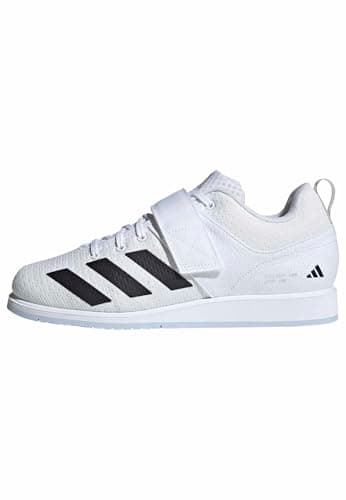
adidas — adidas Powerlift 5
Raised, incompressible heel wedge (adidas lists roughly 15 mm / ~0.6 in effective drop) · single wide instep strap over the laces · firm forefoot with a flat, grippy rubber outsole · canvas-style upper on a fairly roomy last · unisex sizing · a common entry point to dedicated lifting shoes
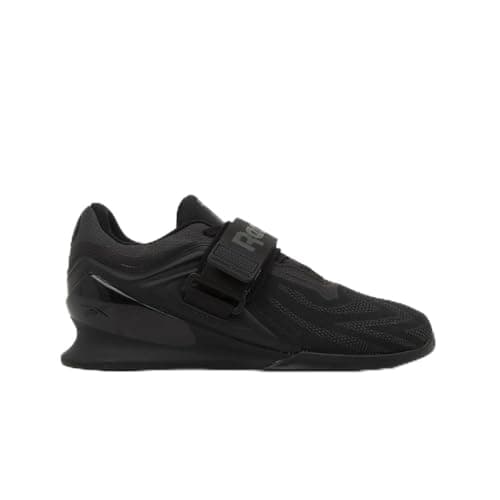
Reebok — Reebok Legacy Lifter IV
At a glance
Tap a row to check price · tap a header to sort| # | Best for | Price | ||
|---|---|---|---|---|
| 1 | | Best overall | 8.6/10 | $99.44$130.00 |
| 2 | | Best for heavy squats & Olympic lifts | 8.5/10 | $237.41 |
| 3 | 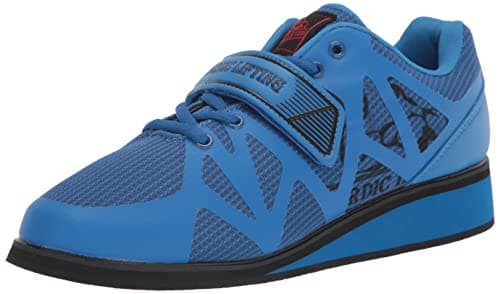 | Best value raised-heel | 7.9/10 | $99.88 |
| 4 | 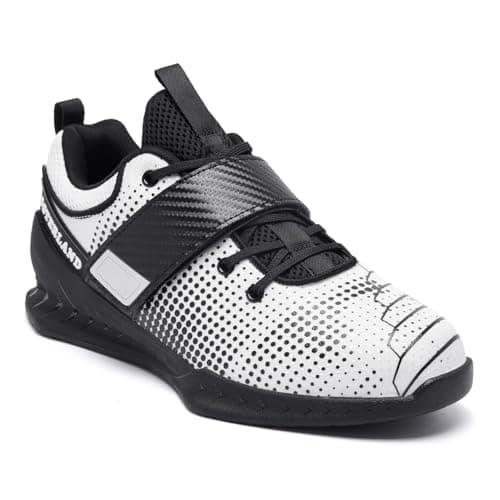 | Best high-heel budget pick | 7.4/10 | $79.98 |
| 5 | 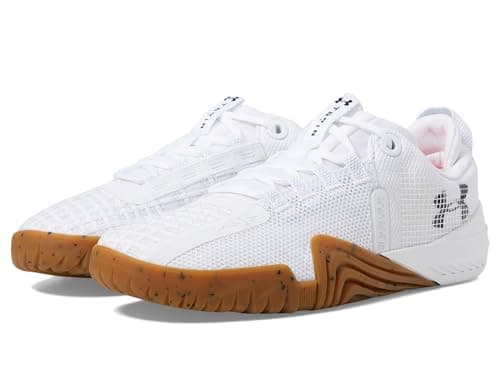 | Best flat trainer for CrossFit & mixed WODs | 7.3/10 | $113.91$130.00 |
| 6 | 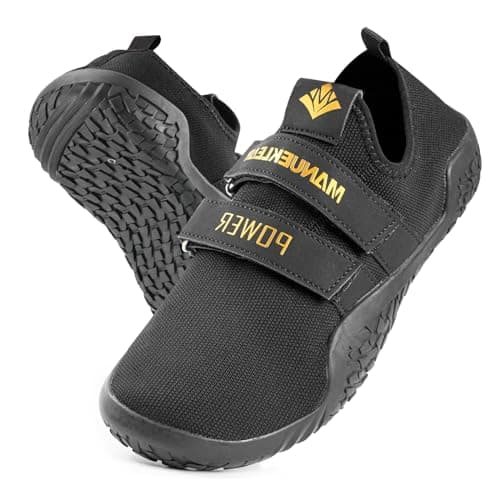 | Best flat deadlift shoe (budget) | 6.8/10 | $31.80$39.99 |
Prices pulled from Amazon as of Sep 16, 2026 and are subject to change. The price shown on Amazon at checkout applies.
How we scored
Every product below is scored on six metrics, 0-10 each, with the weighting described on how we review. The criteria specific to this category:
- Heel height and rigidity — a solid, non-compressible heel wedge (typically 0.5 to 1 inch of effective heel-to-toe drop) tips your shins forward so you can reach squat depth with an upright torso; taller heels help the least-mobile ankles and Olympic lifters, while a lower heel keeps a shoe more versatile.
- Sole stiffness — the whole platform must not squish or roll under a heavy bar; TPU, dense EVA, or wood heels with a firm rubber forefoot transfer force to the floor far better than the compressible foam in a running shoe.
- Strap and lockdown — one or two metatarsal straps over the laces clamp the midfoot so your foot can't slide forward in the shoe as you drive out of the hole, which matters most under maximal loads and in the catch of a clean.
- Fit and last width — weightlifting shoes should fit snug with a planted heel and enough toe room to spread and grip; brands run different widths (some narrow, some roomy), so try to match your foot shape rather than assuming your street size.
- Versatility and use case — a raised heel helps squats, front squats, and Olympic lifts, but it works against you in deadlifts (you want a flat, low shoe) and in mixed conditioning where you run, jump, or do double-unders, where a flat trainer is better.
- Value and durability — stitched or welded uppers, a bonded (not glued-only) sole, and a full rubber outsole survive years of chalk, sweat, and platform abuse; pay for the heel, strap, and build you'll actually use, not the pro-athlete colorway.
What to know before buying
- Do you even need a raised heel? If you can already squat to depth with heels down, an upright torso, and no ankle pinch, a flat, stable shoe or bare feet is fine and cheaper. A raised heel shines when limited ankle dorsiflexion caps your squat depth, when you Olympic lift (the catch demands a fast, deep, stable bottom position), or when you want a more quad-dominant, upright squat. It is a tool for a specific job, not a mandatory purchase.
- Heel height is a trade-off, not 'more is better.' Taller heels (around 0.75 to 1 inch, like the Legacy Lifter and most dedicated Olympic shoes) rescue the stiffest ankles and suit competitive lifting, but they push you more onto your toes and feel less versatile. A lower heel (around 0.6 inch, like the adidas Powerlift) covers most gym lifters, still helps depth, and doubles better for general training. Pick the lowest heel that lets you squat well.
- The sole is the point — don't confuse a squat shoe with a cushioned trainer. The magic isn't the heel alone, it's that the entire platform is rigid, so 100% of your drive goes into the floor instead of being eaten by foam. This is exactly why a weightlifting shoe is the wrong tool for deadlifts: you want the bar as close to the floor as possible, so a flat, thin, low shoe (or a barefoot/deadlift slipper) beats a raised heel there.
- Straps and fit decide whether the shoe actually works. A metatarsal strap that clamps the midfoot keeps your foot from sliding as you stand up out of a heavy squat; a shoe that's too roomy or unstrapped lets the foot shift and kills your platform. Sizing runs brand-specific — some lifting shoes are narrow, others roomy — so prioritize a locked heel and a snug (not crushing) midfoot over guessing your usual sneaker size.
- One shoe rarely does everything. If your training is squat- and Olympic-lift heavy, a raised-heel shoe is worth a dedicated pair. If you do CrossFit-style sessions that mix lifting with running, rope, and box jumps, a flat, firm training shoe (a metcon-style trainer) is the better single buy, and you can add a raised-heel shoe later for max-effort squat days. Don't try to run 400s in a squat shoe.
Our picks
adidas — adidas Powerlift 5
Key specs: Raised, incompressible heel wedge (adidas lists roughly 15 mm / ~0.6 in effective drop) · single wide instep strap over the laces · firm forefoot with a flat, grippy rubber outsole · canvas-style upper on a fairly roomy last · unisex sizing · a common entry point to dedicated lifting shoes
Pros
- The ~0.6 in heel is a smart all-around height — enough to unlock squat depth for stiff ankles while staying low enough to feel versatile for front squats and general training
- Rigid, non-compressible platform sends your drive straight into the floor instead of into foam, which is the whole reason to wear a lifting shoe
- Single wide midfoot strap locks the foot down well for the price, so your foot stays planted coming out of the hole
- Roomy-ish last suits normal-to-wide feet, it's widely stocked, and it undercuts the premium Olympic shoes while doing 90% of what they do for most lifters
Cons
- A single strap and a canvas-type upper give slightly less lockdown and rigidity than a dual-strap, TPU-heeled competition shoe under truly maximal loads
- The moderate heel is a jack-of-all-trades — dedicated Olympic lifters with very stiff ankles may want the taller heel of a Legacy Lifter or Romaleos
- Like any raised-heel shoe it's the wrong choice for deadlifts and for conditioning that involves running or jumping
adidas — adidas Powerlift 5
- Heel stability8/10
- Sole rigidity8/10
- Fit / lockdown8/10
- Versatility8/10
- Value9/10
Reebok — Reebok Legacy Lifter IV
Key specs: Tall, rigid heel (the Legacy Lifter line is built around ~22 mm / ~0.87 in) · dual straps for aggressive midfoot lockdown · full rubber outsole and a stiff, supportive upper · heavier, planted build made for maximal squats, cleans, and snatches · offered in men's and women's sizing
Pros
- One of the tallest heels here (~0.87 in) rescues the stiffest ankles and lets Olympic lifters bury the catch of a clean or snatch with an upright torso
- Dual straps clamp the midfoot harder than a single-strap shoe, so there is essentially zero foot slide even under a max squat
- Very rigid heel and full rubber outsole make an extremely stable platform — this is a competition-grade tool for the heaviest days
- Durable, supportive build that holds up to years of platform use and takes chalk and sweat in stride
Cons
- It's the most expensive pick here, and the price buys a competition heel and dual straps that casual lifters won't fully use
- Heavy and stiff by design — the tall heel and rigid build feel like overkill for general training and are useless for deadlifts or conditioning
- The taller heel pushes you more onto your toes, so it's less versatile than a moderate-heel shoe if you only own one pair
Reebok — Reebok Legacy Lifter IV
- Heel stability10/10
- Sole rigidity9/10
- Fit / lockdown9/10
- Versatility6/10
- Value7/10
Nordic Lifting — Nordic Lifting MEGIN Powerlifting Shoes
Key specs: Elevated heel (marketed as an Olympic-lift/squat heel) · single hook-and-loop midfoot strap plus laces · firm sole with a non-slip rubber outsole · supportive upper · men's and women's sizing · priced below the big-brand lifting shoes
Pros
- A genuine raised-heel squat shoe with a firm platform, priced well under adidas, Reebok, or Nike — an easy way to try a lifting shoe without overspending
- The single midfoot strap plus laces give solid lockdown so the foot stays planted through the squat drive
- Elevated heel meaningfully improves squat depth and upright posture for stiffer-ankled lifters
- Non-slip rubber outsole grips the platform well and the build is sturdier than the price suggests
Cons
- Heel rigidity and overall build sit a step below the premium shoes — the platform is firm but not competition-grade for a true max squat
- Sizing and quality control are less consistent than the major brands, so check fit on arrival
- A value brand rather than a proven competition pedigree — a great first pair, not the choice for a serious meet
Nordic Lifting — Nordic Lifting MEGIN Powerlifting Shoes
- Heel stability7/10
- Sole rigidity7/10
- Fit / lockdown7/10
- Versatility7/10
- Value9/10
Osterland — Osterland Weightlifting Shoes (1.4 in Heel)
Key specs: Manufacturer-stated 1.4 in (~36 mm) heel — one of the tallest here · squat/Olympic-lift orientation · firm sole with a non-slip rubber outsole · men's and women's sizing · budget-friendly price for the heel height
Pros
- The tall, manufacturer-stated 1.4 in heel is aimed squarely at lifters with very limited ankle mobility who need maximum help reaching depth
- Costs a fraction of a premium Olympic shoe while delivering a genuinely high, firm heel platform
- Firm sole and non-slip outsole keep the foot planted on the platform better than any cushioned trainer
- A budget way to test whether a taller heel helps your squat before investing in a Legacy Lifter or Romaleos
Cons
- A very tall heel isn't universally better — it pushes you onto your toes and can feel unstable if your ankles are already mobile
- Build quality, materials, and strap hardware are workmanlike, not premium; check the fit and finish on arrival
- Lesser-known brand with less consistent sizing, and (like all raised-heel shoes) the wrong tool for deadlifts
Osterland — Osterland Weightlifting Shoes (1.4 in Heel)
- Heel stability7/10
- Sole rigidity7/10
- Fit / lockdown6/10
- Versatility6/10
- Value8/10
Under Armour — Under Armour TriBase Reign 6
Key specs: Flat, low-drop training shoe (not a raised-heel lifting shoe) · TriBase outsole with heel-to-forefoot ground contact for stability and rope grip · firmer, stable platform tuned for lifting-plus-conditioning · breathable upper · a metcon-style all-rounder
Pros
- The flat, stable platform is the right tool for deadlifts, mixed WODs, and any session that pairs lifting with running, rope climbs, or box jumps
- TriBase outsole keeps the foot connected to the floor for stable pressing and squatting, and the wrap grips for rope climbs
- Firm midsole handles moderate lifting far better than a cushioned running shoe while still tolerating short runs and jumps
- One versatile shoe for CrossFit-style training, where a dedicated raised-heel squat shoe would be a liability
Cons
- It is a flat trainer, not a raised-heel shoe — it won't help you reach squat depth if limited ankle mobility is your problem
- Not built for maximal Olympic lifting or a true max squat, where a rigid, elevated heel wins
- Priced like a premium trainer, so it's an investment if you specifically wanted a squat shoe
Under Armour — Under Armour TriBase Reign 6
- Heel stability6/10
- Sole rigidity7/10
- Fit / lockdown8/10
- Versatility9/10
- Value7/10
MANUEKLEAR — MANUEKLEAR Deadlift Shoes
Key specs: Flat, low-profile barefoot-style shoe (minimal heel-to-toe drop) · thin, firm non-slip rubber sole to sit close to the floor · lightweight upper · marketed for deadlifts and squats · budget price · men's and women's sizing
Pros
- A thin, flat sole puts you close to the floor for deadlifts, shortening the bar's travel — the opposite of what a raised heel does, and the right idea for pulling
- Firm, non-slip sole gives a stable base for deadlifts and low-bar work without the squish of a running shoe
- Very inexpensive, so it's a low-risk way to get a dedicated flat pulling shoe instead of deadlifting in socks
- Light and minimal, which many lifters prefer for a grounded, connected feel on pulls
Cons
- It's a flat shoe — it does nothing for squat depth and is not a substitute for a raised-heel squat shoe
- Value-brand materials and construction; the upper and sole are basic, and sizing runs inconsistent, so check fit
- Thin cushioning and minimal support make it poorly suited to anything but lifting — no running, jumping, or all-day wear
MANUEKLEAR — MANUEKLEAR Deadlift Shoes
- Heel stability6/10
- Sole rigidity7/10
- Fit / lockdown6/10
- Versatility5/10
- Value9/10
Frequently asked questions
It depends on your ankles and your goals. If you can already squat to depth with your heels flat, an upright torso, and no pinching in the front of the ankle, you don't need a raised heel — a flat, stable shoe or bare feet works fine. A weightlifting shoe earns its place in three cases: when limited ankle dorsiflexion caps your squat depth, when you Olympic lift (the catch of a clean or snatch demands a fast, deep, stable bottom), or when you want a more upright, quad-focused squat. It's a specific tool, not a required purchase for everyone.
Sources
- Essentials of Strength Training and Conditioning — squat mechanics, ankle dorsiflexion, and the role of stable footwear — NSCA (National Strength and Conditioning Association), 2026
- How to Choose Weightlifting Shoes — heel height, sole rigidity, straps, and when a flat shoe is better — BarBend, 2026
- Coaching resources on lifting footwear and stable squat/clean positions — USA Weightlifting, 2026
- Training footwear and lower-body mechanics for the squat — ACE (American Council on Exercise), 2026
Last verified: August 1, 2026. See our editorial policy and how we review for details on scoring and update cadence. Canonical URL: https://trustedhealthgear.com/reviews/best-weightlifting-shoes.
adidas — adidas Powerlift 5
$99.44 · on Amazon