The Best Gym Flooring for a Home or Garage Gym
Home gym flooring has one honest job: protect whatever is under it and make training on top of it more comfortable. Interlocking rubber-top and EVA foam puzzle tiles do that well for a fraction of the cost of a poured rubber floor. They cushion dropped dumbbells, deaden noise, save a garage slab or a bedroom's hardwood, and give bodyweight and cardio work a forgiving surface. What they are not is a bombproof platform for a loaded barbell. Foam compresses, and under the concentrated static load of a squat rack — or the repeated impact of heavy dropped weights — plain EVA tiles dent, dimple, and eventually tear. Rubber-top tiles resist that far better, which is why they lead this list, but even the best puzzle tile is not a horse-stall mat over plywood. We ranked these on cushioning, durability, ease of install, weight tolerance, and value, and we will be blunt about where a sixty-dollar tile set is exactly right and where you genuinely need a dedicated lifting platform underneath.
Top pick
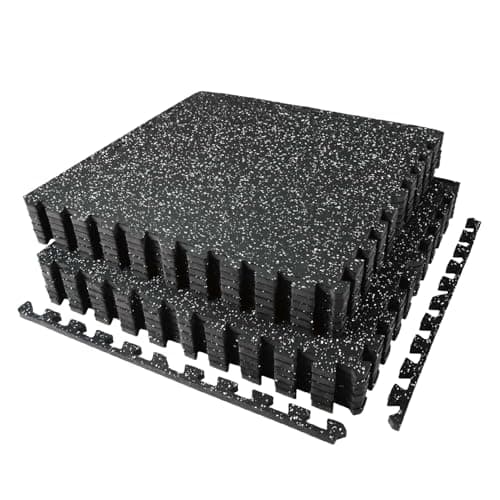
AIRHOP — AIRHOP 0.56-inch Thick Rubber-Top Interlocking Gym Flooring
Rubber-top surface bonded over an EVA foam core - 0.56-inch thickness - 24 x 24 inch interlocking tiles - 48 sq ft set (12 tiles) - included border strips for a finished edge - textured, grippy top layer
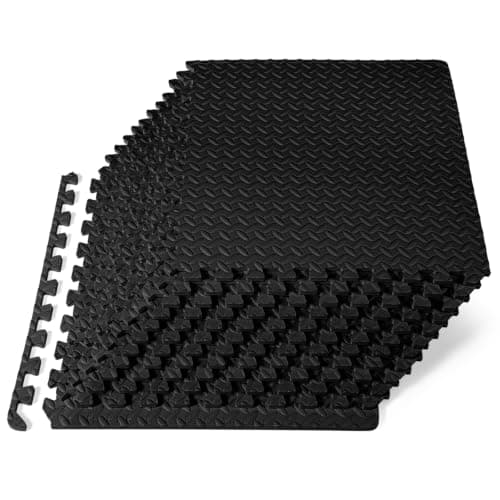
ProsourceFit — ProsourceFit Exercise Puzzle Mat 1/2-inch (48 sq ft)
At a glance
Tap a row to check price · tap a header to sort| # | Best for | Price | ||
|---|---|---|---|---|
| 1 | | Best overall for weight training | 8.5/10 | $119.99 |
| 2 | | Best value EVA foam tiles | 8.2/10 | $54.99 |
| 3 | 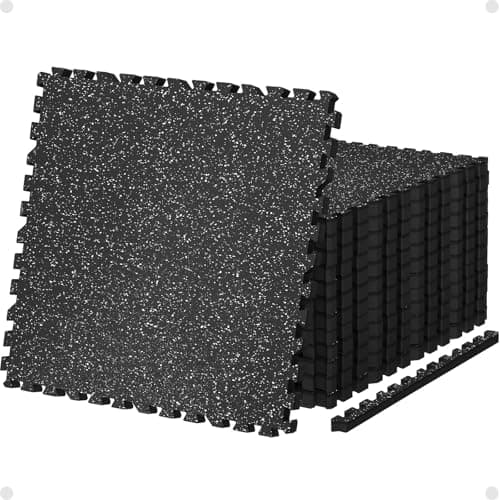 | Best heavy-duty pick | 8/10 | $139.95 |
| 4 | 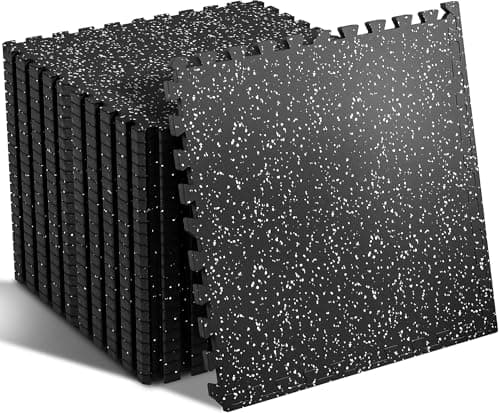 | Best alternative rubber-top pick | 7.7/10 | $89.99$119.99 |
| 5 | 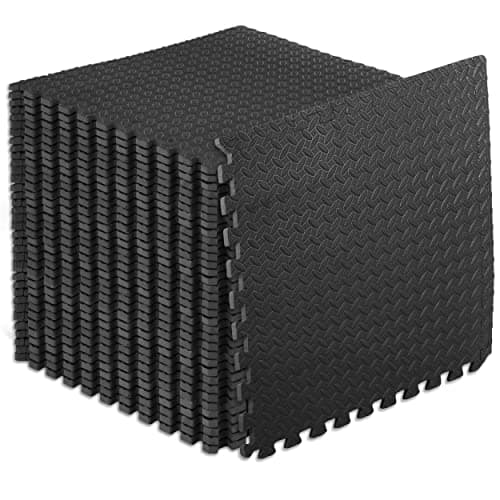 | Best for covering a large space | 7.4/10 | $139.99 |
| 6 | 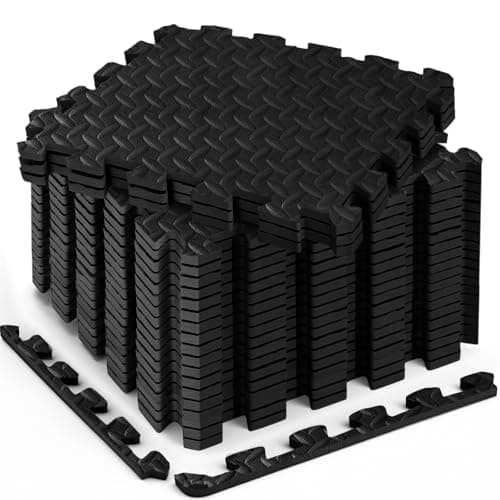 | Cheapest light-use option | 7.1/10 | $22.49$24.99 |
Prices pulled from Amazon as of Sep 16, 2026 and are subject to change. The price shown on Amazon at checkout applies.
How we scored
Every product below is scored on six metrics, 0-10 each, with the weighting described on how we review. The criteria specific to this category:
- Surface material — the biggest divider in this category is a rubber-top wear layer bonded over EVA foam versus plain foam all the way through. Rubber tops grip better when wet, resist gouging from plate edges and equipment feet, and hide scuffs; pure EVA is softer, cheaper, and more prone to compression marks. Material dictates almost everything else about how a tile holds up.
- Cushioning and impact absorption — the reason most people buy tiles at all. Thicker foam and a springier core soak up dropped dumbbells, cushion planks and floor work, and take the edge off jumping or cardio. But more cushion is not a free lunch: the same softness that feels good underfoot is the softness that dents under a heavy static load, so cushioning has to be weighed against stability.
- Durability and dent resistance — how the tile survives real training over months, not the first week. We looked at whether the surface recovers after a dropped weight or holds a permanent dimple, how the interlocking edges wear, and whether the wear layer peels or gouges. Rubber tops and higher-density foam last; thin, soft budget tiles tear at the seams and puncture first.
- Weight tolerance and lifting suitability — the honest limit of the whole category. Interlocking tiles are excellent under dumbbells, benches, cardio machines, and bodyweight work, but foam compresses under point loads. A power rack's feet, a loaded barbell dropped from height, or a heavy bench with someone on it can crush or tear plain foam. We judged how much abuse each tile realistically takes before you need reinforcement.
- Ease of install and portability — puzzle tiles are meant to be a weekend job with no glue. We weighed tile size and weight, how cleanly the teeth lock, whether included border strips give a finished edge, and how easy the floor is to trim with a utility knife, pull up, and relay. Bigger rubber-top tiles are heavier to handle; light foam tiles snap together in minutes but shift more.
- Coverage and value per square foot — the number that actually decides most purchases. We compared total coverage, tiles per box, and price against durability, because the cheapest tile is not the best value if it packs down in a season. A rubber-top set that costs more up front but survives years of dropped weights can be better value than foam you replace twice.
What to know before buying
- Match the floor to the training, not to a photo. If your gym is dumbbells, a bench, a bike or treadmill, and bodyweight or cardio work, interlocking tiles are close to ideal — they cushion, quiet, and protect the subfloor for very little money. If your gym is built around a rack and a loaded barbell, treat tiles as the base layer and plan reinforcement where the heavy loads land. Buying the wrong category is the most common and most expensive flooring mistake.
- Rubber-top beats pure foam wherever weight and abuse are involved. A rubber wear layer over an EVA core grips better when sweaty, resists gouging from plate edges and equipment feet, and hides scuffs, so it is the safer default for a general strength gym. Plain EVA puzzle mats are softer, lighter, cheaper, and genuinely nicer for floor work, stretching, and kids' rooms — but they mark and compress faster, so save them for lighter-use zones or tight budgets.
- Under a power rack, add plywood and a rubber mat — do not rely on foam alone. The single most important honesty in this category: foam tiles dent and tear under the concentrated static load of a rack's feet and under heavy dropped weights. The standard fix is a sheet of 3/4-inch plywood to spread the load, topped with a dense rubber horse-stall mat or lifting mat in the drop zone. Tiles still make sense around that platform; they just should not be the only thing under your heaviest lifting.
- Measure the usable area, not just the box total. Interlocking tiles are sold by total square footage, but the raised teeth on the edges reduce the finished coverage slightly, and you will trim tiles to fit walls and corners. Measure your space, add roughly one extra tile per five or six to cover cuts and waste, and decide up front whether you want the included straight border strips for a clean edge along walkways. Running short mid-install is the usual regret.
- Mind off-gassing, cleaning, and the subfloor underneath. New foam and rubber tiles can carry a rubbery smell for a few days — air the room, and let them off-gas before a bedroom install. Wipe with mild soap and water rather than harsh solvents that degrade foam, and dry sweat promptly so seams do not trap moisture. On concrete, watch for trapped condensation under the tiles in humid or below-grade spaces; lift a corner occasionally to check the slab stays dry.
Our picks
AIRHOP — AIRHOP 0.56-inch Thick Rubber-Top Interlocking Gym Flooring
Key specs: Rubber-top surface bonded over an EVA foam core - 0.56-inch thickness - 24 x 24 inch interlocking tiles - 48 sq ft set (12 tiles) - included border strips for a finished edge - textured, grippy top layer
Pros
- The rubber wear layer is the key upgrade: it grips when sweaty, shrugs off plate edges and equipment feet, and hides scuffs far better than plain EVA foam
- 0.56-inch thickness balances real cushioning for dropped dumbbells and floor work with enough stability to stay planted under benches and machines
- 24-inch interlocking tiles lock cleanly, include border strips for a tidy edge, and install glue-free in an afternoon with just a utility knife
- Best all-round durability in this test for a general strength gym, so it is the safest default when you are not sure how heavy you will go
Cons
- It is still a foam-cored puzzle tile — the feet of a loaded power rack will dent it, so reinforce the rack footprint with plywood and a rubber mat
- Rubber-top tiles are heavier and slightly more awkward to cut and handle than lightweight foam
- Costs more per square foot than plain EVA, which stings if your use is genuinely light
AIRHOP — AIRHOP 0.56-inch Thick Rubber-Top Interlocking Gym Flooring
- Cushioning8/10
- Durability9/10
- Ease of install8/10
- Weight tolerance8/10
- Value8/10
ProsourceFit — ProsourceFit Exercise Puzzle Mat 1/2-inch (48 sq ft)
Key specs: Plain high-density EVA foam - 1/2-inch thickness - 24 x 24 inch interlocking tiles - 48 sq ft set (12 tiles) - reversible two-tone tiles - included border strips - very light to handle
Pros
- Excellent value — one of the lowest prices per square foot for covering a room in real cushioning
- Soft, forgiving EVA is genuinely pleasant for stretching, yoga, planks, and bodyweight work, and easy on the knees and elbows
- Feather-light tiles snap together and trim in minutes, and pull up just as fast if you rearrange or move
- A hugely popular, well-proven mat for home studios, cardio corners, and kids' play areas
Cons
- Plain EVA compresses and dents faster than rubber-top tiles, so heavy or frequent dropped weights will mark it
- Not suitable under a rack or for a serious barbell setup without plywood and a rubber mat on top
- The textured foam surface can feel slick underfoot when wet and scuffs more visibly than rubber
ProsourceFit — ProsourceFit Exercise Puzzle Mat 1/2-inch (48 sq ft)
- Cushioning8/10
- Durability6/10
- Ease of install9/10
- Weight tolerance5/10
- Value9/10
AIRHOP — AIRHOP 0.79-inch Extra-Thick Rubber-Top Gym Flooring
Key specs: Rubber-top surface over EVA foam - 0.79-inch extra-thick core - 24 x 24 inch interlocking tiles - 48 sq ft set (12 tiles) - border strips included - the most cushioned option in this roundup
Pros
- The thickest cushioning tested, so it absorbs dropped dumbbells and impact best and gives the most protection to a garage slab or upstairs floor
- Rubber wear layer brings the same gouge and scuff resistance as the 0.56-inch AIRHOP, on top of more foam underneath
- The extra depth soaks up more noise and vibration, which matters for shared walls, apartments, and early-morning training
- Highest realistic weight tolerance of the puzzle tiles here for dumbbell and machine work
Cons
- Thicker foam is softer to stand on, so a rack or heavy bench can rock slightly and still needs a firm platform for stability
- Heaviest and bulkiest tiles to handle, cut, and lock together during install
- The most expensive set here, and overkill if your training is light or space-limited
AIRHOP — AIRHOP 0.79-inch Extra-Thick Rubber-Top Gym Flooring
- Cushioning9/10
- Durability9/10
- Ease of install7/10
- Weight tolerance9/10
- Value7/10
SUPERJARE — SUPERJARE 0.56-inch Rubber-Top Gym Flooring
Key specs: Rubber-top surface over EVA foam - 0.56-inch thickness - interlocking tiles - 48 sq ft set - textured top for grip - border strips included
Pros
- Delivers the core rubber-top advantage — better grip, gouge resistance, and scuff hiding than plain foam — often at a slightly lower price
- 0.56-inch depth strikes the same sensible cushioning-versus-stability balance as our top pick, suiting a general strength gym
- Textured top gives secure footing for dumbbell work, machines, and cardio, and stays grippy when lightly sweaty
- Standard interlocking install with border strips, so it goes down glue-free with basic tools
Cons
- Same category limit as any foam-cored tile — a power rack or heavy dropped barbell needs plywood and a rubber mat on top
- Edge-lock and finish quality can be a touch less refined than the AIRHOP tiles
- Availability and pack sizes vary, so confirm total coverage before you order
SUPERJARE — SUPERJARE 0.56-inch Rubber-Top Gym Flooring
- Cushioning8/10
- Durability8/10
- Ease of install8/10
- Weight tolerance8/10
- Value7/10
ProsourceFit — ProsourceFit Exercise Puzzle Mat 1/2-inch (144 sq ft)
Key specs: Plain high-density EVA foam - 1/2-inch thickness - 24 x 24 inch interlocking tiles - 144 sq ft set (36 tiles) - reversible two-tone tiles - border strips included - large-area coverage in one box
Pros
- Covers a full garage bay or a large studio in one purchase, usually at a lower per-square-foot cost than buying several small sets
- Same comfortable, forgiving EVA foam that is easy on joints for floor work, stretching, and cardio across a big footprint
- Light tiles make even a large install a manageable, glue-free weekend job
- Reversible two-tone tiles let you lay a simple pattern or mark out zones across the room
Cons
- Being plain EVA, it carries the same compression and denting limits as the smaller set — not for heavy lifting without reinforcement
- A large foam area shifts and separates at the seams more than a rubber-top floor under active training
- Big single-color rooms of foam scuff and show wear visibly over time
ProsourceFit — ProsourceFit Exercise Puzzle Mat 1/2-inch (144 sq ft)
- Cushioning8/10
- Durability6/10
- Ease of install8/10
- Weight tolerance5/10
- Value8/10
Haulcove — Haulcove EVA Foam Floor Tiles (18-Tile Set)
Key specs: Plain EVA foam - interlocking tiles - 18-tile set - border strips included - lightweight - budget-focused general-purpose exercise mat
Pros
- About the lowest entry price here for putting real cushioning under a cardio corner, a kids' area, or a light home workout spot
- Very light and simple to snap together, trim, and reconfigure with no tools beyond a knife
- Soft foam surface is comfortable for stretching, bodyweight work, and standing at a desk or bike
- An easy, low-risk way to protect a floor from light equipment without committing much money
Cons
- Lowest durability and weight tolerance in this roundup — it dents and tears fastest under dropped weights or heavy gear
- Thin, soft foam is strictly for light use; it is not a lifting surface
- Coverage per set is small, so a full room needs several boxes and the seams multiply
Haulcove — Haulcove EVA Foam Floor Tiles (18-Tile Set)
- Cushioning7/10
- Durability5/10
- Ease of install9/10
- Weight tolerance4/10
- Value8/10
Frequently asked questions
Not on their own. Interlocking EVA and rubber-top tiles are foam-cored, and foam compresses under concentrated static loads. A power rack's feet and heavy dropped barbells will dent, dimple, and eventually tear plain foam, and even rubber-top tiles mark under a rack over time. The standard fix is to lay a sheet of 3/4-inch plywood to spread the rack's load, then a dense rubber horse-stall or lifting mat in the drop zone. Keep the puzzle tiles around that platform for comfort and floor protection, but do not make foam the only thing under your heaviest lifts.
Related reading
Sources
- Best Home Gym Flooring — rubber vs foam, thickness, and load guidance — Garage Gym Reviews, 2026
- Home Gym Flooring and Equipment Buying Guides — BarBend, 2026
- Facility Design, Layout, and Flooring Considerations for Training Spaces — National Strength and Conditioning Association, 2026
- Setting Up a Safe Home Exercise Space — American Council on Exercise, 2026
Last verified: August 1, 2026. See our editorial policy and how we review for details on scoring and update cadence. Canonical URL: https://trustedhealthgear.com/reviews/best-gym-flooring.
AIRHOP — AIRHOP 0.56-inch Thick Rubber-Top Interlocking Gym Flooring
$119.99 · on Amazon