How to Choose a Cable Machine for Your Home Gym
A cable machine's real job is smooth, constant-tension resistance you can pull from any angle, so buy one on the specs that change how it trains — not the sticker features. For most home gyms a dual-column functional trainer is the most versatile pick: two independently adjustable pulleys cover presses, rows, flyes, pulldowns, and cable core work in one footprint. Decide between a weight stack (quiet and quick to change) and plate-loaded (cheaper per pound, uses plates you already own), check the pulley ratio and cable travel so the cable is long enough for full movements, count the pulley height positions, and measure your ceiling and floor before you commit. Then match the machine to your goals and budget instead of paying for a commercial tower you'll never fully use.
Affiliate disclosure: Trusted Health Gear is an Amazon Associate. If you buy through links on this page, we may earn a commission at no extra cost to you. Commission does not influence our rankings. Full policy.
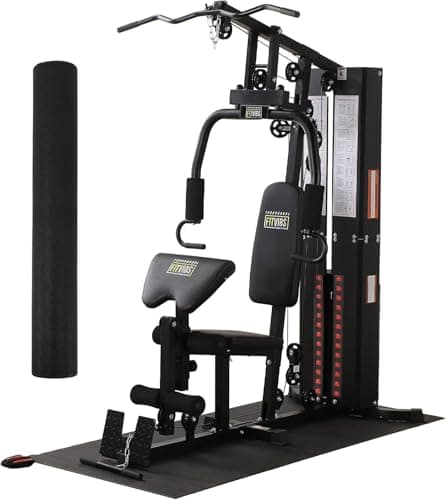
BalanceFrom — BalanceFrom High-Density Gym Equipment Mat (3ft x 6.5ft)
Best value equipment mat — a 3-by-6.5-foot high-density mat to protect floors under machines and benches
The three formats: functional trainer, single-column, wall-mount
Cable machines come in three home-friendly formats, and the format drives everything else. A functional trainer is a two-tower unit with a pulley on each column, both adjustable in height and pulled independently — it's the most versatile because you can train bilateral moves (a wide row, a chest press) or single-arm work with a natural, unrestricted line of pull. A single-column cable station gives you one adjustable pulley: cheaper, smaller, and fine for pulldowns, triceps, and rows, but you lose the two-handed and two-angle options. A wall-mount cable system bolts a pulley (or two) to studs or a rack, reclaiming floor space and often costing less, at the price of a fixed location and, on lighter units, a smaller weight capacity. If you only buy one and have the room, the dual functional trainer earns its footprint.
Weight stack vs plate-loaded
The resistance comes from one of two systems. A selectorized weight stack lets you move a pin to change load in seconds — quiet, fast between sets, and clean-looking, which is why most people prefer it for flowing cable work. The trade-offs are a higher price and a fixed ceiling (commonly a 150-to-200-pound stack per column, effectively less once the pulley ratio is factored in). Plate-loaded cable machines use a carriage you load with your own Olympic plates: dramatically cheaper for the same peak resistance, and easy to push past a stack's limit if you get strong, but you have to load and strip plates between sets and you need plates on hand. If you value convenience and lighter isolation work, choose a stack; if you want maximum load for the money and already own plates, plate-loaded wins on value.
Pulley ratio: 1:1 vs 2:1 and why it matters
This spec confuses more buyers than any other, and it directly changes the weight you feel. On a 1:1 ratio, the selected weight is (roughly) the resistance at the handle and the cable moves the same distance you pull — honest numbers and a shorter pull. On a 2:1 ratio, the machine routes the cable through a doubled pulley system, so you feel about half the stack weight but get double the cable speed and travel. That's why many functional trainers use 2:1: the extra cable length lets you complete long, fast movements like a standing pulldown, a wood-chop, or a cable sprint drive. The catch is you need a bigger stack for the same resistance — a 200-pound 2:1 stack tops out near 100 pounds of pull. Neither is better in a vacuum; just know which one you're buying so the numbers on the label mean what you think.
Cable travel and the number of pulley positions
Two under-advertised specs decide how much a cable machine can actually do. Cable travel is the total length of cable you can pull before it bottoms out; long travel is what lets you finish a tall movement — a full overhead-to-floor chop, a standing lat pulldown, a long row — without running out of rope mid-rep. Short travel quietly caps your range, so favor generous travel (2:1 machines help here). The number of pulley height positions sets how many angles you can attack from: budget single stacks may offer a handful of stops, while good functional trainers give fifteen to twenty-plus settings up each column. More positions mean you can dial in a true low-to-high fly, a mid pulley for face pulls, or a top pulley for pulldowns precisely, rather than settling for the nearest hole. If you want one machine to replace several, prioritize both.
Footprint and ceiling height
A cable machine is useless if it fights your room, so measure before you buy. Functional trainers are tall — many stand around 83 to 91 inches — and you need to clear both the frame and the overhead pulley's working height for a standing pulldown, so a low basement can rule out the tallest units. Check the frame height against your ceiling and leave a few inches of margin. Then map the floor footprint plus the swing room around it: you pull cables out to the sides and step back for many movements, so the usable space is bigger than the base. Wall-mount systems solve the depth problem by hugging the wall but still need vertical clearance for the pulley's travel. If space is the binding constraint, a single-column or wall-mount unit fits where a full trainer won't, without giving up the core cable exercises.
Included attachments and what to add
Half of a cable machine's usefulness is the handles you clip on, so check what ships in the box and what you'll want to add. Most functional trainers include a pair of single-D handles, a straight or angled bar, an ankle strap, and sometimes a rope and a lat bar. Those cover the majority of exercises: single handles for presses, rows, flyes, and curls; a rope for triceps and face pulls; an ankle strap for glute and hip work; a long bar for pulldowns. If a machine skips the essentials, factor the cost of adding them. Also confirm the clips and carabiners are quick and sturdy, and that the pulleys spin smoothly under load — cheap bushings feel gritty and wear out. A machine with a good attachment set and glassy pulleys beats a spec-heavy unit that's rough to actually use.
Matching the machine to your goals and budget
Work backward from how you'll train. If you want one machine to broaden a barbell-and-dumbbell gym with rows, flyes, cable core, and single-arm work, a dual functional trainer with a 2:1 ratio, long cable travel, and lots of pulley positions is the buy-it-once answer — pay for the stack size and pulley quality, not the badge. If you mostly want pulldowns, triceps, and rows on a tight budget, a single-column stack or a wall-mount pulley delivers most of the benefit for far less money and space. If you already own plenty of plates and chase heavy loads, a plate-loaded trainer stretches your dollar furthest. Whatever you pick, prioritize smooth pulleys, honest cable travel, and a ratio you understand over gimmick attachments. Buy the cable setup that fits your room and your actual exercise list, and it'll quietly earn its keep for years.
BalanceFrom — BalanceFrom High-Density Gym Equipment Mat (3ft x 6.5ft)
Frequently asked questions
For most people building a versatile home gym, yes. A dual-pulley functional trainer covers presses, rows, flyes, pulldowns, single-arm work, and cable core in one footprint, and the constant-tension resistance complements free weights well. It's more expensive and taller than a single-column station, so if space or budget is tight, a single stack or wall-mount pulley gives you most of the common exercises for less. Prioritize it if you want one machine to add the widest range of movements.
Related reading
Sources
- Best Functional Trainers — Tested (pulley ratios, cable travel, stack sizes, footprint) — Garage Gym Reviews, 2026
- Functional Trainer & Cable Machine Buying Guide (weight-stack vs plate-loaded, 1:1 vs 2:1 ratio) — BarBend
- Essentials of Strength Training and Conditioning (resistance-training equipment and cable/pulley considerations) — National Strength and Conditioning Association (NSCA)
BalanceFrom — BalanceFrom High-Density Gym Equipment Mat (3ft x 6.5ft)
$34.99 · on Amazon