Cable Machine vs Resistance Bands: Which Resistance Wins?
Cable machines and resistance bands both deliver tension your muscles fight through a full range of motion, but they get there in opposite ways. A cable machine runs a weight stack over pulleys, so resistance stays roughly constant from the first inch to lockout, the load is precise and easy to track, and the range is wide enough to train heavy. That capability costs money and floor space — functional trainers are expensive and permanent. Resistance bands flip the economics: they're cheap, pack into a bag, go anywhere, and their ascending resistance is gentle on joints at the stretched position. The trade-off is precision — band tension is approximate, changes with how far you stretch and anchor them, and the rubber wears out and can snap. If you want a measurable, heavy strength station, lean cable; if you want portable, affordable, joint-friendly resistance, lean bands.
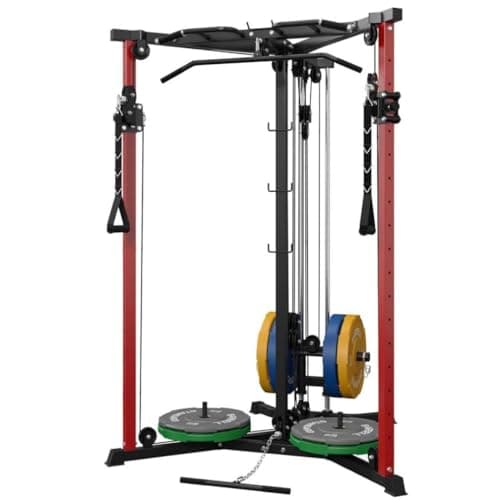
Mikolo — Mikolo Cable Crossover Machine (Functional Trainer)
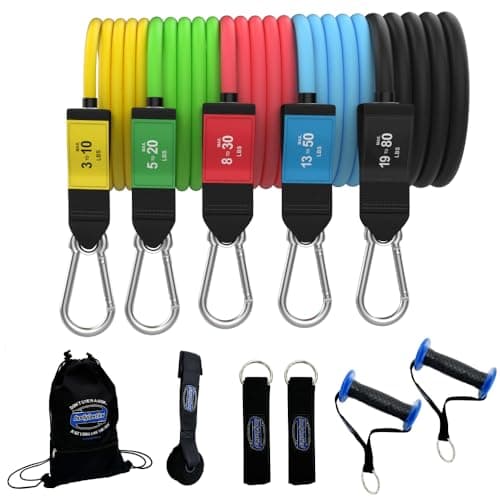
Bodylastics — Bodylastics Stackable Resistance Bands Set (Basic Series, 190 lb)
The verdict
Pick a cable machine if you want a permanent strength station with consistent, precise, heavy resistance and the widest cable exercise menu — and you have the budget and floor space. Pick resistance bands if you want cheap, portable, joint-friendly resistance for travel, small spaces, rehab, and accessory work. They're complements more than rivals: the cable is the workhorse for serious home strength training, while bands are the low-cost, go-anywhere supplement most lifters should own regardless.
Side-by-side
| Attribute | Cable Machine | Resistance Bands |
|---|---|---|
| Best for | Permanent strength station with consistent, heavy, measurable load | Cheap, portable, joint-friendly resistance anywhere |
| Resistance profile | Near-constant tension through the range (weight stack + pulleys) | Ascending — tension rises as the band stretches |
| Load range / heavy work | Wide — stacks commonly reach 150-200+ lb; easy to go heavy | Limited and imprecise; stacking bands gets fiddly at the top end |
| Cost | High — quality functional trainers run several hundred to a few thousand dollars | Low — a full set is typically $15-50 |
| Footprint / portability | Large and heavy — a fixed piece of gym furniture | Tiny — packs into a bag or drawer and travels anywhere |
| Exercise menu | Huge — adjustable pulley heights cover presses, rows, pulldowns, flies, cable core | Wide for pulls, presses, pull-aparts, and mobility; anchor-dependent |
| Durability | Very durable — cables and stacks last years with basic upkeep | Wears out — rubber degrades, loses tension, and can snap over time |
| Precision / progression | Precise — pin-select the weight, repeatable and easy to track | Approximate — resistance varies with stretch and anchor distance |
Who should pick which
Pick Cable Machine
- People building a permanent home gym who want one station with consistent, stackable, measurable resistance that replaces a rack of machines.
- Strength-focused lifters who want to load heavy and progress in defined increments through a smooth, near-constant strength curve.
Pick Resistance Bands
- Budget and small-space trainees, travelers, and anyone who wants effective resistance that packs into a drawer or carry-on.
- People doing rehab, prehab, warm-ups, and joint-friendly work, where accommodating resistance at the stretched position is a feature.
- Lifters who already own free weights and want cheap add-ons — band-resisted lifts, pull-aparts, assistance and mobility work.
Constant tension versus a resistance that climbs
The core difference is mechanical. A cable machine moves a weight stack over pulleys, so the resistance you feel stays close to constant through the whole range of motion — and because the line of pull follows the cable rather than gravity, you get tension at joint angles free weights can't reach. Resistance bands do the opposite: they store more force the more you stretch them, so tension is light at the start of a rep and climbs toward the end. That ascending curve is great for movements that are strongest at lockout — presses, pull-aparts, banded squats — and less ideal when you want even loading from the first inch. Neither profile is 'right'; they suit different jobs.
Load, progression, and going heavy
If your goal is measurable strength progress, the cable stack wins on precision. You pin a number, you know exactly what you lifted, and you add load in defined increments week to week. Quality functional trainers commonly stack to 150-200 lb or more per side, so going genuinely heavy is easy. Bands make heavy, precise loading awkward: their rating is approximate, the tension depends on how far you anchor and stretch them, and stacking multiple bands to add resistance quickly turns fiddly. Bands can absolutely build muscle — especially for higher-rep and accessory work — but if you want to track a number and grind it upward, the cable is the more honest tool.
Cost, space, and portability
This is where bands answer back. A full band set runs roughly $15-50 and disappears into a drawer or a carry-on; you can train in a hotel room, a garage, or a backyard with an anchor and nothing else. A cable machine or functional trainer is the opposite — several hundred to a few thousand dollars, heavy, and a permanent piece of gym furniture that needs floor space and ceiling clearance for high-pulley work. For small apartments, travelers, and tight budgets, bands deliver a huge fraction of the benefit at a tiny fraction of the cost and footprint. For a dedicated home-gym room, the cable earns its space.
Joints, safety, and wear
Bands are forgiving on joints. The tension eases off exactly where most movements are weakest — the bottom, stretched position — which is why they're a staple for rehab, prehab, warm-ups, and shoulder health. The trade-off is wear: rubber degrades with sun, heat, sweat, and time, tension fades, and a worn band can snap. A failing band under load recoils hard, so inspect them and replace them before they fray. Cables are smooth, predictable, and nearly maintenance-free; a stack and a couple of cables last years. The main cable risk is your technique, not equipment failure — the machine isn't going to let go of you mid-rep.
The honest answer: they aren't really rivals
Framed as a duel, this is the wrong fight. Bands are the cheapest, most portable way to add resistance and accommodating tension to almost any program; a cable machine is a permanent station that replaces a rack of single-purpose machines with consistent, heavy, measurable load. Most well-equipped lifters own both: a functional trainer for the bulk of cable strength work, and a band set for travel, warm-ups, assistance work, and band-resisted lifts. If budget or space forces one, let your situation decide — small, mobile, and thrifty points to bands; a dedicated room and a strength focus points to the cable.
Frequently asked questions
For many people, mostly yes — bands can train the same movement patterns (presses, rows, pulldowns, flies, core) at a fraction of the cost and space. What they can't easily replace is precise, heavy, trackable loading. If you lift for measurable strength and want to progress in defined increments, the cable stack does that better. If you train for general fitness, conditioning, and muscle in a small space, a good band set covers a surprising amount of the same ground.
Related reading
Sources
- Progression Models in Resistance Training for Healthy Adults (Position Stand) — American College of Sports Medicine (ACSM), 2009
- Resistance Training Program Design and Basic Principles — National Strength and Conditioning Association (NSCA)
- The Benefits and Uses of Resistance Band Training — American Council on Exercise (ACE)
- Cable Machines and Functional Trainers Explained — BarBend
Mikolo — Mikolo Cable Crossover Machine (Functional Trainer)
$399.99 · on Amazon