How Long Does It Take for Fish Oil to Work?
There are two clocks here and almost every page on this subject confuses them. The first is how fast the omega-3s get into you, and that one is measured precisely. In Katan's 18-month controlled study, 58 men took 0, 3, 6 or 9 g a day of fish oil for twelve months with serial tissue sampling: EPA in serum cholesteryl esters plateaued after four to eight weeks with an incorporation half-life of 4.8 days, while EPA in red blood cell membranes had a half-life of 28 days and did not reach steady state until 180 days. That is why NIH's own fact sheet says erythrocyte fatty acid analysis reflects intake over approximately the previous 120 days, and why the omega-3 index — EPA plus DHA as a percentage of red cell fatty acids — is a four-month average rather than a snapshot. The second clock is how long before something you can actually notice or measure changes, and it depends entirely on what you are taking it for. Triglycerides move on the fast clock: a pooled analysis of 58 trials found each extra gram a day of long-chain omega-3 lowered triglycerides by 5.9 mg/dL with a bigger effect at higher baselines, and a 2020 Cochrane review of 86 trials in 162,796 people put the average reduction around 15% — but you will not feel that, so the answer arrives as a lab result at eight to twelve weeks. Joint symptoms in rheumatoid arthritis run on the slow clock, with trials typically 12 to 16 weeks and inconsistent results even then. Dry eye trials run three to twelve months with results that contradict each other. And for general heart health in a person without existing coronary disease, there is no timeline at all, because the large trials did not find the benefit. So: blood levels in four to eight weeks, a full red-cell shift in six months, a triglyceride answer at eight to twelve weeks on a lab draw, joints at twelve weeks or not at all, and nothing you should expect to feel in week one. If you want one number to plan around, give it twelve weeks and judge it with a blood test rather than a feeling.
Affiliate disclosure: Trusted Health Gear is an Amazon Associate. If you buy through links on this page, we may earn a commission at no extra cost to you. Commission does not influence our rankings. Full policy.
The absorption clock, measured
This is the part that is genuinely nailed down. Katan and colleagues fed 58 men 0, 3, 6 or 9 g a day of fish oil for twelve months and tracked fatty acids in serum cholesteryl esters, erythrocytes and subcutaneous fat during and after supplementation. Three different tissues, three different speeds. EPA in serum cholesteryl esters plateaued after four to eight weeks, with an incorporation half-life of 4.8 days — so plasma is a one-to-two-week rear-view mirror. EPA in erythrocyte membranes had a half-life of 28 days and reached steady state only after 180 days, which makes red cells a one-to-two-month mirror and a full six-month journey to equilibrium. Adipose tissue was slowest of all: the change at six months was 67% of the change at twelve months in gluteal fat, and EPA levels there reflect intake over a period of years. Dose mattered linearly — steady-state EPA in cholesteryl esters rose 3.9 mass percentage points for each extra gram of EPA eaten per day, and 2.1 in erythrocytes. DHA incorporation was more erratic and smaller in both compartments, which is a useful caution against assuming the two fatty acids behave identically. The practical reading: within a month of starting, the omega-3s are measurably in your blood. Within two months your plasma level is where it is going to stay. Your red cells, the compartment the omega-3 index actually measures, need about six months to finish moving.
The omega-3 index, and what dose gets you where
If you want to verify that fish oil is 'working' in the narrow sense of raising your omega-3 status, the omega-3 index is the test, and it is worth understanding before you order one. Proposed by Harris and von Schacky, it expresses EPA plus DHA as a percentage of total erythrocyte fatty acids and serves as a surrogate for tissue levels. NIH notes that EPA and DHA typically make up about 3-5% of erythrocyte fatty acids in Western populations with low fish intake, roughly half the levels seen in Japan. Flock and colleagues ran the dose-response experiment directly: 115 healthy men and women took 0, 300, 600, 900 or 1,800 mg a day of EPA plus DHA for about five months, and the index rose dose-dependently, with dose alone explaining 68% of the variability in response. The single most interesting finding was that dose adjusted per unit body weight did better — 70% of the variability — and adding baseline index, age, sex and physical activity got the model to 78%. In plain terms: a bigger person needs a bigger dose to reach the same index, which is the main reason two people on the same 1,000 mg softgel can end up in different places. Because red cells need around 180 days to reach steady state, a repeat index test is only meaningful at four to six months, not at week six. That makes it a good tool for someone who wants to confirm a real change and a poor tool for someone impatient.
Triglycerides: the fastest real endpoint, and it needs a lab
If there is one effect of fish oil that is both reliable and reasonably quick, it is the triglyceride reduction — and it is invisible without a blood draw. The 2020 Cochrane review of 86 randomized trials, covering 0.5 g a day to more than 5 g a day of long-chain omega-3s for 12 to 88 months in 162,796 participants, found serum triglycerides reduced by about 15%. An earlier analysis of 58 trials found a clean dose-response at ordinary supplement doses: each increase of 1 g a day of long-chain omega-3 lowered triglycerides by 5.9 mg/dL, with a stronger effect in people whose baseline was higher. For clinically high triglycerides the AHA's position is that 4 g a day of prescription omega-3s lowers levels, used alone or alongside other lipid-lowering medication — that is a prescription-dose statement, not an over-the-counter one. The timing question is less well characterized than the effect size, because trials generally report the endpoint rather than the curve, but the biology points the same way as Katan's plasma data: the compartment doing the work is loaded within four to eight weeks. The sensible protocol is therefore to get a fasting lipid panel before you start, take a consistent dose daily for eight to twelve weeks, and repeat the panel. That is a real answer. 'I have been taking fish oil for a month and I feel the same' is not, because you would not expect to feel anything either way.
Joints and inflammation: twelve weeks minimum, and read the fine print
This is where expectations and evidence diverge most sharply, so the honest version matters. NIH's summary of the rheumatoid arthritis literature is that omega-3 supplements generally reduce patients' use of anti-inflammatory drugs and corticosteroids but do not have consistent effects on painful or tender joints, swelling, or morning stiffness. Look at three of the trials it cites and the timelines become clear. A Danish trial gave 51 patients 2.0 g EPA plus 1.2 g DHA or placebo daily for twelve weeks alongside their usual medication: morning stiffness, joint tenderness and visual pain score decreased significantly versus placebo, while grip strength, daily activity score and joint swelling did not, and medication use did not change. A Swedish trial gave 43 patients 10 g a day of fish oil (1.8 g EPA, 1.2 g DHA) and found NSAID use decreased at three and six months with physician-assessed global arthritic activity improved at three months, while patient-reported pain, morning stiffness and function did not differ. A 2013 Korean trial gave 81 patients 2.1 g EPA plus 1.2 g DHA for sixteen weeks and found no significant effect on clinical symptoms, with a post-hoc reduction in NSAID requirement only in patients over 55 kg. Three points fall out of that. Twelve weeks is the floor, not an optimistic estimate. The endpoint that moves most consistently is how much anti-inflammatory medication people need, not how their joints feel. And this is adjunctive-to-treatment evidence in a diagnosed autoimmune disease — it does not transfer to general 'joint health' in someone whose knees ache after squats. For exercise soreness we would look at tart cherry and basic recovery before omega-3s.
Where the clock is long, inconsistent, or the answer is simply no
Three categories deserve naming because they are the ones people quietly expect fish oil to fix. Dry eye disease: the trials contradict each other outright. One trial of 518 adults found 1,000 mg a day of omega-3s (650 mg EPA plus 350 mg DHA) for three months reduced symptoms and some signs versus placebo, and a 105-person trial found the same at 2,240 mg over twelve weeks — but a 535-person, twelve-month trial using 3,000 mg a day against an olive oil placebo found no significant difference in symptoms or signs, and the VITAL ancillary study gave 23,523 adults 1,000 mg a day for a median of 5.3 years with no effect on dry eye incidence. NIH's own conclusion is that the evidence shows no consistent relationship. Mood: a 2016 meta-analysis found 17% lower depression risk with higher fish intake, but a Cochrane review of 26 studies found insufficient evidence that omega-3 supplements at 1,000-6,600 mg a day benefit major depressive disorder, with only a small effect on symptoms that the authors judged not clinically significant. Cardiovascular prevention in healthy people: the AHA recommends one to two servings of seafood a week and about 1 g a day of EPA plus DHA for people with existing coronary heart disease, and explicitly does not recommend omega-3 supplements for people who are not at high cardiovascular risk. REDUCE-IT did find a 25% reduction in cardiovascular events — with 4 g a day of a prescription EPA ethyl ester, in 8,179 statin-treated patients with triglycerides of 135-499 mg/dL, over a median of 4.9 years. That is a drug trial in a sick population on a five-year clock, not a reason to expect your fish oil capsule to do something by March. If you are taking fish oil for one of these three reasons, the realistic answer to 'how long' is 'longer than you will wait, and possibly never.'
What actually shortens the timeline
Four things move the clock, and three of them are free. Dose is the first and biggest: incorporation is linear in intake, so 2 g a day of EPA plus DHA loads your blood roughly twice as fast as 1 g, and Flock's model says the dose you need scales with body weight. Read the EPA plus DHA figure rather than the 'fish oil 1,200 mg' headline — those are not the same number, and the gap between them is the single most common reason someone is taking a third of the dose they think they are. Second, take it with a meal that contains fat, and preferably your largest. These are fat-soluble long-chain fatty acids, and absorption is meaningfully better with food. Third, consistency beats heroics: every timeline above comes from daily dosing, and a week off resets you down the half-life curve rather than parking you where you were. Fourth, form matters a little. Supplements come as natural triglycerides, free fatty acids, ethyl esters, re-esterified triglycerides and phospholipids; NIH states that re-esterified triglycerides, natural triglycerides and free fatty acids have somewhat higher bioavailability than ethyl esters, while consumption of all forms significantly raises plasma EPA and DHA. 'Somewhat higher' is the operative phrase — form is a tiebreaker between two otherwise similar bottles, not a reason to pay double. If you are vegan, algal oil is the route, usually at 100-300 mg DHA per serving with less EPA; a small study found DHA bioavailability from algal oil equivalent to that from cooked salmon, so the constraint is dose per capsule rather than absorption. And the whole-food answer stands above all of it: two servings of oily fish a week gets most people most of the way there, which is why the AHA leads with seafood and treats supplements as the fallback.
What we'd buy, by target dose
Every pick below is already reviewed and scored in our roundups — same products, same specs, with live Amazon prices.
| Attribute | Nordic Naturals Ultimate OmegaOur pick | Sports Research Triple Strength Omega-3 Fish Oil | Carlson Labs Carlson Elite Omega-3 Gems | Deva Deva Vegan Omega-3 DHA-EPA (Algae) |
|---|---|---|---|---|
| Best for | Best overall for research transparency | Best value per gram EPA+DHA | Best for high-dose EPA+DHA in few softgels | Best vegan pick — algae-derived DHA+EPA from a dedicated vegan brand |
| Who it's for | The default if you want the timeline to be short and verifiable: 1,280 mg of EPA plus DHA in a two-softgel serving, in the triglyceride form NIH flags as having somewhat higher bioavailability than ethyl esters, with IFOS 5-star testing behind it. At one serving a day you are comfortably inside the 1-2 g band that loads plasma within four to eight weeks. | The value pick for a twelve-week trial you intend to repeat a lipid panel after: 1,040 mg EPA plus DHA per two softgels, triglyceride form, IFOS tested. Cost per gram of actual EPA plus DHA is what matters when the plan is daily dosing for three months, not the price on the bottle. | For anyone who needs a trial-sized dose without swallowing six softgels: 1,600 mg EPA plus DHA per two-softgel serving, triglyceride form. This is the pick if you are aiming at the 2-3 g a day used in the rheumatoid arthritis trials, or if body weight means a standard dose is unlikely to move your omega-3 index far. | The vegan route, and the honest caveat with it: algae oil delivers 300 mg of DHA plus EPA per serving, so the per-capsule dose is a fraction of a fish oil softgel's and the timeline stretches accordingly. Bioavailability is not the problem — a small study found algal DHA equivalent to cooked salmon — the dose is, so plan servings around the EPA plus DHA figure rather than the capsule count. |
| Key specs | 1,280mg combined EPA+DHA per 2-softgel serving, triglyceride form, IFOS 5-star | 1,040mg EPA+DHA per 2-softgel serving, triglyceride form, IFOS tested | 1,600mg EPA+DHA per 2-softgel serving, triglyceride | 300mg DHA+EPA per serving from algal oil, carrageenan-free, non-GMO, 90 vegetarian/vegan softgels, ~$31 |
| Our score | 8.8/10 | 8.2/10 | 7.8/10 | 6.2/10 |
| Where to buy |
Prices pulled from Amazon as of October 26, 2026 and are subject to change. The price shown on Amazon at checkout applies.

Nordic Naturals — Ultimate Omega
The default if you want the timeline to be short and verifiable: 1,280 mg of EPA plus DHA in a two-softgel serving, in the triglyceride form NIH flags as having somewhat higher bioavailability than ethyl esters, with IFOS 5-star testing behind it. At one serving a day you are comfortably inside the 1-2 g band that loads plasma within four to eight weeks.
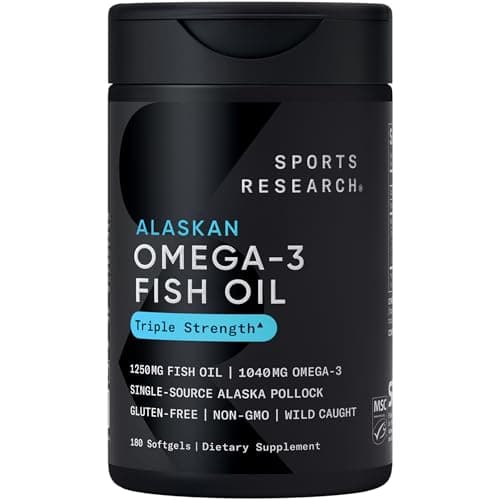
Sports Research — Triple Strength Omega-3 Fish Oil
The value pick for a twelve-week trial you intend to repeat a lipid panel after: 1,040 mg EPA plus DHA per two softgels, triglyceride form, IFOS tested. Cost per gram of actual EPA plus DHA is what matters when the plan is daily dosing for three months, not the price on the bottle.

Carlson Labs — Carlson Elite Omega-3 Gems
For anyone who needs a trial-sized dose without swallowing six softgels: 1,600 mg EPA plus DHA per two-softgel serving, triglyceride form. This is the pick if you are aiming at the 2-3 g a day used in the rheumatoid arthritis trials, or if body weight means a standard dose is unlikely to move your omega-3 index far.
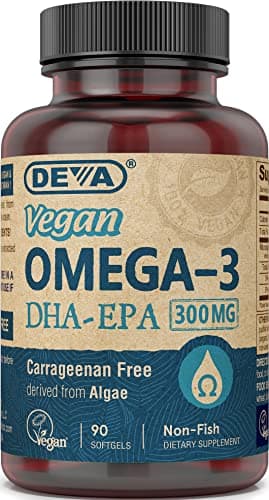
Deva — Deva Vegan Omega-3 DHA-EPA (Algae)
The vegan route, and the honest caveat with it: algae oil delivers 300 mg of DHA plus EPA per serving, so the per-capsule dose is a fraction of a fish oil softgel's and the timeline stretches accordingly. Bioavailability is not the problem — a small study found algal DHA equivalent to cooked salmon — the dose is, so plan servings around the EPA plus DHA figure rather than the capsule count.
What we'd actually do
Decide what you are measuring before you buy anything, because that choice sets the timeline. If the target is triglycerides: get a fasting lipid panel, take 1-2 g a day of EPA plus DHA with your largest meal, and repeat the panel at eight to twelve weeks. That is a clean experiment with a numeric answer. If the target is your omega-3 status as such: take a consistent dose and test the omega-3 index at four to six months, because red cells need about 180 days to reach steady state and testing earlier tells you nothing useful. If the target is rheumatoid arthritis symptoms, discuss it with the clinician managing the disease and plan on at least twelve weeks at a trial-sized dose of 2-3 g of EPA plus DHA, understanding that the effect most likely to appear is a reduced need for anti-inflammatory medication. If the target is general wellness and you have no cardiovascular diagnosis, eat the fish — the AHA does not recommend supplements for people who are not at high risk, and there is no endpoint here for you to time. On safety, the ceiling is generous but not infinite: the IOM set no upper limit but noted that 900 mg EPA plus 600 mg DHA a day or more for several weeks might reduce immune function and that 2-15 g a day might increase bleeding time, while EFSA and FDA both treat combined intakes up to about 5 g a day as safe. Two large trials of 4 g a day over several years found a slightly increased risk of atrial fibrillation in people with or at high risk of cardiovascular disease. If you take warfarin or another anticoagulant, this is a conversation with your prescriber rather than a dose you pick yourself. This is general information, not medical advice.
Frequently asked questions
It depends which clock you mean. Absorption: EPA in serum cholesteryl esters plateaued after four to eight weeks in Katan's controlled study, with an incorporation half-life of 4.8 days, while EPA in red blood cell membranes had a 28-day half-life and reached steady state only after 180 days — which is why NIH says erythrocyte analysis reflects intake over roughly the previous 120 days. Effects: triglycerides are the fastest meaningful endpoint, and the answer arrives as a lab result at eight to twelve weeks (a 2020 Cochrane review of 86 trials found about a 15% reduction, and a pooled analysis of 58 trials found 5.9 mg/dL per extra gram a day). Rheumatoid arthritis trials run 12 to 16 weeks with inconsistent symptom results. For general heart health in someone without existing coronary disease, the large trials did not find a benefit, so there is no timeline to wait out. Plan on twelve weeks and judge with a blood test rather than a feeling.
Related reading
- → Best fish oil supplements, scored on a public rubric
- → Fish oil vs krill oil: EPA and DHA per dollar
- → Turmeric vs fish oil for inflammation
- → Best supplements for inflammation
- → Best tart cherry supplement for exercise soreness
- → How to read a supplement label (EPA + DHA vs total fish oil)
- → Best brain health supplements
Sources
- Omega-3 Fatty Acids — Fact Sheet for Health Professionals (erythrocyte fatty acid analysis reflects intake over approximately the previous 120 days; omega-3 index defined as EPA plus DHA as a percentage of erythrocyte fatty acids, typically 3-5% in Western populations with low fish intake and about twice that in Japan; supplement forms and the somewhat higher bioavailability of re-esterified triglycerides, natural triglycerides and free fatty acids versus ethyl esters; algal oil typically 100-300 mg DHA with bioavailability equivalent to cooked salmon in a small study; 2020 Cochrane review of 86 trials in 162,796 participants finding ~15% triglyceride reduction; analysis of 58 trials finding 5.9 mg/dL per 1 g/day; AHA recommendations of 1-2 seafood servings weekly, ~1 g/day EPA+DHA for existing CHD, 4 g/day prescription omega-3s for high triglycerides, and no recommendation of supplements for people without high CVD risk; REDUCE-IT and STRENGTH results; rheumatoid arthritis trial details; dry eye trial details; Cochrane depression finding; IOM notes on immune function at 900 mg EPA plus 600 mg DHA and bleeding time at 2-15 g/day; EFSA and FDA 5 g/day safety positions; atrial fibrillation signal at 4 g/day) — NIH Office of Dietary Supplements
- Kinetics of the incorporation of dietary fatty acids into serum cholesteryl esters, erythrocyte membranes, and adipose tissue: an 18-month controlled study (Katan MB et al. — 58 men fed 0, 3, 6 or 9 g/day fish oil for 12 months; EPA in cholesteryl esters plateaued after 4-8 weeks with an incorporation half-life of 4.8 days and a rise of 3.9 mass % per extra g/day of EPA; EPA in erythrocyte membranes had a 28-day half-life and reached steady state after 180 days, rising 2.1 mass % per g/day; adipose change at 6 months was 67% of the 12-month change in gluteal fat; DHA incorporation erratic and smaller; conclusion that cholesteryl esters reflect the past week or two, erythrocytes the past month or two, and adipose tissue a period of years) — Journal of Lipid Research, 1997
- Determinants of erythrocyte omega-3 fatty acid content in response to fish oil supplementation: a dose-response randomized controlled trial (Flock MR et al. — 115 healthy men and women given 0, 300, 600, 900 or 1,800 mg/day EPA+DHA for about 5 months; omega-3 index rose dose-dependently with dose alone explaining 68% of response variability, dose per unit body weight explaining 70%, and baseline index, age, sex and physical activity bringing the model to 78%) — Journal of the American Heart Association, 2013
- Product titles, EPA and DHA content per serving, forms, certifications, live prices and availability for the fish oil and algal oil supplements referenced — retrieved via the Amazon product data layer — Amazon product listing data, 2026
Nordic Naturals — Ultimate Omega
$34.20 · on Amazon