Barbell vs Trap Bar: Which Is Better for Deadlifts?
The straight barbell and the trap bar both build a big, strong deadlift, but they load your body differently, so the better choice depends on your goal. With a trap (hex) bar you stand inside the frame and grip neutral handles at your sides, which puts the load in line with your center of mass. Research shows that geometry lowers the demand on your lower back, hips, and ankles while asking more of your knees and quads, makes the lift easier to learn, and lets most people move more weight and more power. The straight bar sits in front of your shins, which trains a purer hip hinge, hammers the posterior chain and spinal erectors harder, and is the competition standard — plus it's the far more versatile bar for rows, cleans, squats, and pressing. This isn't an either/or for most lifters: pick the trap bar if you want a safer, more quad-driven pull, and the straight bar if you want the classic hinge, competition specificity, and one bar that does everything.
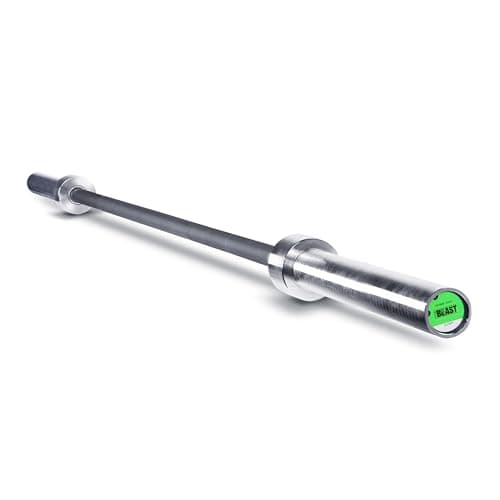
CAP Barbell — CAP The Beast 7ft Olympic Barbell, Pro Series
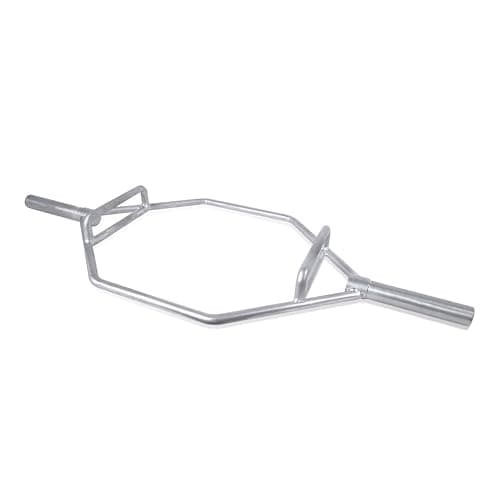
CAP Barbell — CAP Olympic Trap Bar (Combo Grip, 750 lb)
The verdict
Choose the trap bar if you want the safest, most beginner-friendly, most quad-dominant way to deadlift heavy — it reduces lower-back load and suits taller lifters, athletes, and anyone with a cranky back. Choose the straight barbell if you compete in powerlifting, want to train the pure hip hinge and posterior chain, or can only own one bar, because the straight bar also handles squats, presses, rows, and Olympic-style pulls. Serious home gyms benefit from both, but if you're buying one bar first, let your goal decide: general strength and joint-friendly pulling lean trap bar; competition, hinge specificity, and maximum versatility lean straight bar.
Side-by-side
| Attribute | Straight Barbell | Trap (Hex) Bar |
|---|---|---|
| Best for | Competition deadlift, hip hinge, posterior chain, all-around use | Beginner-friendly, quad-dominant, lower-back-friendly pulling |
| Load position | In front of the shins — bar path around the knees | In line with your center of mass — you stand inside it |
| Grip | Pronated, mixed, or hook — bar in front of you | Neutral (palms facing in) handles at your sides |
| Lower-back demand | Higher — more lumbar and hip moment, greater shear | Lower — reduced peak moment at the lumbar spine and hip |
| Muscle emphasis | More posterior chain — hamstrings and spinal erectors | More quadriceps and knee involvement |
| Learning curve | Steeper — setup and bar path take coaching | Gentler — more intuitive, easier to keep in good position |
| Peak force / weight moved | Slightly lower peak force and 1RM in studies | Higher peak force, power, and typically a heavier 1RM |
| Versatility | Very high — squats, presses, rows, cleans, and more | Limited — mainly deadlifts, shrugs, carries, and jumps |
Who should pick which
Pick Straight Barbell
- Powerlifters and anyone who competes or tests a conventional/sumo deadlift, where the straight bar is the standard.
- Lifters who want to train the pure hip hinge and load the posterior chain — glutes, hamstrings, and spinal erectors — hardest.
- Home gyms buying one bar that must also squat, bench, press, row, and clean.
Pick Trap (Hex) Bar
- Beginners and self-coached lifters who want the easiest deadlift to learn and keep safe.
- Lifters with lower-back issues or who want to reduce lumbar load while still pulling heavy.
- Athletes and taller lifters chasing peak force and power with a more quad-dominant, knee-friendly pull.
The core difference is where the load sits
Everything else follows from geometry. With a straight barbell, the bar sits in front of your shins, so the weight is out ahead of your center of mass and your body has to work to keep it close as it travels around your knees. That creates a longer moment arm on your hips and lower back — the source of both the straight bar's training stimulus and its higher back demand. With a trap bar you step inside the frame and hold neutral handles at your sides, which centers the load through the middle of your body. Because the weight is stacked closer to your hips and spine, the same load imposes less torque on your lower back and lets you sit into the lift more like a squat-deadlift hybrid. That single change in load position is why the two bars feel, and train, so differently.
Lower-back load: the trap bar's biggest advantage
This is where the research is clearest. A biomechanical analysis published in the Journal of Strength and Conditioning Research found that the hexagonal (trap) bar significantly reduced the peak moment at the lumbar spine, hip, and ankle compared with the straight bar, while increasing the peak moment at the knee. In plain terms: the trap bar shifts stress off your lower back and hips and onto your knees and quads. Practitioners consistently report the trap bar produces lower shear forces on the lumbar spine than a conventional pull, which is why it's a common recommendation for lifters with a sensitive lower back, for novices still grooving a hinge, and for athletes who deadlift for general strength rather than to compete. The straight bar's higher back demand isn't a flaw — it's exactly what you want if building the hinge and posterior chain is the goal — but if reducing lumbar load matters to you, the trap bar has the evidence on its side.
Muscle emphasis: hinge and posterior chain vs quads and power
The two bars build overlapping but distinct patterns. Because the straight bar sits in front and demands a deeper hip hinge, it loads the posterior chain harder — EMG research shows greater biceps femoris (hamstring) and erector spinae activation with the straight bar, especially during the lift. The trap bar's more upright, squat-like position shifts work toward the knees, and studies show higher quadriceps (vastus lateralis) activation than the straight-bar pull. The trap bar also tends to produce higher peak force, peak power, and peak velocity, and lets most lifters handle a heavier 1RM — in one study subjects lifted more with the hex bar than the straight bar. That makes the trap bar a strong tool for athletes chasing power and total force output, while the straight bar remains the better choice for training the pure hinge, maximizing hamstring and spinal-erector work, and carrying over to sports and lifts that demand a strong hip hinge.
Learning curve, safety, and who it fits
The trap bar is simply easier to do well. Standing inside the frame with neutral handles keeps the load centered, encourages a more upright torso, and makes it harder to round into a dangerous position, so most beginners get to a safe, heavy pull faster with a trap bar than with a straight bar. Neutral handles are also kinder to the wrists and shoulders and remove the need for a mixed grip. Taller lifters and those with long legs or arms often find the trap bar's raised handles let them start from a stronger position than reaching down to a floor-height straight bar. The straight bar rewards coaching on setup, bracing, and bar path, and that skill is worth building — but it takes longer to master and is less forgiving of a lapse in form. For self-coached home lifters, older trainees, and athletes who want strength without a long technical runway, the trap bar's gentler learning curve is a real, practical edge.
Versatility and value: what one bar can do
If you can only own one bar, versatility swings the decision toward the straight barbell. A single Olympic straight bar deadlifts, squats, benches, overhead presses, rows, and cleans — it's the backbone of every classic strength program and the standard you'll be tested against if you ever compete. A trap bar is excellent at what it does — deadlifts, shrugs, farmer's-style carries, jump work, and some pressing on the fixed-handle models — but it can't replace a straight bar for squats, bench, or the Olympic lifts, and it stores less conveniently. That's why the honest answer for most home gyms is to start with a quality straight bar and a rack, then add a trap bar later as a specialty tool for heavy, lower-back-friendly pulling and carries. If your training is deadlift- and athletic-power-focused and you already have a way to squat and press, buying the trap bar first is perfectly reasonable — but the straight bar is the more complete single purchase.
Frequently asked questions
Generally yes, in two senses. It's easier to learn because you stand inside the frame with the load centered and a more upright torso, which makes good position more intuitive and harder to lose. And most people can lift more weight with a trap bar, because the centered load and neutral handles put you in a mechanically stronger, more quad-driven position — studies show higher peak force and typically a heavier 1RM with the hex bar. 'Easier' doesn't mean less effective; it means more accessible and often more productive for building general strength and power.
Sources
- A Biomechanical Analysis of Straight and Hexagonal Barbell Deadlifts Using Submaximal Loads (lower peak lumbar/hip/ankle moment, higher knee moment, greater peak force and power with the hex bar) — Journal of Strength and Conditioning Research (NSCA) — Swinton et al., 2011
- An Examination of Muscle Activation and Power Characteristics While Performing the Deadlift Exercise with Straight and Hexagonal Barbells (hex bar: more quadriceps activation; straight bar: more hamstring and erector spinae activation) — Journal of Strength and Conditioning Research (NSCA) — Camara et al., 2016
- Trap Bar Deadlifts Are Underrated (load position, quad emphasis, and reduced lumbar demand) — Stronger by Science
- Trap Bar vs Conventional Deadlift: Differences, Muscles Worked, and Who Each Suits — BarBend
CAP Barbell — CAP The Beast 7ft Olympic Barbell, Pro Series
$149.00 · on Amazon