How to Choose a Barbell for Your Home Gym
For most home lifters, one good 20kg (44lb) multipurpose Olympic barbell is the right answer — a 28.5mm shaft, a moderate knurl with no center knurl, bushing sleeves, tensile strength of at least 190,000 PSI, and a corrosion-resistant coating. That single bar handles squats, presses, deadlifts, rows, and the occasional clean without complaint. Spend up for a dedicated Olympic weightlifting or powerlifting bar only if you specialize in those lifts. Women and smaller lifters are often better served by a 15kg (33lb), 25mm bar. Skip the cheapest chrome bars with vague specs; a mid-priced bar with published numbers will outlast three of them.
Affiliate disclosure: Trusted Health Gear is an Amazon Associate. If you buy through links on this page, we may earn a commission at no extra cost to you. Commission does not influence our rankings. Full policy.
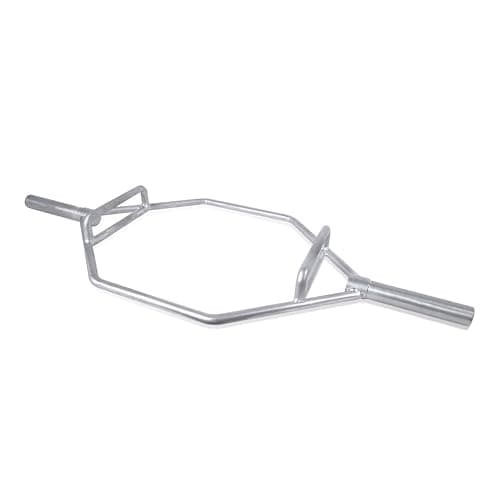
CAP Barbell — CAP Olympic Trap Bar (Combo Grip, 750 lb)
Best overall — a dual-height, high-capacity closed hex bar that covers deadlifts, shrugs, and carries for most home gyms at a fair price
Bar weight and length: the standard specs
A standard men's Olympic barbell weighs 20kg (44lb), runs about 2.2m (7.2ft) long, and has a 28-28.5mm shaft. The women's Olympic bar weighs 15kg (33lb), is roughly 2.0m long with a thinner 25mm shaft and no center knurl — a genuinely better fit for smaller hands and shoulders, not a downgrade. Both use 50mm rotating sleeves that fit standard Olympic plates. Avoid the older 1-inch 'standard' bars with fixed sleeves; they top out at low weight and lock you into a dead-end plate size. The 7-foot length matters for a home gym: it needs to clear a power rack's uprights (usually 43-49 inches inside width) with room for collars, so measure your rack before you buy.
Knurling: aggressiveness and the center knurl
Knurling is the crosshatched grip cut into the shaft, and its aggressiveness is a real feel difference, not marketing. Passive knurl is smooth and forgiving but can slip under heavy pulls; aggressive 'mountain' or sharp volcano knurl bites hard, which powerlifters love on deadlifts and hate on high-rep work that shreds calluses. For a do-everything home bar, moderate knurl is the sweet spot. The center knurl is the patch in the middle: it grips your shirt during low-bar squats so the bar does not slide, but it scrapes your throat on cleans and front squats. Powerlifting bars have it; Olympic weightlifting bars usually do not; multipurpose bars often use a light center knurl or skip it. Match this to the lifts you actually do most.
Sleeve rotation: bushing vs bearing
The sleeves — the fat ends that hold the plates — spin so the bar can rotate under your hands instead of torquing your wrists. There are two systems. Bushings (usually bronze) are simple, durable, and give smooth-enough rotation for squats, presses, deadlifts, and casual cleans; they are what most quality multipurpose and powerlifting bars use, and they are cheaper. Needle bearings spin faster and more freely, which matters when you are catching fast, heavy cleans and snatches; they cost more and can feel too 'loose' for slow strength work. The honest read: unless you are seriously training the Olympic lifts, a good bushing bar is all you need. Paying bearing money for a bar that mostly gets squatted and deadlifted is spending in the wrong place.
Whip: how much the bar flexes
Whip is the springy flex you can see in a loaded bar. Olympic weightlifting bars are built to whip — that stored energy helps drive a heavy clean or snatch out of the bottom, and the bar is engineered to oscillate predictably. Powerlifting bars are the opposite: stiff, so the load stays put and does not bounce you off balance mid-squat. A multipurpose bar sits in between. For the average home lifter, whip is one of the most over-obsessed specs. You will barely notice it until you are loading well past 315lb on fast lifts. Do not let a marketing line about whip talk you out of an otherwise well-built bar; grip feel, coating, and sleeve quality will affect your training far more day to day.
Tensile strength and load capacity
Tensile strength — measured in PSI — is how much stress the steel takes before it fails, and it is the headline durability number. Cheap bars sit around 150,000 PSI; solid bars run 190,000; premium bars hit 200,000-plus. Higher tensile strength means the bar resists taking a permanent bend, which is exactly what you want if you ever drop or fail a heavy lift. Related is the static load rating (often 700-1,500lb), the manufacturer's tested capacity. For nearly all home lifters these ceilings are far above what you will load, so treat them as a proxy for build quality rather than a limit you will hit. Be suspicious of bars that publish no tensile number at all — that silence usually means it is low.
Coatings: bare steel to stainless
The coating protects the shaft from rust and changes how the knurl feels. Bare steel gives the best raw grip and feedback but rusts fast without regular brushing and oiling — high maintenance. Black oxide is cheap and near-bare in feel, but offers minimal corrosion protection. Zinc (bright or black) is a common mid-tier finish; decent protection that wears at the knurl over time. Hard chrome is very durable and rust-resistant but can feel slick, dulling grip. Cerakote, a ceramic coating, has become the popular value pick: excellent corrosion resistance with grip that stays close to bare steel. Stainless steel is the top choice — bare-steel feel plus the best rust resistance — and priced accordingly. In a humid or unheated garage, corrosion resistance is worth paying for.
Bar type, your lifts, and budget
Match the bar to what you do. Train the Olympic lifts seriously? Get a weightlifting bar: 28mm shaft, needle bearings, whippy, no center knurl. Compete or specialize in powerlifting? Get a power bar: 29mm stiff shaft, aggressive knurl, center knurl, bushings. Doing a bit of everything — the reality for most home gyms? Buy a multipurpose bar (roughly 28.5mm, moderate knurl, bushings, no or light center knurl) and stop overthinking it. On budget: the sweet spot is a mid-priced multipurpose bar with published specs and a corrosion-resistant coating. Under that, quality drops fast into vague chrome bars that flake and spin poorly. Above it, you are buying specialization and finish, not core function. Buy one versatile staple well, not two gimmicky bars cheaply.
Frequently asked questions
A men's Olympic barbell weighs 20kg (44lb); the women's Olympic bar weighs 15kg (33lb). Both take 50mm Olympic plates. Older 1-inch 'standard' bars weigh less and vary, but they top out at low loads and are worth avoiding for serious training.
Related reading
Sources
- Technical and Competition Rules & Regulations (barbell specifications) — International Weightlifting Federation (IWF)
- Technical Rules Book (powerlifting bar specifications) — International Powerlifting Federation (IPF)
- How to Choose a Barbell — buyer's guide — BarBend
- Best Barbells & barbell buying guide — Garage Gym Reviews
CAP Barbell — CAP Olympic Trap Bar (Combo Grip, 750 lb)
$89.99 · on Amazon