The Best Weighted Jump Ropes for Conditioning and Double-Unders
A weighted jump rope is one of the cheapest conditioning tools you can own and one of the most oversold. The marketing photos promise 'toned arms' and a fat-burning miracle; the honest version is narrower and more useful. Adding weight — to the cable, the handles, or both — slows the rope down and gives you something to feel, which does two real things. First, a slower rope is easier to learn on: you can time a double-under when the rope isn't whipping past invisibly, and the extra feedback teaches your wrists where the rope is. Second, dragging a heavier rope for a few minutes lights up your forearms, shoulders, and grip in a way a 2-ounce speed cable never will, which is genuine conditioning work. What it does not do is spot-reduce fat off your arms or 'tone' anything on its own — that's the gimmick claim to ignore. The first decision is weight class, and it matters more than brand. Light ropes (roughly a quarter to a half pound) are really speed ropes with a touch of drag — great for CrossFit-style double-unders and boxing footwork where you still want turnover. Heavy ropes (one to three pounds) are a different tool entirely: a slow, grinding upper-body-and-cardio workout where turnover is beside the point. Some ropes weight the handles instead of the cable, which loads your forearms without changing how the rope flies; others weight the cable, which changes the whole feel. After weight class, the things that decide whether you keep a rope are boring and mechanical: whether the bearings spin freely instead of binding, whether the handles are comfortable when your hands are sweaty, whether you can actually adjust the length to your height, and whether the cable survives concrete. We ranked these six on rope/weight options, handle and bearing quality, adjustability, durability, and value — and we'll tell you plainly which ones are light ropes wearing a 'weighted' label and which are true conditioning tools. One practical note before you buy: check your ceiling. A standard 8-foot ceiling is fine for most people, but tall lifters swinging a rope indoors will clip it, and a heavy cable on bare concrete wears faster than one used on a mat or rubber flooring.
Top pick
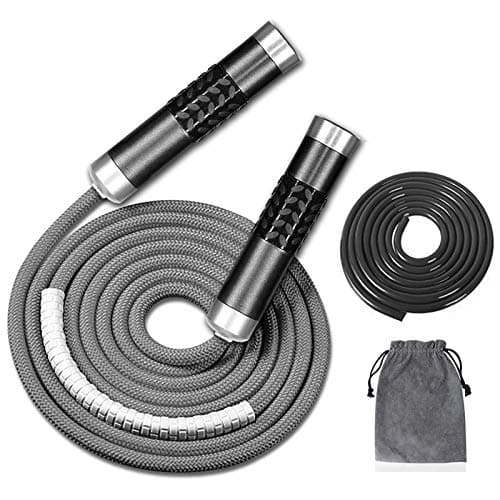
Redify — Redify Weighted Jump Rope (1 lb)
About 1 lb of cable weight for conditioning · PVC-coated steel cable · rapid ball-bearing handles for a smooth spin · adjustable cable length for different heights · memory-foam / textured grips · a mid-weight rope aimed at forearm, shoulder, and cardio conditioning rather than pure speed
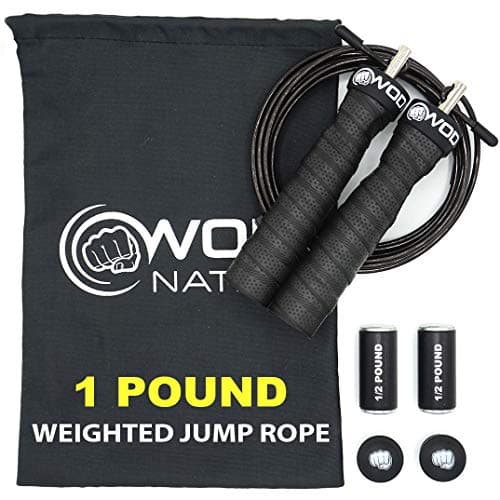
WOD Nation — WOD Nation Weighted Jump Rope (removable weights, adjustable handles)
At a glance
Tap a row to check price · tap a header to sort| # | Best for | Price | ||
|---|---|---|---|---|
| 1 | | Best overall value | 8.5/10 | $25.98 |
| 2 | | Best adjustable/convertible | 8.3/10 | Check price |
| 3 | 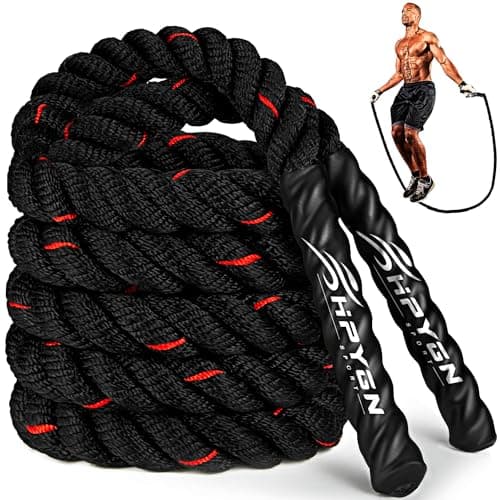 | Best heavy rope for conditioning | 8/10 | $19.99 |
| 4 | 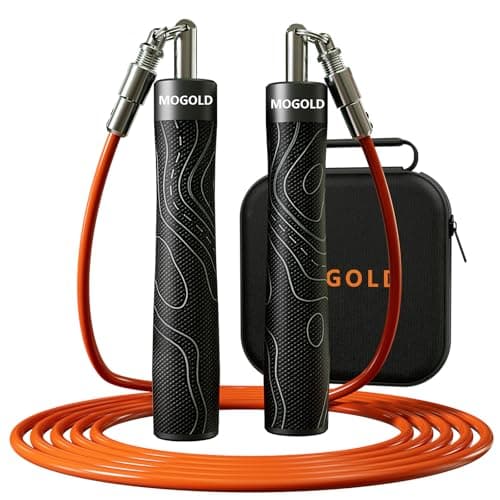 | Best handles and adjustment | 7.7/10 | Check price |
| 5 | 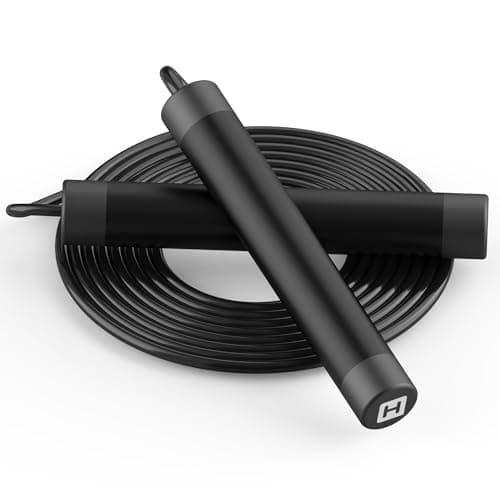 | Best light/speed crossover | 7.5/10 | $13.99 |
| 6 | 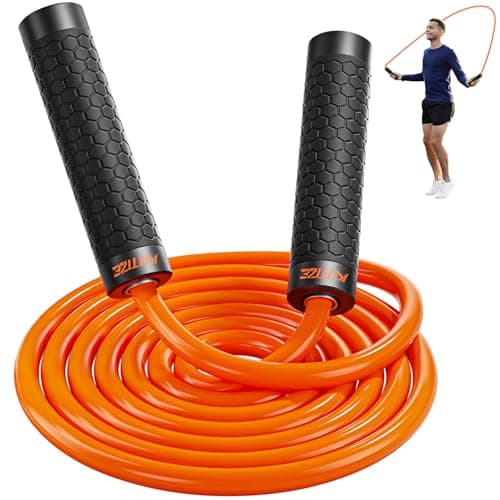 | Best budget beginner rope | 7.2/10 | $17.97 |
Prices pulled from Amazon as of Sep 16, 2026 and are subject to change. The price shown on Amazon at checkout applies.
How we scored
Every product below is scored on six metrics, 0-10 each, with the weighting described on how we review. The criteria specific to this category:
- Weight class and where the weight lives — the decision that matters most. Light ropes (about 1/4 to 1/2 lb) are speed ropes with a little drag: fast enough for double-unders and boxing, forgiving enough to learn on. Heavy ropes (1 to 3 lb) are slow conditioning tools that hammer the forearms, shoulders, and grip, not agility. Just as important is whether the weight is in the cable (changes the whole feel and turnover) or the handles (loads the forearms while the rope still flies fast). Match the tool to the job before you look at anything else.
- Handles and bearings — the difference between a rope that spins and one that binds. Good handles have a real bearing or bushing at the swivel so the cable turns freely without wrapping or jerking; cheap ropes fix the cable rigidly and you feel every hitch. Handle length, grip texture, and whether they stay put in sweaty hands all decide comfort over a long set. Ball bearings spin fastest and are best for speed work; heavier conditioning ropes can get away with a simpler, more durable swivel.
- Adjustability and sizing — a rope that's the wrong length is unusable. The cable should adjust to your height easily and then stay put; the rule of thumb is that with the rope under one foot, the handles reach roughly to your armpits or lower sternum. Screw-clamp and quick-release systems that lock firmly beat crimp-and-cut cables you can only shorten once, and adjustable systems matter more if more than one person will use the rope.
- Removable / convertible weights — flexibility for one purchase. The most versatile ropes let you add or remove weight (weighted sleeves, screw-in handle weights, or a swappable cable) so one rope covers both a light speed setting and a heavier conditioning setting. That's genuinely useful if you're not sure which weight you want yet, but more parts also mean more things that can rattle loose, so the locking mechanism has to be solid.
- Durability — cable, coating, and the swivel are what fail first. A PVC-coated steel cable resists kinking and abrasion far better than a bare wire or an uncoated rope, and a thicker coating survives dragging on concrete. The swivel and the point where the cable enters the handle are the usual failure spots on any rope. Heavier ropes put more stress on all of it, so build quality matters more the heavier you go.
- Value and honesty — performance per dollar, minus the hype. These are inexpensive tools, so we reward ropes that get the mechanics right — free-spinning bearings, comfortable handles, a durable cable, real adjustability — and mark down anything that leans on 'toning' or 'fat-burning' claims to justify a price. A rope that does the boring things well for under twenty dollars beats a heavily marketed one that binds or frays.
What to know before buying
- Decide light vs. heavy before you decide anything else, because they're different tools. A light rope (roughly 1/4 to 1/2 lb) is a speed rope with a little extra feedback — buy it if your goal is double-unders, boxing rounds, or fast footwork and you want the rope to move quickly. A heavy rope (1 to 3 lb) is a slow, grinding conditioning tool for your forearms, shoulders, grip, and heart rate — buy it if you want an upper-body cardio finisher, not agility. Buying the wrong weight class is the single most common mistake, and no rope is good at both jobs at once.
- Weighted ropes are conditioning, not 'toning.' The listings that promise a heavy rope will 'tone your arms' or melt fat off them are selling a claim that doesn't hold up — you can't spot-reduce fat, and a rope doesn't sculpt a muscle. What a heavy rope genuinely does is build muscular endurance in the forearms and shoulders and raise your heart rate fast. That's real, useful conditioning. Buy it for that, ignore the before-and-after arm photos, and you'll be happy with what it actually delivers.
- If you're not sure which weight you want, buy an adjustable or convertible rope. Ropes with removable weights or a swappable cable let you run a light setting to learn and drill speed, then load it up for conditioning — one purchase that grows with you. The trade-off is more parts and more chances for something to rattle loose mid-set, so check that the weights lock in firmly. For a committed CrossFitter who already knows they want double-unders, a dedicated light rope is simpler; for a beginner hedging their bets, convertible is the smarter buy.
- Handles and bearings decide comfort more than weight does. A rope with a genuine bearing or bushing spins freely and smoothly; a cheap rope with a rigid cable attachment jerks and wraps, which throws off your timing and blisters your hands. Ball bearings are best for fast speed work; a simpler durable swivel is fine for a heavy conditioning rope where turnover doesn't matter. If you can, pick handles that are long enough to grip fully and textured enough to hold when your hands are wet — cheap smooth plastic handles get slippery fast.
- Mind your ceiling and your floor. Indoors, a standard 8-foot ceiling works for most people, but if you're tall or the rope arcs high you'll clip the ceiling or a light fixture — measure before you commit to jumping inside. On the floor, a heavy PVC-coated cable dragged across bare concrete or asphalt wears through its coating faster than one used on rubber matting, a gym floor, or short grass. A cheap rubber mat under your jump spot protects the cable and your joints, and it's the easiest way to make an inexpensive rope last.
Our picks
Redify — Redify Weighted Jump Rope (1 lb)
Key specs: About 1 lb of cable weight for conditioning · PVC-coated steel cable · rapid ball-bearing handles for a smooth spin · adjustable cable length for different heights · memory-foam / textured grips · a mid-weight rope aimed at forearm, shoulder, and cardio conditioning rather than pure speed
Pros
- At roughly a pound of cable weight it sits in the sweet spot for conditioning — heavy enough to load the forearms, shoulders, and grip and raise your heart rate fast, without being so heavy it's unmanageable for most people
- Ball-bearing handles keep the cable spinning freely and smoothly instead of jerking or wrapping, which is the single biggest comfort difference between a good rope and a cheap one
- The cable adjusts to your height and the padded, textured handles stay comfortable when your hands get sweaty over a longer set
- One of the best price-to-quality ratios here — it gets the boring mechanical things right for the money instead of leaning on 'toning' marketing
Cons
- At a full pound this is a conditioning rope, not a speed rope — the extra drag makes fast double-unders harder, so it's the wrong pick if agility and turnover are your main goal
- The weight is fixed in the cable, so you can't lighten it for speed work or add more for extra conditioning — it is what it is out of the box
- A heavy PVC cable will wear faster on bare concrete; use it on a mat or gym floor to protect the coating
Redify — Redify Weighted Jump Rope (1 lb)
- Rope/weight options7/10
- Handle & bearings9/10
- Adjustability8/10
- Durability8/10
- Value10/10
WOD Nation — WOD Nation Weighted Jump Rope (removable weights, adjustable handles)
Key specs: Removable handle weights so it converts from a light speed setting to a weighted conditioning setting · fully adjustable cable length via a screw-clamp system · ball-bearing handles for a fast, smooth spin · aimed at CrossFit / functional-fitness users who want one rope for double-unders and conditioning · coated steel cable
Pros
- The removable weights make this the most flexible rope on the list — strip them out for a fast speed rope to drill double-unders, add them for a heavier forearm-and-shoulder conditioning setting, all from one purchase
- The screw-clamp adjustment lets you dial the cable to your exact height and re-size it if someone else uses it, rather than a one-shot crimp-and-cut cable
- Ball-bearing handles spin cleanly, which matters most in the light configuration where you actually want fast turnover for double-unders
- A well-known name in the CrossFit rope world, so the sizing, spare cables, and replacement parts are easy to source
Cons
- More parts means more to manage — removable weights and a clamp adjuster are extra things that can loosen or rattle if you don't seat and tighten them properly
- Even 'loaded,' the handle-based weight is modest compared with a true 2-to-3-pound heavy rope, so dedicated heavy-conditioning users may find it light
- The screw-clamp cable can slip over time if not tightened firmly, and dialing in the perfect length takes a little trial and error at first
WOD Nation — WOD Nation Weighted Jump Rope (removable weights, adjustable handles)
- Rope/weight options9/10
- Handle & bearings8/10
- Adjustability9/10
- Durability7/10
- Value8/10
HPYGN — HPYGN Heavy Weighted Skipping Rope (2.8 lb)
Key specs: About 2.8 lb of cable weight — a genuinely heavy conditioning rope, not a speed rope · thick PVC-coated steel cable · sturdy handles built for the extra load · adjustable length · designed as an upper-body and cardio conditioning tool that hammers the forearms, shoulders, and grip
Pros
- At 2.8 lb this is an honest heavy rope — the kind that turns a few minutes of skipping into a real forearm, shoulder, grip, and cardio finisher rather than a light warm-up
- The thick, heavily coated cable is built to take the abuse a heavy rope puts on it and resists kinking better than a thin speed cable
- The load is high enough that you feel muscular endurance work in the upper body, which is exactly what people buy a heavy rope for
- Simple and rugged — fewer fragile bearings and moving parts to fail because it's not trying to be a fast speed rope
Cons
- This is not a rope for double-unders or agility — nearly three pounds turns slowly and is genuinely tiring, so it's the wrong tool if you want speed or footwork
- The heavy cable is demanding on the wrists, shoulders, and the swivel; short sets are the point, and beginners can overdo it and get sore fast
- That much weight dragging on the ground wears any coating quickly on concrete — a mat is close to mandatory to protect the cable
HPYGN — HPYGN Heavy Weighted Skipping Rope (2.8 lb)
- Rope/weight options8/10
- Handle & bearings7/10
- Adjustability7/10
- Durability8/10
- Value8/10
Mogold — Mogold Adjustable Weighted Jump Rope (PU leather handles, quick-release)
Key specs: PU-leather-wrapped handles for a comfortable, grippy hold · quick-release length adjustment so you can re-size the cable in seconds without tools · weighted cable for conditioning · ball-bearing swivel for a smooth spin · aimed at users who want fast, repeatable sizing and comfortable handles
Pros
- The quick-release adjustment is the standout — you can re-size the cable in seconds without cutting or tools, which is genuinely convenient if more than one person uses the rope or you switch settings often
- PU-leather-wrapped handles are more comfortable and grippier than bare plastic, and they hold up better when your hands are sweaty over a long set
- The bearing swivel keeps the weighted cable spinning smoothly rather than jerking, so the added weight still turns cleanly
- A solid all-rounder for someone who values comfort and easy sizing over chasing the absolute lightest or heaviest weight
Cons
- Quick-release length systems trade a little security for convenience — if the mechanism isn't locked firmly it can slip mid-set, so you have to seat it properly
- PU 'leather' is a coated finish, not real leather, and can scuff or wear at the edges over heavy long-term use
- The cable weight is moderate rather than a true heavy-conditioning load, so dedicated heavy-rope users will want something heavier
Mogold — Mogold Adjustable Weighted Jump Rope (PU leather handles, quick-release)
- Rope/weight options7/10
- Handle & bearings8/10
- Adjustability9/10
- Durability7/10
- Value8/10
HANDIO — HANDIO Weighted Jump Rope (1/2 lb, boxing/CrossFit)
Key specs: Roughly 1/2 lb — a light 'weighted' rope that keeps fast turnover · ball-bearing handles for quick, smooth spinning · adjustable coated-steel cable · pitched at boxing and CrossFit users who want a touch of drag without losing speed · comfortable slim handles
Pros
- At about a half pound it keeps the rope moving fast enough for double-unders and boxing footwork while adding just enough drag to give your wrists feedback and load the forearms slightly
- Ball-bearing handles spin quickly and smoothly, which is exactly what you need for the fast turnover this rope is built for
- The light weight makes it a good learning rope — slower than a bare speed cable, so timing double-unders is easier, without being tiring like a heavy rope
- Adjustable cable and slim, comfortable handles suit the fast-footwork crowd it's aimed at
Cons
- Half a pound is barely 'weighted' — if you want a real forearm-and-shoulder conditioning burn, this is far too light and you'll be disappointed
- It sits in a middle ground: heavier and slower than a dedicated competition speed rope, lighter than a true conditioning rope, so purists at either end may prefer a specialist
- The thin, light cable is more prone to kinking and wear if dragged on rough ground than a thick heavy cable
HANDIO — HANDIO Weighted Jump Rope (1/2 lb, boxing/CrossFit)
- Rope/weight options6/10
- Handle & bearings8/10
- Adjustability8/10
- Durability7/10
- Value8/10
KUTIZE — KUTIZE Weighted Jump Rope (adjustable, 1 lb)
Key specs: About 1 lb of cable weight for entry-level conditioning · adjustable coated-steel cable · bearing swivel handles · textured grips · positioned as an affordable first weighted rope for beginners learning the movement
Pros
- A pound of cable weight at a budget price makes it an easy, low-risk first weighted rope for someone testing whether they'll stick with it
- The slower, weighted cable gives beginners useful feedback and makes timing basic skips and early double-unders easier than a whipping speed rope
- Adjustable length means it fits a range of heights and can be re-sized, and the textured grips are a step up from bare smooth plastic
- Cheap enough that it's a sensible starter before committing to a pricier dedicated speed or heavy rope
Cons
- Budget bearings and handles aren't as smooth or durable as the better ropes here — expect a slightly less refined spin and a shorter lifespan
- One fixed pound means it can't lighten for real speed work or load up for serious conditioning, so you'll likely outgrow it if you get committed
- Value-tier cable and coating wear faster, especially on concrete, so treat it as a starter rather than a long-term tool
KUTIZE — KUTIZE Weighted Jump Rope (adjustable, 1 lb)
- Rope/weight options6/10
- Handle & bearings6/10
- Adjustability8/10
- Durability6/10
- Value9/10
Frequently asked questions
No — and that's the main claim to ignore. You can't spot-reduce fat from a specific area, so no rope will melt fat off your arms, and 'toning' isn't something a rope does on its own. What a weighted rope genuinely does is build muscular endurance in your forearms and shoulders and raise your heart rate quickly, which is real conditioning and part of an overall fat-loss picture when paired with sensible eating and training. Buy a weighted rope for the conditioning effect and grip work, not for the before-and-after arm photos, and it'll deliver exactly what it should.
Related reading
Sources
- The Best Weighted Jump Ropes — how cable weight, handles, and bearings affect performance for speed vs. conditioning — Garage Gym Reviews
- Best Jump Ropes for training — weighted vs. speed ropes, adjustability, and what actually matters when choosing one — BarBend
- Rope jumping and plyometric conditioning — muscular endurance and cardiovascular demands of skipping as a training tool — National Strength and Conditioning Association (NSCA)
- Spot reduction is a myth — why targeted 'toning' of a body area with exercise does not reduce fat there — American Council on Exercise (ACE)
- How to size a jump rope and progress to double-unders — length guidelines and learning drills — BarBend
Last verified: August 2, 2026. See our editorial policy and how we review for details on scoring and update cadence. Canonical URL: https://trustedhealthgear.com/reviews/best-weighted-jump-rope.
Redify — Redify Weighted Jump Rope (1 lb)
$25.98 · on Amazon