The Best Cable Machines & Functional Trainers for a Home Gym
A cable machine is the piece that turns a barbell-and-dumbbell garage gym into something that can train the pulling, pressing, and rotational patterns free weights do awkwardly — lat pulldowns, cable rows, face pulls, tricep pushdowns, flyes, and the loaded chops and carries functional-fitness athletes live on. The catch is that 'cable machine' covers three very different things at three very different prices: full freestanding functional trainers with dual selectorized weight stacks, wall-mounted pulley stations that bolt to your studs to save the floor, and compact plate-loaded crossovers that get you cable tension for the price of a good barbell. The specs that decide which is right are unglamorous: whether it uses a weight stack or your own plates, the pulley ratio (which sets how much weight you feel and how far the cable travels), the number of adjustable pulley heights, and the footprint it demands. We ranked these on resistance system, pulley quality, adjustability, build, and value — and we'll tell you plainly when a $180 wall station is enough and when it's worth stepping up to a real stack.
Top pick
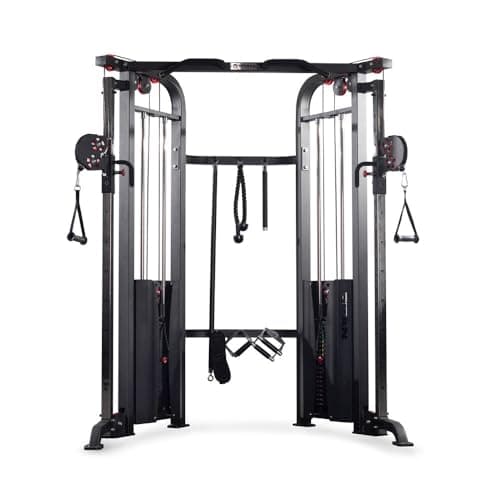
Titan Fitness — Titan Fitness Functional Trainer
Dual selectorized 200 lb weight stacks · 2:1 cable pull ratio (≈100 lb per handle) · multiple adjustable pulley heights · freestanding steel frame · ships with a set of attachments · from Titan Fitness, an established garage-gym brand
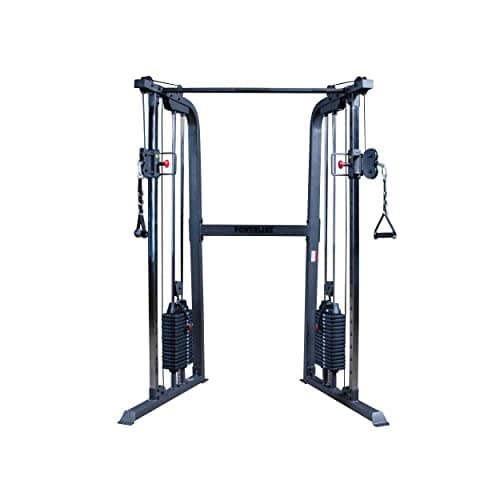
Body-Solid — Body-Solid Powerline PFT100 Functional Trainer
At a glance
Tap a row to check price · tap a header to sort| # | Best for | Price | ||
|---|---|---|---|---|
| 1 | | Best overall functional trainer | 8.6/10 | $3,099.99 |
| 2 | | Best value from a real brand | 8.2/10 | $1,595.00 |
| 3 | 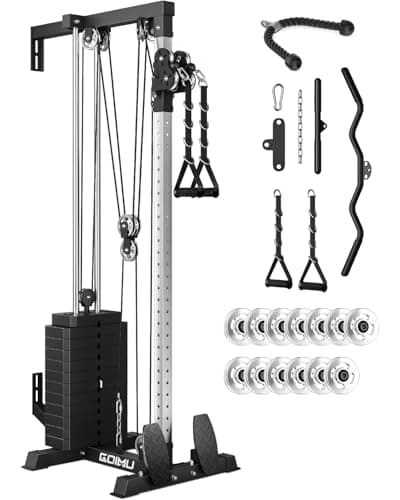 | Best wall-mount with a built-in stack | 7.9/10 | $699.99 |
| 4 | 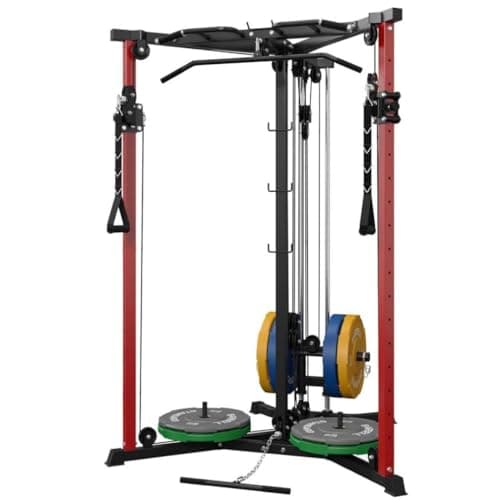 | Best freestanding plate-loaded crossover | 7.5/10 | $399.99$429.99 |
| 5 | 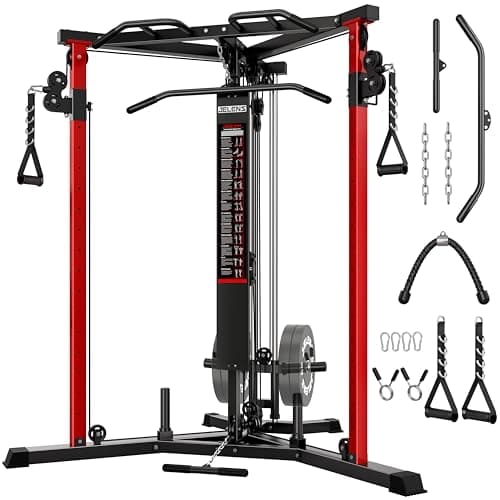 | Best budget freestanding crossover | 7.2/10 | $409.99$439.99 |
| 6 | 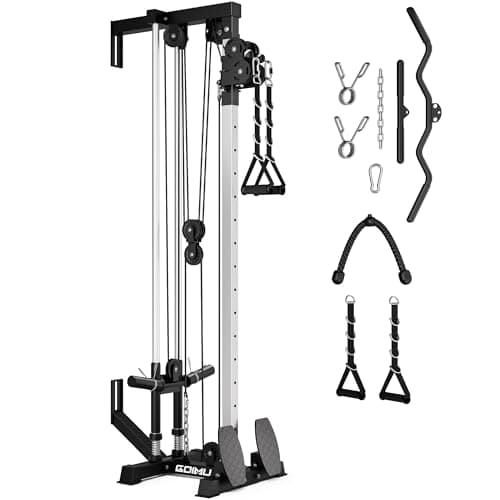 | Best compact space-saver | 7/10 | $229.99 |
Prices pulled from Amazon as of Sep 16, 2026 and are subject to change. The price shown on Amazon at checkout applies.
How we scored
Every product below is scored on six metrics, 0-10 each, with the weighting described on how we review. The criteria specific to this category:
- Resistance system — a selectorized weight stack lets you change load with a pin in one second and is the reason commercial machines feel good, while a plate-loaded pulley is cheaper and lighter to ship but means loading and unloading your own plates every time you change weight.
- Pulley ratio — a 2:1 ratio means you feel half the stack weight at the handle but the cable travels twice as far (good for long-range moves like woodchops and pulldowns), while a 1:1 ratio gives you the true stack weight with shorter travel; know which you're buying, because it changes both the max resistance and the feel.
- Footprint and mounting — freestanding functional trainers need floor space and ceiling height but move with you, wall-mounted stations bolt into studs to save the floor at the cost of drilling into your wall, and either way you must confirm your ceiling clears the top pulley's cable travel.
- Adjustable pulley positions — more height settings (commonly 17 to 33) let you dial the cable to floor, hip, shoulder, or overhead height for everything from low rows and face pulls to pulldowns, so a station with more stops is genuinely more versatile.
- Max resistance and capacity — dual stacks in the 160-230 lb range per side cover almost all home training, but plate-loaded units are capped by how many plates the carriage holds and by that pulley ratio, so check the real usable load at the handle, not just the headline number.
- Cables, pulleys, and attachments — sealed or aluminum pulleys run smoother and last longer than cheap nylon, coated aircraft-cable is the durability standard, and a machine that ships with handles, a bar, and a rope saves you a pile of separate accessory purchases.
What to know before buying
- The weight-stack-versus-plate-loaded choice is the one that matters most. A selectorized stack (move a pin, done) is faster, safer, and feels like a commercial machine — it's why the functional trainers cost what they do. A plate-loaded crossover uses the Olympic plates you already own, ships far cheaper and lighter, and is perfectly good if you don't mind stripping and reloading plates between a heavy row and a light face pull. If you'll do circuits or drop sets, pay for the stack; if you lift heavy and change weight rarely, plate-loaded saves real money.
- Understand the pulley ratio before you judge the weight number. Most functional trainers run 2:1, which means a 200 lb stack gives you up to about 100 lb at the handle but lets the cable travel far enough for full lat pulldowns and woodchops. A 1:1 machine gives you the true stack weight with shorter cable travel. Neither is universally better — 2:1 is friendlier for long-range functional work, 1:1 for heavy short-range pulls — but you need to know which you bought so the resistance isn't a surprise on day one.
- Wall-mount or freestanding is a space-and-commitment decision. A freestanding functional trainer needs floor space and enough ceiling for the cable to travel, but you can reposition it and take it when you move. A wall-mounted station bolts into studs and frees the floor, which is ideal for a tight garage — but you're drilling into your wall, you need solid framing to anchor to, and you must confirm your ceiling clears the top pulley. Measure the wall and the ceiling before you buy either one.
- Be honest about how much resistance you actually need. Dual stacks around 160-230 lb per side cover nearly every home cable exercise — pushdowns, face pulls, flyes, curls, and even most rows and pulldowns. Very few home lifters out-pull a 200 lb stack on cables, and plate-loaded units are capped by carriage size and pulley ratio anyway. Don't overpay for a headline stack weight you'll never select; put the money toward smoother pulleys and better adjustability you'll feel every session.
- Budget import cable machines live and die on shipping and assembly. These units arrive as heavy, multi-box freight, assembly can run several hours, and the weak points on cheap models are the pulleys, cable ends, and hardware — not the frame. Read recent reviews for cable fray and pulley noise, keep the packaging until you've test-loaded every station, and buy from a seller with a real return path. A name-brand unit like Body-Solid or Titan costs more partly because the after-sale support and replacement parts actually exist.
Our picks
Titan Fitness — Titan Fitness Functional Trainer
Key specs: Dual selectorized 200 lb weight stacks · 2:1 cable pull ratio (≈100 lb per handle) · multiple adjustable pulley heights · freestanding steel frame · ships with a set of attachments · from Titan Fitness, an established garage-gym brand
Pros
- Two selectorized 200 lb stacks mean pin-and-go weight changes on both sides — the commercial-machine feel that plate-loaded crossovers can't match
- Titan is a real garage-gym brand with US support and replacement parts, so a frayed cable or bad pulley isn't the end of the machine
- The 2:1 ratio gives long, smooth cable travel that suits functional work — woodchops, pulldowns, carries — plus flyes and pushdowns
- Comes with a usable set of attachments, so you can train the day it's assembled without a separate accessory order
Cons
- It's a serious purchase and heavy freight — expect multi-box delivery and a few hours of assembly
- The 2:1 ratio caps handle load near ~100 lb per side, so the very strongest lifters may want more for heavy single-cable rows
- Needs real floor space and ceiling clearance; it is not a small-apartment machine
Titan Fitness — Titan Fitness Functional Trainer
- Resistance system9/10
- Pulley / cable quality8/10
- Adjustability8/10
- Footprint / build8/10
- Value8/10
Body-Solid — Body-Solid Powerline PFT100 Functional Trainer
Key specs: Dual selectorized 160 lb weight stacks · adjustable dual-pulley system · freestanding steel frame · home/light-commercial rating · Body-Solid Powerline line, backed by Body-Solid's warranty program
Pros
- Dual 160 lb selectorized stacks give you pin-and-go weight on both cables from a brand with a long commercial-gym track record
- Body-Solid's warranty and parts network is a genuine advantage over no-name imports when something eventually wears out
- Well under two thousand dollars for a true dual-stack trainer — strong value in a category where stacks usually cost more
- Rated for home and light-commercial use, so the frame and pulleys are built to outlast budget crossovers
Cons
- 160 lb per stack is enough for most home training but less headroom than the 200 lb-plus machines for heavy pulldowns
- The Powerline line is Body-Solid's value tier — solid, but not the fit-and-finish of their premium series
- Still a large freestanding unit that needs floor space, ceiling height, and a real assembly session
Body-Solid — Body-Solid Powerline PFT100 Functional Trainer
- Resistance system8/10
- Pulley / cable quality8/10
- Adjustability7/10
- Footprint / build8/10
- Value9/10
GOIMU — GOIMU WM2-V4 Wall Mount Cable Station (Weight Stack)
Key specs: Wall-mounted (bolts to studs) · integrated selectorized weight stack · aluminum pulleys · 33 adjustable pulley positions · high-and-low dual pulley system · frees floor space vs a freestanding trainer
Pros
- One of the few wall-mounted stations with a real selectorized weight stack, so you get pin-and-go loading without a floor-hogging frame
- 33 adjustable positions is the most here — you can set the cable anywhere from floor to overhead for pulldowns, rows, face pulls, and chops
- Aluminum pulleys run smoother and last longer than the nylon pulleys on cheaper stations
- Bolting to the wall frees your floor entirely, which is the whole point in a tight garage or basement
Cons
- You're anchoring a loaded stack to your wall — you need solid stud or masonry framing and the correct hardware, or it's genuinely unsafe
- GOIMU is a budget import brand; long-term stack and cable durability is less proven than Titan or Body-Solid
- Wall mounting fixes the machine in place and requires drilling — no repositioning without patching holes
GOIMU — GOIMU WM2-V4 Wall Mount Cable Station (Weight Stack)
- Resistance system8/10
- Pulley / cable quality7/10
- Adjustability9/10
- Footprint / build7/10
- Value8/10
Mikolo — Mikolo Cable Crossover Machine (Functional Trainer)
Key specs: Freestanding plate-loaded pulley system (uses your Olympic plates) · high-and-low dual pulleys · 17 adjustable positions · supports LAT pulldowns and seated cable rows · steel frame · from Mikolo, a budget home-gym brand
Pros
- A full-height freestanding crossover for a fraction of a weight-stack trainer's price, using the Olympic plates you already own
- 17 adjustable pulley positions cover pulldowns, low rows, flyes, and face pulls without a fixed cable height
- Plate-loaded means no stack to ship, so it's cheaper and lighter to move than a selectorized machine
- Handles LAT pulldowns and seated rows out of the box, adding true back training to a barbell gym
Cons
- Plate-loaded — you load and strip plates for every weight change, which is slow for circuits or drop sets
- Usable resistance is capped by carriage size and pulley ratio, so it won't match a 200 lb selectorized stack for heavy pulls
- Budget-brand pulleys and cables are the parts most likely to wear; inspect them and keep the return option open
Mikolo — Mikolo Cable Crossover Machine (Functional Trainer)
- Resistance system6/10
- Pulley / cable quality6/10
- Adjustability7/10
- Footprint / build7/10
- Value8/10
JELENS — JELENS CC01 Cable Crossover Machine
Key specs: Freestanding plate-loaded cable crossover · high-and-low pulley system · integrated pull-up bar · uses your own Olympic plates · steel frame · from JELENS, a budget home-gym brand
Pros
- A freestanding crossover with an integrated pull-up bar for well under $400 — a lot of function per dollar if you own plates
- High-and-low pulleys cover the core cable moves: pushdowns, flyes, curls, low rows, and pulldowns
- The built-in pull-up bar adds vertical pulling without a separate rack or doorway bar
- Plate-loaded and freestanding, so there's no stack to ship and nothing bolted to your wall
Cons
- Plate-loaded weight changes are slow, and the pulley ratio caps how much you actually feel at the handle
- Low stock and a lesser-known brand mean patchy availability and unproven long-term durability
- Budget pulleys and cables are the weak points; test every station under load before the return window closes
JELENS — JELENS CC01 Cable Crossover Machine
- Resistance system6/10
- Pulley / cable quality6/10
- Adjustability6/10
- Footprint / build7/10
- Value8/10
Goimu — Goimu WM1 Wall Mount Cable Station
Key specs: Wall-mounted (bolts to studs) · plate-loaded pulley (uses your own plates) · 17 adjustable positions · high-and-low cable crossover · removable footplate · the smallest footprint here
Pros
- The cheapest entry point to cable training — it bolts to the wall and uses plates you already own
- 17 adjustable positions give real height flexibility despite the tiny footprint
- The removable footplate helps anchor low-pulley rows and pulldowns without a separate seat
- Plate-loaded and wall-mounted, so it disappears against the wall when you're lifting elsewhere
Cons
- No weight stack — every change means loading plates, and resistance is limited by the pulley and your plate inventory
- Must anchor into solid studs or masonry with the correct hardware; a loaded wall pulley on weak framing is dangerous
- Budget import build — pulley smoothness and cable life are the parts to watch, and stock runs thin
Goimu — Goimu WM1 Wall Mount Cable Station
- Resistance system5/10
- Pulley / cable quality6/10
- Adjustability7/10
- Footprint / build7/10
- Value9/10
Frequently asked questions
It comes down to how you train and what you'll spend. A selectorized weight stack lets you change load with a pin in a second, which makes circuits, drop sets, and quick supersets painless — that convenience and the smoother feel are why functional trainers cost more. A plate-loaded crossover uses the Olympic plates you already own, ships far cheaper and lighter, and works fine if you don't mind stripping and reloading plates between exercises. If you value fast weight changes and a commercial feel, pay for the stack. If you lift heavy, change weight rarely, and want to save money, plate-loaded is the smart buy.
Related reading
Sources
- Best Functional Trainers, tested and reviewed (weight stack vs plate-loaded, pulley ratio, footprint) — BarBend, 2026
- Functional Trainer and Cable Machine buying guide (pulley ratios, adjustability, home vs commercial) — Garage Gym Reviews, 2026
- Resistance Training Program Design — cable and pulley exercise selection — National Strength and Conditioning Association (NSCA)
- Powerline PFT100 Functional Trainer specifications (dual 160 lb stacks, pulley system, warranty) — Body-Solid
Last verified: August 1, 2026. See our editorial policy and how we review for details on scoring and update cadence. Canonical URL: https://trustedhealthgear.com/reviews/best-cable-machine.
Titan Fitness — Titan Fitness Functional Trainer
$3,099.99 · on Amazon