The Best Bumper Plates for Olympic Lifting, CrossFit, and Dropping Deadlifts
A bumper plate is a rubber-encased weight built for one thing an iron plate can't do safely: get dropped from overhead onto a platform, over and over, without cracking the plate, the bar, or the floor. That is the entire reason they exist and the reason they cost more per pound than cast iron. The defining feature is diameter — a true Olympic bumper is 450 mm (about 17.7 inches) across no matter whether it weighs 10 pounds or 45, so a loaded bar always sits at the same height off the ground. That consistent height is what makes a snatch or clean-and-jerk start from the right position and what makes a dropped deadlift land flat instead of rolling. It's also why you can't mix a stack of thin iron plates and call it the same thing: iron gets smaller as it gets lighter, so the bar sits too low and a drop lands on the plate edge. If you do Olympic lifts, CrossFit-style metcons, or heavy deadlifts you plan to drop, bumpers are the right tool. If you only do slow, controlled lowers on a bench or in a rack, iron plates are cheaper and take less space — read our bumper-plates-vs-iron-plates comparison before you spend. We ranked these on the things that actually decide whether a plate lasts in a garage gym: durability (does the rubber tear or the insert loosen), bounce control (does it slap back up at your shins or settle into a controlled 'dead' bounce), diameter and thickness accuracy (thinner plates let you fit more weight on the sleeve, and consistent diameter keeps drops flat), insert quality (a machined steel hub versus rubber molded straight around the collar), and noise. One honest thing up front: the premium bumper brands lifters actually rave about — Rogue, Rep, Fringe Sport, Vulcan — mostly do not sell through Amazon. What Amazon's bumper aisle is really about is CAP Barbell, which owns most of the listings, plus a handful of smaller brands. That's not a knock; CAP makes serviceable economy bumpers that a lot of home lifters train on for years. But you should go in knowing that economy bumpers bounce more, run to wider diameter and thickness tolerances, and don't hold up to abusive commercial-gym drops the way a competition plate does. Buy them for what they are — affordable plates for a home platform — and they're a good deal.
Top pick
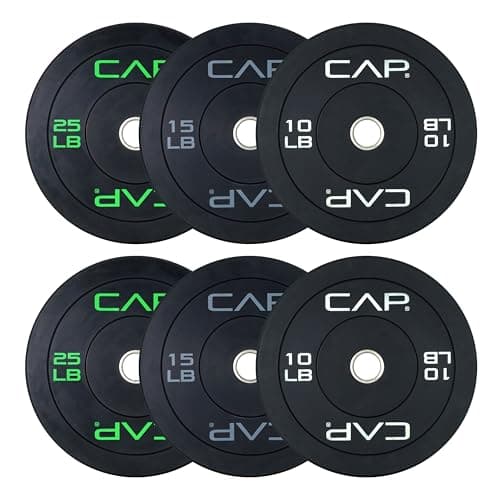
CAP Barbell — CAP Barbell Olympic Bumper Plate Set (100 lb)
100 lb total across paired rubber bumper plates · 2-inch Olympic center hole · full-diameter drop-style bumper design · durable rubber with steel/metal insert hub · plates only (bar and collars separate) · CAP is the dominant bumper brand on Amazon
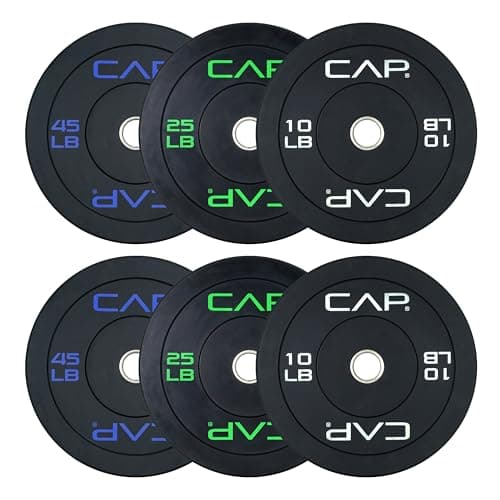
CAP Barbell — CAP Barbell Olympic Bumper Plate Set (160 lb)
At a glance
Tap a row to check price · tap a header to sort| # | Best for | Price | ||
|---|---|---|---|---|
| 1 | | Best starter set | 8.2/10 | $99.99 |
| 2 | | Best mid-size set | 8.1/10 | $167.99 |
| 3 | 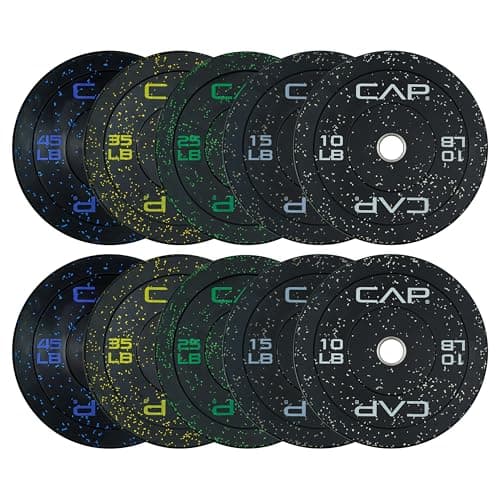 | Best complete/large set | 7.9/10 | $269.99 |
| 4 | 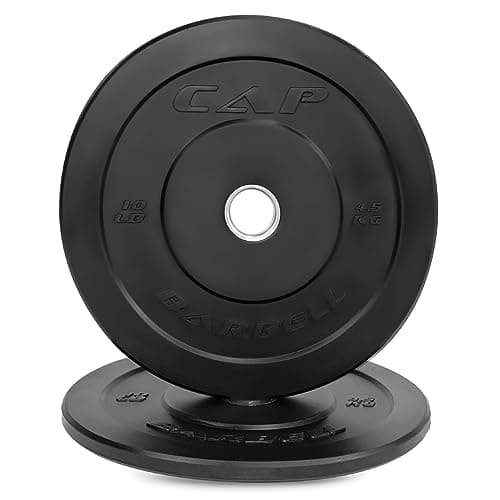 | Best thin | 7.8/10 | $22.55 |
| 5 | 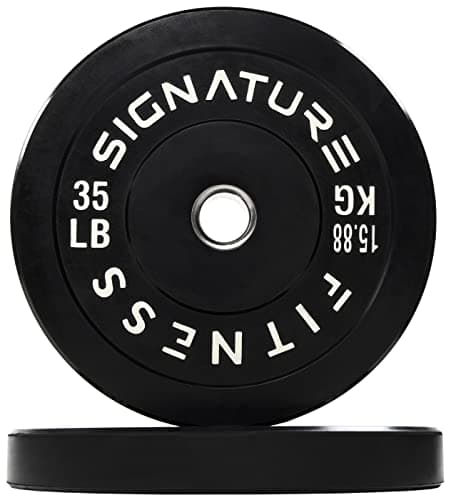 | Best insert/hub quality | 7.6/10 | $95.09 |
| 6 | 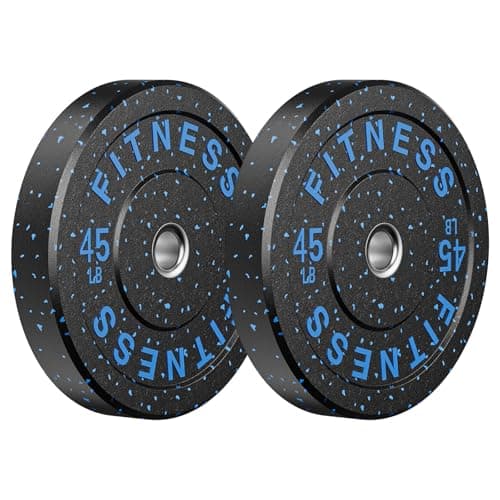 | Best single heavy pair to add | 7.2/10 | $89.99 |
| 7 | 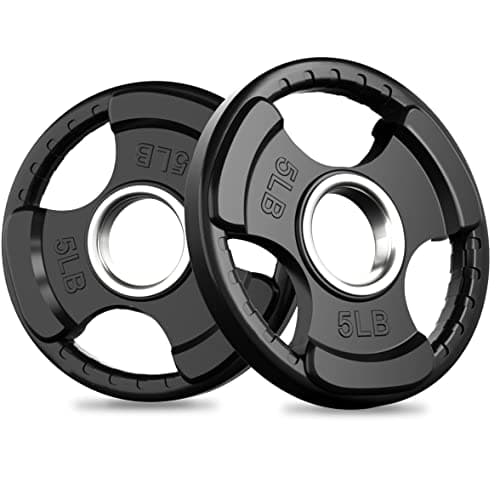 | Best rubber-coated grip-plate alternative | 6.9/10 | $29.99 |
Prices pulled from Amazon as of Sep 16, 2026 and are subject to change. The price shown on Amazon at checkout applies.
How we scored
Every product below is scored on six metrics, 0-10 each, with the weighting described on how we review. The criteria specific to this category:
- Durability — the whole point of a bumper is surviving repeated drops, so this is the metric that matters most. Failure modes are the rubber tearing or delaminating from the insert, the center hub cracking, and the plate 'doming' (bulging) after heavy use. Denser virgin rubber and a well-bonded steel insert last longer than soft recycled crumb rubber molded loosely around the collar. Economy plates trade some of this away for price; drop them onto a proper platform (not bare concrete) and they last far longer.
- Bounce control — a good bumper absorbs the drop and settles into a low, 'dead' bounce; a bad one slaps back up toward your shins and rolls. Bounce is a function of rubber durometer (hardness) and thickness: harder, thinner competition-style plates bounce less, while soft, thick economy plates bounce more. Lighter plates (10s and 15s) are the worst offenders because there's less mass to deaden the rebound, which is exactly why cheap light bumpers get a bad reputation.
- Diameter and thickness accuracy — a true Olympic bumper is 450 mm (17.7 in) in diameter, and holding that spec across every weight is what keeps the bar at a consistent height for drops. Thickness matters just as much: a thinner 45 means you fit more total weight on the sleeve before you run out of room, so a plate that's accurate and thin is worth more than the number stamped on it suggests. Economy bumpers run to wider tolerances on both, so plates from the same set can vary slightly.
- Insert quality — the center of the plate takes all the loading and unloading abuse, and how it's built separates plates that last from plates that fail. A machined steel hub (or a stainless insert) grips the bar sleeve snugly, resists cracking, and won't ovalize; a plate where the rubber is molded directly around a thin collar is cheaper but more prone to a loose, sloppy fit and a cracked center over time. A tight insert also means less rattle and less wear on your bar's knurling and sleeves.
- Noise — bumpers are quieter than iron on a drop, but 'quieter' is relative and it's a real consideration for a garage or apartment-adjacent gym. Softer, thicker rubber deadens the impact sound more than hard competition plates, so here the economy build is actually an advantage. Pairing any bumper with proper platform matting (see our home-gym flooring guide) does far more for noise and floor protection than the plate choice itself.
- Set vs. pair vs. singles, and value — a starter set gets you training fastest and usually costs less per pound than buying pairs one at a time, but it locks you into a fixed spread of weights. Buying pairs or singles lets you build exactly the jumps you want and add a heavy pair later, at a higher per-pound cost. We weighed value as durability and accuracy per dollar, not just the sticker: a plate that lasts five years of drops is cheaper than a bargain plate you replace in one.
What to know before buying
- A starter set is the fastest, cheapest way to get lifting — and CAP owns that shelf on Amazon. A 100- to 160-pound set covers most beginners and intermediates for Olympic lifts and dropped deadlifts, and buying it as a set almost always costs less per pound than assembling pairs. The trade-off is that a set gives you a fixed spread of denominations; if you already know you want, say, a heavy pair of 45s and nothing else, buying pairs or singles makes more sense. Just remember a bumper 'set' is the plates only — the barbell and collars are separate, so budget for those too.
- Do not buy bumpers to drop them on bare concrete. Bumpers protect your floor and bar from drops, but the plate still needs something under it — a platform or thick rubber matting — to survive and to keep the noise and vibration down. Dropping even good bumpers repeatedly onto bare concrete cracks hubs, flat-spots plates, and eventually chips the slab. Our home-gym flooring guide walks through building a cheap plywood-and-mat platform; it's the single best thing you can do to make any bumper on this list last longer.
- Light bumpers (10s and especially 15s) are where economy plates struggle most. There's less mass to deaden the rebound, so cheap thin 10s bounce hard, and cheap thick 10s are so wide they eat bar space and sometimes come in under the full 450 mm diameter. If you snatch or clean light, a quality pair of 10s (like CAP's Elite line) is worth paying up for; the heavier plates in a set are far more forgiving. Some lifters also add a pair of light iron 'change plates' (2.5s and 5s) for small jumps, since those are meant to be lowered, not dropped.
- Bumpers are not the same as rubber-coated grip plates, even though Amazon lists them near each other. A true bumper is full 450 mm diameter, all rubber, and built to be dropped from overhead. A rubber-coated 'grip' plate (like the RitFit set here) is an iron plate with a rubber jacket and hand cutouts — quieter and floor-friendlier than bare iron, but smaller in diameter on the lighter weights and not designed for repeated overhead drops. Grip plates are a fine, versatile choice for a mixed home gym doing loaded carries, curls, and controlled lifts; they are the wrong tool if your main use is dropping snatches.
- If you can spend more and lift regularly, the premium brands are worth a look outside Amazon. The bumpers competitive lifters trust most — Rogue, Rep Fitness, Fringe Sport, Vulcan — mostly sell direct, not through Amazon, and they hold tighter tolerances, bounce less, and back the plates with longer warranties. That's not a reason to avoid the CAP-dominated Amazon options, which are genuinely good value for a home platform. It's a reason to be honest about what you're getting: economy bumpers for economy money, with more bounce and looser tolerances than a plate that costs half again as much.
Our picks
CAP Barbell — CAP Barbell Olympic Bumper Plate Set (100 lb)
Key specs: 100 lb total across paired rubber bumper plates · 2-inch Olympic center hole · full-diameter drop-style bumper design · durable rubber with steel/metal insert hub · plates only (bar and collars separate) · CAP is the dominant bumper brand on Amazon
Pros
- The lowest-cost way to get a real bumper setup going — a paired 100 lb spread is enough for a beginner to learn the snatch, clean, and jerk and to drop moderate deadlifts on a platform
- Buying it as a set costs less per pound than assembling the same weight in individual pairs, and it arrives ready to load rather than piecemeal
- Rubber build with a metal insert takes drops far better than iron and is much quieter and floor-friendlier on a matted platform
- CAP's massive Amazon presence means replacements, add-on pairs, and matching plates are easy to find later
Cons
- 100 lb plus a bar is a starter weight — stronger lifters will out-load it quickly and need to buy a heavier pair, so factor the upgrade in
- Economy bumpers bounce more and run to wider diameter and thickness tolerances than premium competition plates; the lighter plates in the set bounce the most
- Plates only — you still need a barbell and collars — and like all bumpers they need a platform or thick matting, never bare concrete, to last
CAP Barbell — CAP Barbell Olympic Bumper Plate Set (100 lb)
- Durability7/10
- Bounce control7/10
- Fit/accuracy7/10
- Noise8/10
- Value9/10
CAP Barbell — CAP Barbell Olympic Bumper Plate Set (160 lb)
Key specs: 160 lb total across paired rubber bumper plates · 2-inch Olympic center hole · full-diameter drop-style design · rubber over a metal insert · plates only · broader denomination spread than the 100 lb set for bigger jumps
Pros
- 160 lb gives a much more usable spread than the 100 lb set — enough to build real jumps for Olympic lifts and to drop meaningfully heavier deadlifts without immediately needing more plates
- Still priced as an economy set, so the per-pound cost stays low while getting you closer to a complete home setup in one purchase
- Same rubber-and-insert construction that survives platform drops and stays quieter than iron, with CAP's easy-to-match ecosystem for adding weight later
- A single mid-size set is simpler and usually cheaper than buying the equivalent weight as separate pairs
Cons
- Serious strength athletes will still top out here and need a heavy pair of 45s added on, so it's a strong intermediate base rather than a lifetime set
- Economy tolerances mean plates can vary slightly in thickness and diameter, and the lighter plates bounce more than a competition plate would
- Heavier total means a heavier shipment and more storage space — plan for a plate tree or rack (see our best weight plate rack picks) rather than a floor pile
CAP Barbell — CAP Barbell Olympic Bumper Plate Set (160 lb)
- Durability7/10
- Bounce control7/10
- Fit/accuracy7/10
- Noise8/10
- Value9/10
CAP Barbell — CAP Barbell Speckled Olympic Bumper Plate Set (260 lb)
Key specs: 260 lb total across multiple paired denominations · speckled/color-fleck rubber finish · 2-inch Olympic center hole · full-diameter drop-style bumpers · metal insert hub · plates only · CAP's larger prebuilt bumper package
Pros
- 260 lb is enough to get most home lifters to a genuinely complete setup — you can build proper jumps and load a bar heavy for drops without adding pairs for a long time
- Bought as one large set, the per-pound price is typically the best value in CAP's bumper lineup, and it saves the hassle of assembling many separate pairs
- The speckled rubber is a cosmetic upgrade some lifters prefer, over the same drop-rated construction as the plain plates
- One purchase covers a wide denomination spread, so you're not hunting for a missing pair to fill an awkward gap
Cons
- It's a big, heavy, expensive shipment, and a large fixed set means you're buying denominations you might not have chosen if you built it pair by pair
- Still an economy bumper — wider tolerances and more bounce than premium competition plates, most noticeable on the lighter plates in the set
- 260 lb of plates needs real storage and a solid platform; the cost of a rack, bar, collars, and flooring on top of the set adds up, so budget the whole system
CAP Barbell — CAP Barbell Speckled Olympic Bumper Plate Set (260 lb)
- Durability7/10
- Bounce control7/10
- Fit/accuracy7/10
- Noise8/10
- Value8/10
CAP Barbell — CAP Barbell Elite Olympic Bumper Plate (10 lb pair)
Key specs: Sold as a 10 lb pair · CAP's upgraded 'Elite' bumper line · designed to hold full Olympic diameter even at low weight · 2-inch Olympic center hole · denser rubber over an insert for a thinner, tougher light plate
Pros
- Light bumpers are where cheap plates fail, and holding full diameter at 10 lb is exactly what you want — it keeps the bar at the correct height for snatches and cleans done light
- The Elite line uses denser rubber and a better insert than CAP's basic economy plates, so these thin 10s resist the bulging and cracking that plague budget light bumpers
- Buying a quality pair of 10s separately lets you upgrade the weakest plates in a starter set without replacing the whole thing
- A thinner, more accurate light plate wastes less bar space and pairs cleanly with heavier plates for small, precise jumps
Cons
- Even a good 10 lb bumper bounces more than a heavier plate — there's simply less mass to deaden the rebound, so expect some rebound on hard drops
- It's a single pair at a premium (for a light plate) price, so the per-pound cost is high compared with buying weight as part of a set
- 10 lb of added weight is a small increment; you're buying these for their quality and diameter at low weight, not to add meaningful load
CAP Barbell — CAP Barbell Elite Olympic Bumper Plate (10 lb pair)
- Durability8/10
- Bounce control6/10
- Fit/accuracy8/10
- Noise7/10
- Value7/10
Fitvids — Fitvids Olympic Bumper Plates with Steel Hub (35 lb pair)
Key specs: Sold as a 35 lb pair · machined steel insert/hub at the center · 2-inch Olympic center hole · full-diameter drop-style bumper · rubber body over the steel hub · a mid-weight pair to add to or build a set
Pros
- The machined steel hub is the standout — a properly cut insert grips the bar sleeve snugly, resists ovalizing, and holds up better under repeated loading than rubber molded around a thin collar
- A tighter insert means less rattle on the bar and less wear on your sleeve and knurling over time
- 35 lb is a useful jump size that many starter sets skip, so a pair fills a real gap between 25s and 45s
- Full-diameter design keeps drops flat and the bar at the right height, and the steel-hub build is a step up from the cheapest molded-center economy plates
Cons
- Fitvids is a smaller brand than CAP with a shorter track record, so long-term durability data and replacement availability are thinner
- The rubber body is still an economy compound — expect more bounce and looser tolerances than a premium competition plate despite the good hub
- Sold as a single pair at pair pricing, so it's a targeted add-on rather than a value-per-pound way to buy a lot of weight at once
Fitvids — Fitvids Olympic Bumper Plates with Steel Hub (35 lb pair)
- Durability8/10
- Bounce control7/10
- Fit/accuracy7/10
- Noise7/10
- Value7/10
High-Bounce — High-Bounce Olympic Bumper Plates (45 lb pair)
Key specs: Sold as a 45 lb pair · full-diameter drop-style bumper · 2-inch Olympic center hole · rubber body with insert · the standard heavy plate size for loading a bar for Olympic lifts and drops
Pros
- A pair of 45s is the plate most people run out of first, so this is the obvious add-on to extend a starter set to real training loads
- As the heaviest common size, 45s have the most mass to deaden the drop, so they settle into a more controlled bounce than lighter plates regardless of brand
- Full-diameter build keeps the bar at the correct height and lets you drop heavy deadlifts and cleans flat on a platform
- Buying just the pair you need is cheaper up front than a whole new set when 45s are all that's missing
Cons
- The brand name notwithstanding, more bounce is a downside, not a feature — heavier plates bounce less by nature, and you generally want a controlled dead bounce, not a lively one
- It's a lesser-known brand with limited track record and support, so durability and consistency are harder to verify than with CAP
- Single-pair pricing means a high per-pound cost, and two 45s are heavy to ship and to store without a proper rack
High-Bounce — High-Bounce Olympic Bumper Plates (45 lb pair)
- Durability7/10
- Bounce control6/10
- Fit/accuracy7/10
- Noise7/10
- Value7/10
RitFit — RitFit Olympic Rubber Grip Weight Plates (2-inch set)
Key specs: Rubber-coated iron 'grip' plates with molded hand cutouts · 2-inch Olympic center hole · sold in a set of paired denominations · iron core with a protective rubber jacket · smaller diameter on lighter plates than a true 450 mm bumper
Pros
- The rubber coating and molded hand grips make these easy to carry, quieter than bare iron, and gentler on floors for loaded carries, farmer's walks, and controlled lifts
- An iron core in a rubber jacket is compact and dense, so they take up less bar space and store neatly compared with thick bumper plates
- A genuinely versatile choice for a mixed home gym that does curls, presses, rows, and slow lowers rather than dropping snatches
- Sold as a set, which is a convenient, floor-friendly upgrade over a pile of bare cast-iron plates
Cons
- These are grip plates, not true drop bumpers — they are not designed to be dropped from overhead repeatedly, and doing so can crack the coating or damage the iron core
- Lighter grip plates are smaller in diameter than a 450 mm bumper, so a bar loaded with light plates sits too low for proper Olympic-lift drops
- The thin rubber coating chips and can peel over time, and the iron core still clanks more than a full-rubber bumper on a hard set-down
RitFit — RitFit Olympic Rubber Grip Weight Plates (2-inch set)
- Durability7/10
- Bounce control6/10
- Fit/accuracy6/10
- Noise7/10
- Value8/10
Frequently asked questions
In order: durability (does the rubber tear or the hub crack under drops), bounce control (does it settle into a low dead bounce or slap back at your shins), diameter and thickness accuracy (a true bumper is 450 mm / 17.7 in across at every weight, and a thinner accurate plate fits more weight on the bar), and insert quality (a machined steel hub beats rubber molded around a thin collar). Noise and value round it out. Economy bumpers — which is most of what Amazon sells — do the core job but bounce more and hold looser tolerances than premium competition plates. Match the plate to your use: dropping snatches demands more of a plate than slow deadlifts do.
Related reading
Sources
- Best Bumper Plates — hands-on testing of durability, bounce, diameter/thickness tolerances, and insert quality across home and competition plates — Garage Gym Reviews
- Best Bumper Plates — how bumpers are ranked on rubber quality, bounce, tolerances, hub construction, and value — BarBend
- Bumper Plate specifications and durometer explained — why plate diameter, thickness, insert type, and rubber hardness determine bounce and durability — Rogue Fitness
- Technical and Competition Rules & Regulations — standard competition plate diameter (450 mm), color coding, and collar/loadable-length standards — International Weightlifting Federation
- CAP Barbell Olympic bumper plate sets — product information (rubber bumper construction, 2-inch Olympic center hole, paired denomination sets) — CAP Barbell
Last verified: August 2, 2026. See our editorial policy and how we review for details on scoring and update cadence. Canonical URL: https://trustedhealthgear.com/reviews/best-bumper-plates.
CAP Barbell — CAP Barbell Olympic Bumper Plate Set (100 lb)
$99.99 · on Amazon