How to Choose a Kettlebell
For most home lifters, the right first kettlebell is a single, solid cast-iron bell with a smooth, unpainted handle in a weight you can swing with good form. Cast iron is the sweet spot on price and feel; competition (steel) bells offer a uniform size and handle across weights but cost more; coated or vinyl bells are quiet and floor-friendly; adjustable bells save space but compromise the handle. The handle matters more than people expect — a smooth finish and sensible width make swings and cleans far more comfortable. Start with one good bell rather than a full set, buy the weight you'll actually train with, and skip the gimmicks. For picking the exact starting weight, see the dedicated starting-weight guide; this guide is about choosing the bell itself.
Affiliate disclosure: Trusted Health Gear is an Amazon Associate. If you buy through links on this page, we may earn a commission at no extra cost to you. Commission does not influence our rankings. Full policy.
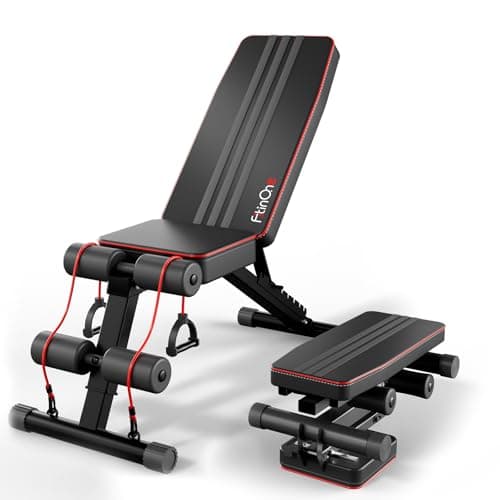
FitinOne — FitinOne Adjustable Weight Bench
Best budget — a fast-folding incline/decline bench for building out a starter home gym cheaply
Kettlebell types: cast iron, competition, coated, adjustable
There are four types worth knowing. Cast iron is the standard and, for most people, the best value: a solid one-piece bell, usually with a bare or lightly powder-coated handle, where the bell gets physically bigger as the weight goes up. Competition (or 'comp') bells are made of steel to a fixed international standard, so every weight is the same overall size with the same handle diameter — great for consistency and gym aesthetics, but noticeably pricier. Coated or vinyl bells are cast iron wrapped in a plastic or rubber shell to protect floors and cut noise, which suits apartments, though the coating can make the handle feel bulkier. Adjustable kettlebells pack several weights into one unit by adding or removing internal plates or shifting a dial, saving money and space if you want a range. Each has a place: cast iron for value and feel, competition for uniformity, coated for quiet floors, adjustable for tight spaces. Match the type to your setup and budget rather than assuming the most expensive option is 'best.'
The handle: width, finish, and why it matters
The handle is the part of a kettlebell you actually hold, and it makes or breaks the experience — yet it's the spec people ignore. Two things matter: width and finish. A handle needs to be wide enough to fit both hands side by side for two-handed swings, and thick enough to challenge your grip without being so thick it shreds your hands. Finish is about texture: a smooth, well-machined bare-iron handle glides during the fast hand-insertion of cleans and snatches, whereas a rough, heavily textured, or thickly painted handle can chew up your palms during high-rep work. That's why many experienced users prefer bare or lightly coated handles and add their own chalk for grip. Handle diameter also tends to grow with the weight on cast-iron bells (a 32kg handle is thicker than a 16kg), which is normal; competition bells keep it constant. If you plan to do a lot of cleans, snatches, and swings, prioritize handle quality over looks — a bad handle will have you cutting sessions short.
Swings vs cleans: how the movement changes your pick
The lifts you plan to do should steer your choice. If your training is mostly two-handed swings, goblet squats, and presses, almost any decent bell works — you just need a handle wide enough for both hands and a comfortable finish. If you want to do the more technical ballistic lifts — cleans, snatches, and long high-rep sets — handle quality and window size (the gap between handle and bell) matter much more, because the bell rotates around your forearm and needs to settle cleanly in the rack position. This is where many people gravitate toward competition bells: the identical handle and body size across weights means the technique feels the same whether you're holding 16kg or 24kg, which is helpful when you're grooving a skill. For pure strength and conditioning at home, a cast-iron bell with a smooth handle handles all of it fine. Be honest about what you'll actually do: most home users swing and squat far more than they snatch, so a good cast-iron bell is usually the right, cheaper answer.
One fixed bell, a set, or adjustable?
Fixed bells are simple, durable, and feel exactly right in the hand — but you need a different bell for each weight, and a growing collection gets expensive and eats floor space. An adjustable kettlebell solves both problems by packing a range of weights into one unit, which is genuinely useful in a small home gym. The trade-off is the handle and the shape: adjustables are often boxier, sometimes bulkier in the handle, and the weight-change mechanism adds a step between sets. For most beginners, the smart move is to start with one fixed bell at a weight you'll actually use, prove you'll train consistently, then decide whether to add a heavier and lighter fixed bell or switch to an adjustable for the range. If space is genuinely tight or you know you'll want several weights, an adjustable can be the better first buy. There's no single right answer — it depends on your space, budget, and how much you value handle feel versus a compact footprint. Don't buy a full ladder of bells before you know you'll use them.
Budget vs premium: where the money goes
You do not need a premium bell to train well, but you should avoid the cheapest junk. On budget cast-iron bells, the common problems are rough or seamy handles (a casting seam right where your hand grips), inconsistent finishes, and sometimes wobbly, poorly cast bottoms. A mid-priced, reputable cast-iron bell with a smooth handle and flat base is all most home lifters ever need and represents the best value. Premium spend makes sense in two cases: competition bells, where you're paying for the standardized size and precise handle across weights; and well-made adjustables, where the mechanism has to be reliable enough to trust overhead. Coated bells sit in between and are worth a small premium if floor protection and quiet matter to you. The features actually worth paying for are a smooth, correctly sized handle, an accurate weight, and a stable flat base. Spending extra on colors, branding, or exotic materials rarely improves the training. Buy the boring, well-made bell and put the savings toward a second weight.
What to ignore: gimmicks and marketing
Kettlebells are one of the simplest tools in the gym, which makes the marketing around them especially silly. Ignore claims about 'ergonomic' handles with aggressive contours — a plain, smooth, correctly sized handle is what serious users want, because fancy shaping usually just fights your grip during dynamic lifts. Be skeptical of thickly painted or heavily textured 'grippy' coatings; they feel secure at first and tear your hands up on high-rep sets, and chalk solves grip far better. You don't need built-in electronics, app connectivity, or 'smart' bells to swing a weight. Wildly cheap no-name bells can have rough seams and inaccurate weights, so a known brand is worth it — but you're paying for casting quality and handle finish, not logos. And you don't need a rainbow set of matching colors to train hard; that's aesthetics, not performance. Focus your decision on the handful of things that matter — type, handle, weight, base, and value — and let the rest go. A plain, well-made bell you'll actually pick up beats a gimmicky one gathering dust.
Frequently asked questions
A standard cast-iron kettlebell with a smooth, bare or lightly coated handle is the best starting point for most beginners. It offers the best balance of price, durability, and feel, and it handles everything a beginner will do — swings, goblet squats, presses, and rows. Competition and adjustable bells have their uses, but they cost more and solve problems most new lifters don't have yet. Start simple with one good cast-iron bell.
Sources
- How to Choose a Kettlebell: Buying Guide — Garage Gym Reviews
- Cast Iron vs Competition Kettlebells: What to Buy — BarBend
- Kettlebell Training and Programming Resources — Stronger By Science
- Essentials of Strength Training and Conditioning (kettlebell training) — National Strength and Conditioning Association
FitinOne — FitinOne Adjustable Weight Bench
$59.98 · on Amazon