Does Creatine Cause Hair Loss?
Almost certainly not. The entire scare traces back to a single 2009 study of 20 college-aged rugby players, and that study never looked at anyone's hair — it measured hormones. It found that three weeks of creatine raised dihydrotestosterone (DHT), the androgen implicated in male pattern baldness, by 56% after a seven-day loading phase, with levels still about 40% above baseline after two weeks of maintenance dosing. That figure has been repeated across the internet ever since, usually without the two details that matter most: the values stayed well inside normal clinical limits, and no hair was ever counted. In 2025 researchers finally ran the trial everyone had been arguing about — 12 weeks, randomized, double-blind, placebo-controlled, 45 resistance-trained men, measuring DHT, testosterone and actual hair follicle parameters. Creatine moved none of them relative to placebo. That sits on top of a 2021 review of the wider literature which found that, of 12 other studies measuring testosterone alongside creatine, ten reported no change at all and two reported increases too small to matter. If your hairline is receding, the overwhelmingly likely cause is androgenetic alopecia — an inherited sensitivity of your follicles to the DHT you already produce — not the 5 grams of monohydrate in your shaker. Creatine is not the variable worth changing.
Affiliate disclosure: Trusted Health Gear is an Amazon Associate. If you buy through links on this page, we may earn a commission at no extra cost to you. Commission does not influence our rankings. Full policy.
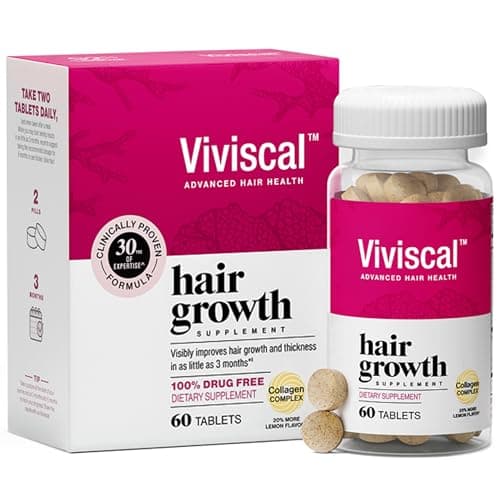
Viviscal — Viviscal Hair Growth Supplements for Women (60 tablets, 1 month)
Best-studied actual supplement — with the trial caveats stated plainly
Where the scare came from: one study, 20 rugby players, 2009
Every version of this claim you have ever read descends from the same paper: van der Merwe, Brooks and Myburgh, published in the Clinical Journal of Sport Medicine in 2009 under the title "Three Weeks of Creatine Monohydrate Supplementation Affects Dihydrotestosterone to Testosterone Ratio in College-Aged Rugby Players." It was a double-blind, placebo-controlled crossover study in 20 rugby players, run during their competitive season with a six-week washout between conditions. Participants took 25 grams of creatine per day for seven days, then 5 grams per day for 14 days. The researchers drew blood and looked at resting androgen concentrations. DHT rose 56% after the loading week and was still roughly 40% above baseline after the maintenance period, while total testosterone did not change — so the ratio of DHT to testosterone shifted. That is a real, published, peer-reviewed finding, and we are not going to pretend otherwise. The study design was reasonable for what it set out to do. The problem is not the study. The problem is everything that got layered on top of it by people who read the abstract, saw the word "dihydrotestosterone," and filled in the rest themselves.
The detail that got lost: nobody measured any hair
The 2009 paper measured hormones in blood. It did not measure hair density, hair count, follicle diameter, miniaturization, shedding rate, or anything else about the scalp. Not once, in any participant, at any timepoint. The leap from "DHT went up in 20 rugby players" to "creatine makes you bald" is entirely an internet invention, and it requires two unstated assumptions: that a short-term change in circulating DHT translates into follicle damage, and that the size of the change was clinically meaningful. The authors' own data undercuts the second one — the increase in DHT and in the DHT-to-testosterone ratio remained well within normal clinical limits. In other words, these men were not pushed into some abnormal hormonal state; they moved around inside the ordinary range. There is also the matter of replication, which is how science separates a signal from a fluke. In the fifteen-plus years since, no study has reproduced that DHT result. A single unreplicated hormone finding in 20 athletes is a hypothesis worth testing, not a warning label. For a long time, though, nobody tested it properly.
2025: someone finally counted the follicles
That changed in 2025, when Lak and colleagues published "Does creatine cause hair loss? A 12-week randomized controlled trial" in the Journal of the International Society of Sports Nutrition. It is the first study designed specifically to answer this question rather than to answer something else and get quoted out of context. Forty-five resistance-trained men aged 18 to 40 were randomized to either 5 grams a day of creatine monohydrate or a placebo for 12 weeks. The researchers measured total testosterone, free testosterone and DHT, calculated the DHT-to-testosterone ratio, and — this is the part that had been missing for sixteen years — assessed the hair follicles directly with imaging, capturing hair density, follicular count and cumulative hair thickness. The result: no significant differences between the creatine group and the placebo group in DHT, in the DHT-to-testosterone ratio, or in any of the hair growth parameters. Total testosterone drifted up and free testosterone drifted down over the 12 weeks in both groups alike, which is a time effect rather than a creatine effect. Worth stating the limits plainly, because that is how you should read any single trial: 45 people is a modest sample, 12 weeks is not a decade, and every participant was a trained man aged 18 to 40. This trial does not prove creatine can never affect anyone's hair. It does mean the one direct test we have came back empty.
What the rest of the creatine literature says about hormones
The 2025 trial did not land in a vacuum. In 2021, a large group of creatine researchers published a review in the same journal addressing the common questions and misconceptions about creatine supplementation, and hair loss was question number four. They pulled together the 12 other studies that had measured testosterone in creatine users. Two reported small increases in total testosterone that the authors described as physiologically insignificant; the remaining ten reported no change at all. Five of those studies also measured free testosterone — the fraction actually available to tissue — and none of them found an increase. Their conclusion was unusually direct for a scientific paper: the current body of evidence does not indicate that creatine supplementation increases total testosterone, free testosterone, DHT, or causes hair loss and baldness. Set against that, the 2009 rugby study is a single outlier that has stood alone for well over a decade. This is exactly the pattern you should expect when a lone result fails to replicate, and it is the reason we treat creatine as one of the best-evidenced supplements you can buy rather than a risk to be managed.
What actually causes pattern hair loss
It helps to know what you are actually up against, because the real mechanism explains why creatine was never a plausible culprit. Male pattern hair loss is androgenetic alopecia, and it affects up to half of men by age 50 and as many as 80% by age 80. It is driven by inherited sensitivity, not by how much androgen you happen to have circulating. The enzyme 5-alpha reductase converts testosterone into DHT; DHT binds to androgen receptors in scalp follicles; and in people whose follicles are genetically primed to respond, that binding shortens the growth cycle and progressively miniaturizes terminal hairs into fine vellus hairs. Variation in the androgen receptor gene on the X chromosome accounts for roughly 40% of the heritability in men. That is why the drugs that work — finasteride and dutasteride — target 5-alpha reductase itself. The practical implication is uncomfortable but clarifying: two men with identical DHT levels can have completely different outcomes, because the difference lives in the receptor, not the hormone. If you are losing hair in a pattern at the temples and crown, you inherited that. Stopping your creatine will not give it back, and a dermatologist is a far better use of your time than a supplement audit.
If baldness runs in your family, the honest read
We are not going to tell you the question is stupid, because it is not. If you have a family history of pattern baldness you are genuinely at higher risk, and it is reasonable to want to know whether anything you take makes it worse. Here is our honest read. The direct evidence says creatine does not affect DHT or hair over 12 weeks. The indirect evidence — a dozen studies on testosterone — says the same. The one contrary finding measured hormones rather than hair, stayed inside normal clinical limits, and has never replicated. Given that, giving up the single most-proven training supplement on the shelf to avoid a risk nobody has been able to demonstrate is a bad trade. What we will not do is claim a certainty nobody has: no study has tracked genetically susceptible men for years rather than weeks, so a small long-term effect in a subgroup cannot be formally ruled out. If you are already losing hair and want to intervene, the useful move is a dermatologist and evidence-based treatment, not dropping creatine and hoping. And if you notice sudden diffuse shedding rather than a receding pattern, that points somewhere else entirely — thyroid problems, iron deficiency, illness, rapid weight loss, medication changes — which is a conversation for your doctor, not a supplement forum.
What we would actually buy, and what we would ignore
If the hair question was the only thing holding you back, buy plain creatine monohydrate and get on with it. Monohydrate is the form used in the overwhelming majority of the research, including both the 2009 study that started this argument and the 2025 trial that closed it, and the 2017 International Society of Sports Nutrition position stand calls it the most effective ergogenic nutritional supplement available for high-intensity exercise. Take 3 to 5 grams a day, every day, and pair it with training that actually taxes the phosphocreatine system. Look for a third-party test mark or a Creapure label, and judge the tub on cost per effective gram rather than on the label design. What we would ignore is the entire premium shelf that grew up around this scare. Creatine HCl, buffered creatine, ethyl ester and anything marketed as gentler on your hormones costs more per effective gram and has no head-to-head evidence of superiority — and none of them was ever a solution to a problem that turned out not to exist. This is the same principle we apply everywhere on this site: buy the boring, well-tested version, spend the difference on food and sleep, and treat the marketing story as the thing being sold to you.
Viviscal — Viviscal Hair Growth Supplements for Women (60 tablets, 1 month)
Frequently asked questions
One 2009 study in 20 rugby players found DHT rose 56% during a seven-day loading phase and stayed about 40% above baseline through two weeks of maintenance dosing, though the values remained well within normal clinical limits. No study has replicated that result since. The 2025 randomized controlled trial that measured DHT directly over 12 weeks found no difference between creatine and placebo, and a 2021 review of 12 other studies found no consistent effect on total or free testosterone. The most accurate answer is that the evidence does not support a meaningful DHT increase from creatine.
Related reading
Sources
- Does creatine cause hair loss? A 12-week randomized controlled trial (Lak M, Forbes SC, Ashtary-Larky D, et al.) — 45 resistance-trained males, 5 g/day vs placebo; no differences in DHT, DHT:testosterone ratio or hair growth parameters — Journal of the International Society of Sports Nutrition, 2025
- Common questions and misconceptions about creatine supplementation: what does the scientific evidence really show? (Antonio J, Candow DG, Forbes SC, et al.) — 12 studies on testosterone; concludes the evidence does not indicate creatine increases total testosterone, free testosterone, DHT or causes hair loss/baldness — Journal of the International Society of Sports Nutrition, 2021
- Three Weeks of Creatine Monohydrate Supplementation Affects Dihydrotestosterone to Testosterone Ratio in College-Aged Rugby Players (van der Merwe J, Brooks NE, Myburgh KH) — the original crossover study, n=20 — Clinical Journal of Sport Medicine, 2009
- Androgenetic Alopecia — prevalence, the 5-alpha reductase and DHT mechanism, and androgen receptor heritability — StatPearls, NCBI Bookshelf (NIH)
- International Society of Sports Nutrition position stand: safety and efficacy of creatine supplementation in exercise, sport, and medicine — Journal of the International Society of Sports Nutrition, 2017
Viviscal — Viviscal Hair Growth Supplements for Women (60 tablets, 1 month)
$37.50 · on Amazon