A Beginner Kettlebell Workout (Full-Body, at Home)
One kettlebell and a little floor space are enough to train your whole body for strength and conditioning at home. A solid beginner routine is built from a handful of moves: the two-hand swing (a hip hinge, not a squat), the goblet squat, the kettlebell deadlift, the strict overhead press, and the bent-over row — with the Turkish get-up as an optional skill to grow into. Run it as a full-body session two or three times a week, 2-3 sets of about 8-12 reps for the grinds and short sets for the swings, leaving a rep or two in reserve. Pick a weight you can control with good form — many beginners start around a lighter bell for presses and a moderately heavier one for swings and squats. Master the hinge and the brace first, keep every rep clean, and add load or reps only once the movement looks the same on the last rep as the first. If you have injuries or health concerns, check with a doctor or coach before starting.
Affiliate disclosure: Trusted Health Gear is an Amazon Associate. If you buy through links on this page, we may earn a commission at no extra cost to you. Commission does not influence our rankings. Full policy.
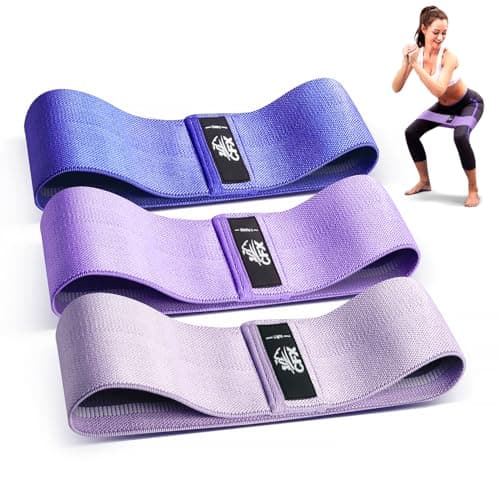
CFX — CFX Booty Bands (3-Level Set)
Most versatile budget set — a low-cost non-slip fabric kit that covers glutes plus Pilates and full-body home work
Why train with a kettlebell
A kettlebell is one of the most efficient tools you can own because a single bell trains strength, power, and conditioning at once. Its offset handle puts the weight below your grip, which makes ballistic, swinging movements natural and builds the hip power that carries over to nearly every athletic action. The same bell you swing for conditioning you can press overhead for strength, hold at your chest for squats, or carry for grip and core. That versatility is why kettlebells are a staple of functional-fitness and garage-gym training: minimal equipment, maximum movement variety, and a strong crossover to real-world and sport tasks. For a home trainer short on space and time, a kettlebell delivers a genuine full-body workout — pulling, pushing, squatting, hinging, and carrying — from a piece of iron that fits in a corner. You don't need a rack of them to start; one well-chosen bell will carry a beginner a long way, and a second bell in a different weight later opens up almost everything else.
The two-hand swing: hinge, don't squat
The swing is the signature kettlebell move, and the single most common beginner mistake is turning it into a squat. It's a hip hinge. Stand with the bell a foot or so in front of you, feet about shoulder-width. Hinge at the hips — push your butt back, keep a slight bend in the knees, and keep your back flat — then hike the bell back between your legs like a football snap. Snap your hips forward explosively to stand tall, squeezing your glutes; that hip drive, not your arms, floats the bell to about chest height. Let it swing back down as you hinge again, and repeat in a smooth rhythm. Cues that fix most problems: the movement is back-and-forth at the hips, not up-and-down at the knees; the arms are ropes, not levers; keep your shoulders 'packed' down away from your ears; and brace your abs on every rep. Start with short sets of 10-15 reps so form stays crisp — the swing is a power move, not an endurance grind, and sloppy fatigue reps are where backs get tweaked.
The core strength moves and their cues
Around the swing, four grinds build the rest of your body. Goblet squat: hold the bell against your chest with both hands, sit straight down between your hips, knees tracking over your toes, chest tall, and stand back up — the front-loaded position naturally keeps you upright and teaches a clean squat. Kettlebell deadlift: bell on the floor between your feet, hinge and grab the handle, keep your back flat, and stand by driving your hips forward — it's the swing's slow cousin and the safest way to learn the hinge. Strict overhead press: clean or lift the bell to the front-rack position at your shoulder, brace your abs and glutes, and press straight overhead without leaning back, then lower under control. Bent-over row: hinge at the hips with a flat back, let the bell hang, and pull it toward your hip by driving your elbow back and squeezing the shoulder blade. Universal cues across all four: brace your midsection, keep your spine neutral (not rounded or overarched), 'pack' the working shoulder down and back, and move at a controlled tempo. The optional Turkish get-up — standing up from lying down while holding the bell overhead — is a fantastic full-body stability drill, but treat it as a skill to practice light, not a workout finisher to grind.
A simple beginner routine
Here's a full-body session to run two or three non-consecutive days a week. Warm up first with five to ten minutes of easy movement — marching, hip hinges with no weight, bodyweight squats, arm circles, and a light set of each lift. Then: (1) Kettlebell deadlift — 3 sets of 8-10, to groove the hinge; (2) Goblet squat — 3 sets of 8-12; (3) Two-hand swing — 5 sets of 10-15, resting as needed to keep every set powerful; (4) Strict overhead press — 3 sets of 6-10 per arm (or both if pressing two bells later); (5) Bent-over row — 3 sets of 8-12 per arm. Rest 60-90 seconds between grind sets and long enough after swings that your form stays sharp. Optionally finish with a few slow, controlled Turkish get-ups per side using a light bell to practice the pattern. The whole thing runs about 30-40 minutes. Do the same session each training day at first — repetition is how you learn the moves — and alternate days off for recovery, since strength is built between sessions, not during them.
How to pick a starting weight
The right starting bell is heavy enough to feel like real work but light enough that your form never breaks down. Because swings and squats use the big muscles of the hips and legs, most people can handle a heavier bell for those than for pressing, where smaller shoulder muscles set the limit. A common approach is one moderately heavier bell for swings, deadlifts, and goblet squats, and — later — a lighter one for presses and get-ups, though many beginners start with a single mid-range bell and simply do fewer reps on the harder lifts. The test is simple: on your first set you should finish the target reps with about two reps still in the tank and clean technique throughout. If your back rounds, your form falls apart, or you can't control the bell, it's too heavy; if a set feels trivially easy, size up. We cover specific pound and kilo recommendations for men and women in our kettlebell starting-weight guide — use that to choose your first bell, and remember that a bell you can move well beats a heavier one you can't.
Form first: safety cues that matter most
Kettlebell training is safe and effective when you respect a few non-negotiables, and risky when you don't. First, learn the hinge before you swing — the deadlift and no-weight hip hinges teach it, and until you own it, don't load a dynamic swing. Second, brace on every rep: take a breath, tighten your abs as if bracing for a light punch, and keep that tension through the movement to protect your spine. Third, pack the shoulder — pull it down and back into the socket before pressing or swinging overhead — to keep the joint stable. Fourth, keep the spine neutral: no rounding on hinges, no excessive arching on presses. Fifth, set the bell down deliberately rather than dropping or reaching for it with a rounded back, which is a classic way to tweak something at the end of a set. Progress the swing before you attempt overhead ballistic moves like the snatch, which are advanced. And the standard honest caveat: this is general fitness education, not medical advice — if you have a back, shoulder, or other injury or any health condition, talk to a doctor or a qualified coach before starting, and stop for sharp pain (effort discomfort is fine; sharp pain is a stop sign).
How to progress
Progress comes from doing a little more over time, done in the right order. First, add reps within your target range while keeping form perfect. Once you can hit the top of the range for all sets across two sessions in a row, either add a set or step up to a heavier bell — but because kettlebells jump in fixed increments (often 4 kg / roughly 9 lb between sizes), the load leap is big, so bank extra reps and sets before you size up, and expect to drop your reps back down when you do. As your technique matures you can also progress by learning new movements: the clean, the front-rack squat, the single-arm swing, and eventually the get-up done heavier all add stimulus without a heavier bell. Track your sessions — bell weight, sets, and reps — so progression is a decision based on data, not a guess based on how you feel that day. Two bells (one lighter, one heavier) cover almost every beginner-to-intermediate need; adjustable kettlebells are worth considering if you'd rather buy one unit that spans several weights instead of a shelf of fixed bells. Above all, stay consistent: steady, clean training across months is what makes you stronger, not any single hard session.
Frequently asked questions
Start with the kettlebell deadlift and goblet squat to learn the hinge and squat, then the two-hand swing, strict overhead press, and bent-over row. Together these train your whole body — hinge, squat, push, and pull. Save advanced moves like the snatch for after you've mastered the swing, and treat the Turkish get-up as a light skill practice.
Related reading
Sources
- Physical Activity Guidelines for Americans, 2nd Edition (muscle-strengthening on 2+ days/week) — U.S. Department of Health and Human Services, 2018
- ACE Exercise Library (kettlebell swing, goblet squat, deadlift technique) — American Council on Exercise
- Essentials of Strength Training and Conditioning (exercise technique and program design) — National Strength and Conditioning Association
CFX — CFX Booty Bands (3-Level Set)
$9.90 · on Amazon