Wall Ball vs Medicine Ball: Which Weighted Ball Do You Need?
Wall balls and medicine balls both look like weighted spheres, but they're built for opposite kinds of throwing. A wall ball is big, soft, and lightly padded — a large-diameter ball you can catch on your chest and drive up to a target without hurting yourself. That forgiving shell is the whole reason wall-ball shots and squat-to-target work exist: you throw hundreds of catchable reps for conditioning. A medicine ball is smaller and denser, usually a firmer rubber, leather, or vinyl shell tuned for grip and a controlled bounce. That density makes it the better tool for rotational throws, partner passes, chest passes off a wall, and slams that rebound. The size and feel decide the movement menu almost entirely: the wall ball owns forgiving, high-rep vertical throws, while the medicine ball owns crisp, dense, rotational and horizontal power work. Plenty of gyms keep one of each because they barely overlap.
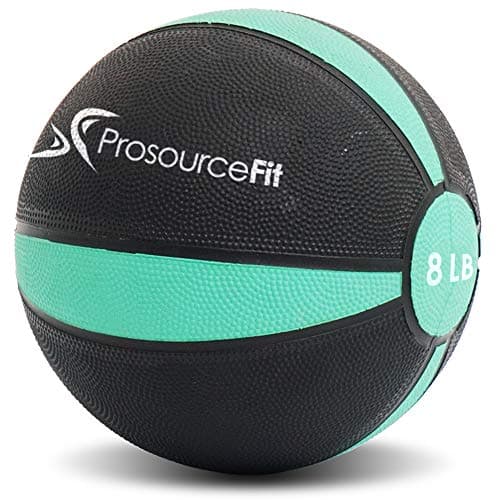
ProsourceFit — ProsourceFit Weighted Rubber Medicine Ball (8 lb)
ProsourceFit — ProsourceFit Weighted Rubber Medicine Ball (8 lb)
The verdict
Pick a wall ball if your training centers on wall-ball shots, squat-to-target throws, or any high-rep catch-and-throw work where a soft, large ball keeps you safe and comfortable. Pick a medicine ball if you want rotational power, partner passes, chest passes, and denser throwing or bounce work in a smaller, grippier package. They solve different problems, so many people own both — but if you can only buy one, match it to your headline movement.
Side-by-side
| Attribute | Wall Ball | Medicine Ball |
|---|---|---|
| Best for | Vertical wall throws, squat-to-target, high-rep conditioning | Rotational power, partner and chest passes, varied core work |
| Size / diameter | Large — roughly 14 inches, easy to catch on the chest | Smaller and denser — easier to grip with the hands |
| Feel / firmness | Soft, padded, forgiving shell that absorbs the catch | Firmer rubber, leather, or vinyl with textured grip |
| Signature movement | Wall-ball shot — squat, throw to a target, catch, repeat | Rotational throws, partner passes, chest passes off a wall |
| Bounce / rebound | Minimal — designed to be caught, not to rebound hard | Often a controlled bounce for wall and partner throws |
| Typical weight range | Commonly 6-20 lb (10, 14, 20 lb are common targets) | Commonly 4-20 lb for throws and core work |
| Grip / catchability | Big and soft — caught against the body, not gripped | Textured and firm — held and thrown with the hands |
| Space / target needs | Wants a tall, sturdy wall and vertical throwing room | Wants a wall or partner; less vertical space required |
Who should pick which
Pick Wall Ball
- CrossFit and conditioning athletes doing wall-ball shots and squat-to-target throws for reps.
- Anyone who wants a soft, large, catchable ball that's forgiving on the hands, chest, and face.
Pick Medicine Ball
- Lifters and athletes training rotational power — scoop tosses, side throws, and Russian twists.
- People doing partner passes, chest passes, and controlled-bounce throws that need a dense, grippy ball.
- Small-space trainees who want a compact, firm ball for varied core and power work.
Size and softness decide everything
The wall ball is large and soft on purpose. A roughly 14-inch, padded ball is easy to cradle against your chest, absorbs the catch, and won't punish your fingers or face when you miss a rep — which matters when the workout is dozens of throws to a ten-foot target. The medicine ball is smaller and denser so you can actually grip it: rotational throws, scoop tosses, and partner passes all rely on holding the ball in your hands and driving it fast. Try to do crisp rotational work with a big squishy wall ball and it's clumsy; try to do a hundred catch-and-throw wall shots with a small dense medicine ball and you'll jam fingers and beat up your chest. The dimensions dictate the drills.
The wall-ball shot is a movement, not just a ball
The wall ball exists to serve one signature exercise: the wall-ball shot. You hold the ball at your chest, drop into a front squat, and use the drive out of the bottom to throw the ball up to a target, then catch it and immediately squat again. It's a full-body conditioning movement that blends a squat, a push, and a throw into one repeatable cycle, which is why it's a staple in CrossFit and metabolic circuits. The soft shell and large size are what make high-rep sets survivable — you can catch rep after rep against your body without the ball hurting you. A medicine ball is the wrong tool here; it's too dense and small to catch comfortably at volume.
The medicine ball owns rotation and horizontal power
Where the wall ball goes up, the medicine ball goes sideways. Its density and grippable size make it the tool for rotational and horizontal throwing power: standing side throws into a wall, rotational scoop tosses, chest passes to a partner or rebounder, and overhead slams that bounce back for another rep. It also handles a long list of loaded core work — Russian twists, weighted sit-ups, and rehab-style throws — where you need a firm ball you can control in the hands. Many models offer a deliberate bounce so the ball comes back off a wall, which is exactly what you want for reactive, explosive throwing. That controlled rebound is a feature the wall ball intentionally lacks.
Durability, floor, and space needs
The two balls make different demands on your gym. Wall balls need a tall, sturdy wall and vertical throwing room — you're launching a soft ball ten feet up repeatedly, so you want a wall that can take it and enough ceiling height to hit your target. The soft shell holds up well to wall impacts but can wear if you drag it across rough concrete. Medicine balls are firmer and more abrasion-resistant, but a hard slam or a rough floor can crack a rigid shell over time, and a bouncy medicine ball slammed straight down can rebound dangerously. Neither ball needs much square footage, but confirm you have the right wall, ceiling, and floor before you start throwing weight around.
Which to buy — or buy both
If you have to choose, match the ball to your headline movement. Training built on wall-ball shots, squat-to-target throws, or conditioning circuits points to a wall ball; it's cheap, forgiving, and purpose-built for high-rep catch-and-throw work. Training built on rotational power, partner passes, or varied loaded core work points to a medicine ball for its grip, density, and controlled bounce. Honestly, they barely overlap, which is why plenty of gyms own one of each — a wall ball for vertical conditioning and a medicine ball for rotation and horizontal power. If budget forces a single purchase, buy the ball that matches today's program and add the other when your training demands it.
Frequently asked questions
You can in a pinch, but it's not ideal. Wall-ball shots involve catching the ball against your chest dozens of times, and a dense, smaller medicine ball is harder to catch and more punishing on your hands and sternum. A purpose-built wall ball is larger and soft, so it absorbs the catch and lets you keep good form across high-rep sets. If wall-ball shots are a regular part of your training, the soft wall ball is the safer, more comfortable choice.
Sources
- Medicine Ball Training for Power and Rotational Athletes — National Strength and Conditioning Association (NSCA)
- Wall-Ball Shot Movement Standards and Scaling — CrossFit
- Wall Ball vs. Medicine Ball vs. Slam Ball: What's the Difference? — BarBend
- Medicine Ball Exercises for Core and Total-Body Power — American Council on Exercise (ACE)
ProsourceFit — ProsourceFit Weighted Rubber Medicine Ball (8 lb)
$34.99 · on Amazon