Suspension Trainer vs Resistance Bands: Which Should You Buy?
Suspension trainers and resistance bands are both cheap, portable ways to train anywhere, but they generate resistance in opposite ways. A suspension trainer hangs from a single anchor and uses your own bodyweight against gravity — you set the difficulty by changing your body angle and foot position, and because the straps move freely, every rep is also a core-stability and balance challenge. Resistance bands supply external elastic tension: the further you stretch the band, the harder it gets, and you scale by swapping thickness or stacking bands. That makes bands more granular at the light end, better for isolation and rehab-style work, and the cheapest, most packable option — no anchor required. Suspension training loads pulls, presses, and core hard once you have a solid anchor. For most people the choice comes down to whether you want bodyweight-and-core work or adjustable external resistance you can dial in.
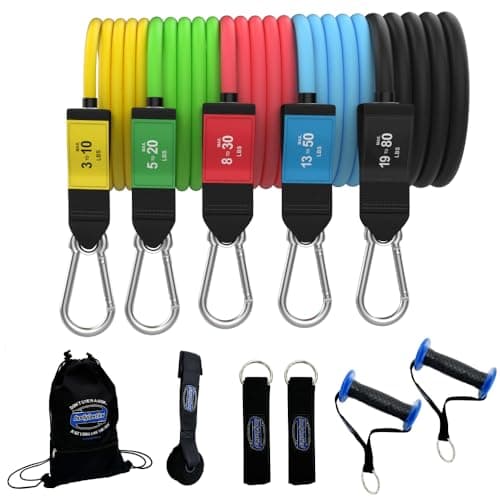
Bodylastics — Bodylastics Stackable Resistance Bands Set (Basic Series, 190 lb)
The verdict
Neither wins outright — they train differently. Pick a suspension trainer if you want bodyweight strength with a heavy dose of core and stability, and you have a solid anchor to hang it from. Pick resistance bands if you want the cheapest, most packable kit, granular light-to-moderate resistance, easy isolation and rehab work, and no anchor requirement. Bands are the more universal starting point; a suspension trainer rewards people who love bodyweight and core training. Since both are inexpensive, plenty of home gyms end up with both.
Side-by-side
| Attribute | Suspension Trainer | Resistance Bands |
|---|---|---|
| Best for | Bodyweight strength + core stability | Adjustable external resistance, portability |
| Resistance source | Your bodyweight vs. gravity (body angle sets load) | Elastic tension (stretch sets load) |
| Anchor needed | Yes — a solid overhead/high anchor with clearance | Often none; door anchor optional |
| How you progress | Change body angle and foot position (smooth, continuous) | Swap or stack bands (coarser step-ups) |
| Core / stability demand | High — moving straps make every rep a stability task | Lower — more isolated and controllable |
| Load ceiling | Roughly your bodyweight (minus what the angle removes) | Higher — bands can be stacked, but tension varies through range |
| Best movements | Rows, chest press, fallouts, hamstring curls, split squats, planks | Presses, pull-aparts, curls, monster walks, accommodating resistance |
| Cost and portability | Moderate cost; packable but needs an anchor | Very cheap; weighs ounces, fits any bag |
Who should pick which
Pick Suspension Trainer
- Bodyweight-strength and core-focused trainers who want one anchored tool for pulls, presses, and stability work.
- People who prefer scaling difficulty by changing body angle and foot position instead of swapping equipment.
- Travelers with access to a solid anchor who want rows, presses, and core work anywhere.
Pick Resistance Bands
- Beginners and rehab-adjacent trainers who want light, granular external resistance.
- Budget buyers who want the cheapest, most packable full-body kit with no anchor required.
Two different engines: bodyweight vs. elastic tension
The core difference is where the resistance comes from. A suspension trainer turns your own bodyweight into the load — lean, hinge, or angle yourself against gravity, and the anchor does the rest. Steeper angles make a movement harder, more upright makes it easier, so you 'add weight' by moving your feet. Resistance bands create load through elastic tension: a relaxed band is easy, a stretched one is hard, and the resistance climbs as you pull. That gives bands an ascending resistance curve — lightest at the start of the range, heaviest at the end — while a suspension trainer's load depends mostly on your body position. Understanding these two engines explains almost every practical difference that follows, from how you progress to what each does best.
The suspension trainer: stability and core are the point
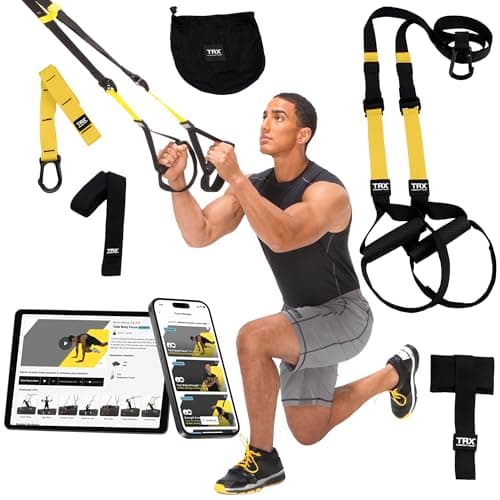
Hang a suspension trainer from a door, beam, or rig and you can train rows, chest presses, face pulls, hamstring curls, split squats, and a deep menu of core work from one tool. Its signature is instability: the straps swing, so every rep recruits the shoulders, hips, and trunk to stay controlled, which makes it excellent for core strength and joint stability. Difficulty scales smoothly — walk your feet forward or back to make a row or press harder or easier without changing anything else, so the same tool serves a beginner and an advanced trainee. The catch is the anchor: you need a solid overhead or high mounting point with clearance, and the load ceiling is roughly your bodyweight, so it isn't the tool for maximal strength.
Resistance bands: cheap, portable, endlessly variable
Resistance bands trade instability for sheer flexibility of loading. Because tension is external and comes in graded strengths, you can dial resistance from feather-light rehab and mobility work up to genuinely challenging sets by swapping or stacking bands. That granularity makes them the better pick for isolation moves, prehab and rehab, warm-ups, and pull-aparts, and their ascending curve is friendly to cranky joints. They're also the most portable option going — a full set weighs ounces, costs little, and needs no anchor, though a door anchor expands the exercise list. Bands add value inside a barbell gym too: looped onto a bar as accommodating resistance, they train explosive lockout strength. The main limits are a coarser jump between resistance levels and tension that can slip or snap if bands are worn.
Anchoring, progression, and the load ceiling
Three practical differences decide most purchases. Anchoring: a suspension trainer needs a rated overhead or high anchor and clearance to move; most band work needs nothing, or just a door anchor for rows and presses. Progression: bands step up in fixed increments — you jump from one band to the next or double up, which is coarse but simple — while a suspension trainer progresses continuously as you change body angle, which is smoother but always tied to your bodyweight. Load ceiling: bands can be stacked to fairly high tension, but a suspension trainer caps out near your own bodyweight minus whatever the angle removes. If your goal is heavy loading, neither replaces free weights — but for portable, joint-friendly training, these differences point you to the right tool.
Our take: bands for most, suspension for bodyweight devotees
For most people, a quality resistance band set is the more universal buy: it's the cheapest, packs anywhere, scales from rehab-light to challenging, needs no anchor, and even upgrades a barbell gym through accommodating resistance. Choose a suspension trainer first if you specifically love bodyweight training and want serious core and stability work, and you have a solid anchor to use it. The honest news is that you don't really have to choose — both are inexpensive, and together they cover bodyweight pulls and presses, external resistance for isolation and rehab, and portable full-body training for travel. Buy the one that matches how you train now, and add the other when the gap shows up.
Frequently asked questions
The resistance source. A suspension trainer uses your bodyweight against gravity — you make exercises harder or easier by changing your body angle and foot position — and its moving straps add a big core-stability demand. Resistance bands supply external elastic tension that increases as you stretch them, and you scale by swapping or stacking bands. Suspension training leans toward bodyweight strength and core control; bands offer granular, adjustable resistance and need no anchor. They overlap but suit different goals.
Related reading
Sources
- Suspension training: exercise application and program design — American Council on Exercise (ACE)
- Bodyweight and suspension training for strength and stability — National Strength and Conditioning Association (NSCA)
- Effects of elastic resistance training on muscle strength and function: a systematic review and meta-analysis — SAGE Open Medicine, 2019
- The use of variable (band) resistance and its effects on strength and power — Journal of Strength and Conditioning Research
TRX — TRX Pro3 Suspension Trainer
$229.95 · on Amazon