Safety Squat Bar vs Barbell: Which Should You Squat With?
The straight barbell is the default squat tool for a reason: it is cheap, endlessly versatile, and the exact implement you compete with in powerlifting and Olympic lifting. But it forces you to rack the bar on your back and hold it in place with your shoulders and wrists, which is a problem if either joint is cranky. The safety squat bar (SSB) solves that. Padded shoulder yokes and handles out front mean your arms stay relaxed and your wrists stay neutral, while the bar's forward camber shifts the load ahead of your spine. That camber drives you toward a more upright torso and challenges your upper back to fight the fold — great for quad emphasis, good-mornings, and lifters rehabbing shoulder or wrist pain. Neither bar is strictly better. The straight bar wins on cost, versatility, and competition specificity; the SSB wins on comfort and its distinct training stimulus. Most serious home gyms eventually own both.
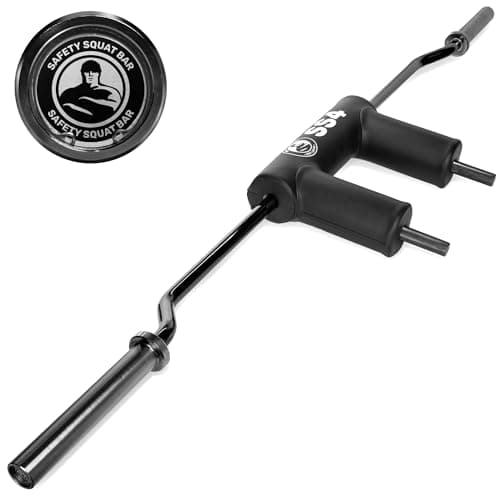
Bells of Steel — Bells of Steel Safety Squat Barbell 4.0
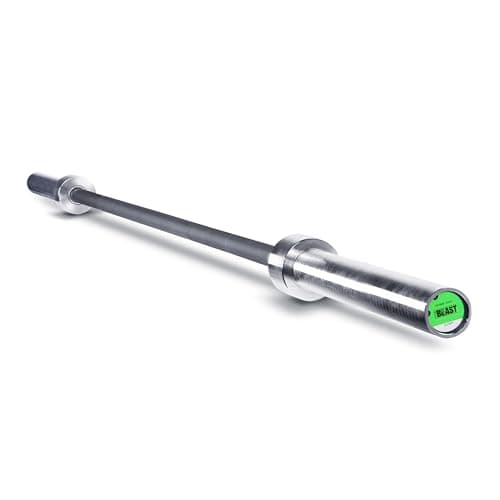
CAP Barbell — CAP The Beast 7ft Olympic Barbell, Pro Series
The verdict
Pick a straight barbell if you compete, want one bar that does everything, or are buying your first bar on a budget — it is the versatile, do-it-all default. Pick a safety squat bar if shoulder or wrist pain makes back-squatting miserable, or you specifically want the upright, quad-biased, upper-back-hammering stimulus it delivers. If you can only buy one, start with the straight bar and add the SSB later as a specialty tool.
Side-by-side
| Attribute | Safety Squat Bar | Straight Barbell |
|---|---|---|
| Best for | Comfort, upright squatting, quad and upper-back emphasis | Versatility, competition specificity, all-around loading |
| Shoulder / wrist demand | Low — padded yoke and front handles keep arms relaxed | Higher — you rack and hold the bar with shoulders and wrists |
| Torso angle in the squat | More upright; forward camber pushes you to stay tall | Varies by stance; more forward lean under heavy load |
| Exercise range | Squats, good-mornings, lunges, carries — squat-family focused | Widest — squats, presses, deadlifts, rows, cleans, curls |
| Competition carryover | Indirect — a training tool, not a competition bar | Direct — the exact implement used in meets |
| Learning curve | Easy to unrack; camber makes the bar want to tip you forward | Standard back-squat setup most lifters already know |
| Typical cost | Higher — a specialty bar, often $200-400+ | Lower — a quality Olympic bar can be had for less |
| Loading capacity | High, but check the rated limit on your specific bar | Very high — quality power bars handle heavy loads easily |
Who should pick which
Pick Safety Squat Bar
- Lifters with shoulder, elbow, or wrist pain who can't comfortably rack a bar on their back.
- People chasing quad emphasis, upper-back strength, and easier loaded good-mornings and Zercher-style work.
Pick Straight Barbell
- Powerlifters and Olympic lifters who must train with the exact bar they compete on.
- Beginners and budget builders who want one versatile bar for squats, presses, pulls, and rows.
- Anyone whose shoulders and wrists are healthy and who values maximum exercise variety per dollar.
The forward camber is the whole point
A safety squat bar isn't just a padded barbell. The sleeves are cambered forward and angled down, so the weight sits ahead of and below your shoulders instead of straight over your spine. That offset does two things. First, it creates a constant forward-tipping torque that your upper back has to resist, which is why the SSB feels brutal on the thoracic spine and is prized for building that fight-the-fold strength. Second, because you're resisting that pull, you tend to squat with a more upright torso and more knee bend, which shifts emphasis toward the quads. A straight barbell sits balanced over your mid-foot with no built-in torque, so the movement is dictated by your stance and mobility rather than the bar itself.
Shoulders, wrists, and why the SSB exists
The most common reason lifters buy a safety squat bar is pain. Racking a straight bar on your back means externally rotating the shoulders, bending the elbows, and cocking the wrists to hold the bar in place — a position that aggravates cranky shoulders, tennis elbow, and stiff wrists. The SSB's padded shoulder yoke carries the load for you, and the front-facing handles let your arms hang relaxed and your wrists stay neutral. For anyone rehabbing an upper-body injury, that difference is the difference between squatting and not squatting. The trade-off is that holding the handles isn't free: the bar wants to roll you forward, so you can't just switch off and grind.
Versatility and competition specificity favor the straight bar
If you only get one bar, the straight barbell is the obvious pick because it does nearly everything. The same bar handles back squats, front squats, deadlifts, presses, rows, cleans, and curls — one purchase covers your whole program. It's also the implement you actually compete with: powerlifting meets use a straight bar, and Olympic lifting demands the specific bar and technique. Training the movement you'll be tested on matters, and the SSB, for all its benefits, changes the bar path and muscle emphasis enough that it can't replace competition squatting. The SSB is a supplement to a straight-bar program, not a substitute for it.
Cost, rack fit, and practical ownership
A straight Olympic barbell is one of the best-value purchases in a home gym — a solid power bar is affordable and lasts decades. The safety squat bar is a specialty tool and priced like one, often two to four times the cost of a basic bar, and it's a second bar you have to store and rack. It's also heavier and bulkier, and its padded yoke won't sit cleanly in every J-cup or monolift. None of this is a dealbreaker, but it's why the SSB is usually the second or third bar someone buys, not the first. Confirm the bar's rated load and that it fits your rack before you commit.
How most lifters actually use both
In practice these bars aren't rivals — they're a main lift and a variation. The straight bar stays the backbone of a squat program: it's what you test, peak, and compete with. The safety squat bar comes in as an accessory or a deload-from-pain option, used for higher-rep quad work, loaded good-mornings, walking lunges, and training around a tweaked shoulder without missing squat sessions. Strength coaches often program the SSB in the offseason precisely because it builds upper-back and quad strength that carries back to the straight-bar squat. If your budget forces a choice, buy the straight bar first and treat the SSB as the upgrade that keeps you squatting when your shoulders won't cooperate.
Frequently asked questions
For most people, yes — the same weight on an SSB usually feels heavier. The forward camber pulls you into a forward lean, so your upper back and quads work harder to keep you upright, and the bar gives you no help staying balanced. Many lifters find they handle noticeably less on the SSB than on a straight bar for the same rep target. That extra difficulty is the point: it's a training stimulus, not a flaw.
Sources
- Specialty Bars and Their Application in Strength Training — National Strength and Conditioning Association (NSCA)
- Safety Squat Bar: Benefits, Muscles Worked, and How to Use It — BarBend
- Best Safety Squat Bars, Tested and Reviewed — Garage Gym Reviews
- Squat Variations and Technique Fundamentals — American Council on Exercise (ACE)
Bells of Steel — Bells of Steel Safety Squat Barbell 4.0
$359.99 · on Amazon