Loop Bands vs Tube Bands: Which Resistance Bands Should You Buy?
Loop bands and tube bands both add resistance without adding iron, but they solve different problems. Loop bands — the flat and fabric mini-loops for hips and glutes, plus the long continuous loops used for pull-up assistance and heavy lower-body work — are the more versatile raw tool: no hardware, packable, and unbeatable for glute activation and travel. Tube bands with handles clip a grip onto each end and, paired with a door anchor, let you row, press, and curl through motions that mimic a cable machine or free weights far more naturally than a loop can. If you mostly train hips, legs, and glutes or want the lightest travel kit, loops win. If you want a full-body, cable-style workout at home, handled tubes win. Plenty of people are best served owning both, because together they cost little and cover nearly every movement pattern.
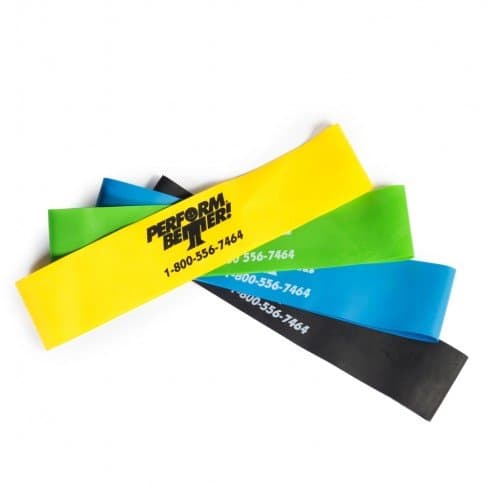
Perform Better — Perform Better Mini Bands (Set of 4)
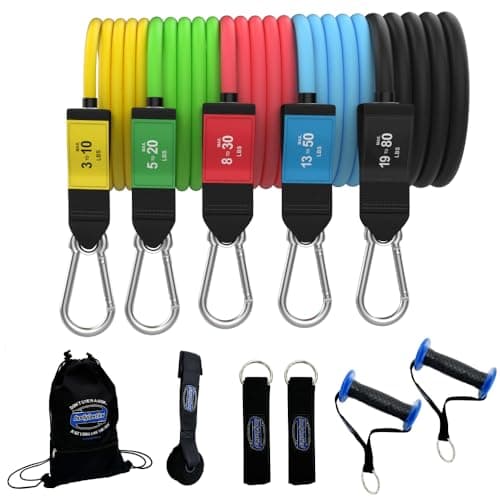
Bodylastics — Resistance Bands Set with Handles, Door Anchor & Ankle Straps
The verdict
Buy loop bands if your priority is glute and lower-body activation, pull-up or mobility assistance, and a tiny, hardware-free kit you can throw in a suitcase. Buy tube bands with handles if you want to replicate rows, presses, curls, and pushdowns with a comfortable grip and a door anchor for full-body training. They are cheap enough that the honest answer for most people is to own both — a mini-loop set for hips and warm-ups, and a handled tube set for pressing and pulling — and cover the whole body for less than the price of a single dumbbell.
Side-by-side
| Attribute | Loop Bands | Tube Bands (with Handles) |
|---|---|---|
| Best for | Glute/lower-body activation, pull-up assist, travel | Cable-style full-body work: rows, presses, curls |
| Form factor | Continuous loop — flat, fabric, or long latex loop | Straight tube with a handle clipped to each end |
| Hardware needed | None — loops over limbs or an anchor directly | Door anchor for many exercises; handles built in |
| Pressing & pulling | Workable but awkward without handles | Excellent — handles make rows, presses, curls natural |
| Hip & glute isolation | Excellent — mini loops sit around the thighs | Limited — not the tool for direct hip abduction |
| Packability | Best — a set weighs almost nothing | Compact, but handles and anchor add bulk |
| Durability weak point | Latex loops can snap; fabric loops last longer | Handle attachment clips and stitching wear first |
| Typical price | Low — mini-loop sets are very cheap | Low to moderate — sets include handles and anchor |
Who should pick which
Pick Loop Bands
- Anyone focused on glutes, hips, and lower-body activation — lateral walks, clamshells, hip thrusts, and kickbacks.
- Travelers and minimalists who want the lightest, most packable kit with zero hardware to set up.
- Lifters who want pull-up assistance, mobility work, or a way to add resistance around the thighs or above the knees.
Pick Tube Bands (with Handles)
- People who want a full-body, cable-style workout at home — rows, chest and shoulder presses, curls, and triceps pushdowns.
- Beginners and anyone who finds handles more comfortable and intuitive than gripping a bare band.
How each one actually works
A loop band is a continuous circle of resistance with no ends to hold. That covers three common styles: flat latex mini-loops and fabric booty bands that sit around your thighs or above your knees for hip and glute work, and long continuous loops (often called pull-up or power bands) that you anchor to a bar for assisted pull-ups, heavy pulls, and mobility. Because there is nothing to grip and no hardware, a loop is the simplest possible tool — you step into it or hook it over a bar and go. A tube band is different: it is a straight length of rubber tubing with a handle clipped or fixed to each end. You hold the handles, and with a door anchor you can pin the middle or one end to a doorframe and pull or press from almost any angle. The handle is the whole point — it turns a band into something that behaves much more like a cable stack.
Where loop bands win: glutes, lower body, and travel
For hips, glutes, and lower-body activation, loop bands are simply the better tool. A mini loop around the thighs applies outward tension exactly where you want it for lateral walks, monster walks, clamshells, fire hydrants, and banded hip thrusts — the movements that light up the gluteus medius and get the glutes firing before a lift. Coaches lean on them for warm-ups and activation precisely because the resistance sits in the right place with zero setup. Loops also own the travel and minimalist category: a full set of mini loops weighs almost nothing, needs no anchor or handles, and disappears into a bag. And the long continuous loops are the standard tool for assisted pull-ups and loaded mobility drills. If your training centers on the lower body, or you want the lightest kit that still does real work, loops are the pick.
Where tube bands win: pressing, pulling, and full-body work
The moment you want to row, press, curl, or push down, handles change everything. Gripping a comfortable handle instead of pinching a bare loop lets you drive through chest presses, shoulder presses, seated rows, biceps curls, and triceps pushdowns with a natural hand position and full range of motion. Add a door anchor and a single tube set becomes a small cable machine: anchor high for pushdowns and face pulls, anchor low for rows and curls, anchor at chest height for presses and flyes. That is why handled tubes are the better home tool for a genuine full-body workout — they cover the upper-body pushing and pulling patterns that loops handle awkwardly at best. Stackable clip-on systems take it further, letting you combine multiple tubes on one pair of handles to raise the resistance. For building a complete routine around one inexpensive kit, handled tubes are hard to beat.
Durability, comfort, and setup
Each style fails in its own way. Latex loop bands — the thin flat ones — can snap over time, especially if they get nicked, over-stretched, or stored in heat or sunlight; fabric mini-loops are more durable and do not roll or dig in, which is why many people prefer them for glute work. Long power loops are tough but should be inspected for cracks before you trust one for assisted pull-ups. On tube bands, the weak point is almost always where the handle attaches — the clip, carabiner, or stitched connection wears before the tubing does, so quality of that junction matters most. Comfort favors handles for pressing and pulling, and favors fabric loops for anything wrapped around the body. Setup is a wash day to day, but tubes need a door anchor for their best exercises, while loops need nothing at all — a real advantage when you are traveling or short on space.
The honest answer: most people should own both
These are not really rivals; they are two cheap tools that cover different halves of the body. A set of mini loops handles glute activation, hip work, and warm-ups, plus long loops for pull-up assistance and mobility. A set of handled tubes with a door anchor handles rows, presses, curls, and pushdowns for the upper body. Together they cost about the same as a single adjustable dumbbell and give you a near-complete resistance kit that fits in a drawer. If budget forces one choice, let your training decide: lower-body and glute focus, or pure travel, means loops; a full-body workout at home means handled tubes. But if you can spend a little more, buying both is the move that actually covers your whole body — and it is why most band-based home setups end up with a bin of loops next to a set of tubes.
Frequently asked questions
Loop bands, and it is not close. Mini loops and fabric booty bands sit around the thighs or above the knees and apply outward tension exactly where you want it for lateral walks, clamshells, fire hydrants, and banded hip thrusts — the movements that target the glute medius and activate the glutes. Tube bands with handles are built for pressing and pulling, not hip abduction, so for direct glute work a loop set is the right tool.
Related reading
Sources
- The 6 Best Resistance Bands for Glutes (loop and mini-band use for glute activation) — BarBend
- Best Resistance Bands (types, tube vs loop, door-anchor use) — BarBend
- Guidance on Resistance-Band Training and Exercise Selection — American Council on Exercise (ACE)
- Basics of Strength and Conditioning (resistance training modalities) — National Strength and Conditioning Association (NSCA)
Perform Better — Perform Better Mini Bands (Set of 4)
$19.95 · on Amazon