EZ Curl Bar vs Straight Bar: Which Is Better for Curls?
The EZ curl bar and the straight bar both do curls, but they trade off comfort against range of motion. The EZ bar's zig-zag shape lets you grip it in a semi-supinated, angled position — halfway between palms-up and palms-in — which takes strain off the wrists and elbows and is why so many lifters reach for it on curls and skullcrushers. The catch is that the angled grip reduces how much your forearm supinates, so the biceps don't get the same full, peak-contracted stretch a true palms-up grip provides. The straight bar keeps your hands fully supinated, which maximizes biceps recruitment and lets you load heavier, but that fixed position can nag cranky wrists and elbows. Neither is objectively better: the EZ bar wins on joint comfort and is often lighter and easier to handle, while the straight bar wins on full biceps stretch, heavier loading, and versatility beyond arm work. Many lifters keep both.
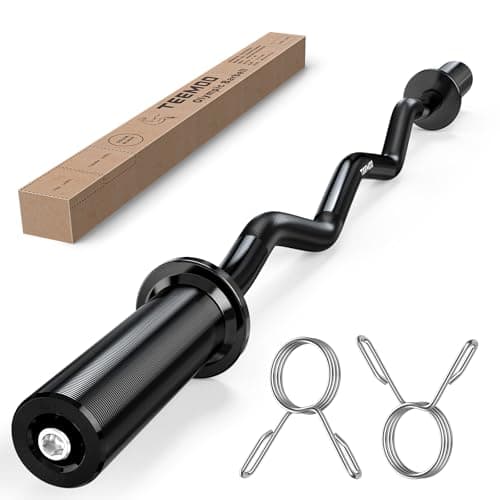
TEEMOO — TEEMOO Olympic EZ Curl Bar (47", E-Coat)
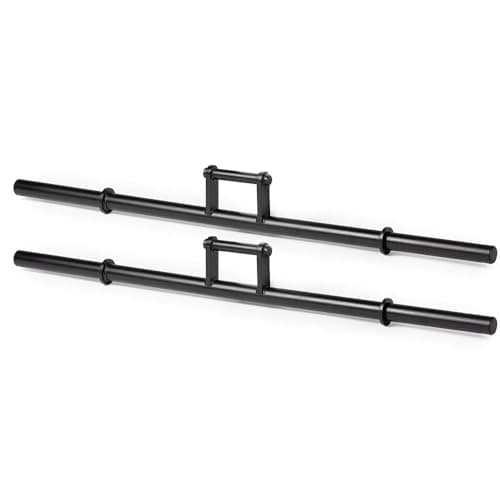
Titan Fitness — Titan Fitness 60" Farmers Walk Handles
The verdict
Pick an EZ curl bar if wrist or elbow discomfort makes straight-bar curls and skullcrushers unpleasant, or you want a lighter, more forgiving bar for high-rep arm work. Pick a straight bar if you want the fullest supinated biceps stretch, the ability to load heavier, and one bar that does far more than curls. If you can only own one, the straight bar is the more versatile buy — add the EZ bar when your wrists ask for it.
Side-by-side
| Attribute | EZ Curl Bar | Straight Bar |
|---|---|---|
| Best for | Wrist-friendly curls, skullcrushers, high-rep arm work | Full biceps stretch, heavier loading, all-around versatility |
| Grip position | Semi-supinated, angled — easier on wrists and elbows | Fully supinated (palms up) — maximal biceps involvement |
| Wrist / elbow comfort | High — the angled grip reduces joint strain | Lower for some — fixed palms-up can nag cranky joints |
| Biceps stretch / peak | Slightly reduced supination, so less full contraction | Greatest — full supination hits the biceps hardest |
| Loading capacity | Lighter bar; good for moderate loads and volume | Handles heavier loads; a full power bar loads big |
| Exercise range | Curls, skullcrushers, close-grip work, upright rows | Curls plus rows, presses, deadlifts, and much more |
| Bar weight | Often lighter (many EZ bars run ~15-25 lb) | Standard Olympic bar is ~45 lb / 20 kg |
| Versatility beyond arms | Limited — mostly an arm and accessory bar | Very high — a true do-everything barbell |
Who should pick which
Pick EZ Curl Bar
- Lifters whose wrists or elbows ache on straight-bar curls and skullcrushers.
- People who want a lighter, easier-to-handle bar for high-rep arm and triceps work.
- Home gyms short on space that want a dedicated, comfortable arm-training bar.
Pick Straight Bar
- Lifters chasing maximum biceps recruitment through a full supinated range of motion.
- Anyone wanting one versatile bar for curls plus rows, presses, and heavier loading.
The angled grip is the trade-off
The EZ bar's whole identity is the wave in the middle. Those angled sections let you grip the bar in a semi-supinated position — palms turned partway up rather than fully up — which rotates the wrists and elbows into a more neutral, comfortable line. For a lot of lifters that's the difference between curls that feel fine and curls that aggravate the elbows. But the same angle that saves your joints also reduces how far your forearm supinates, and full supination is what most strongly contracts the biceps. So the EZ bar buys comfort at the cost of a little peak biceps engagement. The straight bar makes the opposite trade: no relief for the wrists, but the fullest supinated stretch you can get with a barbell.
Wrist and elbow comfort: the EZ bar's home turf
If straight-bar curls or skullcrushers leave your wrists or elbows sore, the EZ bar is the usual fix. Holding a straight bar forces full supination, and for people with tight forearms, past elbow issues, or just cranky joints, that fixed position becomes a nagging strain — especially at heavier loads or higher reps. The EZ bar's angled grip lets the wrist sit more naturally, which reduces that torque and lets you keep training arms without the joint complaining. This is why the EZ bar earns its keep even in gyms that own plenty of straight bars: it's the comfort tool that keeps elbow-sensitive lifters curling and pressing when a straight bar would sideline them.
Biceps stretch and loading: the straight bar's edge
For maximum biceps stimulus, full supination matters. A palms-up grip on a straight bar puts the biceps in their strongest line of pull and lets them contract fully at the top, which is why a straight bar curl tends to feel like it hits the biceps harder than an EZ curl. The straight bar also lets you load heavier and grip wherever you want, so it's the better choice when you're chasing progressive overload on curls rather than just accumulating reps. That fuller stretch and heavier loading come at the cost of comfort — the trade the EZ bar exists to solve — but if your wrists and elbows are healthy and you want the strongest biceps stimulus, the straight bar wins.
Exercise fit and versatility
Beyond curls, the two bars diverge in scope. The EZ bar is a specialist: it's excellent for curls, skullcrushers, close-grip work, and light upright rows, and its lighter weight makes it easy to handle for high-rep arm sessions. But it's not built to be your one bar. The straight barbell is a generalist — the same bar handles curls, rows, presses, deadlifts, and much more, so a single purchase covers your whole program. That's why, if you're buying one bar for a home gym, the straight bar is the smarter first purchase: it does the EZ bar's job passably and a dozen other jobs the EZ bar can't touch. The EZ bar comes in later as a comfort-focused accessory.
How to use both without overthinking it
In practice these bars complement each other rather than compete. Keep the straight bar as your main tool for heavy curls and everything else, and bring in the EZ bar when your joints want a break or when you're doing high-rep, comfort-sensitive arm work like skullcrushers. A common approach is heavy straight-bar or dumbbell curls early in a session for maximal biceps loading, then EZ-bar work later for volume without the elbow strain. If budget or space forces a choice, buy the straight bar first for its versatility and add the EZ bar when wrist or elbow comfort becomes the limiting factor in your arm training.
Frequently asked questions
For most people, yes. The EZ bar's angled grip lets your wrists and elbows sit in a more neutral, semi-supinated position, which reduces the strain that a fully palms-up straight-bar grip puts on those joints. That makes it the go-to for lifters with cranky wrists or elbows, or anyone doing high-rep curls and skullcrushers. It doesn't cure an injury, but it's a sensible way to keep training arms comfortably when a straight bar aggravates the joint.
Sources
- Biceps Brachii and Forearm Supination in Curling Exercises — National Strength and Conditioning Association (NSCA)
- EZ Bar vs. Straight Bar: Which Is Better for Curls? — BarBend
- Arm Training Technique and Wrist-Friendly Variations — American Council on Exercise (ACE)
- Best EZ Curl Bars, Tested and Reviewed — Garage Gym Reviews
TEEMOO — TEEMOO Olympic EZ Curl Bar (47", E-Coat)
$46.99 · on Amazon