Fixed vs Adjustable Dumbbells: Which Belongs in Your Home Gym?
Fixed dumbbells and adjustable dumbbells solve the same problem two very different ways. A rack of fixed hex or rubber dumbbells gives you instant grab-and-go loading, near-bulletproof durability, and drop tolerance — you never fumble a dial mid-set. The cost is money and floor space: a full set from light to heavy runs into a wall of racked pairs and hundreds of dollars. Adjustable dumbbells collapse that entire range into one or two handles, saving enormous space and usually money per pound of range, but you pay for it with slower weight changes, a bulkier handle, more fragile mechanisms, and a hard rule against dropping them. For most space- and budget-constrained home lifters, adjustables win on math; for garages, small gyms, and anyone who trains fast or drops weight, fixed dumbbells earn their footprint.
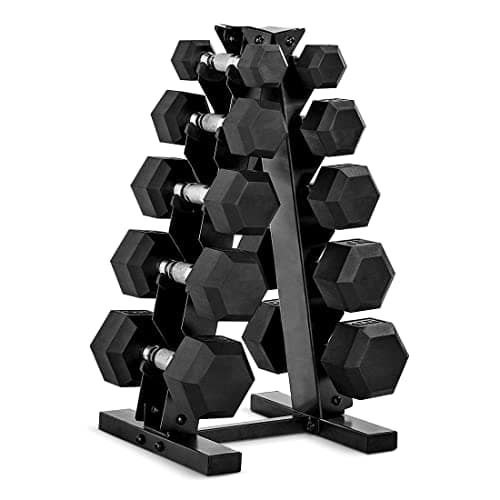
CAP Barbell — CAP 150 lb Rubber Hex Dumbbell Set with A-Frame Rack
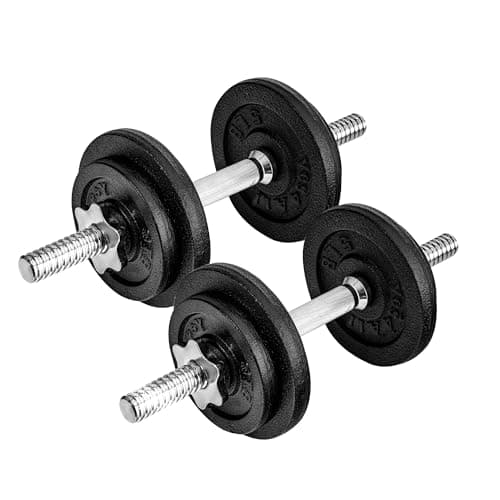
Yes4All — Yes4All Adjustable Dumbbell Set (Cast Iron, Spinlock)
The verdict
Pick adjustable dumbbells if you train at home, are short on space or budget, and want a wide weight range in one footprint — that covers most home lifters. Pick fixed dumbbells if you have the room and money, hate fiddling between sets, run fast drop-set or superset work, or need weights that survive being dropped. It is a space-and-workflow decision more than a quality one; neither is objectively better.
Side-by-side
| Attribute | Fixed Dumbbells | Adjustable Dumbbells |
|---|---|---|
| Best for | Grab-and-go training, durability, high-tempo work | Wide range in one footprint, space and budget savings |
| Weight-change speed | Instant — pick up the next pair | Slower — dial, pin, or spin to reset the load |
| Space / footprint | Large — a full set is a wall of racked pairs | Tiny — one or two handles cover the whole range |
| Cost | High for a full range; low per single pair | Lower per pound of range; high sticker for one pair |
| Durability | Very high — simple, solid, few parts to fail | Lower — dials, plates, and locks can wear or jam |
| Drop tolerance | High — rubber/urethane hex shrug off drops | Low — dropping can shatter selectors or plates |
| Handle feel | Compact, balanced, natural in the hand | Bulkier and longer, especially at heavy settings |
| Micro-loading | Limited by which pairs you own | Often better — small jumps within one handle |
Who should pick which
Pick Fixed Dumbbells
- Lifters with room for a rack who want instant, no-fumble weight changes between sets.
- Anyone running fast drop sets, supersets, or circuits where dial-spinning kills the pace.
Pick Adjustable Dumbbells
- Home and apartment trainees who need a wide range of loads in a tiny footprint.
- Budget-focused beginners who want light-to-heavy coverage without buying pair after pair.
- People whose main lift menu is presses, rows, and curls — not explosive, drop-heavy work.
Speed and workflow: the fixed dumbbell's edge
The single biggest practical difference shows up between sets. With fixed dumbbells you drop one pair and grab the next — no dial to turn, no plate to reseat, no fumbling while your heart rate is up. That matters most for drop sets, mechanical drop sets, and dense supersets where seconds of rest change the stimulus. Adjustables have gotten faster, but even a good dial system needs a couple of seconds per hand and a stable cradle to set it in, and some designs make you seat the handle a specific way before it releases. If your training is high-tempo or you run circuits, fixed dumbbells keep you moving; if your rest periods are long and deliberate, the change time barely registers.
Space and cost: the adjustable's whole reason to exist
This is where adjustables usually win. A single pair of adjustable dumbbells can replace roughly fifteen pairs of fixed weights, collapsing a wall of racked steel into a footprint the size of a couple of shoeboxes. For an apartment, a spare bedroom, or a shared garage, that is often the difference between owning dumbbells at all and not. The cost math follows: buying fixed pairs from light to heavy adds up fast, while one adjustable pair delivers the same range for less total spend. The catch is the sticker shock of a single pair and the fact that you are buying one range — if you outgrow the top end, you replace the whole unit rather than adding a heavier pair.
Durability and dropping: read this before you buy adjustables
Fixed rubber or urethane hex dumbbells are close to indestructible — a solid head, a knurled handle, and almost nothing to break. You can set them down hard, drop them off a bench press, and keep going. Adjustable dumbbells trade that toughness for their mechanism: dials, selector pins, sliding plates, and locking collars are all points that can wear, rattle loose, or jam, and most makers explicitly warn against dropping them. A dropped adjustable can crack a selector or scatter plates, and that is not a warranty-friendly event. If you press to failure without a spotter, train explosively, or know you will occasionally have to bail a rep, fixed weights are the safer, longer-lived choice.
Handle feel, balance, and heavy sets
Fixed dumbbells feel compact and natural — the load sits close to your hand and the balance is predictable rep after rep. Adjustables are inherently bulkier: the mechanism and plate stack make the head longer and the handle wider, and at the top of the range the weight can feel spread out or slightly awkward on movements like lateral raises, flyes, and anything where the head clips your body. Most lifters adapt quickly, but larger-handed users and anyone doing high-skill unilateral work notice the difference. One point in the adjustable's favor: many models allow smaller jumps within a single handle, which can make micro-progression easier than owning fixed pairs spaced five pounds apart.
How to actually decide
Start with your two hardest constraints: space and how you train. If you have the room and the budget, hate fiddling between sets, and run fast or drop-heavy work, fixed dumbbells are worth their footprint and will outlast everything else in the room. If you are working in tight space, want the widest range for the least money, and your menu is mostly controlled presses, rows, curls, and squats, adjustables are the obvious pick and what most home lifters should buy first. A common middle path is a set of adjustables for the range plus a couple of fixed pairs at your most-used weights for fast, drop-friendly sets — you get the space savings and the grab-and-go speed where it counts.
Frequently asked questions
For most home lifters, adjustables are worth it — they deliver a wide range in a tiny footprint for less total money than buying pair after pair of fixed weights. Buy fixed instead if you have the space and budget, dislike changing weights mid-workout, or train in a way that involves dropping or bailing weights, since fixed dumbbells handle that abuse and adjustables generally do not.
Related reading
Sources
- Resistance Training Basics and Equipment Selection — National Strength and Conditioning Association (NSCA)
- Strength Training Equipment Guidelines — American Council on Exercise (ACE)
- Adjustable Dumbbells: Testing and Buyer Guidance — BarBend
- Best Adjustable Dumbbells, Tested — Garage Gym Reviews
CAP Barbell — CAP 150 lb Rubber Hex Dumbbell Set with A-Frame Rack
$189.99 · on Amazon