Best CoQ10 Supplements, Scored on a Public Rubric
Coenzyme Q10 is one of the few supplements your body already makes in quantity, and one of the few whose marketing runs several steps ahead of the evidence. It is a fat-soluble compound that shuttles electrons through the mitochondrial respiratory chain to help produce ATP, which is why the tissues that carry it in the highest concentrations are the ones that never rest — the heart, liver, kidneys, and pancreas. Your own synthesis appears to peak around age 20 and decline from there, which is the seed of truth the aisle grows a forest of claims around. The aisle sells two upgrades in particular that the science does not clearly earn. The first is the ubiquinol premium: CoQ10 exists as an oxidized form (ubiquinone, the cheap one) and a reduced form (ubiquinol, sold as "the active form" at two to three times the price), but the head-to-head human absorption data is mixed rather than decisive, much of the pro-ubiquinol evidence traces back to its manufacturer, your body freely interconverts the two forms so that the vast majority of what circulates in your blood ends up as ubiquinol no matter which you swallow, and — the detail the label never prints — the one trial that actually moved hard cardiac outcomes, Q-SYMBIO, used plain ubiquinone. The second oversold pitch is "take it for your statin." Statins genuinely deplete plasma CoQ10 — one study of high-intensity statin users measured a roughly 43% drop in three months — so the story is intuitive, but a Mayo Clinic Proceedings meta-analysis of the randomized trials found no significant benefit for statin-associated muscle pain, and NCCIH concludes the overall evidence does not support the idea that CoQ10 relieves it. Where CoQ10 does have a real, earned case is narrower and more serious than the shelf implies: as an add-on in heart failure with reduced ejection fraction (a clinician-supervised use, on ubiquinone), and as a possibly-effective option for migraine prevention. For a healthy person it is a low-stakes, well-tolerated antioxidant with modest and largely unproven general benefits. So the rubric here is unglamorous: buy an honest ubiquinone softgel at a real dose, take it with a fatty meal because it is fat-soluble, and do not pay triple for a form the outcome trials didn't bother with.
Top pick
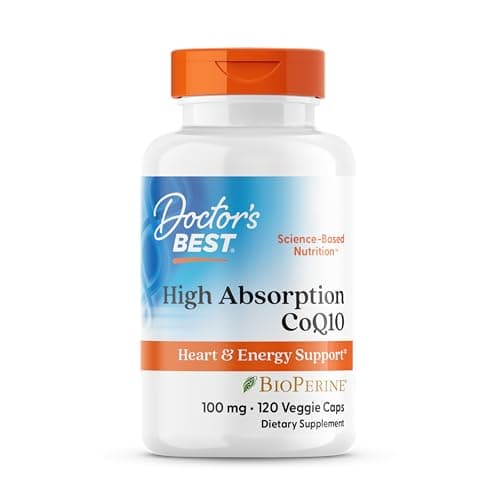
Doctor's Best — High Absorption CoQ10 100 mg with BioPerine (120 veggie caps)
100 mg CoQ10 (ubiquinone) per capsule with BioPerine black pepper extract, 120 vegetarian capsules, labelled for heart and energy support
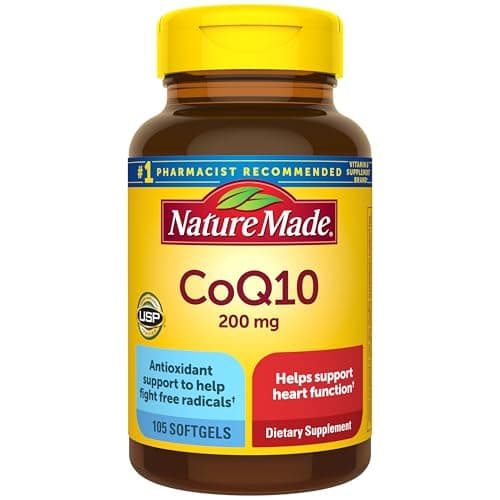
Nature Made — CoQ10 200 mg Softgels (105 softgels)
At a glance
Tap a row to check price · tap a header to sort| # | Best for | Price | ||
|---|---|---|---|---|
| 1 | 1. Doctor's Best — High Absorption CoQ10 100 mg with BioPerine (120 veggie caps)Best overall | Best overall | 8.4/10 | |
| 2 | 2. Nature Made — CoQ10 200 mg Softgels (105 softgels)Best higher dose | Best higher dose | 8.1/10 | $28.49$34.4917% offCheck Price for Nature Made CoQ10 200 mg Softgels (105 softgels) on AmazonIn Stock |
| 3 | 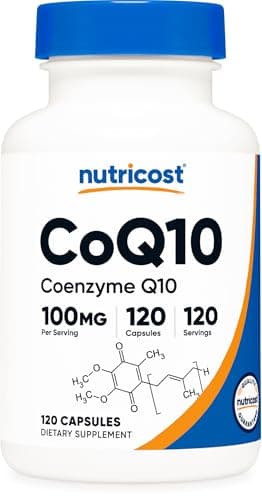 3. Nutricost — CoQ10 100 mg (120 vegetarian capsules)Best budget | Best budget | 7.8/10 | |
| 4 | 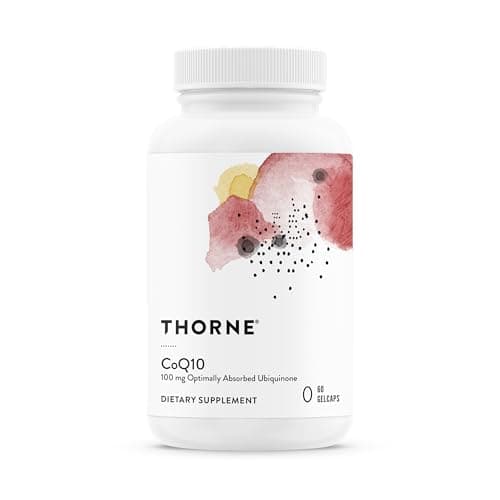 4. Thorne — CoQ10 100 mg (60 softgels)Best third-party assurance | Best third-party assurance | 7.4/10 | |
| 5 | 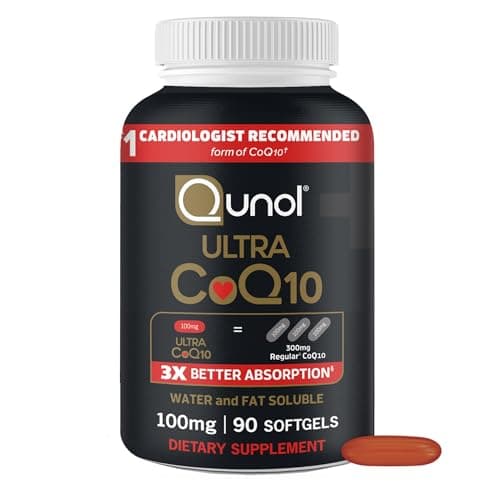 5. Qunol — Ultra CoQ10 100 mg (90 softgels)Best-selling solubilized ubiquinone | Best-selling solubilized ubiquinone | 7.2/10 | |
| 6 | 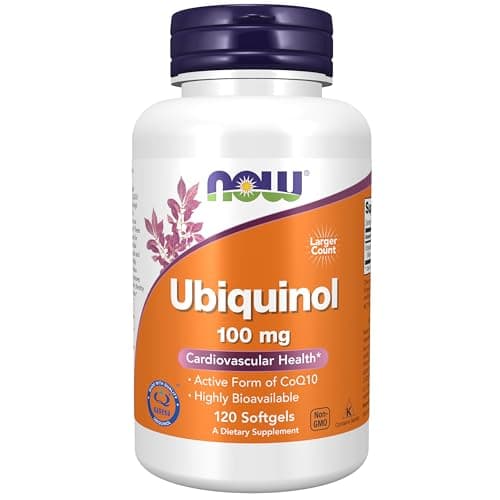 6. NOW Foods — Ubiquinol 100 mg (120 softgels)Best ubiquinol | Best ubiquinol | 6.8/10 | |
| 7 | 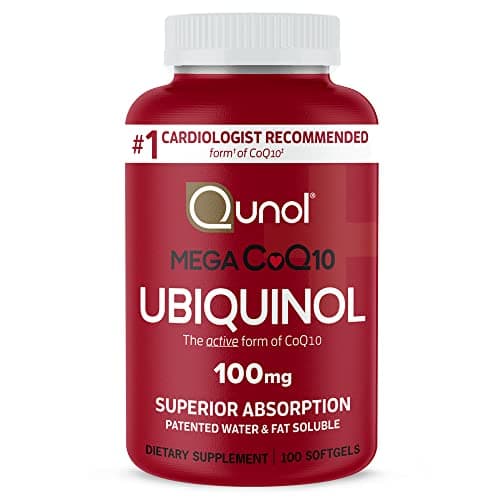 7. Qunol — Mega Ubiquinol CoQ10 100 mg (100 softgels)The mass-market ubiquinol premium | The mass-market ubiquinol premium | 6.3/10 | $29.14$32.9912% offCheck Price for Qunol Mega Ubiquinol CoQ10 100 mg (100 softgels) on AmazonIn Stock |
Prices pulled from Amazon as of October 25, 2026 and are subject to change. The price shown on Amazon at checkout applies.
How we scored
Every product below is scored on six metrics, 0-10 each, with the weighting described on how we review. The criteria specific to this category:
- A real dose in the studied range, stated plainly — clinical work generally uses 100 to 300 mg per day, so we score up products that hit 100 mg or more per serving and print the milligrams on the front, and score down 30 mg 'heart health' tokens that cost nearly as much for a fraction of the dose.
- Ubiquinone unless you have a specific reason to pay for ubiquinol — the two forms interconvert in the body, the human evidence that ubiquinol absorbs meaningfully better is mixed and leans on manufacturer-linked studies, and the strongest outcome trial used ubiquinone, so a clean ubiquinone softgel is the default and ubiquinol has to justify its premium rather than be assumed superior.
- An oil-based softgel, or a plan to take a dry capsule with fat — CoQ10 is lipophilic and its absorption improves with a fatty meal, so oil-filled softgels suit the molecule; a dry powder capsule isn't disqualified, it just has to be taken with food that contains fat to absorb properly, and we note which is which.
- Third-party testing you can actually point to — CoQ10 is expensive raw material and a tempting place to under-fill, so an independent identity-and-potency certificate (NSF, USP, or a brand's published third-party program) is worth more than any 'high absorption' badge on the label.
- A short, honest label — this site favors minimal-ingredient formulas, so a bottle that is CoQ10 in oil plus the softgel scores above one padded with a 'proprietary energy blend,' PQQ, and a dusting of vitamins added mostly to justify the price.
- Cost per effective dose, not cost per bottle — the honest denominator is the price of a 100 mg-or-more serving, which is where the ubiquinol premium and the tiny-dose 'support' products both fall apart, and where a plain fermented-ubiquinone softgel usually wins outright.
What to know before buying
- Know what CoQ10 is actually proven to do — and what it isn't. The best evidence is for heart failure with reduced ejection fraction: the Q-SYMBIO trial randomized 420 patients to 100 mg of CoQ10 three times daily or placebo for two years and found the CoQ10 group reached the primary composite of major adverse cardiovascular events in 15% versus 26% (hazard ratio 0.50), with lower all-cause mortality (10% vs 18%) and cardiovascular mortality (9% vs 16%). That is a genuine result — but it is in a diagnosed heart-failure population under cardiology care, not a healthy shopper looking for an energy boost. For blood pressure, a Cochrane review concluded CoQ10 does not have a clinically significant effect. For general fatigue and 'cellular energy' in healthy people, the marketing badly outruns the data.
- The ubiquinol upgrade is mostly a price upgrade. Ubiquinol is sold as the superior 'active' form, and in some crossover studies it does reach higher plasma levels than ubiquinone — but the human evidence is mixed rather than settled, a large share of it is tied to the ingredient's manufacturer, and your body converts between the two forms regardless of which you take, so most of the CoQ10 circulating in your blood is ubiquinol either way. Decisively, the outcome trial that matters most (Q-SYMBIO) used ubiquinone. Unless a clinician has a specific reason to put you on ubiquinol, a well-made ubiquinone softgel does the same job for a fraction of the cost.
- If you're taking it 'for your statin,' read this first. Statins really do lower circulating CoQ10 — a meta-analysis of randomized trials found a significant reduction (weighted mean difference −0.44 μmol/L), and one cohort of high-intensity statin users saw plasma CoQ10 fall about 43% over three months. That biochemical fact is why the supplement is marketed so hard to statin users. But the clinical question is whether replacing it relieves statin-associated muscle pain, and the 2015 Mayo Clinic Proceedings meta-analysis of six randomized trials (302 patients) found no significant benefit for muscle symptoms or for creatine kinase. NCCIH agrees the overall evidence doesn't support it. It's low-risk to try under your doctor's eye, but don't expect it to fix statin myalgia, and never stop a statin to test the theory.
- Take it with a meal that contains fat. CoQ10 is a lipophilic molecule and its absorption is slow and incomplete on an empty stomach but improves in the presence of dietary fat. Oil-filled softgels come pre-dissolved in a carrier oil, which is a sensible match for the molecule. A dry powder capsule (like a plain vegetarian-capsule product) isn't wrong, it just needs to ride along with a meal that has some fat in it — otherwise you're paying for CoQ10 you won't absorb.
- Dose to the studies, not to the smallest bottle. Trials generally use 100 to 300 mg per day, and Q-SYMBIO used 300 mg (split as 100 mg three times daily). Many drugstore 'heart health' products deliver 30 mg or even less while charging nearly as much as a 100 mg softgel, which is the classic under-dose-at-a-premium trap. If you're going to take CoQ10 at all, take an amount the research actually used.
- It's safe, which is genuinely part of the appeal. No serious side effects have been reported; the mild ones people occasionally notice are insomnia, nausea, digestive upset, or loss of appetite, and they tend to ease by splitting the dose or taking it earlier in the day. No Tolerable Upper Intake Level has been established, and the safety literature notes toxicity is unlikely up to about 1,200 mg per day — far above what anyone needs. The low risk is exactly why it's reasonable to trial for a documented indication; it's also why the supplement industry can make big promises without much downside to the seller.
- Mind the warfarin interaction and a few others. If you take the blood thinner warfarin, talk to your doctor before adding CoQ10 — it can alter how the drug works, so your INR needs watching rather than a guess. CoQ10 may also interact with insulin and with some cancer treatments. As with any supplement on this site, none of this is medical advice: bring the bottle to the person managing your medications.
- Skip the 'kitchen sink' formulas unless you'd buy each ingredient on its own. A lot of premium CoQ10 bottles bolt on PQQ, a scatter of B-vitamins, or a trademarked 'energy matrix' to justify the price. Per this site's whole-food-first, minimal-label bias, that's usually paying more for a shorter list of things you can verify. Buy CoQ10 as CoQ10; if you want PQQ or a B-complex, buy those as their own decision.
Our picks
Doctor's Best — High Absorption CoQ10 100 mg with BioPerine (120 veggie caps)
Key specs: 100 mg CoQ10 (ubiquinone) per capsule with BioPerine black pepper extract, 120 vegetarian capsules, labelled for heart and energy support
Pros
- A genuine 100 mg dose in the range the studies use — this is the honest default the rest of the list is measured against
- Ubiquinone, the same form used in the Q-SYMBIO outcome trial, so you're paying for the version with the strongest evidence rather than the marketed 'active form' premium
- 120 capsules is roughly a four-month supply at one a day, which puts the cost per effective dose near the bottom of the category
- The vegetarian capsule suits anyone avoiding gelatin softgels, which most of this category is built on
Cons
- This is the dry vegetarian-capsule version, not an oil-filled softgel — CoQ10 is fat-soluble, so take it with a meal containing some fat rather than on an empty stomach
- The added BioPerine is there to nudge absorption; the effect on CoQ10 specifically is a smaller body of evidence than the brand's name suggests, so treat it as a minor plus, not the reason to buy
- No NSF or USP mark on the bottle — Doctor's Best publishes its own testing, but there's no top-tier independent certificate here
Doctor's Best — High Absorption CoQ10 100 mg with BioPerine (120 veggie caps)
- Third-party testing6/10
- Bioavailability8/10
- Clinical evidence8/10
- Value9/10
- Brand transparency8/10
- Form & absorption8/10
Nature Made — CoQ10 200 mg Softgels (105 softgels)
Key specs: 200 mg CoQ10 (ubiquinone) per softgel, 105 softgels, heart-health positioning, from the brand that pioneered the USP Verified program
Pros
- 200 mg in a single softgel reaches the upper half of the studied range without stacking pills — useful if you're targeting the doses used in cardiovascular research (under a clinician's guidance)
- Nature Made was the first brand accepted into USP's Dietary Supplement Verification Program and carries more USP-verified products than any other brand; verification is granted per product, so check the USP mark on the specific bottle you buy
- Softgel format and a plain label — CoQ10 in oil, no proprietary 'energy blend' riding along
Cons
- At 200 mg per softgel this is more than a healthy person taking CoQ10 for general wellness needs — the 100 mg picks are a better fit unless you're deliberately dosing high
- Per milligram it isn't the cheapest here; the budget capsules undercut it if you don't need the softgel or the brand's testing pedigree
Nature Made — CoQ10 200 mg Softgels (105 softgels)
- Third-party testing7/10
- Bioavailability8/10
- Clinical evidence8/10
- Value7/10
- Brand transparency8/10
- Form & absorption8/10
Nutricost — CoQ10 100 mg (120 vegetarian capsules)
Key specs: 100 mg CoQ10 (ubiquinone) per vegetarian capsule, 120 capsules / 120 servings, non-GMO, gluten-free
Pros
- The cheapest honest 100 mg dose on this list — 120 servings at a price that makes a long trial cost very little
- A short label and a vegetarian capsule, which suits readers who avoid gelatin softgels
- Same ubiquinone form and same 100 mg dose as the top pick, so the only real trade-off is the delivery, not the CoQ10 itself
Cons
- It's a dry powder capsule, not an oil softgel — because CoQ10 is fat-soluble, you should take this one with a meal that contains fat, or you'll absorb noticeably less of it
- Nutricost publishes third-party testing but the bottle carries no NSF or USP mark, so you're trusting the brand's program
Nutricost — CoQ10 100 mg (120 vegetarian capsules)
- Third-party testing6/10
- Bioavailability6/10
- Clinical evidence8/10
- Value10/10
- Brand transparency7/10
- Form & absorption6/10
Thorne — CoQ10 100 mg (60 softgels)
Key specs: 100 mg CoQ10 (ubiquinone) per softgel, 60 softgels, third-party certified, gluten-free
Pros
- Third-party certification is Thorne's hallmark, and on an expensive raw material like CoQ10 an independent identity-and-potency check is the single most useful thing on a label — this is the pick if testing rigor is your priority
- Notably, Thorne chose ubiquinone, not the pricier 'active' ubiquinol — a quiet vote of confidence in the cheaper form from a brand with no incentive to cut corners
- Clean, minimal formula in an oil softgel — exactly the short-label profile this site favors
Cons
- By a wide margin the most expensive pick here per softgel — you're paying a real premium for the certification and the brand, not for a better dose or form
- Only 60 softgels per bottle, so at one a day it's a two-month supply, which compounds the per-dose cost versus the 120-count value picks
Thorne — CoQ10 100 mg (60 softgels)
- Third-party testing10/10
- Bioavailability8/10
- Clinical evidence8/10
- Value3/10
- Brand transparency9/10
- Form & absorption8/10
Qunol — Ultra CoQ10 100 mg (90 softgels)
Key specs: 100 mg CoQ10 (ubiquinone) per softgel in a solubilized 'water- and fat-soluble' formulation, 90 softgels
Pros
- Qunol's solubilized delivery is a legitimate absorption strategy — improving the formulation of ordinary ubiquinone rather than charging you for ubiquinol, which is the more defensible way to spend on 'absorption'
- It's the category best-seller for a reason: a 100 mg ubiquinone dose, easy-to-swallow softgel, and broad availability
- A sensible middle option if you want an enhanced-absorption product without paying the ubiquinol premium
Cons
- The '3x better absorption' claim is the brand's own framing measured against a plain reference product — treat it as marketing math, not an independent head-to-head
- The softgel carries more excipients than the bare-bones picks to achieve the solubilized formulation, which cuts against a strict minimal-label preference
Qunol — Ultra CoQ10 100 mg (90 softgels)
- Third-party testing5/10
- Bioavailability8/10
- Clinical evidence7/10
- Value7/10
- Brand transparency6/10
- Form & absorption8/10
NOW Foods — Ubiquinol 100 mg (120 softgels)
Key specs: 100 mg ubiquinol (the reduced, 'active' form of CoQ10, as Kaneka QH) per softgel, 120 softgels, non-GMO
Pros
- If you have a specific reason to take ubiquinol, this is the sensible way to buy it: a reputable brand with an in-house GMP-audited testing lab, a real 100 mg dose, and 120 softgels
- Uses Kaneka's QH ubiquinol, the most-studied branded ubiquinol material, in an oil softgel
- A clean, single-ingredient label — no bolt-on 'energy blend' padding the price
Cons
- You're paying the ubiquinol premium — roughly double the per-dose cost of an equivalent ubiquinone softgel — for a form whose absorption advantage in humans is mixed and largely manufacturer-supported
- The strongest outcome evidence (Q-SYMBIO) used ubiquinone, so for most people the extra cost buys reassurance, not a documented clinical edge
NOW Foods — Ubiquinol 100 mg (120 softgels)
- Third-party testing6/10
- Bioavailability8/10
- Clinical evidence6/10
- Value5/10
- Brand transparency8/10
- Form & absorption8/10
Qunol — Mega Ubiquinol CoQ10 100 mg (100 softgels)
Key specs: 100 mg ubiquinol (reduced form of CoQ10) per softgel in a solubilized formulation, 100 softgels
Pros
- A widely stocked, easy-to-find ubiquinol at a 100 mg dose, with Qunol's solubilized delivery on top of the reduced form
- Fine as a product if a practitioner specifically wants you on ubiquinol and you value availability
Cons
- This is the thesis of the page in one bottle: you're paying a premium for the 'active form' when your body converts ubiquinone to ubiquinol anyway and the outcome trials used ubiquinone
- Per effective dose it costs well above the ubiquinone picks that scored higher, with no independent evidence of a matching clinical benefit
- No top-tier third-party certification mark to justify the price step-up over a plain, tested ubiquinone softgel
Qunol — Mega Ubiquinol CoQ10 100 mg (100 softgels)
- Third-party testing5/10
- Bioavailability8/10
- Clinical evidence6/10
- Value5/10
- Brand transparency6/10
- Form & absorption8/10
Frequently asked questions
For most people, ubiquinone — the cheaper, oxidized form. Ubiquinol is the reduced form marketed as the 'active' version at two to three times the price, and in some crossover studies it does reach higher plasma CoQ10 levels. But the human head-to-head evidence is mixed rather than decisive, a large share of the pro-ubiquinol research is tied to the ingredient's manufacturer, and your body freely converts between the two forms, so most of the CoQ10 circulating in your blood ends up as ubiquinol regardless of which you swallow. The clincher: the strongest clinical outcome trial, Q-SYMBIO, used ubiquinone. Unless a clinician has a specific reason to put you on ubiquinol, a well-made ubiquinone softgel does the same job for less money.
Related reading
- → How much protein you actually need (dietary CoQ10 comes from the same whole foods — organ meats, fatty fish, and muscle meat)
- → Best fish oil (the other heart-health staple — and how to spot the honest label)
- → Best multivitamin (check whether yours already includes a token dose of CoQ10)
- → Best magnesium supplement (the other mineral marketed hard for the heart and energy)
- → Best creatine (the cellular-energy supplement that actually has the evidence CoQ10 is sold on)
Sources
- Coenzyme Q10 — What You Need To Know — National Center for Complementary and Integrative Health (NCCIH), 2024
- Coenzyme Q10 — About Herbs — Memorial Sloan Kettering Cancer Center
- Coenzyme Q10 (StatPearls) — biochemistry, forms, absorption, dosing, safety — StatPearls, NCBI Bookshelf
- The Effect of Coenzyme Q10 on Morbidity and Mortality in Chronic Heart Failure: Results From Q-SYMBIO (420 patients, 100 mg 3x/day, 2 years) — JACC: Heart Failure 2014;2(6):641-649, 2014
- Effects of Coenzyme Q10 on Statin-Induced Myopathy: A Meta-analysis of Randomized Controlled Trials (6 trials, 302 patients) — Mayo Clinic Proceedings 2015 (Banach et al.), 2015
- Effect of statin therapy on plasma coenzyme Q10 concentrations — a systematic review and meta-analysis (WMD −0.44 μmol/L) — Pharmacological Research 2015, 2015
- Plasma CoQ10 fell ~43% after 3 months of high-intensity statin therapy (STEMI cohort, n=67) — PMC (peer-reviewed), 2024
- Coenzyme Q10 for high blood pressure — no clinically significant effect (Cochrane review) — Cochrane Database of Systematic Reviews (Ho MJ, Li ECK, Wright JM), CD007435, 2016
- Evidence-based guideline update: NSAIDs and other complementary treatments for episodic migraine prevention (CoQ10 rated Level C, 'possibly effective') — Neurology 2012;78(17):1346-1353 (AAN/AHS; guideline retired 2015), 2012
- Coenzyme Q10 and aging — tissue levels decline with age (peak ~age 20) — Antioxidants (Hernández-Camacho et al.), 2019
Last verified: July 27, 2026. See our editorial policy and how we review for details on scoring and update cadence. Canonical URL: https://trustedhealthgear.com/reviews/best-coq10.
Doctor's Best — High Absorption CoQ10 100 mg with BioPerine (120 veggie caps)
$18.99 · on Amazon