Theragun vs Hypervolt: Which Massage Gun Should You Pick?
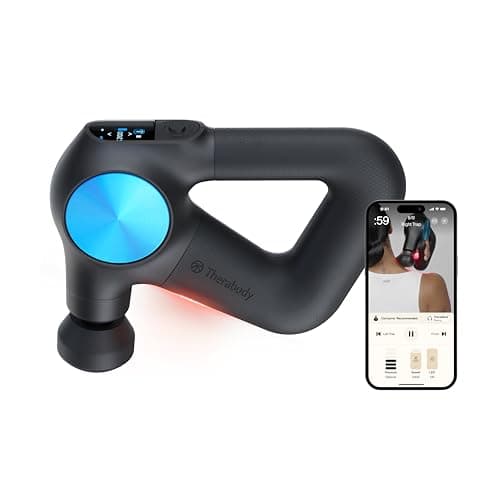
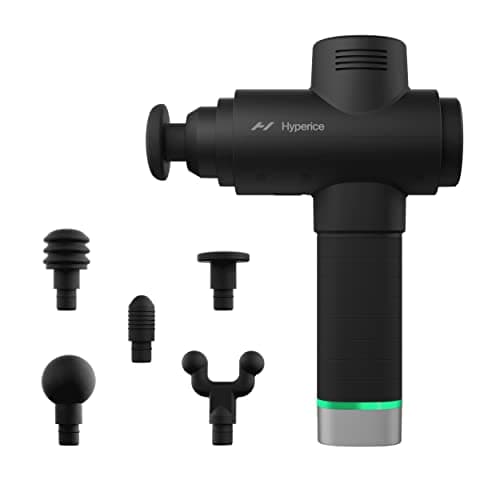
Theragun and Hyperice's Hypervolt are the two reference percussion guns for recovery work, and they make different trade-offs. The Theragun Pro (5th Gen) hits a deeper 16mm stroke with a rotating arm and high no-stall force, so it digs into dense muscle without bogging down — at the cost of more weight and a louder, more aggressive feel. The Hypervolt 2 Pro runs a shorter 14mm stroke at higher speed (up to 2,700 PPM), is lighter and quieter, and glides over tissue rather than punching into it. Both pair with an app and have a pressure read-out. For heavy lifting and dense quads, glutes, and hamstrings, the deeper stroke usually wins; for daily mobility and travel, the lighter, quieter Hypervolt is the easier tool to actually use.
The verdict
Pick the Theragun Pro if you train heavy and want the deepest stroke and most no-stall force for dense muscle — you'll accept extra weight and noise for it. Pick the Hypervolt 2 Pro if you want a lighter, quieter gun that's easier to hold for daily recovery and travel, and you don't need a full 16mm punch. The deeper stroke is the real differentiator; everything else is comfort and convenience.
Side-by-side
| Attribute | Theragun | Hypervolt |
|---|---|---|
| Amplitude (stroke depth) | 16mm (Pro / Pro Plus) | 14mm (2 Pro); 12mm (Hypervolt 2) |
| No-stall / stall force | Up to ~60 lb no-stall force (Pro 5th Gen) | ~60-70 lb stall force (2 Pro); mid-20s lb (Hypervolt 2) |
| Speed range (PPM) | 1,750-2,400 across 5 preset speeds | Up to 2,700 across 5 speeds (2 Pro) |
| Motor / noise | EQ150 brushless, QuietForce; ~52-67 dB | Quiet Glide brushless; ~54-65 dB (2 Pro) |
| Battery life | ~150 min via two swappable batteries (~75 min each) | ~3 hours per charge (internal battery) |
| App / display | Therabody app + on-device OLED with pressure gauge & guided routines | Hyperice app (Bluetooth) + 3-LED pressure sensor; no screen |
| Attachments | 6 (Standard Ball, Dampener, Thumb, Wedge, SuperSoft, Micro-point) | 5 detachable heads (2 Pro) |
| Weight | ~2.9 lb (Pro 5th Gen) | ~2.6 lb (2 Pro) |
| Where to buy |
Prices pulled from Amazon as of Sep 24, 2026 and are subject to change. The price shown on Amazon at checkout applies.
Who should pick which
Pick Theragun
- Heavy lifters and CrossFitters working dense quads, glutes, and erectors who want maximum depth.
- People who want the most no-stall force so the head doesn't stall when they lean in hard.
- Buyers who value the ergonomic rotating handle for reaching their own back and shoulders.
Pick Hypervolt
- Anyone prioritizing a lighter, quieter gun they'll comfortably use every day or take to the gym.
- Users who prefer a smoother glide over tissue rather than a deep, aggressive punch.
Amplitude is the spec that actually matters
Amplitude is how far the head travels on each stroke, and it's the single most useful number for picking a gun. The Theragun Pro runs a 16mm stroke; the Hypervolt 2 Pro runs ~14.5mm and the standard Hypervolt 2 runs 12mm. A deeper stroke reaches further into muscle per hit, which is why the Theragun feels like it's working underneath dense tissue while the Hypervolt feels like it's working the surface. For heavy lifters with thick quads, glutes, and lower-back musculature, that extra few millimeters is the difference you feel most. For lighter recovery, calves, forearms, and general mobility, 12-14mm is plenty.
Stall force: leaning in without bogging down
Stall (or 'no-stall') force is how much pressure you can apply before the head stops moving. The Theragun Pro 5th Gen is rated up to ~60 lb of no-stall force; the Hypervolt 2 Pro lands in the ~60-70 lb range, while the standard Hypervolt 2 is far lower (roughly mid-20s lb). In practice both Pro models let you press hard into a knot without the motor stalling — but the cheaper Hypervolt 2 will stall if you really lean in. If you press firmly and dislike a head that quits under load, stay with one of the Pro-tier guns.
Noise, weight, and how often you'll actually use it
The best recovery tool is the one you reach for daily, and that's where the Hypervolt's lighter, quieter design earns its keep. At ~2.6 lb and ~54-65 dB, the Hypervolt 2 Pro is easy to hold for a full session and quiet enough to use during a podcast or while others sleep. The Theragun Pro is heavier (~2.9 lb) and its QuietForce motor still runs louder and more aggressive at ~52-67 dB. The Theragun's rotating, multi-grip handle partly offsets the weight by letting you reach your own back and shoulders without straining your wrist — a genuinely useful design for solo recovery.
App, screen, and the Pro Plus's extra therapies
Both brands offer Bluetooth apps with guided routines; neither app is essential. The Theragun adds an on-device OLED screen with a live pressure gauge, speed, and battery — useful because you can read it mid-session without your phone. The Hypervolt uses three pressure-indicator LEDs instead of a screen. If you want more than percussion, the Theragun Pro Plus layers in near-infrared LED, heat, and vibration therapy plus a biometric heart-rate read-out — extras that matter to a recovery-focused buyer but add cost. For pure percussion value, the standard Pro and the Hypervolt 2 Pro are the head-to-head pick.
Battery and real-world use
The Hypervolt 2 Pro runs roughly 3 hours on its internal battery, so most people charge it once or twice a week. The Theragun Pro instead ships with two swappable ~75-minute batteries (~150 minutes total) — you can hot-swap a fresh pack and keep going, which suits clinics or households with multiple users, but means more to keep track of. Neither approach is clearly better: pick swappable packs if you want zero downtime, pick the longer single charge if you'd rather not juggle batteries.
Frequently asked questions
For dense muscle from heavy lifting, the Theragun Pro's 16mm stroke and high no-stall force give it the edge — it digs deeper into thick quads, glutes, and erectors without stalling when you press hard. The Hypervolt 2 Pro is excellent and more comfortable to use, but its shorter 14mm stroke works tissue less deeply. If depth is your priority, choose the Theragun.
Sources
- Theragun PRO (5th Gen) — product specifications — Therabody, 2026
- Theragun PRO Plus — multi-therapy device specifications — Therabody, 2026
- Hyperice Hypervolt 2 Pro review (amplitude, stall force, noise) — Tom's Guide, 2024
- Hypervolt 2 review — standard model specs — Massage Gun Advice, 2024
- Theragun Pro (Gen 5) review — noise, weight, attachments — Tom's Guide, 2024
Therabody — Theragun PRO Plus
$649.99 · on Amazon